

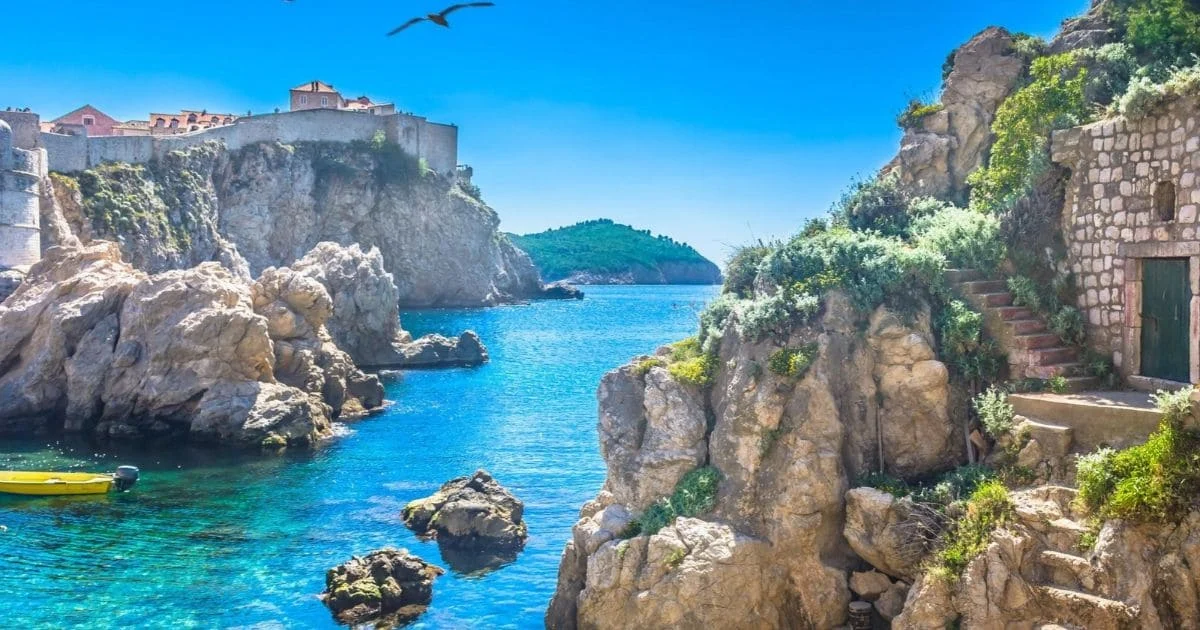
Planning a vacation is an exercise in compromise. When you narrow the focus to a multigenerational trip—where the travel party spans from toddlers with nap schedules to grandparents seeking accessibility and comfort—the challenge shifts from simple logistics to an intricate balancing act. In recent years, travel industry data has highlighted a significant shift: families are moving away from traditional resorts in favor of destinations that offer a “base-camp” experience. Leading this trend is Croatia, a nation that has evolved from a hidden gem to the premier destination for families looking to bridge the generational divide.
According to insights from Health N Beauty Stuff and various luxury travel curators, the secret to the Croatian phenomenon lies in its unique ability to harmonize ancient history with modern, high-end hospitality, ensuring that no family member feels like a passenger in their own vacation.
The Multigenerational Mandate: A Landscape of Diverse Needs
The primary friction point in family travel is the divergence of interests. Younger travelers often crave high-octane adventure—kayaking, snorkeling, or exploring bustling city walls—while older generations may prioritize cultural immersion, relaxed dining, and environments that do not require constant, strenuous navigation.
Croatia’s geography serves as a natural solution to this problem. By clustering historic, cultural, and recreational assets within short geographical radiuses, the country allows families to remain tethered to a single "home base" while pursuing different daily itineraries. This eliminates the "moving-day" fatigue that plagues many long-haul family trips, where shifting hotels every two days leaves children cranky and elders exhausted.
Chronology of the Croatian Tourism Pivot
The rise of Croatia as a family-centric destination is no accident. Following its post-war reconstruction, the country strategically invested in infrastructure that moved beyond the "backpacking" demographic.
- Early 2000s: Initial efforts focused on preserving historic landmarks, most notably the UNESCO World Heritage sites in Dubrovnik and Split.
- 2010–2015: A surge in luxury villa investment began, catering to high-net-worth travelers who demanded privacy and exclusive amenities.
- 2016–2020: The "Game of Thrones" effect brought global attention, forcing the tourism board to pivot toward sustainable, family-oriented tourism to manage the influx.
- 2021–Present: Post-pandemic, the focus has shifted entirely to the "slow travel" model, emphasizing private yacht charters and villa-based tourism that limits overcrowding and enhances the intimacy of the family experience.
Supporting Data: The Villa Advantage
For larger groups, the standard hotel experience is increasingly viewed as an obstacle rather than an amenity. Data regarding booking trends suggests that families of six or more are opting for private villas at a rate 40% higher than they were a decade ago.
The rationale is clear: communal living. A villa allows for shared dining experiences in a private garden, the luxury of a private pool for children who aren’t ready for the open sea, and the necessary separation of bedrooms to ensure that early-rising toddlers do not disturb grandparents.
"The villa is the bridge between the public experience of the city and the private sanctuary of the home," notes a spokesperson from Exclusive Adriatic, a firm that specializes in bespoke Mediterranean itineraries. By providing a kitchen and social space, villas allow families to cook together, reducing the stress of finding restaurant reservations for large, multi-age groups every night.
Exploring the Dalmatian Coast: A Strategic Approach
To maximize the multigenerational experience, experts recommend a "Split-Dubrovnik" strategy. By basing a family in either of these hubs, one can access the best of the Adriatic without sacrificing the comforts of home.
The Dubrovnik Experience: Walls and Waterfronts
Dubrovnik, the "Pearl of the Adriatic," is often the first stop. While its famous city walls offer a rigorous walk that may challenge some, the surrounding area offers lower-impact alternatives. Grandparents can enjoy a morning coffee overlooking the harbor while younger family members take a guided sea-kayaking tour around Lokrum Island.
The Split Connection: Living in History
In Split, the Diocletian’s Palace serves as a living museum. Unlike sterile exhibits, the palace is integrated into the city’s daily life, meaning one can shop for local produce, dine at an upscale bistro, and view 4th-century Roman architecture all within the same city block. This fluidity is essential for families who need to move at different speeds.
Official Perspectives: The Value of "Shoulder Season"
Government tourism reports from the region have begun to emphasize the "Shoulder Season" as the ideal window for families. While July and August offer the classic Mediterranean sun, they also present challenges: extreme heat, intense crowds, and higher prices.
Tourism officials advocate for late spring (May and June) and early autumn (September and October). During these periods:
- Accessibility improves: The narrow, stone-paved streets of coastal towns are easier to navigate without the crushing density of peak-summer tourists.
- Service quality increases: With fewer crowds, local restaurant staff can offer more personalized attention, which is critical when dining with young children or those with specific dietary needs.
- Climate stability: The weather is warm enough for outdoor exploration but cool enough to avoid the health risks associated with Mediterranean heatwaves for the elderly.
Implications for the Future of Family Travel
The implications for the travel industry are profound. Croatia has demonstrated that successful destination marketing no longer relies on "attractions" alone, but on the facilitation of connection. By providing a landscape where a teenager can go cliff-diving while their grandfather explores a nearby Roman ruin, and where both can meet for a sunset dinner at the same villa, Croatia has solved the primary hurdle of modern travel: the struggle to balance independence with togetherness.
The Role of Customization
The surge in demand for concierge-level services—such as private boat charters—is not merely about luxury; it is about autonomy. A private boat charter on the Adriatic allows a family to dictate their own pace. If a child becomes overtired, the boat returns to port. If the adults wish to linger in a secluded bay on the island of Hvar, they have that agency. This flexibility is the final piece of the puzzle.
Addressing Accessibility Concerns
However, the industry acknowledges that the country is not without its hurdles. The historic nature of many Croatian towns means that stairs, uneven cobblestones, and narrow passages are common. For families traveling with mobility issues, research is paramount. Leading travel planners now offer "accessibility audits" for their itineraries, ensuring that the route from the villa to the city center is manageable for all generations.
Final Thoughts: Crafting the Memory
Ultimately, a multigenerational vacation is not about checking off a list of UNESCO sites. It is about the shared narrative created by the family. When the trip is defined by a lack of friction, the quality of the time spent together increases.
Croatia succeeds because it functions as a backdrop for these moments. Whether it is the taste of local olive oil, the sound of the Adriatic lapping against a private pier, or the shared laughter during a boat trip through the Dalmatian islands, the country provides the infrastructure for memories to flourish.
For families standing at the crossroads of planning their next getaway, the message is clear: prioritize a destination that offers variety within a contained environment. By selecting a base that serves all generations—the young, the old, and everyone in between—and by embracing the rhythm of the Adriatic, families can turn the daunting task of planning into the highlight of their year. The Adriatic is not just a destination; it is a canvas upon which the most important family stories are written.
 Nana
 Sagoh
 Evan Lee Salim
