

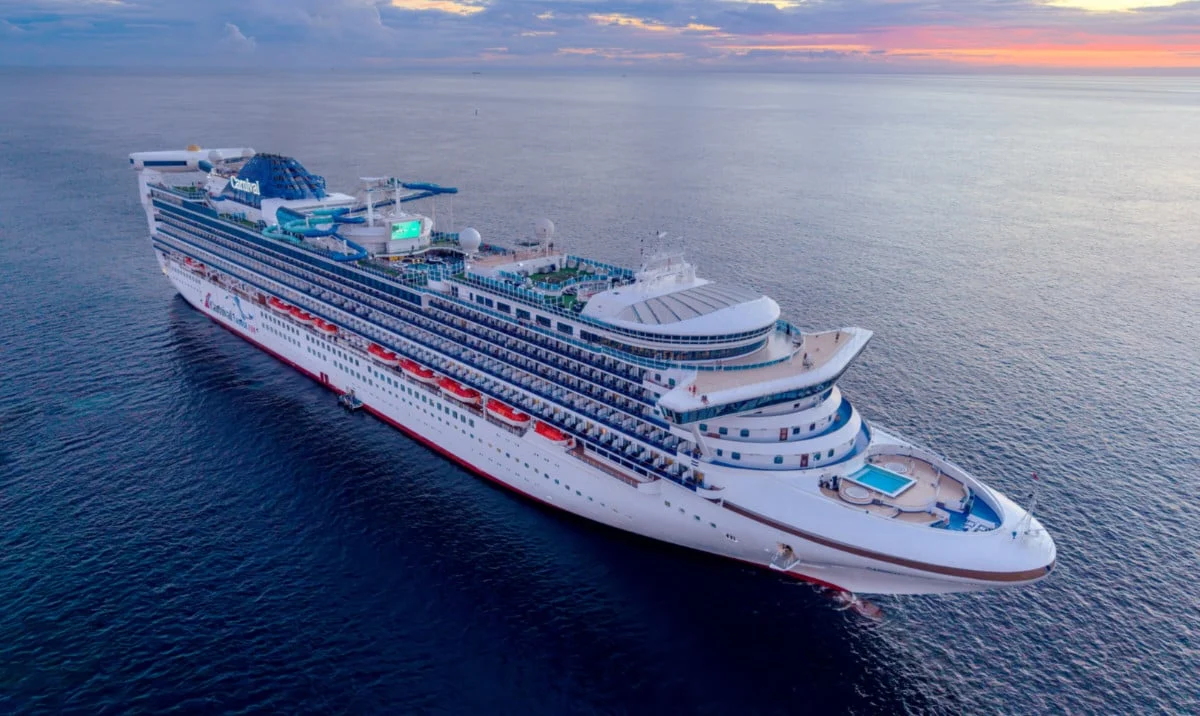
SYDNEY, AUSTRALIA — Carnival Cruise Line has officially unveiled the final chapters for two of its most prominent vessels operating in the South Pacific. In a sweeping operational update, the cruise giant has mapped out the definitive farewell itineraries for Carnival Adventure and Carnival Luminosa, marking their permanent departure from the Australian market in March 2028.
The announcement brings a bittersweet conclusion to years of speculation regarding the future of Carnival’s fleet allocation in the region. While cruise enthusiasts and loyal passengers prepare to bid a final "g’day mate" to the two ships, regional tourism boards and economic analysts are already grappling with the broader geopolitical and financial fallout of the redeployment.
Although Carnival will maintain a reduced regional footprint with Carnival Encounter and Carnival Splendor, the permanent withdrawal of Carnival Adventure and Carnival Luminosa signifies a major turning point for the Australian cruise industry.
Main Facts: The 2028 Departure Plan
The grand exit of the two vessels will be marked by a series of four meticulously planned repositioning itineraries. Ranging from 8 to 23 days, these final voyages are designed to transition the ships out of Australian waters while offering guests bucket-list journeys across the Pacific, Asia, and North America.
Carnival Adventure‘s Epic Pacific-to-Asia Farewell
The 2,636-guest Carnival Adventure—which originally joined the Carnival fleet in March 2025 after sailing as the Pacific Adventure under P&O Cruises Australia—will wave goodbye to Sydney with a trio of spectacular northward voyages:
- Sydney to Tokyo (19 Days): Commencing on March 20, 2028, this grand voyage will take guests from the iconic Sydney Opera House northward through Papua New Guinea, Hong Kong, and Taipei in Taiwan, before concluding in the heart of Japan.
- Tokyo Round-Trip (8 Days): Departing on April 8, 2028, this shorter regional sailing will give guests an immersive Japanese experience, featuring culturally rich stops in Busan, South Korea, and scenic destinations near Mount Fuji.
- Tokyo to Seattle Transpacific (15 Days): Serving as the ship’s final grand finale under its current operational alignment, this transpacific crossing departs Tokyo on April 16, 2028, bringing the vessel across the North Pacific to Seattle, Washington. (Carnival has yet to release specific intermediate ports of call for this final oceanic stretch).
Carnival Luminosa‘s Transpacific Odyssey
Meanwhile, the 2,260-guest Carnival Luminosa, which has operated out of Brisbane since 2022 (initially year-round before transitioning to seasonal deployments in 2025), will take a more direct path home to the United States.
The ship will undertake a single, massive 23-day repositioning voyage from Sydney to Los Angeles. Departing on March 15, 2028, the cruise will traverse the central Pacific, offering guests extended port calls in Hawaii and French Polynesia before arriving on the West Coast of the United States.
Bookings for these highly anticipated final voyages are slated to open to the public later this week, though Carnival has kept exact launch timetables under wraps. Both ships will continue to service their regular Australian itineraries right up until their respective March 2028 departure dates.
Chronology of Events: How We Got Here
To understand the weight of Carnival’s 2028 announcement, it is necessary to retrace the timeline of regulatory shifts, fleet integrations, and corporate strategy that led to this crossroads.
- November 2022: Carnival Luminosa officially debuts in Brisbane, marking a major expansion for the brand in the Australian market and capturing a dedicated following of Queensland cruisers.
- March 2025: Carnival Corporation completes a massive structural realignment in the region, absorbing P&O Cruises Australia into the Carnival brand. Pacific Adventure is successfully rebranded as Carnival Adventure, establishing a year-round presence in Sydney.
- October 15, 2026: Carnival Cruise Line sends shockwaves through the maritime industry by officially announcing that both Carnival Adventure and Carnival Luminosa will be pulled from Australia. Initial plans that suggested the ships might split time seasonally between Australia and North America are officially scrapped; neither ship will return to Down Under homeports after 2028.
- Late 2026 – Early 2028: Regional stakeholders, local businesses, and Pacific Island nations begin assessing the long-term economic blowback of losing hundreds of thousands of cruise passenger visits.
- March 2028: The definitive countdown concludes. Carnival Luminosa (March 15) and Carnival Adventure (March 20) embark on their final farewell voyages, permanently closing their chapters in Australian waters.
Supporting Data and Fleet Analysis
The numbers behind Carnival’s operational pivot reveal a calculated, albeit painful, corporate strategy aimed at maximizing global profitability in an increasingly complex regulatory landscape.
- Fleet Capacities: Carnival Adventure accommodates approximately 2,636 guests, while Carnival Luminosa carries 2,260 passengers. Together, they represent a significant portion of Carnival’s total regional berth capacity.
- Remaining Strength: Despite these departures, Carnival is quick to reassure the public that it is not abandoning the Australian market entirely. Carnival Splendor and Carnival Encounter will remain firmly anchored in the region, continuing to offer year-round homeported sailings out of Sydney and Brisbane.
- Geographic Reach of Final Itineraries: The 2028 farewell voyages span multiple continents and hemispheres, touching ports in Australia, Papua New Guinea, Taiwan, Hong Kong, Japan, South Korea, French Polynesia, Hawaii, and the United States.
Official Responses and Regulatory Pressures
The decision to pull two major vessels from the region was not made in a vacuum. When Carnival first announced the withdrawal in late 2026, leadership pointed directly to a confluence of domestic regulations, intense global competition, and operational hurdles.

The Regulatory Hurdle: Coastal Trading Act 2012
The Australian federal government previously granted exemptions to the Coastal Trading Act 2012, a move designed to protect local maritime labor standards while allowing foreign-flagged cruise ships to operate domestic itineraries. While these exemptions were extended through the end of 2028, Carnival executives noted that the reality of doing business in Australia has shifted.
As the only major cruise line maintaining ships dedicated year-round to the Australian domestic market, Carnival argued that it bears a disproportionately heavy burden when compliance costs, port fees, and labor regulations fluctuate. Seasonal operators, by contrast, can easily pivot their ships to Europe, the Caribbean, or Alaska if local economics sour, leaving year-round brands to absorb the brunt of domestic policy changes.
The Pacific Island Fallout
The impact of Carnival’s withdrawal extends far beyond Australian shores. Island nations in the South Pacific—many of which rely almost entirely on tourism dollars—are sounding the alarm.
Recently, Vanuatu’s Ministry of Trade and Commerce published a pointed policy and impact assessment blog post detailing the economic dangers posed by Carnival’s 2028 fleet redeployment. The reduction in ships will inevitably lead to a sharp decline in cruise calls to vital regional ports such as Port Vila and Mystery Island.
"It is decisions taken in Australia, not in the Pacific, that are now determining how ships are deployed across the South Pacific," stated the Ministry’s official publication. "And it is Pacific destinations such as Vanuatu, and the operators and communities who depend on cruise visitors, that are bearing the consequences."
Local tour operators, craft vendors, and port-side businesses in the islands are now facing the daunting task of pivoting their business models to survive a future with fewer mega-ships on the horizon.
Implications for the Future of Australian Cruising
As the industry looks ahead to 2028, the departure of Carnival Adventure and Carnival Luminosa serves as a stark reminder of the fragile relationship between cruise corporations and host governments.
For Australian cruisers, the immediate concern is capacity. With two fewer ships servicing the market, demand for remaining berths aboard Carnival Splendor and Carnival Encounter—as well as ships from competing lines like Royal Caribbean and Princess Cruises—is expected to surge, potentially driving ticket prices higher.
Furthermore, the shift highlights a broader global trend within the cruise industry: lines are increasingly pivoting their assets toward markets offering higher yields, more predictable regulatory environments, and lower operational overhead. While Australia remains a lucrative cruise hub, the regulatory and economic friction that prompted Carnival’s retreat may serve as a cautionary tale for other operators evaluating their own South Pacific deployments.
For now, an unforgettable era is drawing to a close. As Carnival Adventure points its bow toward Tokyo and Carnival Luminosa sets a course for Los Angeles in March 2028, thousands of Australian travelers will have one final opportunity to sail on the ships that helped define modern cruising Down Under.
 Nana
 Ammar Sabilarrohman
 Nana Wu
