

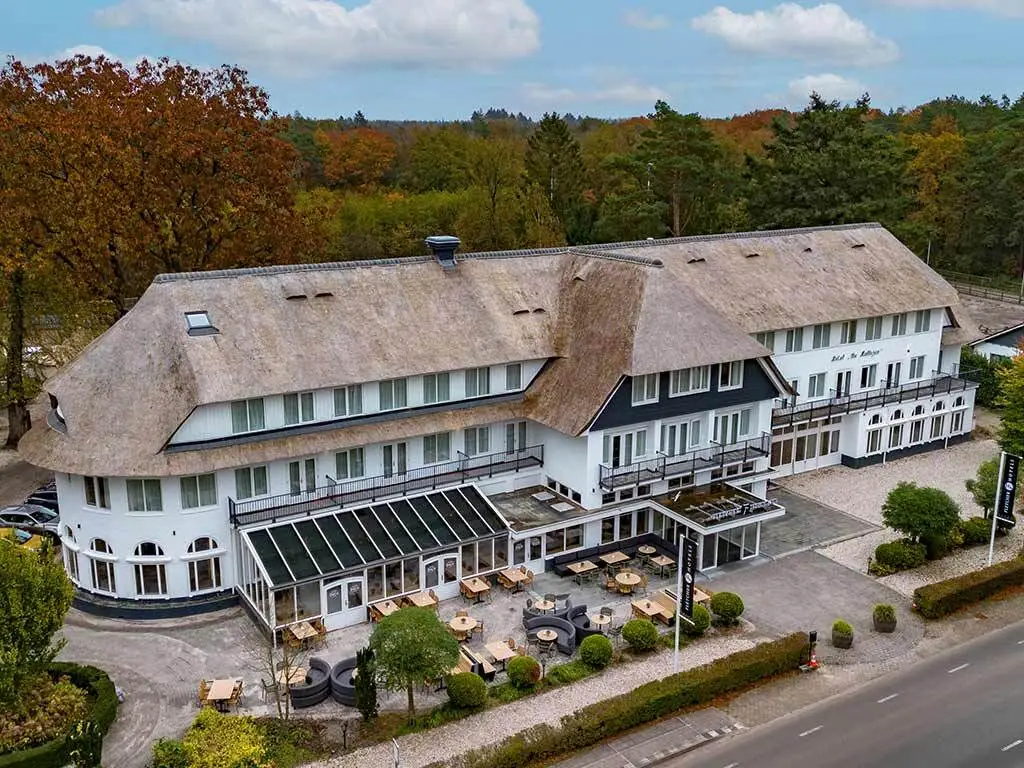
In a move that signals a significant shift in the European hospitality landscape, Indian hotel investor Sunday PropTech has finalized an agreement to acquire Fletcher Hotels, the largest hospitality chain in the Netherlands. The deal, which brings 170 properties under the ownership of a major international player, marks a bold entry for Sunday PropTech into the mature European market. However, as the dust settles on the transaction, a closer examination of Fletcher’s recent financial disclosures has revealed a complex business model—one heavily reliant on government-funded long-stay contracts that have significantly bolstered the group’s bottom line.
The Deal: A Strategic Expansion
Sunday PropTech’s acquisition of Fletcher Hotels is more than just a real estate play; it is an acquisition of operational scale. Fletcher, known for its extensive portfolio of boutique hotels and countryside estates across the Dutch landscape, has long been a staple of the Netherlands’ tourism sector. By integrating 170 hotels into its ecosystem, Sunday PropTech gains an immediate, dominant footprint in a stable, high-barrier-to-entry market.
For the Indian investor, this acquisition provides an established platform from which to deploy capital, management technology, and operational efficiencies. However, the optics of the deal have been complicated by recent financial data, which suggests that the profitability of this expansive network is currently anchored by a singular, non-traditional revenue stream.
Chronology of a Transformation
The evolution of Fletcher Hotels from a traditional leisure operator to a key partner for the Dutch government is a story defined by shifting global and regional demands.
- Pre-2020: Fletcher operated primarily as a traditional leisure and business hospitality provider, focusing on weekend getaways, conferences, and regional tourism.
- 2020–2022: Like many global hotel operators, Fletcher faced existential threats during the COVID-19 pandemic. During this period, the group began pivoting toward government-contracted accommodation to offset the collapse in tourism and travel.
- 2023: The group consolidated its position as a preferred provider for long-stay government housing, serving various needs including, but not limited to, temporary housing for asylum seekers and emergency social accommodation.
- Late 2024–Early 2025: Speculation regarding a potential sale of the group intensified as market conditions for hospitality assets improved.
- October 2026: Sunday PropTech formally announces the acquisition of Fletcher Hotels, setting the stage for a new chapter in the company’s history.
Supporting Data: The Anatomy of a High-Margin Revenue Stream
The financial health of Fletcher Hotels is currently a tale of two business models. According to the company’s most recent financial statements for the nine-month period ending in June, the group reported a total revenue of €288 million ($321 million). On the surface, this figure reflects a robust recovery in the travel sector. However, a deeper dive into the numbers reveals a stark disparity between traditional hotel operations and the government-funded long-stay division.
The Profitability Gap
The data indicates that long-stay rooms rented to the Dutch government accounted for approximately 17% of total revenue. While that percentage may seem modest, its contribution to the group’s profitability is disproportionate. This segment generated €22.5 million ($25 million) in EBITDA.
To put this in perspective, the EBITDA margin for these government contracts sits at approximately 45%. In stark contrast, the margin for Fletcher’s traditional hotel operations hovers at roughly 10%. When aggregating these figures, the government-funded segment accounts for approximately 80% of the group’s total EBITDA of €28 million ($31 million), a calculation reached after accounting for €23.7 million ($26.4 million) in head-office operational costs.
Even before the deduction of head-office overheads, long-stay contracts represent roughly 44% of the aggregate earnings generated by the company’s various business units. This concentration of profit highlights a critical dependency: without the consistent, high-margin revenue from state contracts, the group’s financial performance would appear significantly leaner.
Official Responses and Corporate Stance
As of the time of reporting, representatives for Sunday PropTech have remained optimistic about the integration. In official communications, the firm has emphasized the "scalability and operational excellence" of the Fletcher portfolio.
"Fletcher represents a cornerstone asset in the Netherlands," a spokesperson for Sunday PropTech stated. "While we acknowledge the current revenue mix, we are focused on the long-term potential of these assets. We see a clear path to revitalizing the traditional leisure segment while maintaining strong partnerships with public sector stakeholders to ensure the group remains a pillar of Dutch infrastructure."
Fletcher management has similarly defended the revenue mix, framing the government contracts as a testament to the group’s agility and its ability to serve the national interest during times of crisis. They argue that the infrastructure provided by their expansive hotel network is uniquely suited to handle large-scale accommodation needs, providing a steady floor for the business that traditional, volatile leisure demand cannot match.
Implications: Risks and Opportunities
The acquisition raises profound questions regarding the future strategy of the Fletcher brand under new ownership.
The Risk of Dependency
The primary concern for investors and analysts is the "temporary" nature of the government contracts. While these contracts have been lucrative, they are subject to political shifts, changes in immigration policy, and fluctuating social needs. If the Dutch government were to reduce its reliance on private hotel space for long-term housing, the impact on Fletcher’s EBITDA would be immediate and severe. The 45% margin is a luxury that few traditional hospitality assets enjoy, and the loss of this stream could force a painful restructuring of the group’s overhead costs.
Operational Synergies and Future Growth
Sunday PropTech likely views this acquisition as a bridge. By leveraging the cash flow generated by these state contracts, the new owners may seek to renovate and rebrand key properties to capture the higher-yielding, premium tourism market. If Sunday PropTech can successfully pivot the portfolio back toward traditional leisure and business travel while the government contracts provide a stable cash cushion, the deal could be viewed as a masterstroke of financial engineering.
The Broader Hospitality Landscape
This acquisition also highlights a growing trend across Europe: the "hybridization" of hotel assets. With rising real estate costs and the need for consistent revenue, hotel groups are increasingly looking toward public-private partnerships. Whether it is housing for students, emergency shelter, or workforce accommodation, hotels are being utilized for more than just short-term stays. Fletcher Hotels is the most prominent example of this, but it is unlikely to be the last.
Conclusion: A High-Stakes Balancing Act
Sunday PropTech has purchased a market leader, but it has also inherited a business model that is currently undergoing a structural identity crisis. The transition from a government-dependent revenue base to a diversified, tourism-focused hospitality giant will require more than just capital—it will require a surgical approach to operational management.
As the Dutch market continues to evolve, the performance of the Fletcher portfolio will serve as a bellwether for the industry. Will the "temporary" long-stay revenue stream be phased out in favor of traditional luxury and leisure, or will it remain a permanent fixture of the Fletcher identity? For Sunday PropTech, the answer to this question will determine whether their investment in the Netherlands becomes a flagship success or a lesson in the dangers of over-reliance on state-backed income.
For now, the industry watches closely. The numbers are clear, the risks are defined, and the path forward remains anything but certain. As the integration process begins, the true test for Sunday PropTech will be its ability to harmonize the urgent needs of the Dutch government with the long-term aspirations of a classic European hotel brand.
 Layla Zulfa
 Iffa Jayyana
