

Executive Summary: A Paradigm Shift in Travel Planning
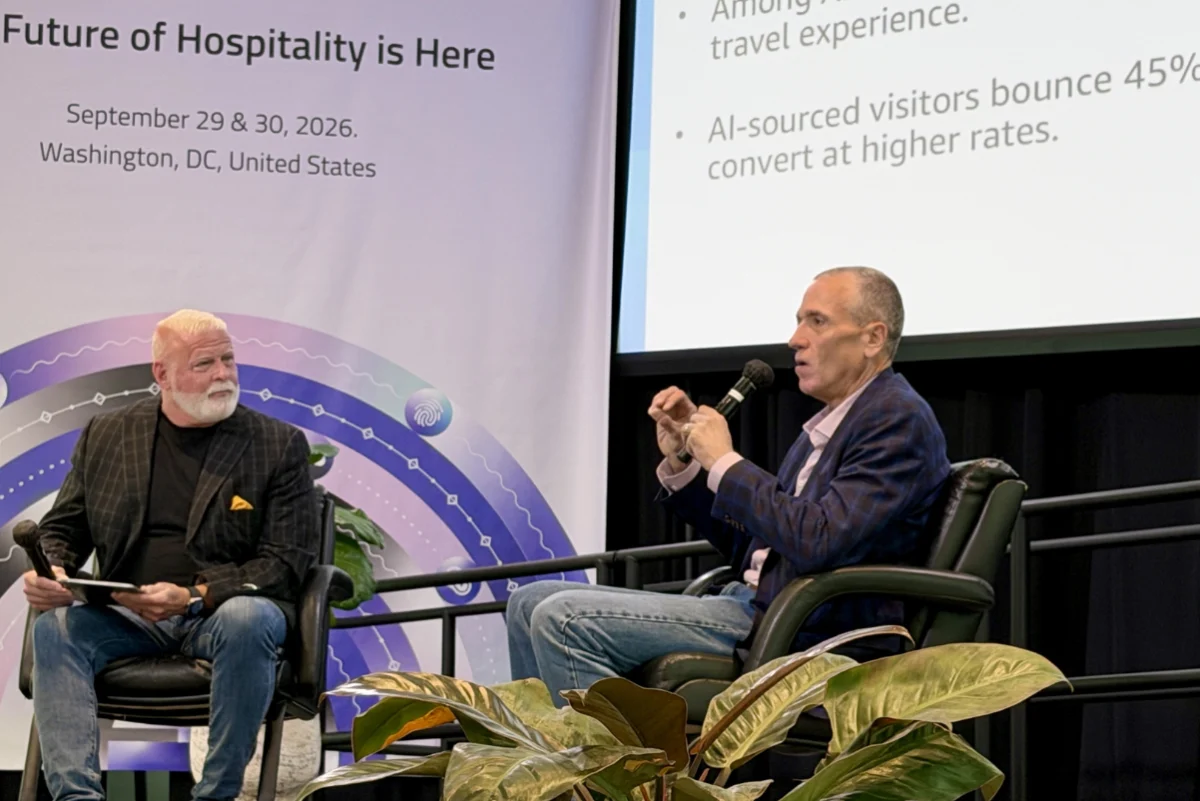
The travel industry, long dominated by the "Big Three" online travel agencies (OTAs)—Expedia, Booking Holdings, and Trip.com—is facing an unprecedented technological pivot. At the recent Destination AI conference in Washington, D.C., Hilton’s Senior Vice President and Chief Information Officer, Michael Leidinger, articulated a perspective that is sending ripples through the hospitality sector: the rise of Large Language Models (LLMs) and agentic AI represents the most significant threat to the OTA business model in decades.
According to Leidinger, the primary value proposition of OTAs—the ability to aggregate a fragmented landscape of hotels, flights, and experiences into a single interface—is being effectively neutralized by artificial intelligence. As travelers pivot from traditional search engines and static booking portals to conversational, AI-driven assistants, the necessity of the "middleman" is being called into question.
The Chronology of the Disruption
To understand the gravity of Leidinger’s comments, one must look at the historical trajectory of the travel industry’s digital transformation.
Phase 1: The Aggregation Era (1996–2010)
The birth of the internet brought about the "fragmentation problem." With millions of individual hotels, airlines, and car rental agencies, the average traveler had no efficient way to compare pricing or availability. OTAs emerged as the solution, building massive databases that acted as the gatekeepers of the internet travel economy.
Phase 2: The Mobile and Loyalty Era (2010–2022)
As smartphones became ubiquitous, OTAs doubled down on mobile apps and loyalty programs. Hotels fought back by emphasizing direct-booking perks, but the convenience of a one-stop-shop app kept consumers tethered to platforms like Expedia and Booking.com.
Phase 3: The Generative AI Turning Point (2023–Present)
The public release of ChatGPT and subsequent advancements in agentic AI (systems that can take action on behalf of a user) changed the calculus. Suddenly, a consumer could bypass the "filter-and-click" method of the past 20 years. Instead, they could input complex, context-rich queries—such as "Find me a quiet, boutique-style hotel in Lisbon for under $300 a night that is within walking distance of a vegan restaurant and allows for late check-in"—and receive a curated, actionable itinerary in seconds.
Supporting Data: The Erosion of the OTA Moat
Leidinger’s assertion is supported by a growing body of data regarding consumer behavior and search patterns.
The Death of the "Search-Filter-Compare" Funnel
Traditional OTAs built their empires on the "Search-Filter-Compare" funnel. This model requires a user to perform multiple clicks to narrow down options. Data from industry analysts suggests that conversion rates for AI-assisted travel planning are significantly higher than traditional search queries because the "work" of filtering is done by the LLM.
Shift in Marketing Spend
For years, OTAs have spent billions of dollars on Search Engine Marketing (SEM), effectively paying Google to sit at the top of the funnel. However, if a user goes directly to an AI agent (such as Perplexity, ChatGPT, or Gemini) for travel advice, the traffic directed toward traditional OTA landing pages drops. Hilton and other major chains are now investing heavily in their own internal AI capabilities to capture this intent at the source.
The Agentic Advantage
Leidinger noted that "agentic AI"—AI that doesn’t just talk but executes tasks—is the final nail in the coffin for passive aggregation. When an AI can automatically book a room, secure a restaurant reservation, and update a calendar, the value of an OTA’s proprietary interface diminishes.
Official Responses and Industry Perspectives
The industry is currently divided into two camps: those who see AI as a partnership opportunity and those who see it as an existential threat.
The Hilton Position
Michael Leidinger, speaking alongside Greg Land of Amazon Web Services (AWS), emphasized that Hilton sees this shift as an opportunity to reclaim the direct relationship with the guest. By leveraging AI, Hilton aims to provide a personalized service level that OTAs, which lack access to a hotel’s internal property management systems (PMS) and real-time guest preferences, simply cannot match.
The OTA Counter-Narrative
In response to these trends, OTA giants have publicly stated that they are not standing still. Both Expedia and Booking.com have integrated generative AI features into their platforms. They argue that their scale, historical customer data, and established trust remain significant barriers to entry for new AI-only startups. They contend that while AI changes the interface, the underlying need for a global, reliable booking engine remains firmly in their court.
Implications: A New Frontier for Hospitality
The shift described by Leidinger has profound implications for how travel will be booked, marketed, and experienced in the coming decade.
1. The Death of Generic SEO
For decades, hotels have optimized their websites for keywords like "best hotel in [city]." In an AI-native world, the algorithm doesn’t care about keyword density; it cares about factual accuracy, structured data, and the quality of the guest experience. Hotels will need to shift from SEO (Search Engine Optimization) to AIO (AI Optimization).
2. Hyper-Personalization
The primary advantage a hotel chain has over an OTA is the "guest profile." An OTA knows what you booked last year; a hotel chain knows you prefer a feather-free pillow, a room on a high floor, and a specific brand of sparkling water. Agentic AI will allow Hilton to utilize this data to create a "concierge-level" experience before the guest even arrives.
3. The Rise of Direct-Booking AI
As Leidinger hinted, the goal for major brands is to build an AI ecosystem where the traveler asks the hotel’s own AI for advice, not just on the hotel stay, but on the destination itself. If a hotel brand can successfully provide a "travel assistant" that recommends local museums, transport, and tours—all integrated into the hotel booking—they remove the need for an OTA entirely.
4. Competitive Dynamics
The competitive landscape is likely to move from a price-war environment to an intelligence-war environment. The company that can build the most helpful, reliable, and "human-like" AI assistant will command the most loyalty. This puts pressure on mid-sized hotel brands that lack the R&D budget to develop sophisticated LLMs, potentially leading to a new wave of industry consolidation.
Conclusion: The Long Road Ahead
While Leidinger’s assessment of the threat to OTAs is bold, the transition will not happen overnight. OTAs have deep pockets and decades of ingrained consumer habit to rely on. However, the trajectory is clear. The "middleman" model thrived in an era of information scarcity, where their ability to aggregate data was their primary value.
In an era of AI-driven information abundance, the value shifts to those who can provide context, personalization, and seamless execution. By embracing agentic AI, Hilton and its peers are signaling that they are no longer content to let OTAs sit between them and their guests. The next five years will determine whether the travel industry returns to a direct-relationship model, or if the intermediaries will successfully pivot into the AI-assistant layer of the future.
As Leidinger noted in Washington, the technology is no longer in the "experimental" phase; it is in the "operational" phase. For the travel industry, the window for adaptation is closing, and the AI-driven future is already checking in.
 Nana
 Lina Hope
