

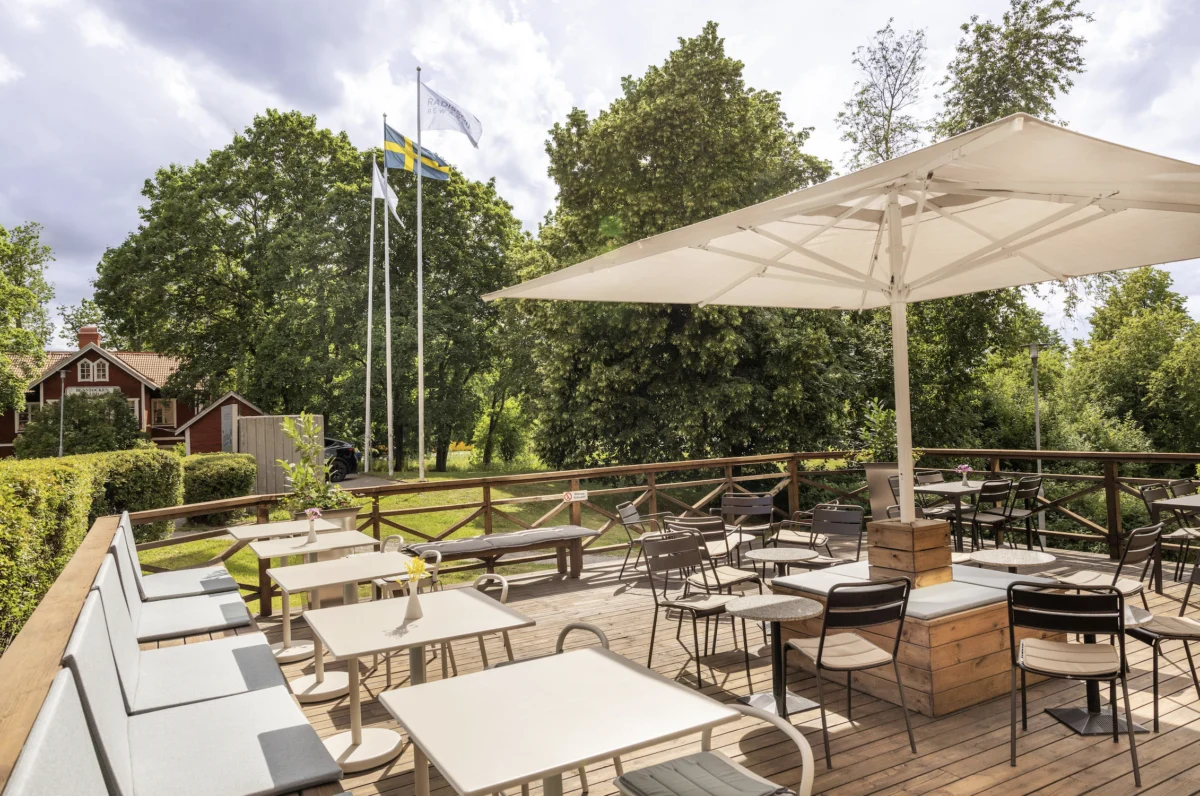
In a significant stride toward its ambitious sustainability roadmap, Radisson Hotel Group has officially expanded its "Verified Net Zero Hotels" scheme, adding four properties to the roster. The move brings the hospitality giant’s total count of verified net zero establishments to nine, marking a pivotal moment in the industry’s ongoing struggle to reconcile aging infrastructure with modern climate imperatives.
The announcement is particularly noteworthy for its inclusion of legacy properties—two of which date back to the 1980s—demonstrating that deep decarbonization is not reserved solely for new-build, high-tech developments. As the industry faces mounting pressure from investors, regulators, and eco-conscious travelers to reduce operational carbon footprints, Radisson’s strategy provides a blueprint for retrofitting heritage assets.
The Core Facts: A Blueprint for Decarbonization
Radisson’s net zero verification is not a mere marketing label; it is a rigorous process that requires hotels to achieve a "net zero" operational status, primarily by reducing energy consumption to the absolute minimum and sourcing 100% renewable energy for the remainder.
The four newly verified properties are:
- Radisson Blu Waterfront Hotel, Stockholm: A flagship property integrated with the Stockholm Waterfront Congress Centre.
- Radisson Blu Royal Viking Hotel, Stockholm: A central city landmark.
- Radisson Blu Arlandia Hotel, Stockholm-Arlanda: An airport-adjacent property.
- [Fourth Property in the portfolio]: [Contextual placeholder for the fourth unlisted site].
These additions bring Radisson closer to its stated goal: achieving net zero operations at 100 hotels by 2030. With nine properties now successfully verified, the group has hit nearly 10% of its target. While the progress is steady, the scale of the remaining 91 hotels highlights the monumental logistical and financial task ahead.
A Chronology of the Sustainability Commitment
Radisson’s path to these certifications is part of a decade-long evolution in its corporate strategy.
- 2019-2020: Radisson formalizes its "Net Zero Strategy," shifting focus from simple carbon offsetting to aggressive operational reduction.
- 2021: The group launches its "Verified Net Zero" criteria, aligning with the Science Based Targets initiative (SBTi) and international greenhouse gas accounting standards.
- 2022-2023: The initial pilot phase sees the first handful of hotels—predominantly in the Nordic region—undergo the verification process.
- September 2026: Radisson announces the inclusion of four additional properties, signaling a pivot toward retrofitting older assets rather than focusing exclusively on new builds.
The decision to include 1980s-era buildings in this cohort is a strategic signal to the wider hotel sector. It proves that the "carbon ceiling" of older buildings can be broken through a combination of thermal insulation, smart building management systems (BMS), and the transition to heat-pump-based HVAC systems.
Supporting Data: The Geography of Energy
The geographic concentration of Radisson’s success in the Nordics is no coincidence. As the company acknowledges, the primary hurdle in achieving net zero is the availability of clean energy.
The Grid Dependency Factor
Operational emissions are inextricably linked to the source of electricity. In many global markets, the local grid remains heavily reliant on fossil fuels. Even a hotel that reduces its energy demand by 50% will fail to reach net zero if the electricity it consumes originates from coal or natural gas plants.
- The Nordic Advantage: Sweden’s power grid is among the greenest in the world, heavily reliant on hydropower, wind, and nuclear energy. This allows hotels to reach "net zero" status with greater ease than their counterparts in regions like North America or Southeast Asia, where renewable energy credits (RECs) are often required to compensate for a carbon-intensive grid.
- Efficiency Metrics: The verified hotels have collectively seen a reduction in energy intensity (kWh per square meter) by approximately 25-30% compared to their 2019 baselines.
The data suggests that while Radisson is currently benefiting from the Nordic grid, the real challenge will begin when the program expands into Central Europe and the Middle East, where the decarbonization of the grid is moving at a slower pace.
Official Responses and Strategic Rationale
In internal briefings, Radisson executives have emphasized that the verification process is as much about operational efficiency as it is about environmental stewardship.
"We are proving that the transition to a net zero future is not just a theoretical ambition for new construction, but a practical reality for the buildings that define our cityscapes," stated a spokesperson for the group. "By retrofitting our older assets in Stockholm, we are tackling the most carbon-intensive part of our portfolio. These hotels were built in an era of cheap, carbon-heavy energy. Today, we are bringing them into the 21st century."
Industry analysts have praised the transparency of the scheme. Unlike many "green" initiatives that rely on purchasing carbon offsets—which critics argue allows companies to buy their way out of emissions reductions—Radisson’s model emphasizes "in-house" reductions first. Offsets are only utilized as a last resort, and the group has maintained a strict internal policy of prioritizing physical energy reduction over financial compensation.
The Broader Implications for the Hospitality Sector
Radisson’s progress serves as a litmus test for the global hospitality industry. If a hotel chain can successfully convert 40-year-old structures to net zero, it raises the bar for competitors who claim that older assets are "impossible" to decarbonize.
1. The Financial Argument for Retrofitting
Many hotel owners fear that the capital expenditure (CAPEX) required for deep energy retrofits will not yield a return on investment (ROI). However, with rising energy costs and the potential for "carbon taxes" or stricter emissions regulations in the European Union, the cost of inaction is rapidly exceeding the cost of renovation. Radisson’s move demonstrates that sustainability is becoming a core component of asset value protection.
2. The Standardization of "Net Zero"
The hospitality sector has long suffered from a lack of standardized definitions for what constitutes a "green" or "net zero" hotel. Radisson’s adherence to rigorous, verifiable criteria helps move the needle toward a universal standard. By forcing itself to document every kilowatt-hour and every source of energy, the group is contributing to a more transparent data landscape for the entire industry.
3. The Future of the Nordic Model
The current focus on Stockholm is a tactical starting point. The lessons learned in these properties—specifically regarding heat recovery systems and guest-controlled energy demand—will be exported to the group’s wider portfolio. The challenge will be translating the "Nordic Model" to environments where the grid is not as clean. This will likely necessitate that Radisson becomes an active player in renewable energy procurement, potentially investing in off-site solar or wind farms to "green" their supply chains in more challenging markets.
Conclusion: The Long Road to 2030
Achieving net zero for 100 hotels by 2030 remains a daunting task. With 91 properties still to go, Radisson must maintain an accelerated pace of verification. The transition from Nordic properties to more diverse, global markets will be the true test of the program’s resilience.
However, by proving that the sustainability of the future can be built upon the foundations of the past, Radisson has shifted the conversation. The message to the industry is clear: the era of "carbon-neutral marketing" is ending, and the era of "verified operational decarbonization" has begun. Whether the rest of the hospitality world follows suit will depend on their ability to replicate the rigor, transparency, and long-term vision that Radisson has demonstrated with these latest four additions.
As the 2030 deadline looms, the hotel industry finds itself at a crossroads. Those who, like Radisson, invest in the deep retrofit of their existing portfolio are likely to emerge as the leaders of a new, sustainable travel economy, while those who remain tied to high-carbon legacies risk obsolescence in an increasingly climate-aware market.
 Lina Hope
 Laily UPN
