

The hospitality industry stands at a precarious juncture. As generative artificial intelligence permeates every facet of the global economy, the hotel sector—traditionally defined by human warmth and bespoke service—is being forced to reconcile the cold efficiency of automation with the visceral need for genuine human connection.
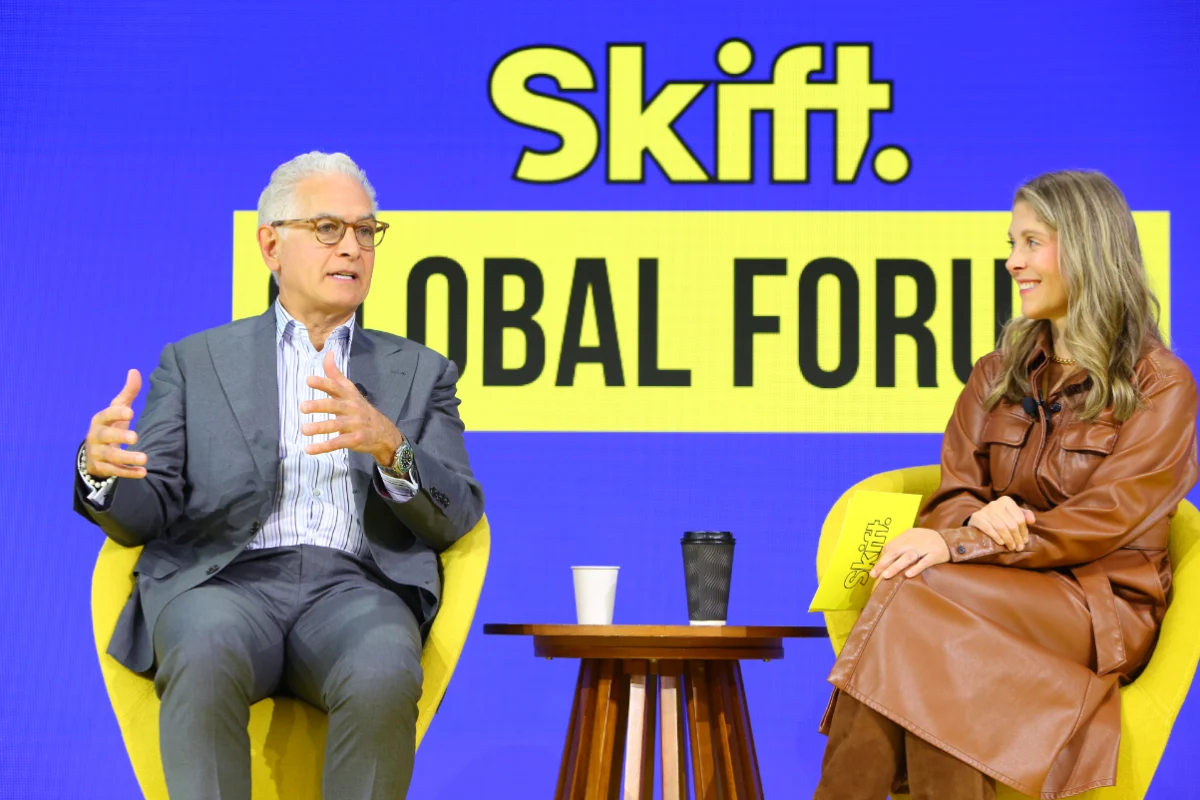
At the 2026 Skift Global Forum in New York City, the leaders of the world’s most prominent hotel conglomerates gathered to address this existential shift. While the speakers represented different brands, cultures, and strategic priorities, their consensus was striking: artificial intelligence, in its current iteration, is not a replacement for the hotel staffer, but rather a tool intended to elevate their capabilities.
The Consensus: AI as a Force Multiplier
The prevailing theme among the five hotel CEOs on stage was one of "augmented hospitality." Rather than positioning AI as a cost-cutting mechanism designed to erase human labor, these leaders articulated a vision where technology acts as a force multiplier for employees.
The strategy is clear: strip away the repetitive, low-value administrative tasks that currently bog down front-desk operations and back-office logistics, and redirect that saved time toward high-value guest interactions. By equipping staff with real-time, data-driven insights—such as knowing a guest’s history, specific preferences, or the precise nature of an ongoing issue before they even reach the lobby—hotels aim to make the service experience feel more personal, not less.
Chronology: The Evolution of Digital Hospitality
To understand the current debate, one must look at the progression of technology within the sector over the last decade:
- 2016–2019: The Mobile Revolution. The focus was on app-based check-ins and keyless room entry. The goal was purely functional: reducing friction.
- 2020–2023: The Pandemic Pivot. Touchless technology became a health mandate. Automation was adopted out of necessity to cope with severe labor shortages and social distancing protocols.
- 2024–2025: The Data Awakening. Companies began centralizing massive datasets, moving from disparate property management systems to unified global cloud platforms.
- 2026: The Generative AI Integration. The focus shifted from mere data collection to intelligent, generative response systems capable of predicting guest needs and streamlining complex workflows.
The Debate on Displacement: A Divergent Outlook
While the CEOs agreed on the potential of AI, they were starkly divided on the implications for the workforce. The tension lies in the fine line between "efficiency" and "displacement."
The Hilton Stance: The Immutable Front Desk
Hilton CEO Chris Nassetta offered the most traditionalist perspective, emphasizing that the hospitality industry is, fundamentally, a human-centric enterprise. During the forum, Nassetta was emphatic that the front desk is not a relic of the past, even at limited-service properties like Hampton.
"You’re never taking all the people out," Nassetta argued. "In the end, we’re a business of people serving people." His vision for the future Hampton staff is one of increased agency. By utilizing AI, a staff member will be alerted to a guest’s specific problem—perhaps a maintenance issue or a room preference request—before the guest even vocalizes it. According to Nassetta, this doesn’t replace the employee; it transforms them into a "super-empowered" concierge capable of solving problems in seconds rather than hours.
The Divergent Views on Scaling
Other leaders on the panel, while perhaps not as vocal as Nassetta, hinted at a more aggressive stance on automation. The debate among the group centered on two core questions:
- To what degree can AI handle the "long tail" of guest requests? (e.g., room service, late check-outs, local recommendations).
- Does the guest actually want to talk to a human?
While some executives argued that Gen-Z and Millennial travelers prefer app-based interaction, others cautioned that the "premium" experience remains defined by a handshake, eye contact, and the empathy of a human professional.
Supporting Data: The Efficiency Gap
Current internal data from major hospitality firms suggests that AI integration has already yielded significant productivity gains. According to industry reports presented during the forum, the pilot programs for AI-assisted property management systems have:
- Reduced Check-in Times: By an average of 40% through pre-arrival data synchronization.
- Optimized Housekeeping Schedules: AI-driven predictive analytics have reduced room turnover times by 15% by anticipating departures and scheduling cleaning crews more dynamically.
- Increased Ancillary Revenue: AI-driven personalized offers for room upgrades or local dining experiences have shown a 12% higher conversion rate compared to static email marketing.
However, these gains come with significant overhead costs related to cybersecurity, data privacy training, and the necessity of upskilling a workforce that is, in many cases, not technologically fluent.
Official Responses and Strategic Pillars
The CEOs articulated three pillars of their AI strategy moving forward:
1. Data Sovereignty and Privacy
Every executive emphasized that the greatest challenge to AI adoption is not the technology itself, but the ethical handling of guest data. The "Hyatt model," as hinted at by Mark Hoplamazian, involves building a "trust-first" ecosystem where AI is used to deepen the relationship between the brand and the loyalty member, rather than simply mining data for ad-targeting.
2. The "Human-in-the-Loop" Mandate
There was a collective agreement that no critical guest experience—such as conflict resolution or safety incidents—should ever be fully automated. The "Human-in-the-loop" philosophy dictates that AI serves as a recommendation engine, but the final decision and the emotional labor of the interaction remain the responsibility of the staff.
3. Omnichannel Presence
A point of contention remains: Should hotel AI be "everywhere"? Some executives argued that hotels must be integrated into the ecosystems where travelers shop (e.g., AI travel agents, search engines, and booking platforms). Others argued that hotels must maintain their own proprietary interfaces to protect the integrity of the guest experience and avoid becoming commoditized by third-party AI intermediaries.
Implications for the Future of Hospitality
The implications of the 2026 Skift Global Forum are profound for both the industry and the consumer.
For the Hotel Employee
The career trajectory for hotel staff is changing. Entry-level roles will likely require more technical literacy. The "front desk agent" of 2030 will look more like an "experience manager," someone who monitors digital dashboards while managing complex interpersonal guest relations. Unions and labor advocates will likely monitor this shift closely, as the definition of "essential labor" in a hotel environment continues to evolve.
For the Traveler
Travelers should expect a more seamless, yet potentially more "watched" experience. The benefit is obvious: your room will be the right temperature, your dietary preferences will be known, and your requests will be met with lightning speed. The cost is a heightened reliance on data tracking. The challenge for hoteliers will be to ensure that this data-driven service feels "magical" rather than "creepy."
For the Industry Structure
The divide between luxury and budget segments will likely widen. Luxury hotels will use AI to hide the technology, creating a "frictionless human experience," while budget hotels will use AI to replace human labor entirely, creating a "frictionless digital experience." The middle market faces the most difficult challenge: attempting to maintain human service levels while simultaneously cutting costs through automation.
Conclusion: The New Social Contract
The dialogue in New York underscored a new social contract between hotel brands, their employees, and their guests. The "Human-first" approach championed by leaders like Chris Nassetta serves as a necessary anchor in a sea of technological disruption.
As we look toward the latter half of the decade, the winners in the hospitality space will not necessarily be the companies with the most advanced AI models. Rather, they will be the companies that successfully navigate the "human-tech paradox"—using the infinite reach of artificial intelligence to cultivate the finite, precious resource of human empathy.
Ultimately, the consensus remains clear: technology can book the room, adjust the thermostat, and process the payment. But it cannot offer a warm welcome. That, for the foreseeable future, remains the exclusive domain of the hotel staffer—now, hopefully, with a bit more help from the machines behind the scenes.
 Nana
 Lina Hope
 Laily UPN
