

There is a quiet, persistent, and entirely invisible crisis unfolding in every outdoor retail space across the globe. It is a problem of sheer excess, hidden behind the most ubiquitous shade in the industry: black.
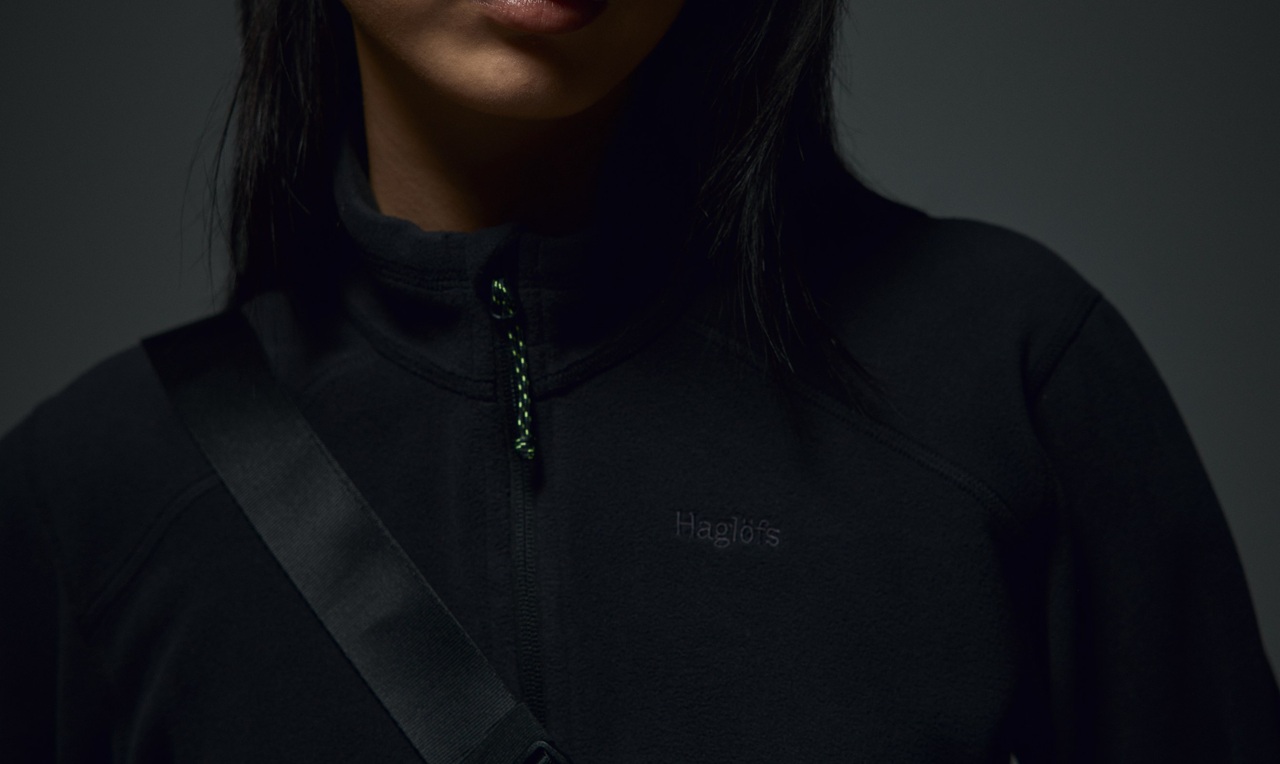
Walk into any high-end gear shop, and you are greeted by a sea of black fleece. To the casual observer, it is a uniform aesthetic—a staple of the outdoor wardrobe. But place those garments side-by-side under the scrutiny of a neutral light, and the illusion of uniformity shatters. You will find that these blacks are not the same. They are subtly distinct, the result of thousands of independent, overlapping, and largely redundant manufacturing processes.
This reality has sparked a quiet revolution within the halls of Haglöfs and Polartec. Together, they have introduced Standard Issue Black™—a radical, industry-wide proposal to consolidate dye processes, reduce environmental impact, and challenge the institutional inertia that has long defined textile manufacturing.
Main Facts: The Anatomy of a Redundant Process
The problem with black in the outdoor industry is not one of design; it is one of industrial logistics. When brands source polyester fleece, they typically commission custom dye batches. Every brand, in pursuit of its own specific “house black,” initiates a separate production cycle.
Each of these cycles requires:
- Unique Recipe Development: A bespoke chemical formula to hit a specific shade of black.
- Quality Approval Processes: Independent testing to ensure the color meets proprietary brand standards.
- Minimum Order Quantities (MOQs): Dye houses operate on volume. Small, bespoke runs lead to massive inefficiencies in water and energy usage.
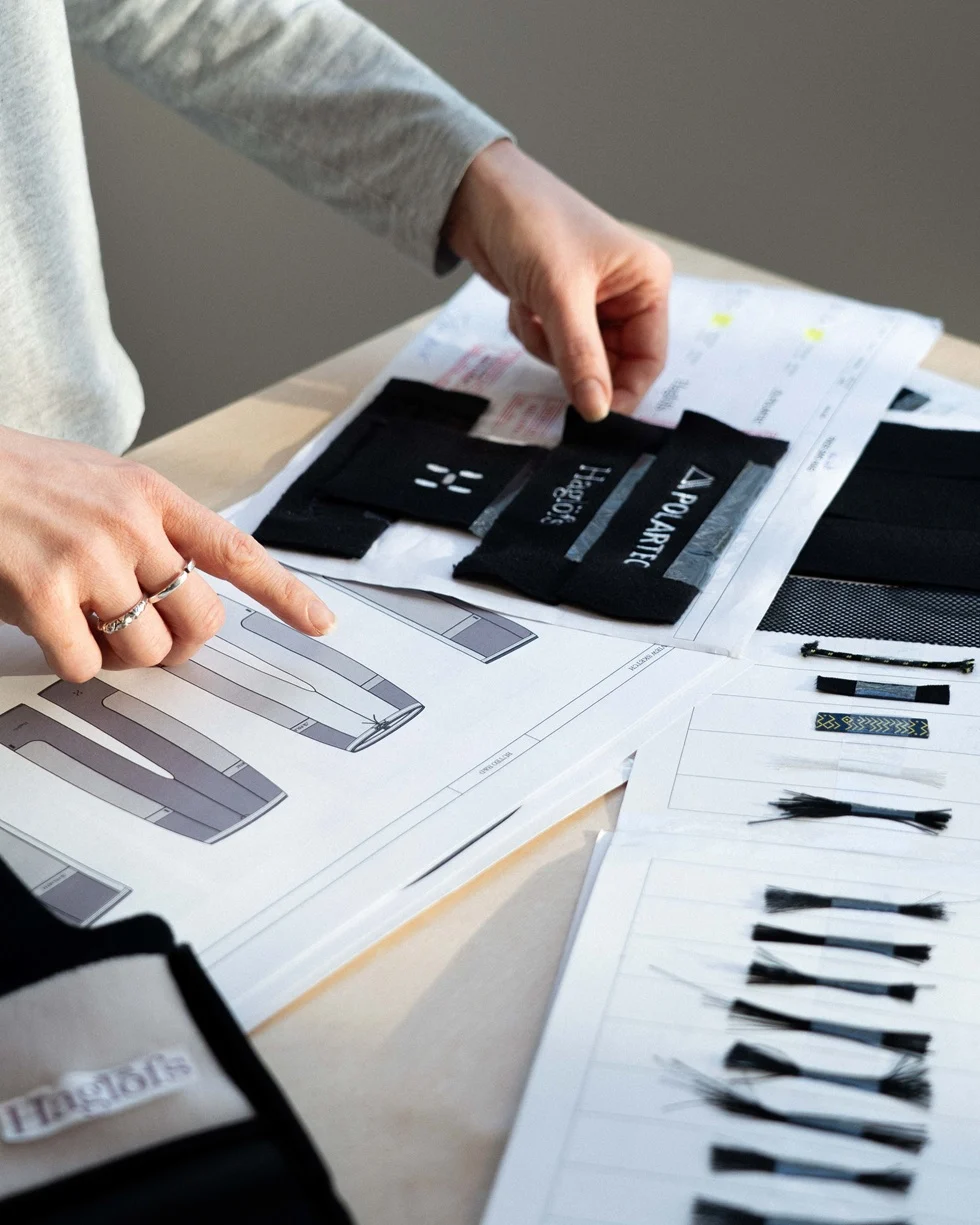
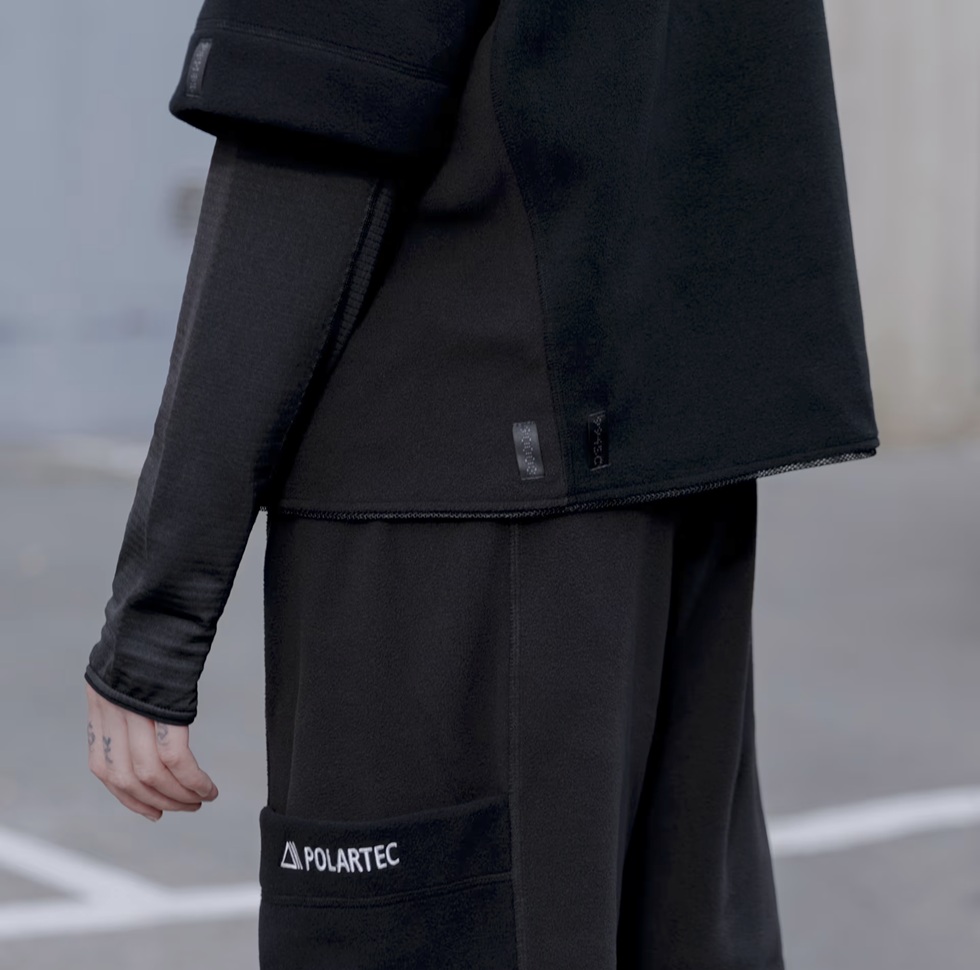
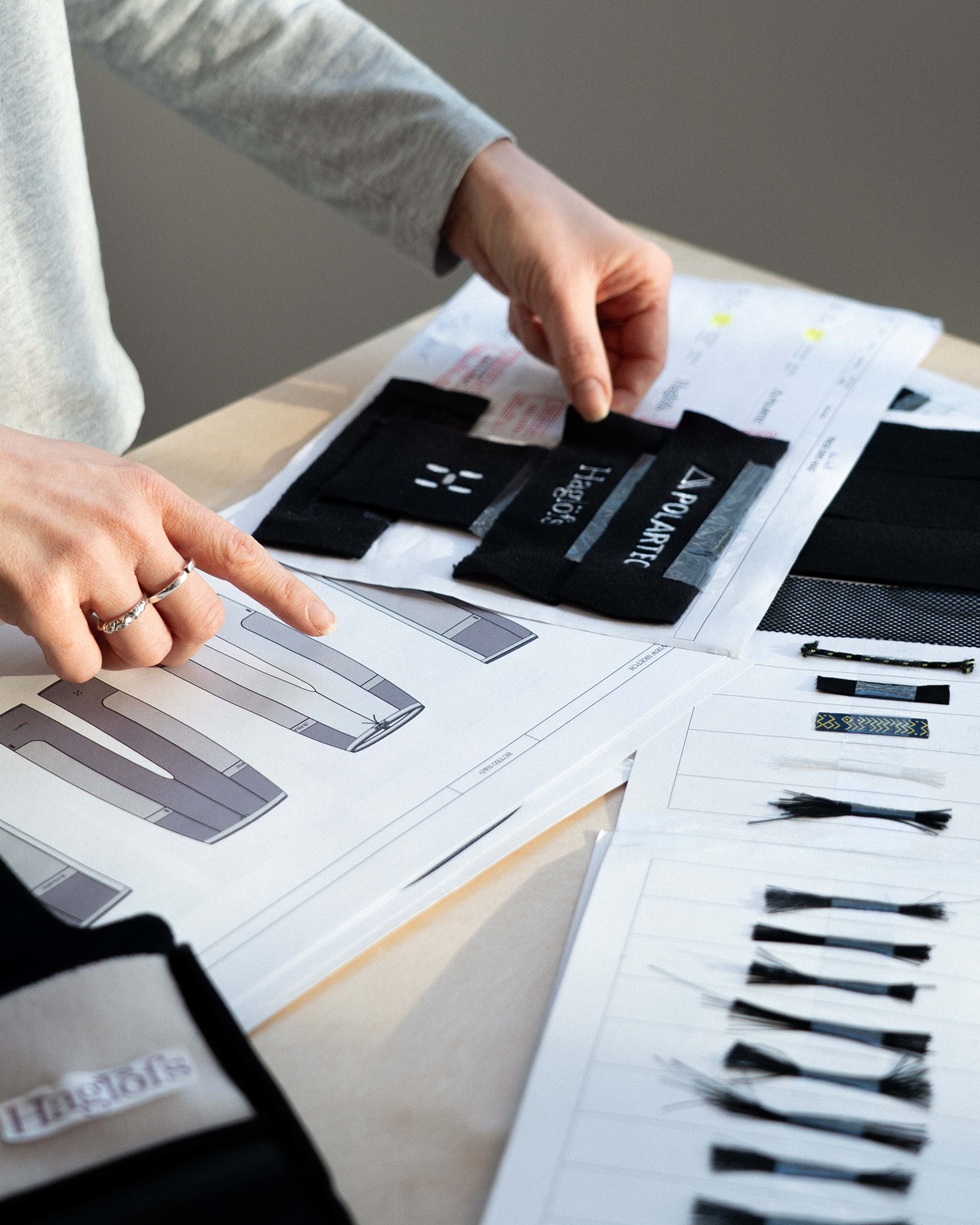
The result is a fractured supply chain where hundreds of brands consume vast amounts of natural resources to produce colors that are, for all practical purposes, identical. Haglöfs’ "Black Capsule" project served as the proof of concept for this dysfunction, utilizing mismatched panels of leftover black fleece from various dye lots to create a patchwork garment. Each panel was labeled with its batch number, physically demonstrating that what we perceive as one color is actually a chaotic mosaic of hundreds of different industrial runs.
A Chronology of the Standard Issue Black™ Initiative
The journey toward a unified black standard is one of collaboration and slow, deliberate engineering.
- Pre-2025: The Status Quo. The outdoor industry continues to operate in silos, with brands prioritizing the “customization” of black shades, leading to massive, uncounted environmental costs.
- Early 2026: The Black Capsule Concept. Haglöfs begins investigating the environmental footprint of its supply chain. They realize that by using leftover fleece from different batches, they are highlighting a systemic failure. The "Black Capsule" collection—including a Project Tee, Beanie, Scarf, and Pant—launches as an art-meets-activism project to expose the reality of dye-batch waste.
- Mid-2026: The Partnership. Haglöfs and Polartec begin the technical work of aligning on a "universal" black. The goal is to create a shade that is high-quality, durable, and universally applicable, stripping away the need for individual proprietary formulas.
- Late 2026: The Launch of Standard Issue Black™. The industry-standardized color is finalized and made available to any brand wishing to adopt it.
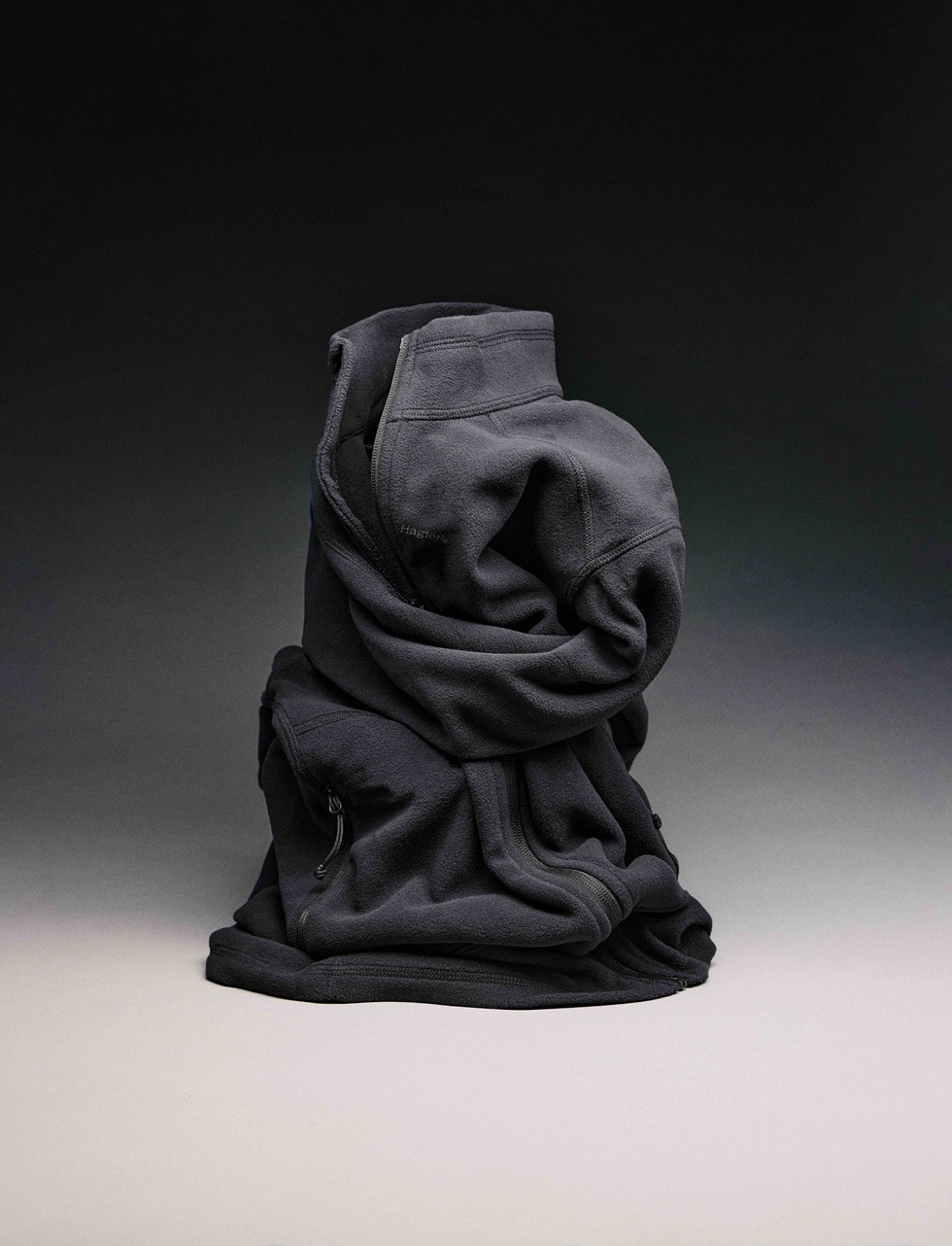
- FW26 Season: Implementation begins. The Buteo Mid II Jacket hits the market, marking the first time a high-volume commercial product is produced using the new standardized black.
Supporting Data: The Environmental Arithmetic
To understand why this shift is necessary, one must look at the science of dyeing synthetic fibers. Unlike cotton or wool, which have a natural affinity for dyes, polyester is hydrophobic. Dyeing it requires disperse dyes, high-pressure vessels, and temperatures exceeding 130°C.
The Energy and Water Cost
The textile industry is responsible for roughly 20% of global industrial water pollution, with dyeing and finishing as the primary culprits. A single kilogram of dyed polyester requires between 30 and 150 liters of water. Black is the most demanding shade in the palette; it requires multiple layers of dye molecules, longer fixation cycles, and significantly more heat.
Haglöfs’ internal assessment of the Standard Issue Black™ transition highlights staggering potential for improvement:
- Water Reduction: Over 50% decrease in water usage compared to traditional, fragmented piece-dyeing methods.
- Energy Efficiency: At least 20% reduction in energy consumption.
While these figures are company-supplied, the underlying logic of industrial batch consolidation is a well-established principle of chemical engineering. By shifting from many small, inefficient runs to one massive, optimized process, the environmental "bill" of the garment is slashed without sacrificing quality.
Official Responses: Shifting the Paradigm
Eva Weiss, Head of Design and R&D at Haglöfs, has been the public face of the project, framing the initiative not as a restriction on creativity, but as a liberation of resources.
“Standardization doesn’t have to limit creativity,” Weiss stated during the project’s launch. “With the right framework, it gives us the freedom to work together in the same creative direction and make a bigger impact. Having one defined black simplifies the design process, and brands could still differentiate themselves through other colors, cuts, and design elements.”
The argument is compellingly supported by the history of the industry itself. Decades ago, the outdoor sector standardized the use of YKK zippers. No one today argues that the industry’s reliance on a single, high-quality zipper manufacturer has stifled creativity. Instead, it allowed designers to focus their energy on architecture, fabric performance, and fit. Standard Issue Black™ aims to do the same for color: turn a functional requirement into a non-issue, allowing innovation to happen where it truly matters.
Implications: The Road Ahead
The success of Standard Issue Black™ hinges on a simple, yet daunting question: Can the outdoor industry overcome institutional inertia?
The "Green Premium" Trap
Historically, many sustainability initiatives have failed because they imposed a "green premium"—a higher cost that consumers were unwilling to pay. Standard Issue Black™ avoids this entirely. Because it relies on economies of scale, it is, at worst, cost-neutral, and at best, an efficiency gain for the manufacturer.
The Challenge of Collective Action
The real hurdle is the "machine" of the industry. Brands are accustomed to controlling every aspect of their supply chain. Even when a solution is logically superior, the friction of changing established workflows is significant. We have seen this with other initiatives, such as the push for ZeroPCF or ePE membranes. The industry is slow to move, often preferring the comfort of the status quo over the discomfort of systemic change.
The Power of Volume
The Buteo Mid II Jacket is the test case. By choosing a high-volume, bestselling style rather than a limited-edition piece, Haglöfs is making a statement: this is not just a marketing stunt; it is an industrial necessity.
If Standard Issue Black™ gains traction, the ripple effects could be profound. It creates a blueprint for other areas of the apparel industry—standardizing thread, hardware, or even raw fiber types—to further reduce the environmental footprint of mass-produced goods.
Ultimately, Standard Issue Black™ is a test of whether the outdoor industry is capable of maturing. It is an acknowledgment that while competition is the engine of the market, there are certain baseline realities—our water, our energy, our climate—that require us to stop competing and start collaborating. The question is no longer whether we can fix the dye problem; it is whether we are brave enough to accept the simple, elegant, and standard solution that is already in front of us.
 Nana Muazin
  Suro Senen
  Evan Lee Salim