

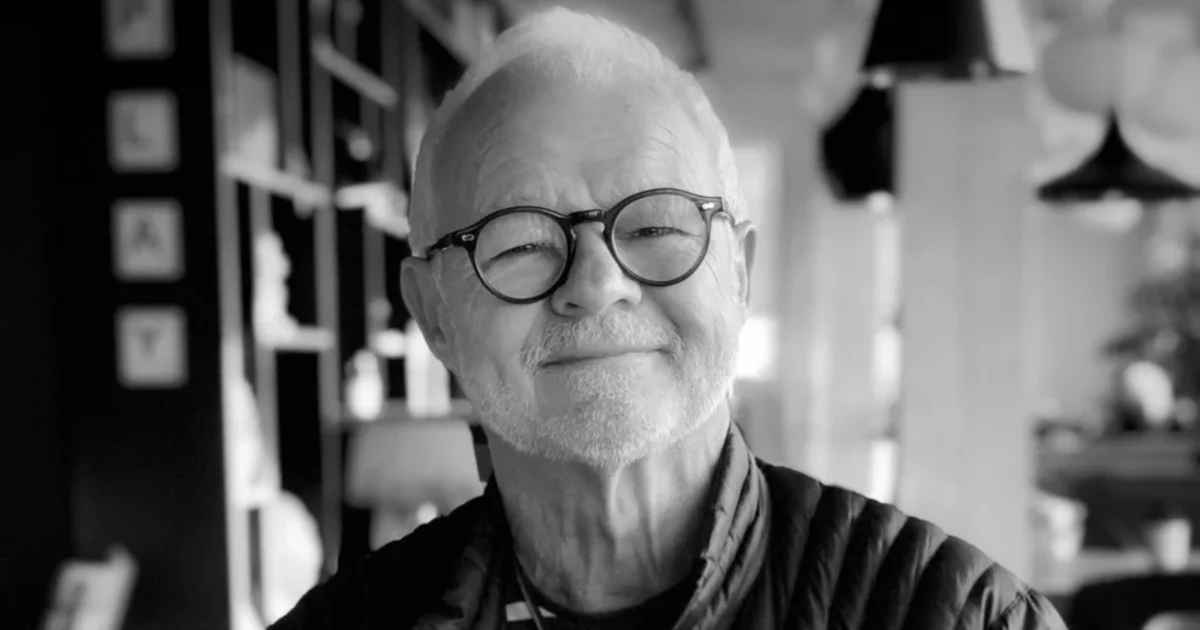
AMSTERDAM — Rodney Charters, the visionary director of photography whose breathless, dynamic camerawork helped define the frantic real-time aesthetic of the groundbreaking television thriller 24, has died. He was 80 years old.
The American Society of Cinematographers (ASC) announced that Charters passed away suddenly on September 13 in Amsterdam. A towering figure in modern television production, Charters is best remembered for shooting nearly every episode of the first eight seasons of Fox’s hit series 24, earning two Primetime Emmy nominations along the way for his contributions to the medium.
Born in New Zealand, Charters cultivated a visual philosophy that bridged classic photographic traditions with a frantic, adrenaline-fueled style of modern television. His sudden passing has drawn tributes from across the entertainment industry, with colleagues and admirers remembering him not just as a master of his craft, but as an innovator who fundamentally altered how action and tension are captured on the small screen.
Main Facts
Rodney Charters’s legacy is inextricably linked to 24, the critically acclaimed Fox drama starring Kiefer Sutherland as counter-terrorism agent Jack Bauer. Over the course of the series, Charters served as the principal director of photography, lensing 184 episodes between 2001 and 2010. This accounted for all but eight episodes of the show’s first eight seasons.
In addition to his staggering episode count as a cinematographer, Charters also shot the 2008 television movie 24: Redemption and stepped behind the camera to direct three of the episodes he did not shoot. His distinctive visual blueprint—characterized by rapid-fire zooms, aggressive handheld movements, and whip pans—helped anchor the show’s high-stakes narrative gimmick: each 24-episode season unfolded in real time, driven by a persistent, on-screen ticking clock.
Beyond 24, Charters enjoyed a prolific career that spanned decades and genres. He served as director of photography for 57 episodes of NBC’s The Pretender and lensed episodes of the science-fiction series Roswell. Following his tenure on 24, Charters lent his visual expertise to the first three seasons of Showtime’s hit dramedy Shameless from 2011 to 2013, cementing his reputation as one of the most versatile and reliable cinematographers in television history.
Chronology: A Life Immersed in Image-Making
Roots in the Darkroom
Charters’s journey into the cinematic arts began long before he ever set foot on a Hollywood soundstage. Raised in New Zealand, he was introduced to visual storytelling through his father, a portrait photographer and filmmaker. Charters frequently described his childhood as being "raised in the darkroom," absorbing the chemical and technical foundations of photography from an early age. This upbringing instilled in him an intuitive understanding of light, shadow, and exposure that would later inform his professional career.
Breaking Into American Television
After honing his skills internationally, Charters transitioned into American television production during the late 1990s. His early breakthrough came with NBC’s The Pretender, where he shot 57 episodes between 1997 and 2000. This multi-year run established his reputation for handling complex, fast-paced episodic television under tight production schedules. Shortly after, he contributed to the second season of the sci-fi drama Roswell, further expanding his portfolio into genre storytelling.
The 24 Phenomenon (2001–2010)
The defining chapter of Charters’s career began in 2001 when he joined the production team of 24. Created by Joel Surnow and Robert Cochran, the series presented an unprecedented logistical and creative challenge: simulating a continuous, 24-hour day in real time.
Charters embraced the challenge, developing what the American Society of Cinematographers termed an "aggressive camera style." Instead of relying on traditional, static multi-camera setups, Charters and his crew utilized dynamic movement to mirror the panic and urgency of Jack Bauer’s missions. His work on the show earned him consecutive Primetime Emmy nominations for Outstanding Cinematography for a Single-Camera Series in 2005 and 2006.
Post-24 and Later Years
Even after the conclusion of 24’s original run, Charters showed no signs of slowing down. He transitioned seamlessly into cable television, shooting the gritty, chaotic family dynamics of Showtime’s Shameless from 2011 to 2013. His ability to adapt his visual style to fit the raw, unpolished aesthetic of South Side Chicago proved that his artistic vision was not tethered to a single genre. Charters remained active within the cinematography community, eventually retiring and passing away in Amsterdam at the age of 80.
Supporting Data and Production Methodology
To understand Charters’s impact on 24, one must examine the revolutionary way he approached blocking, lighting, and camera placement. In a February 2004 interview with American Cinematographer magazine—archived by the ASC—Charters detailed the unique methodology he and the directors employed to keep the show feeling organic and spontaneous.
"We’ve evolved to the point where we always shoot a scene in its entirety — it’s never broken into setups," Charters explained. "We shoot two directions on every scene. We shoot one direction first, after it’s been blocked and staged by the cast privately, without even me present, which is a little uncommon in television."
This method required immense trust between the actors, directors, and the camera crew. By allowing the actors to rehearse independently, the production captured authentic blocking and spontaneous movements. Once the cameras rolled, Charters’s team had to be ready to capture the action from every angle without pausing to reset lights or reposition equipment continuously.
Charters also credited executive producer and director Stephen Hopkins with pushing him to think outside the traditional cinematic box. "When we’re brought in, we have an understanding of what the scene is, but sometimes there are pleasant surprises," Charters recalled. "[Stephen] was a great one for saying, ‘Look at the scene and imagine where the camera would never be, and that’s where I want it.’"
This philosophy resulted in signature techniques that would become staples of the action-thriller genre:
- Snap Zooms and Whip Pans: Used strategically to heighten sudden realizations, environmental threats, or shifts in character focus.
- Handheld Mobility: Keeping the camera in constant, subtle motion to simulate the jittery anxiety of high-stress counter-terrorism operations.
- Naturalistic, Mixed Lighting: Embracing the harsh fluorescents of CTU (Counter Terrorist Unit) offices or the dim, shadowy corners of safehouses, adding gritty realism to every frame.
Official Responses and Industry Tributes
Following the announcement of his passing, the American Society of Cinematographers and numerous industry professionals shared heartfelt tributes honoring Charters’s life and artistic contributions.
The ASC released a formal statement commemorating his membership, his technical prowess, and his warm demeanor on set. Colleagues from the 24 production team, including directors, producers, and actors, took to social media to express their grief and admiration.
"Rodney wasn’t just a brilliant cinematographer; he was the heartbeat of our visual storytelling on 24," said a former production colleague. "He walked onto set every day with boundless energy, a brilliant eye, and a complete disregard for where a camera ‘should’ be. He made every single actor and director look better."
Fans of 24 have also flooded online film and television forums, sharing clips of iconic sequences—such as frantic foot chases through Los Angeles streets or tense interrogations inside CTU—that were brought to life by Charters’s restless lens.
Implications: The Enduring Legacy of an Aesthetic Pioneer
Rodney Charters’s passing marks the end of an era for network television production, but his technical and artistic innovations continue to reverberate through the industry.
When 24 premiered in 2001, television was still largely transitioning from traditional theatrical-style setups to more modern, fluid formats. Charters’s work on the series proved that high-end dramatic television could sustain the kinetic, cinematic energy of a feature-length action film week after week, episode after episode. The split-screen editing technique, rapid pacing, and aggressive handheld camera movements popularized by 24 and championed by Charters directly influenced a generation of action dramas that followed.
Furthermore, his collaborative approach—empowering actors to block scenes organically and daring camera operators to find impossible angles—demonstrated a masterclass in set leadership. Charters proved that technical excellence does not require rigid, sterile environments; rather, the best cinematography often emerges from chaos, trust, and a willingness to embrace the unexpected.
As the film and television community mourns the loss of Rodney Charters, his work remains preserved in the archives of television history. Every time a modern action series utilizes a rapid whip pan, a tense handheld tracking shot, or a relentless real-time countdown, the DNA of Rodney Charters’s vision lives on.
 Nila Kartika Wati
  Nana
Nana  Sagoh
Sagoh 