

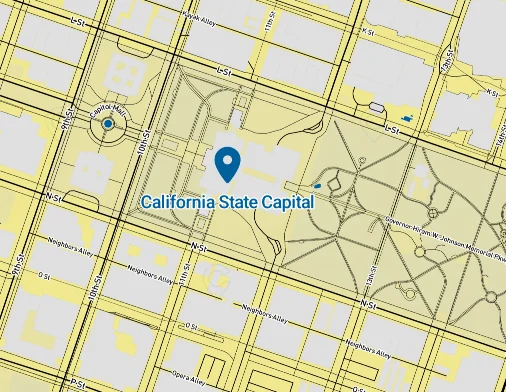
SACRAMENTO, CA – In the high-stakes world of travel technology, the adage "what happens in Vegas stays in Vegas" has been inverted by the reality of the digital age: what happens in Sacramento rarely stays in Sacramento. As the California Legislature concluded its 2026 session on August 31, industry leaders are turning their eyes toward the Governor’s desk, where a slate of transformative bills awaits either executive endorsement or veto by September 30.
For the travel technology sector—a sprawling ecosystem encompassing online travel agencies (OTAs), AI-driven customer service providers, and global distribution platforms—the 2026 session serves as a bellwether for the future of digital commerce. From the governance of generative AI to the tightening of data privacy mandates, the proposals moving through the California statehouse represent a significant shift in the regulatory climate, one that threatens to set a nationwide precedent.
The Legislative Landscape: A Chronology of the 2026 Session
The 2026 legislative cycle in California was marked by an aggressive push to address the societal impacts of rapid technological advancement. The session followed a predictable but high-pressure cadence, beginning with the introduction of hundreds of tech-related bills in the early months of the year, moving through intense committee hearings in the spring, and culminating in a frantic, high-stakes sprint toward the August 31 adjournment.
The Spring Scrutiny
During the early months of 2026, the focus was on the "AI Boom." As generative AI became a staple of customer interaction in the travel industry, lawmakers began drafting frameworks to ensure "human oversight." By May, these discussions had coalesced into specific legislative vehicles, most notably AB 1609. This bill became the primary target for advocacy groups concerned that rigid mandates would stifle the very innovation that makes modern travel booking efficient.
The Mid-Session Policy Pivot
As summer approached, the conversation shifted from AI to the bedrock of digital consumer protection: data privacy. Proposals such as SB 923 and AB 1542 sought to expand the definition of "sensitive personal information" and broaden the rights of consumers to demand the deletion of their digital footprints. For travel firms, which rely on the seamless sharing of PII (Personally Identifiable Information) across airlines, hotels, and rental car platforms, these bills represented an existential threat to operational efficiency.
The Final Sprint
August saw the final push. The California Legislature’s closing weeks were characterized by backroom negotiations, intense lobbying efforts by trade associations like the Travel Tech Association (Travel Tech), and the final drafting of bills that will now define the regulatory landscape for the foreseeable future.
Analyzing the Key Proposals: A Deep Dive
The complexity of these bills lies not just in their intent, but in their technical application. Travel Tech has been at the forefront of this analysis, deciphering how broadly written legislation could inadvertently ensnare travel companies.
AB 1609: The AI and Chatbot Mandate
At the heart of the current debate is AB 1609, which seeks to establish strict operational requirements for chatbots and AI-powered customer service interfaces. The bill would mandate that businesses provide an "easy-access" path for consumers to escalate interactions to human agents within a specified timeframe.
For travel tech companies, the operational cost of this mandate is substantial. Many platforms operate on a 24/7 global model where automated systems handle thousands of concurrent queries. A blanket requirement to force human intervention could disrupt the scalability of these platforms. Travel Tech, as part of a broad industry coalition, has vehemently opposed this measure, urging Governor Gavin Newsom to veto the bill on the grounds that it ignores the nuance of modern, AI-augmented customer support.
SB 923 & AB 1542: The Privacy Patchwork
The debate over data privacy in California has evolved from the initial CCPA (California Consumer Privacy Act) framework into a more granular, and often more restrictive, environment. SB 923 and AB 1542 aim to grant consumers greater control over the deletion of their data and stricter limitations on how that data can be processed.
Travel companies operate in a data-rich environment. To facilitate a simple flight booking, information must pass through multiple entities. If privacy laws become overly prescriptive, the friction introduced into the booking process could result in slower, less personalized, and more expensive travel services.
AB 2564: Surveillance Pricing and the Scope of Regulation
Perhaps the most significant victory for the travel industry this year came from the analysis of AB 2564, a bill aimed at curbing "surveillance pricing"—a practice where companies use personal data to dynamically adjust prices for individual users.
Initially, there was fear that the bill’s language was broad enough to encompass travel-specific pricing algorithms, which rely on historical data to manage inventory and demand. However, through rigorous legal and policy analysis, Travel Tech concluded that the bill’s operative provisions are narrowly focused on "tangible personal goods." This interpretation effectively excludes travel, providing a sigh of relief for airlines and travel platforms that rely on dynamic pricing to manage capacity.
The Role of Strategic Advocacy
In an era where public policy is increasingly synonymous with business strategy, the ability to "see around the corner" is a competitive advantage. Laura Chadwick, President & CEO of Travel Tech, emphasizes that advocacy is no longer just about reacting to legislation—it is about shaping the dialogue before the ink is dry on a bill.
"Public policy is increasingly shaping the business environment for travel technology companies," Chadwick noted. "Our job is to help members see around the corner—identifying emerging issues early, explaining what they mean for travel, and ensuring our members and the industry are represented when policymakers are making decisions."
This proactive approach is exemplified by the association’s State Policy Intelligence Brief (SPIB). This resource provides members with regular, high-level analysis of emerging state policy trends. By cutting through the legislative noise, Travel Tech empowers its members—from growth-stage startups to global enterprise leaders—to prepare for regulatory shifts long before they take effect.
Implications for the Future of Travel
The implications of California’s 2026 session extend far beyond the state’s borders. Historically, California has served as the "laboratory" for U.S. tech regulation. Laws passed in Sacramento often serve as the template for other states, and occasionally, for federal legislation.
1. The Fragmentation of Regulation
The primary risk for travel tech companies is the development of a "patchwork" of state-level requirements. If California mandates one type of chatbot protocol, while Texas or New York adopts another, the cost of compliance for a national platform could become prohibitive. This creates a significant barrier to entry for smaller, innovative firms, potentially consolidating the market into the hands of only the largest players who can afford massive legal and compliance teams.
2. AI Implementation Costs
The push to regulate AI in customer service is likely to accelerate. While companies are currently integrating AI to enhance speed and reduce costs, legislative mandates could force them to build "human-in-the-loop" systems that negate those gains. This will force a pivot in how companies market their AI capabilities, shifting the focus from "full automation" to "augmented assistance."
3. The Data Privacy Trade-off
As privacy laws tighten, the ability to provide hyper-personalized travel recommendations—such as suggesting a hotel based on past behavior or a destination based on travel preferences—may become more difficult. The challenge for the industry will be to balance consumer privacy rights with the desire for the seamless, customized experiences that modern travelers have come to expect.
Conclusion: Preparing for What Comes Next
As the September 30 deadline for Governor Newsom’s action approaches, the travel technology sector stands at a crossroads. The legislative developments of 2026 underscore a fundamental truth: technology is no longer a peripheral issue for lawmakers; it is a core component of the public interest.
For companies operating in this space, the lesson of the 2026 session is clear: passive compliance is a failed strategy. Success requires a deep, ongoing engagement with the policy process. Whether it is through trade associations like Travel Tech or internal government affairs departments, companies must be prepared to articulate the value of their innovations in a way that resonates with policymakers.
"Knowing what matters, understanding what it means for your business, and preparing for what comes next" is the mantra for the modern travel technology executive. As California continues to lead the way in tech regulation, the industry must ensure that its voice remains a vital part of the conversation, championing policies that support competition, innovation, and a robust, technology-enabled travel marketplace.
With the legislative session now in the rearview mirror, the focus shifts to implementation and the inevitable legal challenges that follow. For travel tech companies, the work has only just begun.
About the Travel Tech Association
The Travel Tech Association (Travel Tech) is the unified voice for the travel technology ecosystem. Travel Tech brings together enterprise leaders, growth-stage companies, and emerging innovators to advance public policies that support competition, innovation, and a strong technology-enabled travel marketplace. Through advocacy, regulatory intelligence, and cross-sector collaboration, Travel Tech helps shape the future of modern travel.
To schedule an interview with a Travel Tech spokesperson, contact Jessica Matthias at [email protected].
 Iffa Jayyana
  Neng Nana
  Evan Lee Salim