

By the Location Rebel Editorial Team
For contemporary freelance writers navigating a shifting digital landscape, the methods used to secure high-paying gigs have evolved dramatically. While traditional job boards and cold-pitching email campaigns once served as the primary bread and butter for independent creators, the industry’s center of gravity has shifted entirely. Today, one platform reigns supreme for inbound client acquisition: LinkedIn.
Far more than a digital resume repository, LinkedIn has matured into a robust business-to-business (B2B) ecosystem where decision-makers, marketing directors, and founders actively seek thought leadership, industry insights, and reliable creative partners. Yet, despite its immense potential, many writers approach the network haphazardly, posting sporadically or talking exclusively to peers rather than prospective buyers.
To help freelance writers cut through the noise, industry experts have synthesized the most effective, algorithm-friendly strategies. Dedicating just 20 to 30 minutes a day to a structured, deliberate LinkedIn routine can transform the platform from a frustrating time-sink into a consistent engine for high-value client leads.
Main Facts: The Shift Toward Inbound Lead Generation
The modern freelance economy demands a passive attraction model rather than an exclusively aggressive outbound chase. LinkedIn sits at the center of this paradigm shift.
Industry data and consensus among full-time freelancers indicate that the platform is currently the single most reliable source for high-quality, inbound writing contracts. This trend is driven by several core realities of the platform:
- Business-Focused Intent: Users log onto LinkedIn with a professional mindset. They are looking to solve business problems, optimize content strategies, and discover industry trends.
- Algorithmic Evolution: LinkedIn’s underlying code has shifted dramatically over the years. Outdated tactics—such as drop-shipping generic link posts or engaging in artificial engagement pods—are heavily penalized. Instead, the algorithm rewards relevance, dwell time, and content that fosters genuine discussion within specific niches.
- Authority Over Reach: The platform no longer prioritizes viral posts that appeal to everyone. It favors creators who consistently produce authoritative content tailored to a well-defined target audience.
For freelancers attempting to build a resilient, recession-proof business, mastering LinkedIn is no longer optional—it is a core operational requirement.
Chronology: The Evolution of Freelance Client Acquisition
To understand why LinkedIn commands such attention today, it is helpful to look at how freelance writing acquisition has evolved over the past decade and the steps required to transition to a modern workflow.
Phase 1: The Era of Job Boards and Cold Email (Early 2010s)
Ten years ago, aspiring freelancers relied heavily on content mills, Craigslist boards, and aggressive cold-email outreach. While these methods yielded high volume, they often resulted in a race to the bottom regarding pay rates. Writers spent hours every day pitching hundreds of cold prospects with low conversion rates.
Phase 2: The Rise of Personal Branding (Late 2010s)
As platforms matured, personal websites and blogs became crucial. Writers began building portfolios and leveraging Twitter (now X) to showcase their expertise. However, B2B decision-makers remained somewhat fragmented across various consumer-leaning networks.
Phase 3: The Consolidation of B2B Decision-Makers on LinkedIn (Present Day)
Over the last few years, corporate executives, marketing managers, and startup founders consolidated their professional networking on LinkedIn. Recognizing this shift, successful freelancers stopped treating the platform as a static digital CV and began treating it as a dynamic publishing and networking hub.
Today, a streamlined, weekly chronology for mastering this environment involves:

- Sunday (Strategy & Creation): Dedicate 30 minutes to mapping out the week’s content and building an idea backlog.
- Monday to Friday (The Daily Routine): Execute a micro-routine—such as the popular 3-2-1 method (3 connection requests, 2 thoughtful comments, and 1 targeted post)—to maintain steady visibility.
- Ongoing (Profile Optimization): Continually refine the profile to ensure it functions as a high-converting sales landing page rather than an employment history.
Supporting Data & Core Strategies
Transitioning a LinkedIn profile from a neglected account into a client-generating machine requires adherence to five foundational strategies backed by modern platform data.
1. Write to Potential Clients, Not Other Freelancers
A common trap for new freelancers is joining online writing communities on LinkedIn and networking exclusively with peers. While peer support is valuable for morale, it does not pay the bills.
- The Audit: Review your last 10 posts. If the majority offer advice on how to freelance, you are talking to the wrong audience.
- The Niche Shift: Identify three to five pain points that your ideal clients care about. For instance, a freelance medical writer should discuss regulatory compliance, clinical trial hurdles, or healthcare marketing challenges. A fintech writer might focus on cybersecurity, customer onboarding friction, or regulatory tech trends.
- The Goal: When a marketing director lands on your profile, they must immediately recognize that you understand their specific industry vocabulary and business objectives.
2. Overcome Posting Anxiety Through Sustainable Cadence
Conventional advice often dictates that creators must post daily to succeed. For busy freelancers balancing client work, this mandate triggers severe imposter syndrome and burnout, frequently resulting in zero activity.
- The Reality: Consistency beats frantic frequency. Posting one to two times a week consistently over several months yields vastly superior results compared to a flurry of daily posts followed by weeks of silence.
- The Execution: Block out 30 minutes every Sunday to draft and schedule your weekly posts using LinkedIn’s native scheduler. Focus on clean text-formatted posts with compelling hooks; expensive graphics and video production are entirely unnecessary to capture attention.
3. Prioritize Daily Engagement ("Walking the Marketing Dog")
Content creation is only half the battle. Actively engaging with prospective clients often accelerates inbound lead generation faster than publishing original posts.

- The Methodology: Implement B2B content strategist Sarah Greesonbach’s concept of "walking the marketing dog"—treating your marketing outreach as a daily, non-negotiable habit. Curate a list of 20 to 30 target prospects, including marketing directors, content managers, and founders at companies you want to work with.
- The 3-2-1 Method: Popularized by B2B expert Ed Gandia, this framework simplifies daily engagement into three steps: send 3 strategic connection requests, leave 2 thoughtful comments on prospect posts, and publish 1 post. Avoid lazy comments like "Great post!" Instead, add unique value, share a contrasting data point, or ask an insightful follow-up question.
4. Optimize Your Profile as a High-Converting Sales Page
Your LinkedIn profile should never read like a traditional chronological resume. Treat every section as a piece of real estate designed to convert casual visitors into paying clients.
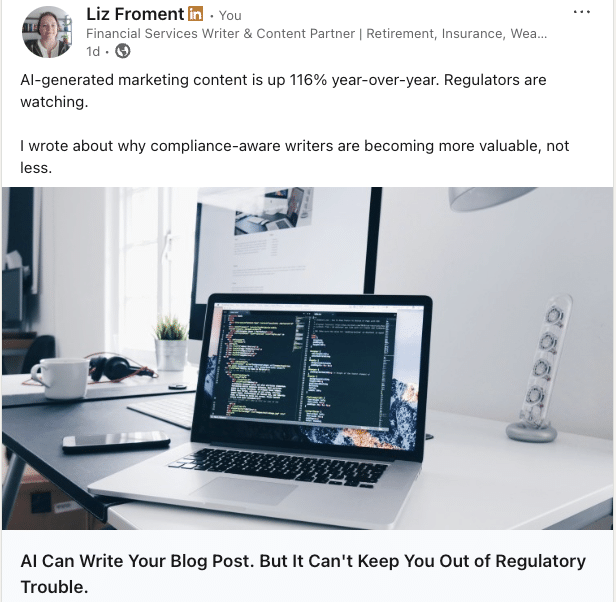
- The Headline: Ditch the generic "Freelance Writer" title. Instead, use a value-driven hook: "I write high-converting content for B2B SaaS companies" or "Financial Services Copywriter | Trusted by [Client A], [Client B], and [Client C]."
- The About Section: Write in the second person. Address the reader directly, highlight the specific business problems you solve, and conclude with a clear call to action and a link to your portfolio website.
- The Experience & Featured Sections: Pin your best 2 to 3 writing samples or case studies to the Featured section. In your Experience section, emphasize quantifiable metrics—for example, "Wrote 50+ authoritative articles covering AI banking integrations, driving a 30% increase in organic search traffic" rather than generic job descriptions.
5. Build an "Idea Brain" to Eliminate Writer’s Block
Never staring at a blank screen wondering what to post is the key to maintaining a low-stress content schedule.
- The Volume Habit: Set a daily reminder to jot down 10 rough ideas in a smartphone notes app or a physical notebook. Do not judge the quality of the ideas during this capture phase.
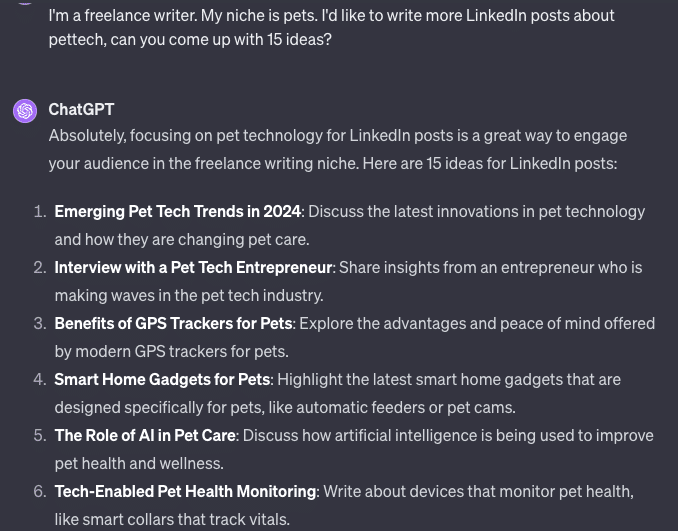
- The Curation Filter: At the end of the week, review your list of 70 ideas. You will typically find 5 to 10 gems worth expanding into full-length LinkedIn posts. If you ever hit a wall, leverage AI writing tools like ChatGPT to generate niche-specific brainstorming prompts, using artificial intelligence as a springboard rather than a replacement for your authentic voice.
Official Responses & Industry Insights
Leading voices in the freelance and content marketing spaces emphasize that LinkedIn’s dominance is reshaping how modern independent professionals build career stability.
Sean Ogle, founder of Location Rebel, notes that mastering foundational platforms is what separates hobbyist writers from full-time entrepreneurs:
"If you can spend 20 to 30 minutes a day on LinkedIn as a freelancer, it will pay off exponentially. Beyond acquiring top-tier clients, you build a resilient network of peers, leading to lucrative referrals and long-term income stability."
Industry veterans agree that the traditional cold-pitching era has been replaced by a relationship-driven inbound economy. When hiring managers or marketing executives have an urgent content need, they rarely search obscure job boards; instead, they turn to their LinkedIn feeds to find trusted voices who have consistently demonstrated authority in their specific niche.
Implications for the Future of Independent Writing
The strategic pivot toward LinkedIn as the primary hub for freelance acquisition carries profound implications for the writing industry at large.
- Rise of the Niche Expert: Generalist writers who produce generic content across wildly divergent topics will find it increasingly difficult to stand out. The LinkedIn algorithm and modern B2B buyers heavily reward hyper-specialized domain expertise.
- The Blurring of Marketing and Creation: Freelance writers can no longer simply deliver raw copy and disappear; they must understand personal branding, audience engagement, and content distribution principles to market themselves effectively.
- Enhanced Income Stability: By moving away from volatile job boards and toward an inbound thought-leadership model, freelancers can command higher per-project rates, establish long-term retainer agreements, and build sustainable businesses capable of weathering broader economic fluctuations.
For writers willing to invest 20 to 30 minutes a day into a deliberate, client-focused LinkedIn strategy, the path to building a thriving, independent writing career has never been clearer.
 Asep Darmawan
  Raul Delapena Setiawan
  Basiran