

By [Your Name/Journalist]
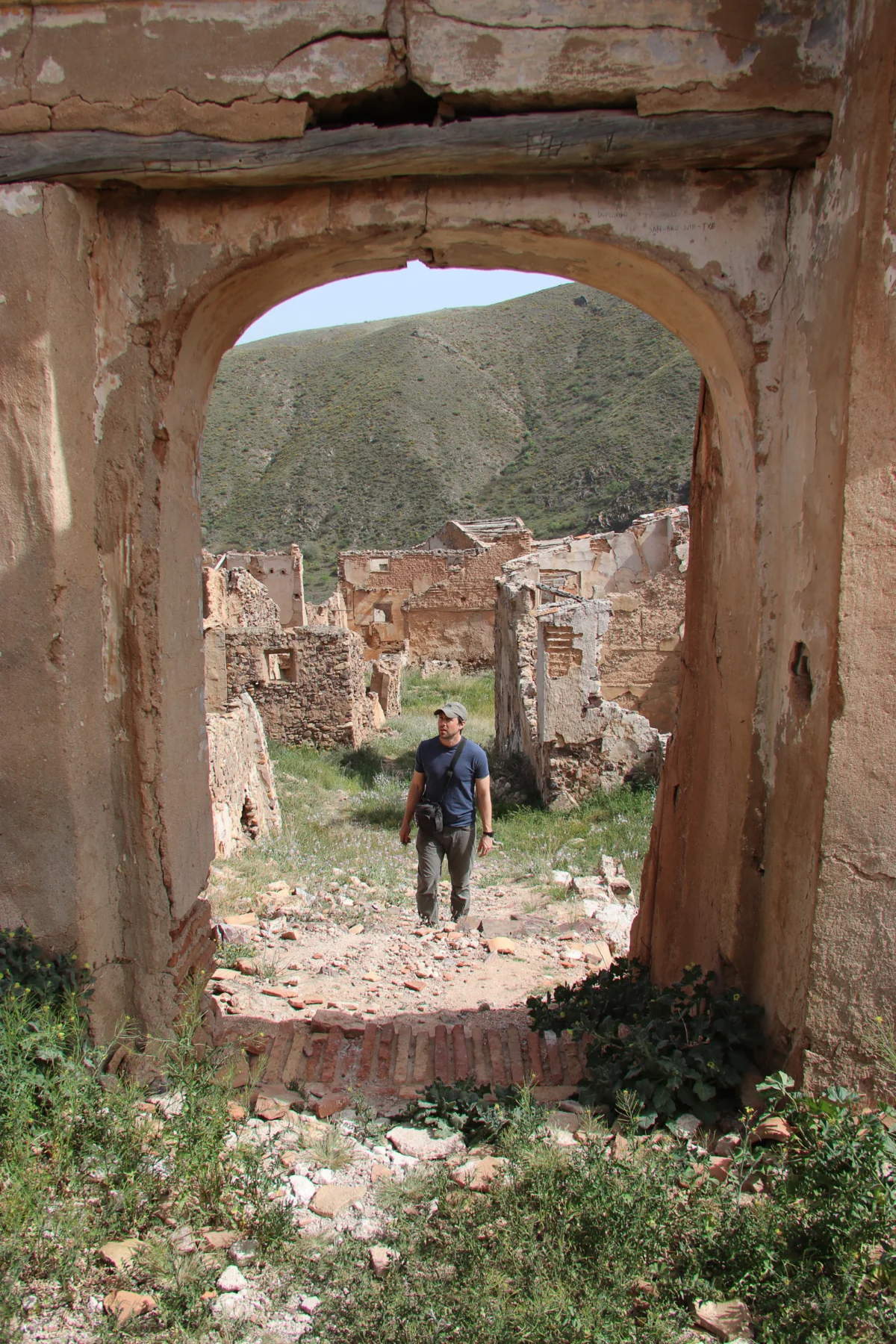
The first thing you notice in an abandoned Spanish village is not the silence, but the swallows. They swoop with a rhythmic, possessive energy, cutting through the stagnant air of empty plazas and darting through the skeletal frames of roofless stone cottages. They navigate broken windows and splintered front doors with the reckless precision of residents who have lived here for generations. To the observer, it is clear: they do not merely visit these ruins; they own them.
This is the reality of La España Vaciada—the "emptied Spain"—a phenomenon where the pulse of human life has receded from the rural interior, leaving behind a landscape in transition. From the rugged highlands of Teruel to the sun-scorched plains of Castile, nature is aggressively reclaiming the territory that humans once carved out with plow and stone.
The Geography of Abandonment: Main Facts
Across the interior of the Iberian Peninsula, more than 3,000 villages sit in varying states of decay. This is not a localized curiosity but a demographic hemorrhage. The exodus began in earnest during the mid-20th century, fueled by the rapid industrialization of urban centers like Madrid, Barcelona, and Valencia.
As the youth migrated toward the promise of stable wages and modern infrastructure, the rural agrarian economy collapsed. Today, these villages serve as haunting monuments to a lost way of life. The structures—built from local limestone and timber—are crumbling under the weight of time, while the surrounding land, once meticulously managed, is being swallowed by scrubland, oak, and the relentless return of wild biodiversity.
A Chronology of Decline
The trajectory of Spain’s rural decline can be broken down into three distinct phases:
- 1950–1975 (The Great Migration): Following the Spanish Civil War and the subsequent economic isolation, the regime’s industrialization policies incentivized mass migration to cities. Small-scale subsistence farming became unsustainable, and the "rural exodus" saw millions abandon their ancestral homes.
- 1975–2000 (The Aging Trap): With the younger generations firmly established in urban centers, the rural population became increasingly elderly. Services such as schools, post offices, and medical clinics shuttered one by one, creating a "death spiral" where the lack of infrastructure made staying impossible for the few remaining inhabitants.
- 2000–Present (The Wilding Era): In the current century, the focus has shifted. While some villages have been bought by foreign investors or "neo-rurals" seeking a back-to-the-land lifestyle, the vast majority have entered a state of ecological succession. The land is effectively being "rewilded," not by design, but by default.
Supporting Data: The Demographic Crisis
The numbers provided by the Spanish National Institute of Statistics (INE) paint a stark picture. Nearly 90% of Spain’s population is now concentrated on 30% of its land, primarily along the coast and in the capital. The interior, often referred to as "Serranía Celtibérica"—a region spanning parts of Aragon, Castile-La Mancha, and Castile and León—has a population density comparable to the most remote reaches of Scandinavia or the Scottish Highlands.
Some provinces in the interior have fewer than eight inhabitants per square kilometer, a threshold defined by the European Union as a "demographic desert." In these zones, the ratio of elderly citizens to children is among the highest in the world, ensuring that when the current generation passes, the remaining villages will be entirely devoid of human presence.
Official Responses: Can the Tide Be Turned?
The Spanish government has recognized the existential threat posed by La España Vaciada. In recent years, the Ministry for the Ecological Transition and the Demographic Challenge has launched several initiatives aimed at reversing the trend.
The "Digitalization" Strategy
One of the primary government responses has been the aggressive expansion of fiber-optic internet into the most remote corners of the country. The logic is simple: if the workforce can operate remotely, the "urban tether" is broken. By providing high-speed connectivity, the state hopes to attract "digital nomads" and younger families who might otherwise be priced out of major cities.
Financial Incentives and Tax Breaks
Regional governments have introduced "demographic tax breaks," offering significant reductions in income tax for those willing to relocate to municipalities with fewer than 5,000 inhabitants. In some regions, local authorities have even experimented with offering housing subsidies or small business grants to entrepreneurs willing to set up shop in ghost villages.
However, critics argue that these measures are "band-aids on a gunshot wound." Without the restoration of basic social services—hospitals, transit, and schools—the "lifestyle" appeal is insufficient to sustain long-term growth.
The Ecological Implications: A New Wild
Perhaps the most profound consequence of this mass departure is the ecological transformation of the landscape. When humans leave, the traditional management of the land—grazing by sheep and goats, controlled burning, and forest clearing—stops.
The Return of Apex Predators
As the land reverts to thicket and forest, the Iberian wolf and the griffon vulture have returned to areas where they had been absent for decades. The increase in biomass has provided a sanctuary for endangered species, including the Iberian lynx. In many ways, the "emptying" of the countryside is the largest unintentional rewilding project in European history.
The Fire Risk Paradox
Conversely, the unchecked growth of vegetation creates a significant wildfire risk. Without human intervention to clear underbrush or maintain firebreaks, these "abandoned" forests become powder kegs during the increasingly hot and dry Mediterranean summers. This creates a complex policy dilemma: should the state preserve the cultural heritage of the villages, or allow the land to return to a natural state, even if it carries the risk of massive wildfires?
Conclusion: Striding into the Future
Standing in the square of a village like Las Casillas de Bezas, the wind whistling through the empty window frames, one is struck by a sense of profound ambiguity. Is this the end of a civilization, or is it a new beginning?
The humans have retreated, but the land is breathing again. The swallows do not care for historical records or demographic statistics; they only care that the masonry holds their nests and that the sky remains clear. As Europe navigates the challenges of a shrinking rural population, the lesson from Spain is clear: nature is a persistent force.
When we abandon the land, we do not leave a void. We leave an opening. Whether we choose to re-occupy these spaces through technology and policy, or whether we accept the role of stewards to a newly wild continent, remains the defining question of the century. The village may be empty of people, but it is far from empty of life. It is a portal, looking back at our history and forward into a future where the boundary between the "human" and the "wild" is increasingly blurred.
 Raul Delapena Setiawan
  Pevita Pearce
  Siti Muinah