

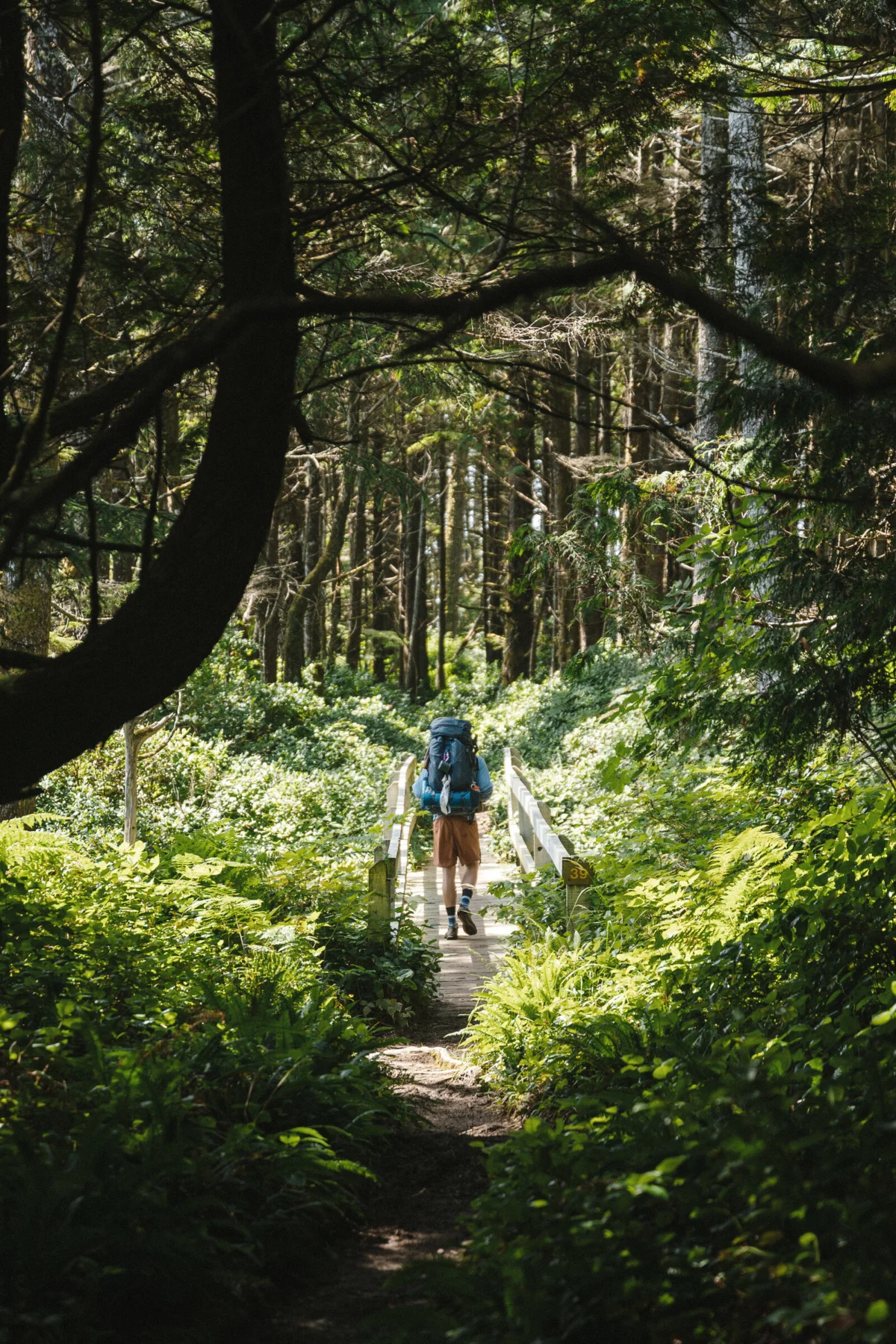
The fog clinging to the Gordon River in Port Renfrew, British Columbia, is more than a meteorological phenomenon; it is a curtain. As it shifts, it reveals glimpses of jagged peaks and the shadowed, ancient inlets that define the edge of Vancouver Island. For three brothers—Sam, Isaac, and myself—this mist represented the threshold of a journey that had long occupied our imaginations. We stood on the precipice of the West Coast Trail (WCT), a 47-mile (75-kilometer) gauntlet that serves as one of the most storied, demanding, and ecologically diverse backpacking routes in North America.
With sixty-pound packs straining our shoulders and a mixture of nervous adrenaline and profound anticipation, we were among a select group of hikers preparing to commit to eight days of isolation. Before us lay a route defined by its brutality: miles of deep, muddy forest, vertical ladder climbs, surging tidal shelves, and the relentless, raw power of the Pacific Ocean.
The Anatomy of an Expedition: A Chronological Account
Days 1-2: The Rite of Passage
The journey began with the mandatory safety briefing mandated by Parks Canada. It is a procedural ritual that strips away the romanticism of the trail, replacing it with the reality of search-and-rescue statistics, tide charts, and bear safety protocols. Our group, including six other hikers, was guided toward Butch’s Wharf.
Butch, a member of the Pacheedaht First Nation, oversees the first of two critical ferry crossings. His workshop, a cavernous space filled with the detritus of a lifetime—rusty tools, driftwood carvings, and mechanical oddities—served as our final connection to the "civilized" world. As we pushed off from the dock, the silence of the wilderness began to swallow the sounds of the marina. The first few miles were deceptive; the trail wound through lush, temperate rainforests, the ground a sponge of decaying needles and moss. However, the true nature of the WCT revealed itself quickly: the mud. It is not merely dirt; it is a viscous, grasping substance that dictates the pace of every traveler.
Days 3-5: The Tidal Frontier
As we transitioned from the inland forest to the coastline, the physical toll shifted. The WCT is not just a trail; it is a series of obstacles. We spent days navigating "surging" tide charts, timing our passage around headlands that would be impassable at high tide. The landscape here is unforgiving. We encountered the skeleton of the Valencia, a stark reminder of the "Graveyard of the Pacific." The history of this coast is written in shipwrecks, a somber backdrop that adds a weight of gravity to every step taken along the rocky shelves.
By day four, the fraternal dynamic began to shift. The "brotherly" banter that started the trip had been replaced by the quiet, synchronized movement of people who understand each other’s physical limits. Isaac, the navigator, kept a watchful eye on our progress against the tide, while Sam focused on the logistics of camp—firewood, water filtration, and the arduous task of setting up tents on uneven, damp terrain.
Days 6-8: The Vertical Ascent
The final stretch of the WCT is defined by its verticality. The trail is famous for its massive wooden ladder systems, installed to help hikers traverse deep ravines and cliffs. Scaling these ladders with sixty-pound packs is an exercise in pure willpower. By the time we reached the northern end of the trail near Pachena Bay, the exhaustion was absolute. Our bodies were battered, our gear was caked in layers of dried silt, and our mental reserves were nearly depleted. But as the Pacific opened up, revealing a horizon that seemed to stretch into eternity, the sense of accomplishment was transformative. We hadn’t just walked a trail; we had survived a landscape.
Supporting Data: The Logistics of the West Coast Trail
To understand the magnitude of the West Coast Trail, one must look at the data that governs it. Managed by Parks Canada as part of the Pacific Rim National Park Reserve, the WCT sees thousands of applicants annually, yet access is strictly controlled to preserve the fragile ecosystem.
- Distance: 75 kilometers (47 miles).
- Elevation Gain/Loss: Approximately 2,000 meters of cumulative elevation gain.
- Environmental Impact: The trail passes through a complex ecosystem of old-growth Sitka spruce, western hemlock, and red cedar. The soil composition is primarily muskeg and clay, leading to the infamous "WCT mud."
- The "Ladder" Statistics: There are over 70 individual ladders along the route, some reaching heights of over 30 feet.
- Weather Patterns: The area is part of the temperate rainforest, receiving upwards of 3,000mm of rain annually. Hikers must be prepared for extreme temperature fluctuations, even in the height of summer.
Official Perspectives: Parks Canada and Stewardship
Parks Canada’s management of the West Coast Trail is a delicate balancing act between public access and environmental protection. According to park officials, the trail is categorized as "difficult," and they maintain a rigorous screening process for all hikers.
"The West Coast Trail is not a recreational hike in the traditional sense," noted one Park Ranger during our briefing. "It is a wilderness expedition. The primary goal of our safety program is to ensure that hikers understand the inherent risks—not just of injury, but of being completely cut off from assistance for days at a time."
The Pacheedaht First Nation plays a vital role in this ecosystem, not only through their stewardship of the land but as the operators of the critical ferry crossings. Their involvement ensures that the trail remains a site of cultural significance rather than merely a playground for tourists. The partnership between the First Nation and Parks Canada is essential for the ongoing maintenance of the trail, which is constantly battered by winter storms and requiring significant annual repairs.
Implications: Why We Hike the Impossible
The prevalence of "adventure tourism" has led to a commodification of the outdoors, yet the West Coast Trail resists this trend. The physical difficulty of the route acts as a natural filter, ensuring that those who reach the finish line have earned their place there.
The Psychological Impact of Wilderness
The implications of an eight-day immersion in a place like the WCT are profound. In an era of constant connectivity, the trail forces a state of "forced presence." When you are navigating a slick, mud-covered root system or calculating the timing of a wave against a rock wall, there is no room for digital distraction. The brain is entirely occupied by the task of survival and movement.
For my brothers and me, this trip wasn’t just about ticking a box on a bucket list. It was about testing the bonds of our relationship against the friction of the trail. We discovered that shared hardship is a powerful catalyst for communication. When you are both exhausted, wet, and hungry, the trivial grievances of daily life vanish, leaving only the essential truths of the bond you share.
Conservation and the Future
As climate change impacts the Pacific Northwest, the stability of the West Coast Trail becomes a subject of concern. Increased rainfall patterns are leading to more frequent landslides and the degradation of the trail’s infrastructure. The long-term implication is that the trail may require more frequent closures or significant re-routing to protect the environment and the hikers themselves.
The trail serves as a vital indicator of the health of our temperate rainforests. As we walked through forests that have stood for centuries, it was impossible not to feel a sense of insignificance. We were mere transients passing through a landscape that operates on a timeline of centuries, not days.
Conclusion: The Horizon Reached
The final miles of the West Coast Trail are a blur of sea spray and relief. Looking back at the images of the journey, I am struck by how small we appear against the backdrop of the towering trees and the vast ocean. The West Coast Trail is not merely a path to be traversed; it is a mirror. It reflects our own limitations back at us and forces us to confront the reality of our own fragility.
Eight days on the trail, with two brothers, provided a perspective that no amount of urban comfort could replicate. We carried our lives on our backs, faced the raw indifference of the Pacific, and emerged on the other side with a renewed understanding of what it means to be human in the wild. The West Coast Trail remains, as it has always been, a masterpiece of natural design and a crucible for the soul. It is a journey that changes you, leaving the mud on your boots and the memory of the mist in your mind forever.
 Raul Delapena Setiawan
  Pevita Pearce
  Siti Muinah