

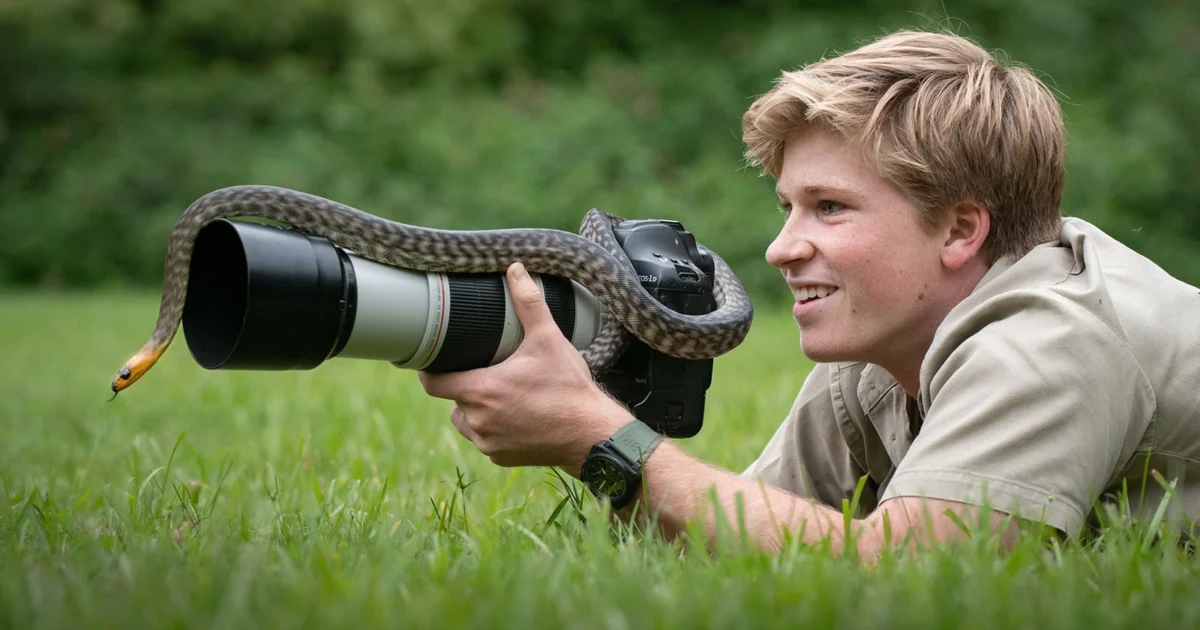
In an era defined by the rapid proliferation of generative artificial intelligence, the line between reality and digital fabrication has never been more blurred. For renowned conservationist, television presenter, and acclaimed wildlife photographer Robert Irwin, this shift represents more than just a technological milestone; it marks a critical juncture for the art of nature photography.
At 22, Irwin—the son of the legendary "Crocodile Hunter" Steve Irwin—has spent the better part of his life behind a camera, documenting the raw, unscripted majesty of the natural world. In a recent, wide-ranging interview with Parade, Irwin opened up about his lifelong commitment to photography, his burgeoning career as a television personality, and his uncompromising stance against the encroachment of AI in the field of wildlife documentation.
The Formative Power of Photography
While the public often associates the Irwin name with high-octane wildlife rescues and television charisma, Robert views his work as a photographer as his most profound personal achievement. For him, the camera is not merely a tool for capturing an image; it is an extension of his conservation philosophy.
"This has been a passion project of mine and ours for a very long time," Irwin noted during his interview. "A lot of people might not realize this, but there’s this part of my life that’s been really probably the most formative part of my life and really created the person I am today, which is photography."
Since PetaPixel last interviewed the young conservationist in 2023, his professional portfolio has expanded significantly. Having successfully navigated the spotlight of Dancing With the Stars and continued his duties at the Australia Zoo, Irwin has maintained his focus on the visual arts. He describes photography as the primary vehicle through which he communicates the urgency of environmental protection to a new generation.
Chronology: From Prodigy to Industry Leader
Robert Irwin’s journey with a camera began in his early childhood, serving as a quiet, observational counterpart to the loud, energetic advocacy of his father.
- Early Childhood (Age 10): Irwin begins taking photography seriously as an artistic endeavor, using the camera to interpret nature’s patterns and stories.
- Teenage Years: He hones his technical skills, transitioning from a hobbyist to a serious field photographer, focusing on macro shots and large mammals alike.
- 2023: A defining year where his status as a serious wildlife photographer is solidified through global media recognition and his collaboration with high-end photography outlets like PetaPixel.
- 2024–2025: Irwin shifts his focus toward advocacy within the creative industry, using his platform to warn against the dangers of AI, while simultaneously launching the 10th anniversary of the Crikey! Magazine Photography Competition.
- The Present: He continues to push for "authentic storytelling," emphasizing that real-world photography is a crucial component of modern environmentalism.
The AI Dilemma: Why Reality Matters
Irwin’s critique of generative AI is rooted in both ethics and environmental awareness. He argues that the convenience of AI tools threatens to devalue the labor, patience, and physical presence required to document the natural world.
"As with any advancement in technology, I think we sometimes forget about the environmental destruction that it can cause," Irwin observes. His concerns are two-fold: the massive carbon footprint required to train large-scale AI models, and the "dilution" of the human experience.
"With AI, I think not only does it take away from the artistry of photography, but it also dilutes what is impressive," he explains. "Because we’ve seen so many incredible things, we don’t realize that what is real—and that’s more amazing because it’s real, you know?"
Irwin points to the viral nature of AI-generated imagery—such as fabricated photos of impossible animal behaviors—as a primary culprit. He argues that when the public becomes accustomed to seeing "eagles riding elephants," the genuine, hard-won photographs of nature lose their impact. When we lose the ability to distinguish the real from the synthesized, we lose the emotional connection that drives conservation.
The Unfinished Bucket List: A Photographer’s Ambition
Despite his extensive travels and high-profile work, Irwin maintains the humble curiosity of a student. When asked if he has "seen it all," he is quick to clarify that the world is far too vast for anyone to claim mastery.
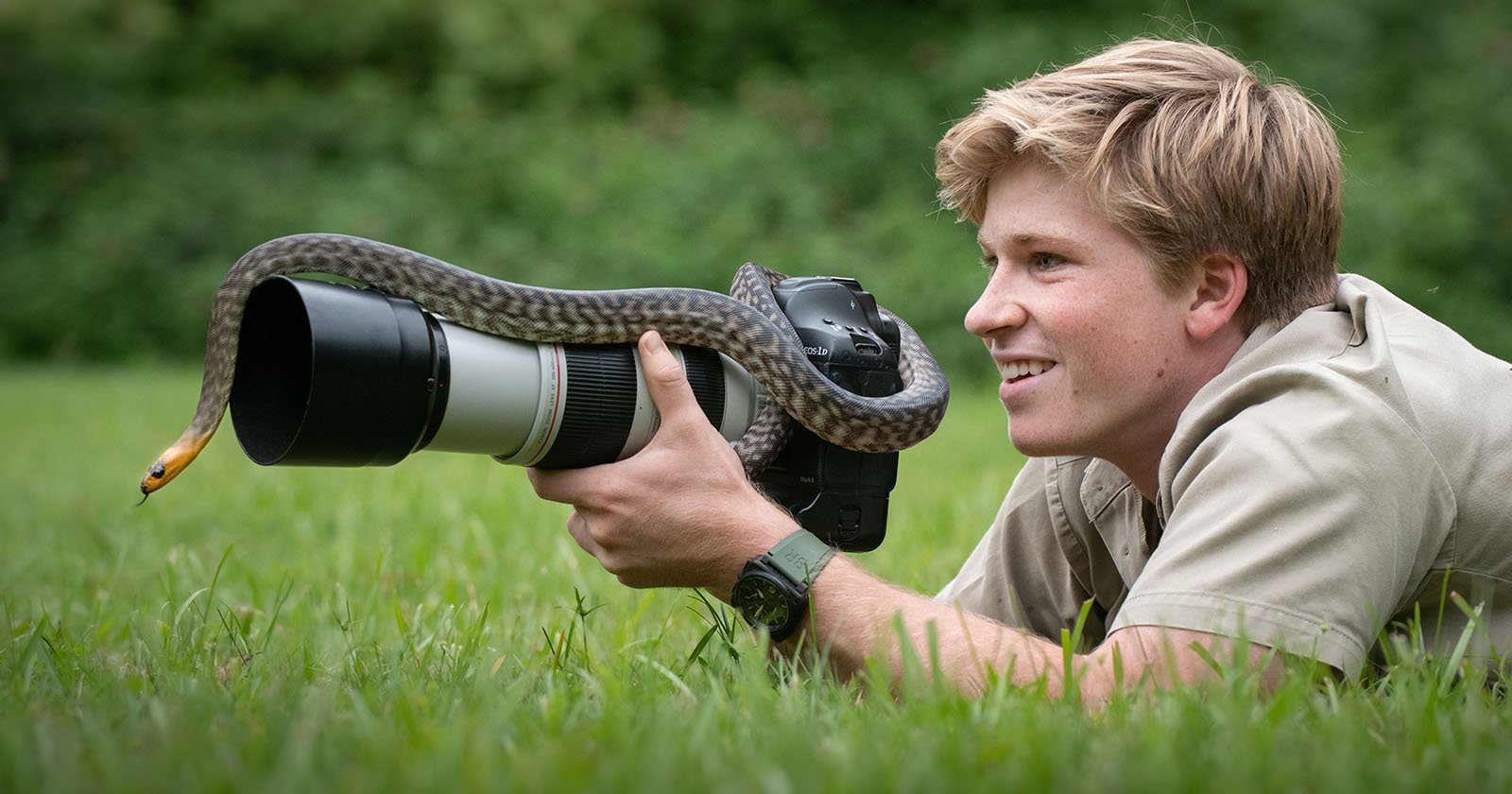
"Anyone who has a passion for wildlife will tell you they have a list that’s a mile long of what they want to see next," he says. His personal "to-do" list reads like a dream itinerary for any nature enthusiast:
- South America: A region he has yet to explore, with a specific focus on capturing sloths in their natural habitat.
- The Galapagos Islands: A site of immense biological significance that remains high on his priority list.
- Komodo Dragons: He expresses a long-held desire to photograph these apex predators in the wild.
- Snow Leopards & Polar Bears: These represent, in his view, the "pinnacle" of wildlife photography—a test of both patience and environmental adaptation.
"I think I would just squeal with excitement if I saw one of them," he says of his desire to track a polar bear, highlighting that even for a global icon, the magic of the natural world remains undiminished.
The Call for Authenticity: Crikey! Magazine Competition
As a counter-movement to the AI trend, Irwin is doubling down on the importance of human-led, authentic photography. Through his partnership with the Australia Zoo, he is championing the 10th anniversary of the Crikey! Magazine Photography Competition.
The competition serves as a global stage for photographers who value the "true and raw" state of nature. With entries open until August 31, 2026, the competition is strictly "AI-free."
"I’m looking for storytelling that shows nature as it’s intended," Irwin states. "You’re not meddling with anything. You’re letting nature take its course, and you’re photographing it in its true and raw state. I don’t care how many AI photos you see. When you see a real, true representation of nature, there is a visceral feeling that hits you in the heart; you just can’t deny it."
He emphasizes that the competition is open to all, from the novice kid who just picked up their first camera to the grizzled professional. By providing this platform, Irwin hopes to encourage the next generation of photographers to step outside, brave the elements, and document the truth, rather than relying on digital shortcuts.
Implications for the Future of Conservation
The implications of Irwin’s stance are significant for the photography industry and environmental education. If photography is a key pillar of conservation awareness, then the integrity of that photography is paramount.
If the public stops believing in the authenticity of wildlife images, the power of photography to mobilize support for endangered species will likely wane. By advocating for a "truth-first" approach, Irwin is not just defending a medium; he is defending the link between human empathy and animal protection.
In a world where algorithms can generate perfect, non-existent creatures in seconds, Robert Irwin stands as a firm advocate for the grit, patience, and unpredictability of the real world. His message is simple: there is no substitute for the experience of being there, standing in the wild, and waiting for that one, perfect, real moment to reveal itself.
"Storytelling and art have to be authentic," Irwin concludes. "In wildlife photography, we need a true and authentic representation of nature. In our competition at least, there is no room for AI, that’s for sure. It ain’t happening."
 Pevita Pearce
  Jia Lissa
  Basiran