

By Maritime News Desk
Updated: July 26, 2026
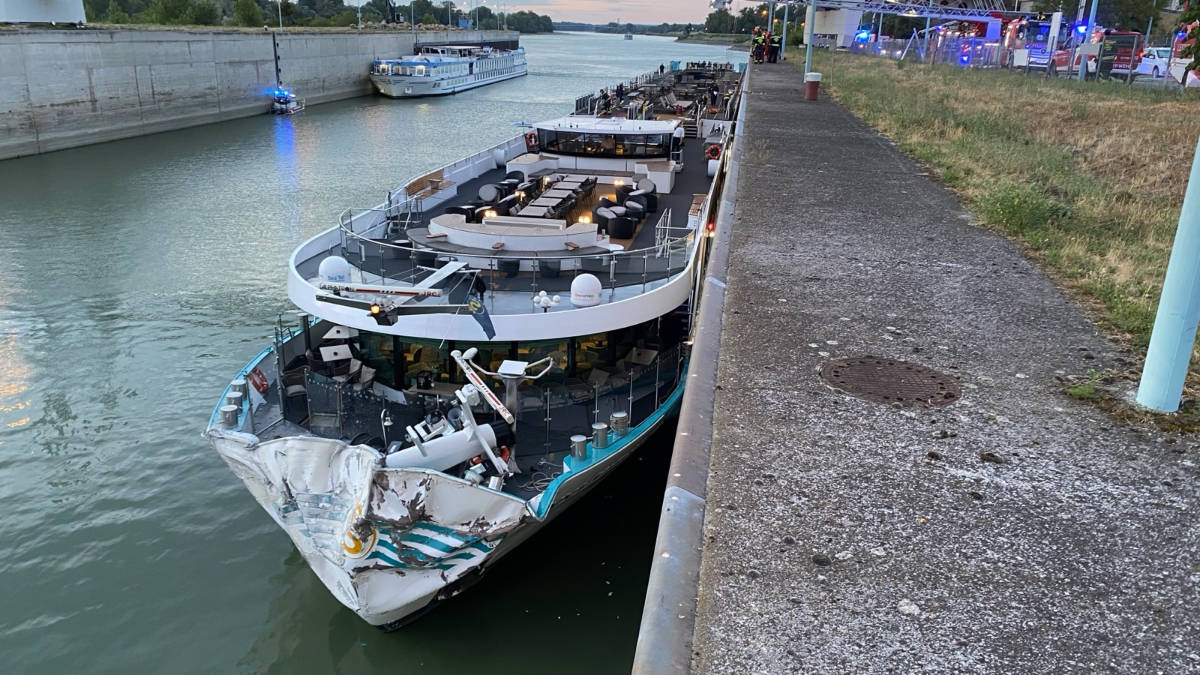
A serene river cruise journey turned into a scene of chaos and alarm early Friday morning, July 24, 2026, when the 135-meter river cruise vessel Anna Katharina struck a quay wall and the Freudenau lock gate on the Danube River near Vienna, Austria. The incident, which occurred at approximately 4:00 a.m. local time, has prompted an intensive investigation by Austrian authorities and raised significant questions regarding maritime safety protocols on one of Europe’s busiest waterways.
Main Facts: A Violent Awakening
The Anna Katharina, a vessel operated by the Swiss-based company Scylla AG on behalf of German cruise line Phoenix Reisen, was navigating a standard transit when the collision occurred at full speed. The impact was described as severe, resulting in significant structural deformation to the vessel’s bow.
According to local reports from the Kronen Zeitung, the force of the collision was sufficient to collapse an instrumentation structure mounted at the front of the ship. While the vessel’s hull remained technically intact, the forward section—which houses the Panorama Terrace and Lounge—sustained heavy damage.
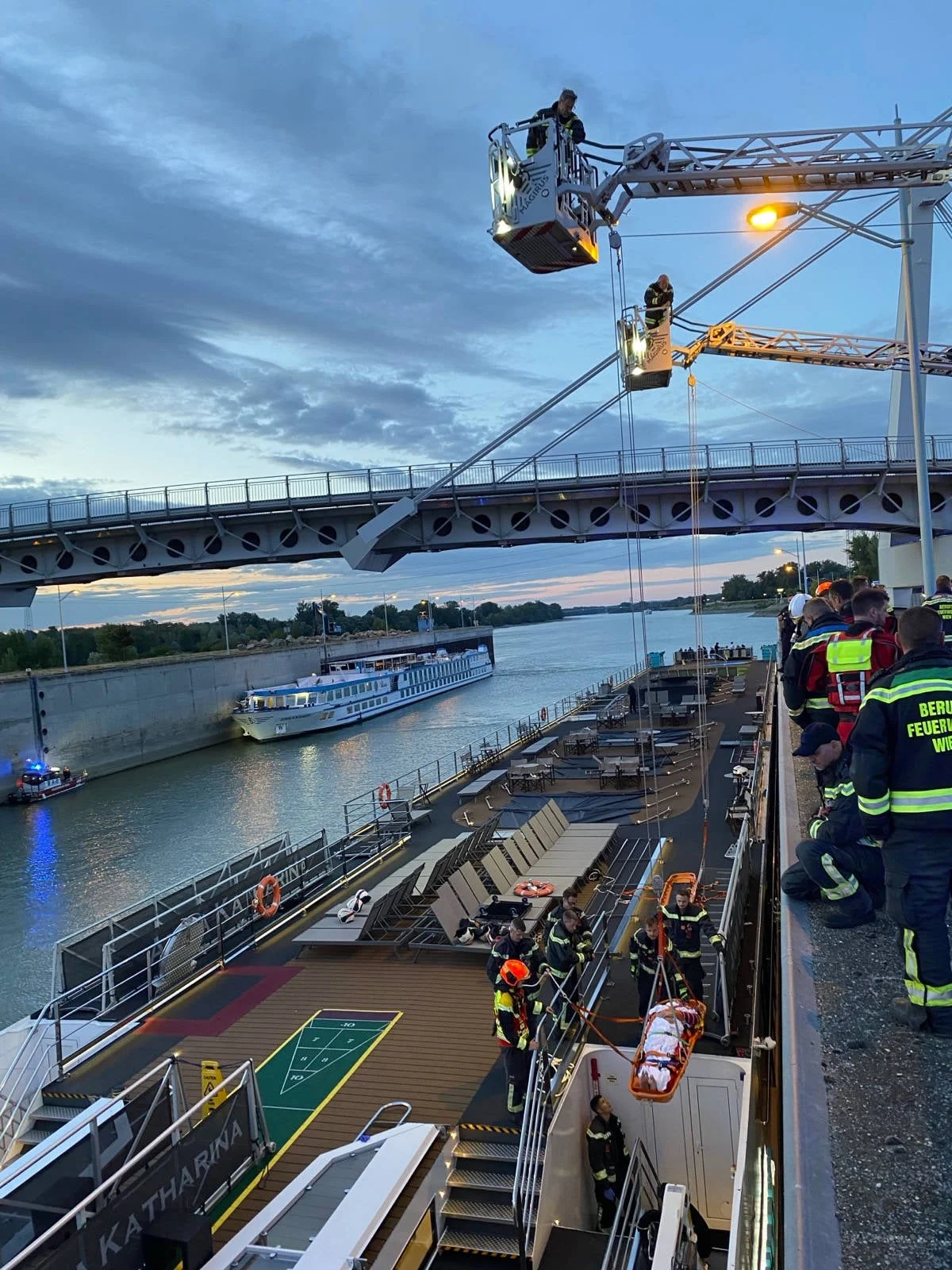
Of the 180 guests and 40 crew members aboard, 14 individuals reported minor injuries. While the vast majority were treated at the scene by emergency medical services, six passengers were transported to local Viennese hospitals for further evaluation regarding complaints of neck, back, and chest pain. Medical officials confirmed that all six were discharged within a few hours, having sustained only superficial injuries. No individuals were reported to have fallen overboard, and the ship’s structural integrity, despite the crumpled bow, was confirmed by the Vienna Fire Department shortly after their arrival.
Chronology of the Incident
The timeline of the disaster began well before the dawn of July 24. The Anna Katharina had departed from Passau, Germany, on Sunday, July 19, embarking on a week-long roundtrip voyage designed to showcase the cultural and historical riches of the Danube, with planned stops in Austria, Hungary, and Slovakia.
- Sunday, July 19: The vessel departs Passau for a scheduled week-long itinerary.
- Friday, July 24, ~3:55 a.m.: The ship approaches the Freudenau lock, a critical transit point on the Danube near Vienna.
- Friday, July 24, 4:00 a.m.: The vessel fails to maneuver correctly and strikes the quay wall and lock gate at significant speed.
- Friday, July 24, 4:15 a.m.: Emergency services, including the Vienna Fire Department, arrive on the scene to assess potential breaches of the hull and ensure no passengers are in the water.
- Friday, July 24, 5:00 a.m. onwards: Passengers are accounted for, and medical triaging begins.
- Friday, July 24, Afternoon: The vessel is secured at the shore. Plans are initiated to transfer the remaining guests to a secondary vessel to allow them to continue their holiday.
The scheduled itinerary for that day had included a stop in Weissenkirchen in der Wachau, roughly 56 miles west of Vienna, where passengers were slated to spend the afternoon. That excursion, and likely the remainder of the voyage, was rendered impossible by the collision.
Supporting Data: Vessel Specifications and Operations
The Anna Katharina is a modern river cruiser, measuring 135 meters (443 feet) in length. Designed specifically for the shallow, winding nature of European river travel, the vessel features a layout optimized for guest comfort and scenic viewing.
Onboard amenities include a spacious Panorama Terrace and Lounge located in the forward section—the very area that bore the brunt of the impact. Below the passenger deck, the forward section contains the ship’s galley, raising concerns about the potential for secondary damage to critical infrastructure.
The ship operates under the management of Scylla AG, a company widely regarded as a leader in the river cruise industry, providing charter services for various lines including Phoenix Reisen. The vessel is known for its high standards of comfort, but the investigation will now shift to the technical systems that failed during the early hours of Friday morning.
Investigation to Proceed: Seeking Answers
The master of the vessel, a 49-year-old Polish national, has been identified as a person of interest. He is currently undergoing questioning by local authorities to establish the sequence of events leading up to the impact.
A primary focus of the investigation is determining whether the collision was the result of human error, environmental factors, or a catastrophic technical malfunction. While there is no current evidence of a power failure, investigators are drawing cautious parallels to the March 2024 disaster in Baltimore, where the Dali container ship suffered a total blackout before colliding with the Francis Scott Key Bridge.
"We are looking into every possibility, from steering failure to engine room malfunctions," a spokesperson for the local maritime authority noted. Such investigations into maritime accidents are notoriously complex and can take several weeks, or even months, to reach a definitive conclusion. Forensic engineers will need to analyze the ship’s Voyage Data Recorder (VDR)—the maritime equivalent of an airplane’s black box—to understand the commands issued by the bridge and the ship’s response in the final minutes before the collision.
Official Responses and Corporate Silence
As of the time of this report, both Phoenix Reisen and Scylla AG have maintained a notable silence. Neither organization has issued a formal press release or a statement of apology to the affected guests. This lack of communication has led to growing frustration among passengers and their families, many of whom are seeking clarity regarding compensation and the logistics of their interrupted travels.
Industry experts suggest that the cruise lines are likely waiting for preliminary findings from the investigators before making public declarations to mitigate potential legal liability. However, the optics of such silence are causing concern within the travel industry.
Implications for the River Cruise Industry
The crash of the Anna Katharina has sent shockwaves through the river cruising sector, an industry that has prided itself on its safety record compared to the larger, more complex operations of ocean-going cruise lines.
1. Safety and Infrastructure
The Freudenau lock is a heavily trafficked site. A collision of this magnitude highlights the risks inherent in maneuvering large vessels in tight, artificial waterways. Experts are already calling for a review of communication protocols between lock operators and cruise ship captains.
2. Impact on Future Bookings
With the vessel severely damaged and currently docked for repairs, upcoming voyages are almost certainly canceled. Passengers holding reservations for the remainder of the summer season are advised to contact their travel agents immediately. The logistics of re-routing or re-booking hundreds of guests during the peak European travel season will present a significant challenge for the operators.
3. Increased Scrutiny
Maritime regulators in Austria and the broader European Union are expected to increase inspections on vessels of similar age and class. While the Anna Katharina was generally considered well-maintained, the industry will now face renewed scrutiny regarding the training of bridge crews and the redundancy of technical systems on river vessels.
Conclusion: A Long Road to Recovery
For the 180 passengers who boarded the Anna Katharina expecting a relaxing journey through the heart of Europe, the voyage ended in a way no one could have anticipated. While the news that there were no fatalities is a massive relief, the psychological impact of a midnight collision at speed is profound.
As the ship sits at the quay, its bow crushed and its future uncertain, the maritime community waits for answers. The investigation into the Anna Katharina will serve as a critical case study for the industry, serving as a reminder that even in the calm waters of the Danube, the margin for error is razor-thin. For now, the focus remains on the well-being of the passengers and the long process of determining how a routine transit ended in a disaster that could have been far worse.
Travelers with upcoming bookings are encouraged to monitor the Phoenix Reisen website for updates, though as of now, the company has provided no guidance regarding future operations.
 Lina Hope
  Suro Senen