

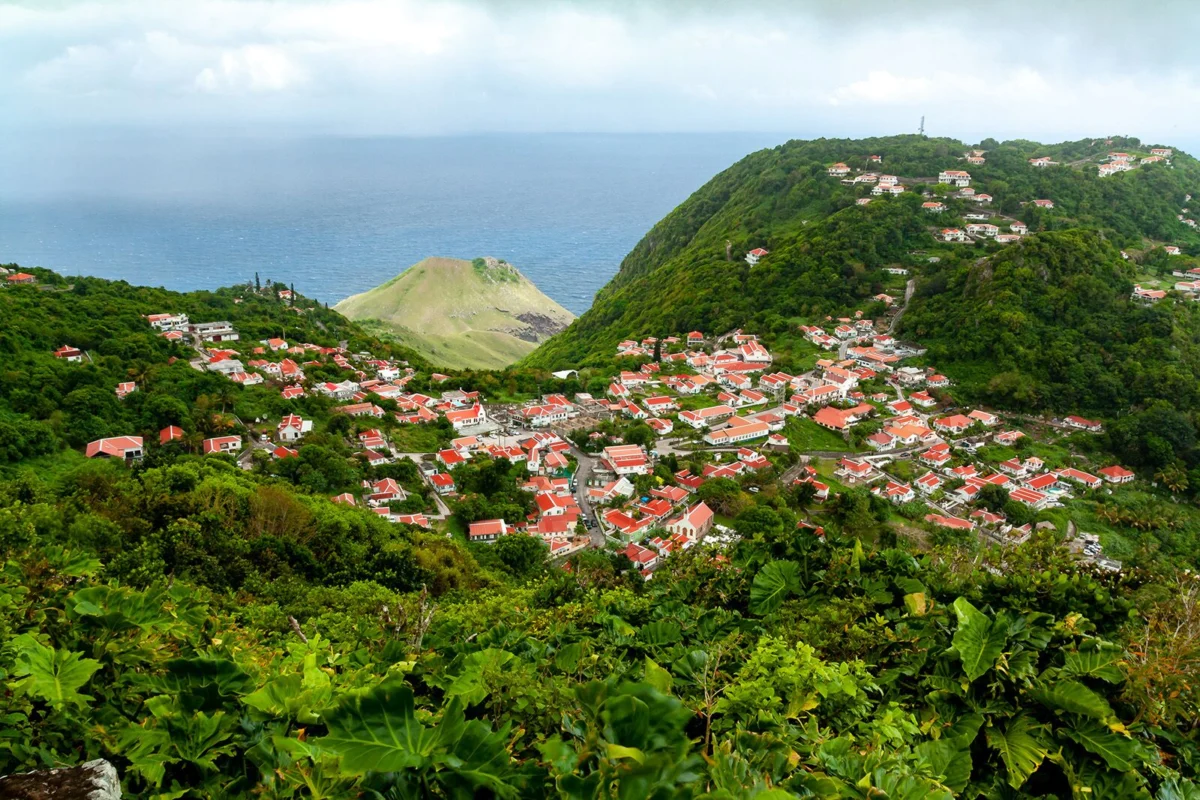
In an era defined by mass tourism, sprawling all-inclusive resorts, and the homogenization of tropical travel, the Caribbean island of Saba stands as a defiant outlier. Rising sharply from the azure depths of the Caribbean Sea, this five-square-mile volcanic peak has eschewed the high-rise development model that dominates its neighbors. Instead, it has cultivated an identity as the "Unspoiled Queen of the Caribbean," a moniker earned through a steadfast commitment to conservation, historical preservation, and a deliberate, slow-paced approach to tourism.
With one-third of the island’s land mass protected under a tripartite system—comprising Mount Scenery National Park, the Saba National Marine Park, and the Saba Bank National Park—the island offers a rare, immersive experience where the focus shifts from luxury amenities to the raw, rugged beauty of nature.
The Deliberate Architecture of Conservation
For Tom Brokke, a Senior National Park Officer with the Saba Conservation Foundation, the island’s lack of commercial sprawl is not an accident of geography or economics, but a calculated strategy.
"What makes Saba special is its natural beauty, the dramatic landscapes, and the fact that development has remained relatively small-scale and in character with the island," Brokke explains. "The small boutique hotels and locally owned businesses actually add to that identity rather than taking away from it."
This philosophy ensures that the island’s aesthetic remains consistent. Visitors will notice a strict architectural code that governs the island’s built environment: traditional white-walled structures, red-shingled roofs, and shutters painted in signature green-and-white or red-and-white palettes, often accented with delicate gingerbread trim. This visual harmony preserves the island’s historic character, preventing the visual pollution often associated with rapid tourism development.
A Chronology of Ingenuity: Building "The Road"
The physical accessibility of Saba is a testament to the sheer tenacity of its inhabitants. For decades, engineers from outside the island declared the rugged, steep volcanic terrain "too steep to build" for a modern road. In an act of profound self-reliance, the people of Saba took matters into their own hands.
Starting in the mid-20th century, Sabans taught themselves the nuances of road construction, carving the island’s only paved route—simply known as "The Road"—into the mountainside by hand. Completed in 1963, the project is a marvel of human persistence. Navigating the road today, one experiences sharp, dizzying switchbacks and limited visibility that underscore why the locals’ feat was once considered impossible by professional standards. This singular artery remains the lifeline of the island, connecting the airport to the various villages, including the high-altitude settlement of Windwardside.
Supporting Data: The Biological and Cultural Riches
Saba’s environmental commitment extends well beneath the surface of the Caribbean Sea. Since 1987, the Saba Marine Park has protected the surrounding waters, and the results are quantifiable in the biodiversity found there.
Biodiversity Highlights
- Marine Life: The reefs are among the most pristine in the Caribbean, serving as a sanctuary for sea turtles, nurse sharks, and vast schools of fish that inhabit complex volcanic rock formations.
- Altitude Transitions: The island’s topography allows for distinct climate zones. Hikers on the 20 maintained trails—such as the Mas’Cohones Trail—can transition from dry, coastal shrubland to lush, cloud-enshrouded rainforest within the span of a single afternoon.
- The Summit: Mount Scenery, the highest point in the Kingdom of the Netherlands, stands at over 2,900 feet, offering a panoramic vantage point that highlights the island’s isolation and dramatic geography.
The Guardians of Tradition: Cultural Preservation
Beyond the cliffs and cloud forests, the true pulse of Saba is found in its workshops and historical archives. The island’s culture is deeply intertwined with the stories of the women who maintained the economy while men were away at sea.
The Legacy of Saba Lace
In the 1870s, as the male population of the island worked as sailors and ship captains, the women of Saba pioneered a cottage industry that would define the island’s economy for nearly a century: drawn threadwork, or "Saba Lace." This intricate craft became a sophisticated mail-order business, with lace shipped to London, Barbados, and the United States.
Peggy Barnes, a lead instructor at the weekly Saba lace-making workshops, remembers the era before electricity, when the craft was honed by the flickering light of kerosene lamps. Today, the "Lace Ladies" continue this tradition, teaching children and visitors alike for free. "No barriers to entry," Barnes says. "We always make room for whoever wants to come."
The Revival of Plaiting
Cultural preservation efforts are further exemplified by individuals like Marie Petit, who is actively reviving the lost art of plaiting. Having traveled as far as Fiji and New Zealand to recover ancestral knowledge, Petit now operates a workshop in Windwardside. She utilizes local materials—seeds for jewelry and dried palm fronds for weaving—to create pieces that serve as a tangible link to the island’s past.
Implications of the "Hidden Gem" Model
The choice to remain "undiscovered" has significant implications for the future of the island. Saba’s remote nature—accessible only via a 15-minute flight from St. Maarten or a 90-minute ferry crossing—acts as a natural filter for the type of tourism the island attracts.
Economic Sustainability
Because there are only five hotels on the island, the tourism model is inherently high-value and low-volume. Properties like Juliana’s Hotel, a family-run establishment, exemplify this, providing an intimate experience that emphasizes local food production and traditional architectural styles. This prevents the "leakage" of tourism revenue often seen in larger destinations, as money spent on dining and lodging circulates directly within the local community.
Environmental Stewardship
The reliance on national parks and protected zones creates a symbiotic relationship between tourism and conservation. Visitors come to hike, dive, and explore; their park fees directly fund the ongoing maintenance and protection of the resources they enjoy. This cycle ensures that the very features that attract travelers—pristine reefs and untouched forests—remain protected from the degradation associated with mass-market travel.
A Practical Guide to the Unspoiled Experience
For the traveler seeking to experience Saba, preparation is key. The island is not a destination for leisure in the traditional "resort" sense; it is a destination for engagement.
- Logistics: All travel must transit through St. Maarten. Whether choosing the flight (Winair) or the ferry (Makana), visitors should arrange for hotel pickup, as the island’s terrain is not easily navigated on foot by those unaccustomed to steep, hilly paths.
- Dining: The culinary scene is remarkably sophisticated for such a small community. Establishments like Brigadoon highlight local ingredients, specifically lobster caught within the protected waters of the Saba Bank. The Hideaway offers a more casual, hearty approach, while the Tropics Cafe at Juliana’s Hotel emphasizes farm-to-table practices.
- Preparation: Hikers are strongly advised to bring high-quality, broken-in hiking boots. The terrain is frequently wet, uneven, and steep; sneakers are often insufficient for the more challenging trails of Mount Scenery.
- Cultural Etiquette: Participation in the local workshops is encouraged. Engaging with the Lace Ladies or Marie Petit is not merely a tourist activity, but a vital part of supporting the generational transfer of knowledge that keeps the island’s identity alive.
Conclusion
Saba represents a compelling case study for the future of Caribbean tourism. By prioritizing environmental integrity and cultural continuity over rapid growth, the island has managed to preserve a sense of place that is becoming increasingly rare. It is an "unspoiled" destination not because it is underdeveloped, but because its development has been meticulously curated to honor the landscape and the people who call it home.
As Tom Brokke notes, a camera can capture the cliffs and the ocean, but it cannot capture the feeling of living in a place that has decided, with intention, to remain itself. For the conscious traveler, Saba offers more than just a getaway; it offers a glimpse into a sustainable future for island life.
 Raul Delapena Setiawan
  Nila Kartika Wati
  Iffa Jayyana