

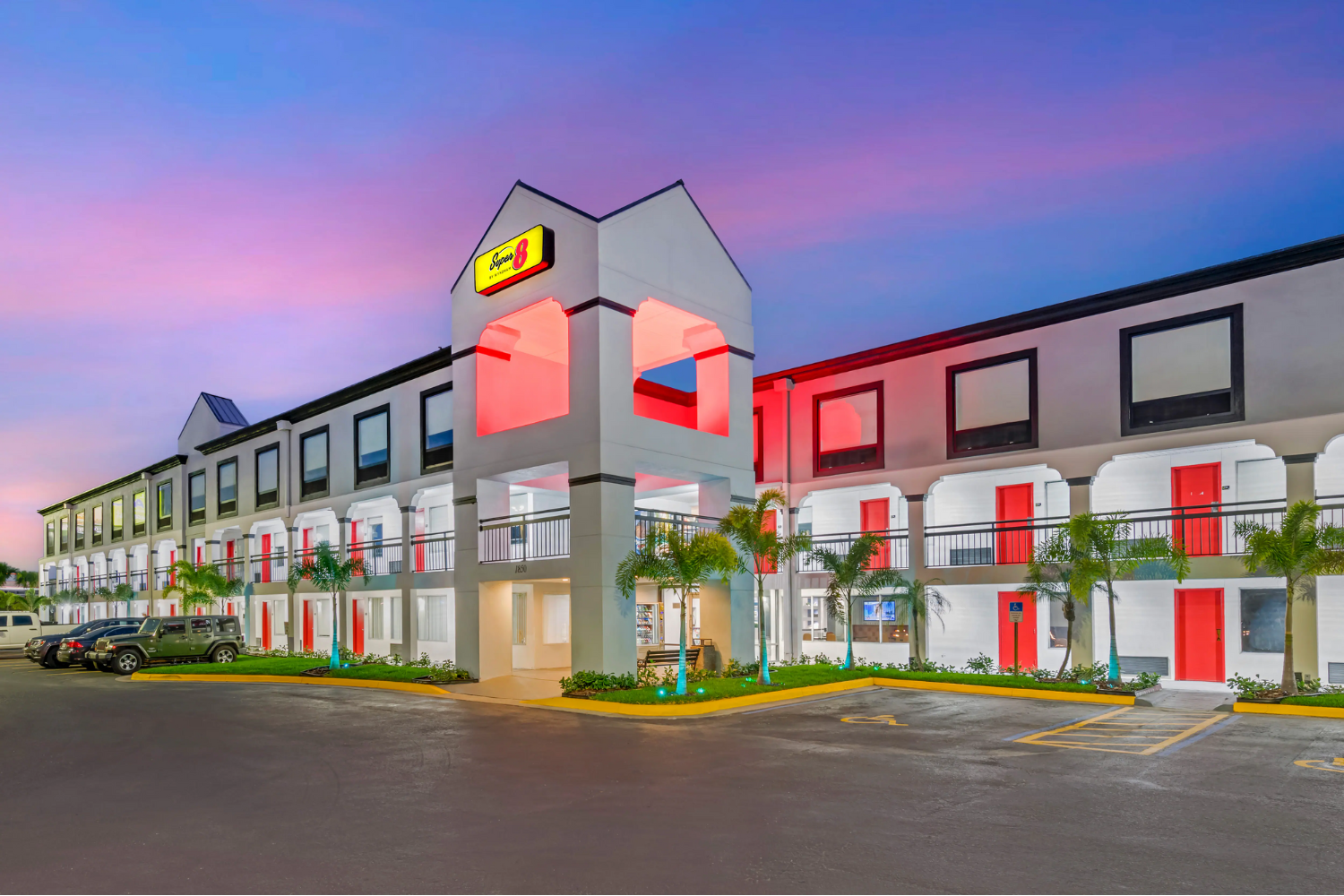
Wyndham Hotels & Resorts, a titan long synonymous with the American roadside economy segment, is currently executing a sophisticated, behind-the-scenes architectural shift in its portfolio. While the company’s total U.S. room count remains stubbornly stable—clocking in at approximately 501,100 rooms year-over-year—the composition of that inventory is undergoing a fundamental transformation.
For investors and industry analysts, the headline figures regarding total room count might suggest stagnation. However, beneath the surface, Wyndham is engaged in a systematic, high-stakes swap: offloading lower-fee, economy-tier assets and aggressively integrating higher-fee, midscale-and-above properties. This transition is not merely a cosmetic branding exercise; it is a calculated effort to optimize FeePAR (Fee Per Available Room) and insulate the company’s bottom line against the volatility of the lower-tier market.
Main Facts: The Great Portfolio Swap
The core of the strategy is simple to state but complex to execute: Wyndham is intentionally shrinking its presence in the deep-discount economy sector to create space for more lucrative, mid-market offerings.
In its latest second-quarter earnings report, the data revealed a stark divergence between segments. While the company’s total U.S. footprint remained essentially flat, the internal distribution shifted significantly. Economy-tier rooms in the United States contracted by 3%, falling to 216,600 units. Simultaneously, the "midscale and above" segment grew by 2%.
This is not a failure to grow; it is an act of surgical pruning. By shedding older, lower-quality economy hotels that often yield thin margins and require significant operational oversight, Wyndham is trading volume for value. The objective is to increase the company’s aggregate FeePAR, ensuring that even if the total number of doors remains static, the revenue generated from those doors climbs steadily.
A Chronology of Transformation
The roots of this pivot can be traced back several years, as Wyndham began to grapple with the changing dynamics of the post-pandemic travel landscape.
- Pre-2022: Wyndham’s growth strategy was largely volume-based. The company relied on the massive scale of legacy brands like Super 8, Days Inn, and Howard Johnson to maintain its status as the world’s largest hotel franchisor by unit count.
- 2023: Leadership began signaling a shift in tone during investor briefings. The emphasis moved away from "total unit growth" toward "quality of growth." The company began enforcing stricter brand standards, which naturally led to the attrition of weaker, non-compliant economy properties.
- Q1 & Q2 2024: The strategy solidified. During the Q2 earnings call, CEO Geoff Ballotti explicitly confirmed that the company was prioritizing the removal of low-fee, aging assets. This period marked the clear pivot point where the "swap" became the primary driver of corporate strategy.
- The Future Outlook: Wyndham’s current roadmap suggests a continued focus on this "quality-first" migration. The company is leaning into brands like Microtel, La Quinta, and Trademark Collection, which offer higher revenue potential and align more closely with the expectations of modern, value-conscious travelers.
Supporting Data: By the Numbers
To understand the magnitude of this shift, one must look at the specific performance metrics provided by the company:
- The Economy Contraction: The 3% reduction in U.S. economy rooms (a drop to 216,600) is significant because these rooms were historically the bedrock of the company’s business model. This decline reflects a deliberate decision to terminate or exit franchise agreements with properties that no longer meet the evolving aesthetic and functional standards of the Wyndham portfolio.
- The Midscale Ascent: The 2% growth in the "midscale and above" category represents a shift toward more premium assets. These properties generally command higher daily rates (ADR), which in turn drives higher fees for the franchisor.
- FeePAR Efficiency: While total unit counts are flat, the "FeePAR" metric is the true north star for Wyndham’s executive team. By concentrating on higher-fee properties, the company is effectively increasing the "yield" per room, ensuring that revenue growth can outpace room-count growth.
Official Responses: The Leadership Perspective
During the second-quarter earnings call, CEO Geoff Ballotti provided the clearest articulation of this strategy to date. Addressing investors and analysts, he stated:
"We’re very focused on replacing those lower quality, lower FeePAR rooms with higher quality, higher FeePAR rooms."
Ballotti’s rhetoric emphasizes that this is not an accidental contraction but a deliberate strategic trade-off. By elevating the brand portfolio, Wyndham is attempting to shed the "budget-only" stigma that has sometimes hindered its ability to attract higher-tier developers and more affluent travelers.
Furthermore, the company’s CFO and executive team have reiterated that this focus on quality does not preclude growth. Instead, they argue that by creating a more attractive, modernized brand portfolio, Wyndham becomes a more compelling choice for developers looking to convert existing independent hotels or build new midscale projects. The "quality-first" approach is designed to attract better partners, which in turn leads to better-performing assets.
Implications: What This Means for the Industry
The implications of Wyndham’s strategy are wide-reaching for the hospitality sector.
1. The Death of the "Volume-at-All-Costs" Era
For decades, major hotel chains were judged primarily by the sheer number of keys in their system. Wyndham’s pivot suggests that the industry is entering a new era where quality and revenue efficiency are paramount. Investors are increasingly skeptical of scale that doesn’t translate into profitability. By proactively pruning its portfolio, Wyndham is signaling to the market that it values long-term sustainability over short-term growth statistics.
2. The Midscale Market Becomes a Battleground
As Wyndham pivots upward, it enters a more crowded and competitive space. It will be competing more directly with players like Hilton (Hampton, Tru) and Marriott (Fairfield, TownePlace Suites). This move indicates that Wyndham feels confident in its ability to compete for the "value-conscious" traveler who is willing to pay a premium for a reliable, modernized experience over the "rock-bottom" price point of the past.
3. Developer Dynamics and Brand Standards
This shift places significant pressure on current and prospective franchisees. As Wyndham raises its standards to facilitate this swap, property owners may find themselves forced to invest more in capital improvements to remain part of the brand. For some, this will be a welcome opportunity to upgrade their assets; for others, it may lead to them leaving the Wyndham system entirely.
4. Consumer Perception
For the average guest, this strategy aims to bridge the gap between "cheap" and "reliable." By removing the lower-performing, aging hotels that often dragged down the brand’s reputation, Wyndham is attempting to create a more consistent customer experience. If successful, the company will likely see improved loyalty program engagement and higher repeat guest rates—the holy grail of the franchising model.
Conclusion: The Long Game
Wyndham Hotels & Resorts is currently playing a sophisticated game of chess in a sector often characterized by checkers. By accepting a flat total room count in the short term, the company is positioning itself for a more profitable and stable future.
The transition from a volume-heavy economy model to a quality-focused midscale model is a risky but necessary evolution. The hospitality industry is rapidly modernizing, and the "roadside motel" archetype of the late 20th century is increasingly at odds with the digital-first, experience-driven demands of modern travelers.
Whether this "systematic swap" will provide the long-term revenue growth that analysts are looking for remains to be seen. However, one thing is clear: Wyndham is no longer content to simply be the largest player in the room. They are now striving to be the most efficient, betting that a leaner, more upscale portfolio will prove far more resilient than a bloated collection of low-margin assets. As the company continues to shed the old to make room for the new, the rest of the industry will be watching closely to see if this "quality-first" strategy becomes the new standard for global franchising.
 Basiran
  Pevita Pearce
  Evan Lee Salim