


Main Facts: The Modern Writer’s Dilemma and the Rise of AI Transcription
For freelance writers, the modern information economy presents a paradoxical challenge. On one hand, deep, authoritative content requires direct engagement with subject matter experts (SMEs). On the other hand, translating a standard 20-minute expert conversation into a polished, publishable article can balloon into a grueling, multi-hour administrative marathon.
A 20-minute dialogue with an industry specialist easily translates into 3,000 or more spoken words. Historically, capturing those words meant either frantically multi-tasking—attempting to type quotes in real-time while actively maintaining a conversational flow—or enduring the excruciating process of rewinding and re-listening to a raw audio recording five or six times. For a single short interview, this traditional workflow routinely demanded an hour or more of manual transcription before the actual writing could even begin.
Enter automated speech recognition (ASR) tools powered by artificial intelligence. Among them, Otter.ai has emerged as a fixture in the digital workspace since its widespread adoption around 2020. Used extensively by journalists, fintech content creators, and corporate communications professionals, the platform promises instant text generation directly from audio files and live meetings.
For solo entrepreneurs and independent content creators operating on tight margins, the critical question remains: Does a $100-per-year professional subscription deliver a tangible return on investment, or is it just another software subscription eating into slim profit margins? According to industry veterans, the answer lies in evaluating how time savings directly impact billable hours.
Chronology: From Manual Tape Recorders to Real-Time AI Neural Nets
To understand the current reliance on AI transcription tools, it helps to examine the evolutionary timeline of how writers capture and process spoken information.

- The Analog Era (Pre-2010s): Writers relied heavily on handheld microcassette recorders or digital voice recorders. Interviews had to be played back using foot pedals or software like Express Scribe, requiring transcribers to pause, type a few words, rewind, and repeat. This manual process often took a staggering four hours for every one hour of audio.
- The Rise of Human Crowdsourcing (2010s–2018): As the gig economy matured, platforms like Rev and various human transcription agencies gained traction. Writers could outsource audio files to human transcribers for a per-minute fee. While accuracy was high, turnaround times routinely spanned 24 to 72 hours, creating a massive bottleneck for journalists operating on strict daily deadlines.
- Early Automated Transcription (2018–2020): Early automated speech-to-text engines emerged, but they were plagued by poor accuracy, struggling heavily with accented speech, background noise, and industry-specific jargon. They served as novelties rather than dependable production tools.
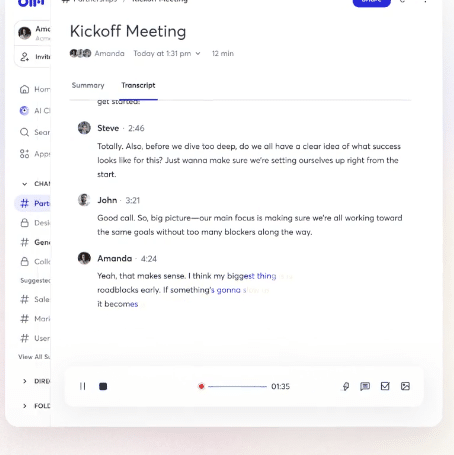
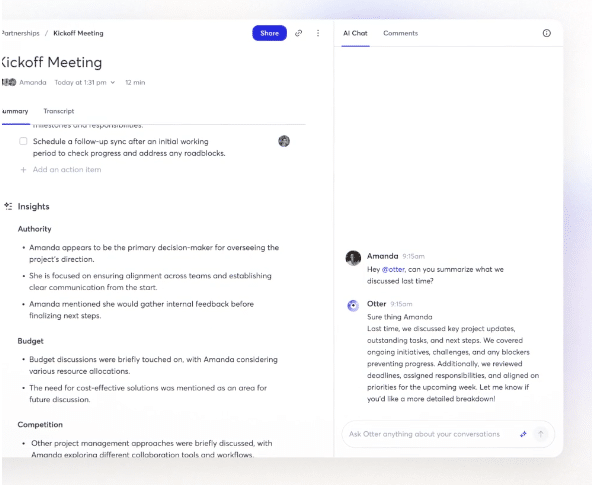
- The AI Integration Era (2020–Present): With major advancements in natural language processing (NLP) and machine learning models, tools like Otter.ai transitioned from basic speech-to-text converters into fully integrated workspace assistants. Modern features now include real-time calendar syncing, automated speaker identification, chat-based transcript searching, and linked audio-text playback, fundamentally transforming the freelance writing workflow.
Supporting Data: The ROI Math Behind Automated Transcription
When evaluating software tools, independent professionals must look past marketing claims and analyze hard economics. For a freelance writer commanding competitive rates, time is quite literally currency.
Consider a typical assignment profile in modern digital publishing: an independent writer is contracted to produce a 1,000-word reported article featuring insights from at least one SME. The flat fee for such a piece often sits around $1,200.
A standard production breakdown without automated transcription typically looks like this:
- Research and Source Outreach: 1 hour
- Interview Execution: 20 to 30 minutes
- Manual Transcription and Quote Verification: 1 to 1.5 hours
- Outlining and Drafting: 3 hours
- Editing and Polishing: 1 hour
- Total Time Invested: ~6.5 hours
- Effective Hourly Rate: ~$184 per hour
By integrating an AI transcription tool like Otter.ai into the workflow, the manual transcription phase is virtually eliminated. The raw text document is generated instantly upon the conclusion of the call. Even accounting for a mandatory 10-minute accuracy sweep and quote verification, the time spent wrestling with raw audio drops dramatically.
- Revised Production Breakdown with AI:
- Research and Source Outreach: 1 hour
- Interview Execution: 20 to 30 minutes
- Instant AI Transcription & Cleanup: 10 minutes
- Outlining and Drafting: 3 hours
- Editing and Polishing: 1 hour
- Total Time Invested: ~5.5 hours
- Effective Hourly Rate: ~$218 per hour
For a writer producing three to four interview-driven pieces per month, the cumulative time savings ranges between three and five hours monthly. At a professional subscription cost of roughly $8.33 per month (billed annually at $100), the platform frequently pays for itself within the very first week of active client work. Furthermore, freed from the cognitive burden of frantic note-taking, writers report a noticeable qualitative improvement in the depth and natural flow of their interviews.
Official Responses and Industry Perspectives
While software developers market AI transcription as an infallible silver bullet, experienced freelance practitioners offer a more nuanced, realistic appraisal of its capabilities and shortcomings.
Industry veterans emphasize that while tools like Otter.ai drastically accelerate the drafting process, they are not without operational friction. User reviews and professional case studies highlight several key technical realities:
- The Accuracy Ceiling: Software developers frequently boast transcription accuracy rates of up to 95%. However, field practitioners working with specialized subject matter—such as fintech, legal frameworks, or advanced engineering—estimate real-world accuracy closer to 80% to 85%. Proper nouns, acronyms, and industry-specific jargon are frequently mangled, requiring diligent human oversight before publication.
- Hardware and Setup Nuances: To capture both sides of a digital conversation seamlessly (such as over Zoom, Microsoft Teams, or Google Meet), the software relies heavily on computer speaker audio pickup, or explicit virtual meeting bot integration. Technical hurdles, such as wearing headphones during calls, can sometimes result in the software recording only the user’s voice while missing the expert entirely, necessitating specific workstation configurations.
- Attribution Challenges: In multi-speaker environments or chaotic webinar settings, automated speaker labeling ("Speaker 1," "Speaker 2") can become confused. Writers must remain vigilant to ensure quotes are correctly attributed to the appropriate sources.
Despite these limitations, the consensus among professional content creators is overwhelmingly positive. The alternative—waiting days for human-generated transcripts or spending hours listening to raw audio—creates unacceptable friction in fast-paced editorial environments.
Implications for the Future of Freelance Writing and Content Creation
The widespread adoption of generative AI and transcription assistants carries profound implications for the freelance economy. As barriers to content production continue to drop, the definition of value in writing is undergoing a fundamental shift.
1. The Death of the Administrative Bottleneck
Historically, administrative tasks like transcription, formatting, and basic research consumed a disproportionate amount of an independent contractor’s working week. By automating the mechanical aspects of journalism—converting spoken word to written text—AI tools allow creators to scale their output without suffering proportional burnout. Writers can take on more high-value, reported assignments each month, directly increasing their earning potential.
2. Enhanced Journalistic Presence
When writers are liberated from the tyranny of the notepad, the dynamics of the interview change entirely. Eye contact is maintained; active listening improves; and spontaneous, organic follow-up questions can be pursued without the fear of missing a critical soundbite. This psychological freedom results in richer, more authentic source material, ultimately elevating the quality of modern digital journalism.
3. The Commoditization of Speed
As tools like Otter.ai, Fireflies, and Fathom become standard issue across the freelance landscape, speed is no longer a unique competitive advantage—it is merely the baseline expectation. Writers who fail to adopt these workflow optimizations risk finding themselves mathematically uncompetitive against peers who can research, interview, transcribe, and draft articles in a fraction of the time.
4. The Irreplaceable Value of Human Verification
Perhaps the most important implication of the AI transcription boom is the reinforced necessity of human editorial judgment. Because automated tools mishear technical terms, mangle unique names, and occasionally hallucinate context, the role of the writer transforms from a mere stenographer to an indispensable verifier and curator. The machine provides the raw clay, but the human writer retains absolute responsibility for shaping, fact-checking, and polishing the final narrative.
Ultimately, for freelancers navigating the competitive landscape of modern digital publishing, investing in reliable transcription infrastructure is no longer an optional luxury—it is a fundamental cost of doing business in the digital age.
 Evan Lee Salim
  Dwi Wanna