


By the Editorial Desk
Published: Special Industry Report
Main Facts: The New Reality of the Digital Content Economy
Artificial intelligence is no longer an experimental novelty; it is the baseline operating system of the modern creative economy. For freelance writers navigating an increasingly competitive marketplace, the choice is no longer whether to adopt AI, but how to master it.

Industry analysis reveals a sharp polarization in the freelance writing workforce:
- The Thriving Class: Professionals who leverage AI to eliminate administrative overhead and tedious workflows, redirecting those saved hours toward high-value human skills—critical thinking, primary research, exclusive interviews, and relationship-building.
- The Struggling Class: Writers who either reject technological progress entirely or rely on AI as a cheap substitute for original thought, resulting in generic, formulaic content that clients and search engines immediately flag as substandard.
AI tools like ChatGPT, Claude, Perplexity, Otter, and Grammarly are redefining productivity. However, market experts emphasize that these platforms are structural catalysts, not ghostwriters. To survive and scale, writers must learn to delegate the mechanics of writing while fiercely protecting their unique editorial voice.
Chronology: From Resistance to Strategic Integration
The integration of artificial intelligence into the freelance workflow has evolved rapidly over recent years:
- Phase 1: The Panic and the Novelty (Early Generative AI Era)
Writers viewed early large language models with a mixture of existential dread and skepticism. Many feared total replacement, while others experimented with letting AI write entire articles from single-sentence prompts, producing a flood of low-quality, derivative web content. - Phase 2: The Backlash and Client Rejection
Clients quickly grew fatigued by generic, AI-generated prose devoid of original insights, personal anecdotes, or verified data. A cultural shift occurred: raw AI-generated output became toxic to high-paying publications and marketing agencies. - Phase 3: The Strategic Workflow Integration (Current Landscape)
Successful freelancers recalibrated. Instead of using AI to replace the creative act of writing, they deployed it as an auxiliary assistant—streamlining research, organizing outlines, breaking through writer’s block, and managing business operations. Today, AI functions as a force multiplier rather than an automated substitute for human intellect.
Supporting Data: 10 Strategic Use Cases for High-Performance Writers
To help professionals harness technology effectively, industry leaders have identified ten precise workflows where AI delivers exponential efficiency without compromising editorial integrity.

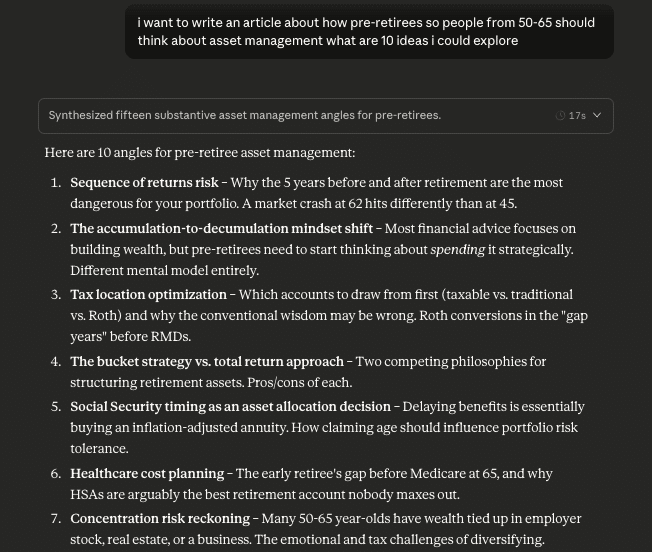
1. Beating the Blank Page Syndrome
The psychological barrier of staring at an empty document is a primary drain on creative energy.
- The Workflow: Instead of asking an LLM to draft an essay, prompt it to generate ten unconventional angles, alternative opening paragraphs, or reader-centric questions.
- The Value: This approach breaks cognitive paralysis. Even if the initial suggestions are discarded, they stimulate creative momentum, providing raw material to react against rather than starting from absolute zero.
2. Streamlining Structural Outlines
Rigorous outlining prevents structural drift and illogical arguments.
- The Workflow: Feed an AI tool your core topic, target audience, and primary objectives. Ask it to suggest subheadings, logical transitions, and sections that a discerning reader would expect.
- The Value: Advanced users build intake prompt templates in tools like Claude, pasting messy brain-dumps of research and quotes to receive a clean structural skeleton that can be rapidly refined.
3. Accelerated Research and Triage
Thorough research requires sifting through endless reports, white papers, and academic studies.
- The Workflow: Utilize platforms like Perplexity to perform real-time web searches accompanied by verified citations. Paste dense articles into ChatGPT to extract key statistics, core arguments, and historical context.
- The Value: This enables rapid triage. Writers can evaluate whether an external source holds genuine value before investing twenty minutes into reading it, drastically reducing the risk of citing outdated or inaccurate data.
4. Crafting Targeted Outreach and Letters of Introduction (LOIs)
Cold emailing prospective clients is notoriously exhausting and repetitive.
- The Workflow: Instruct an AI to draft base templates for marketing agencies or prospective clients, requesting multiple length variations. Crucially, research the target company’s recent achievements (such as an industry award or newly published study) to construct a bespoke, human-written opening line.
- The Value: AI handles the structural boilerplate, allowing the writer to focus 100% of their energy on personalized, high-conversion introductions that prove they understand the client’s business.
5. Generating Headlines and Conceptual Hooks
A compelling headline determines whether exceptional content is read or ignored.
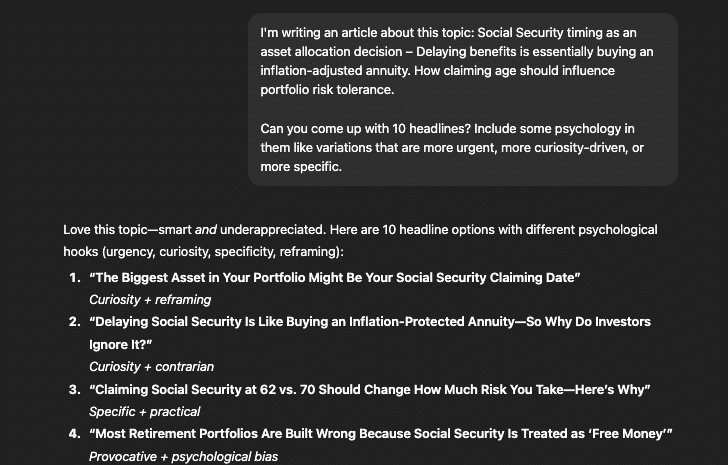
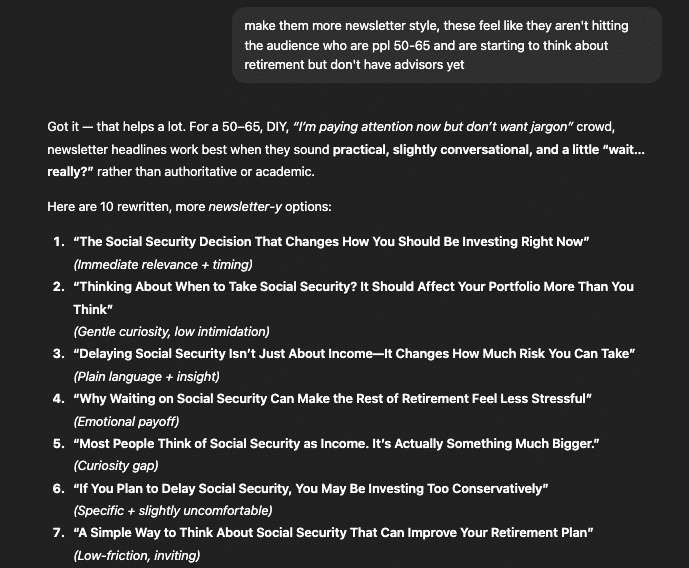
- The Workflow: Prompt AI engines to generate ten distinct headline variations tailored to specific psychological triggers—such as urgency, curiosity, or specific utility.
- The Value: Writers rarely use AI headlines verbatim, but reviewing multiple options sparks creative combinations, helping creators find the precise tonal sweet spot between compelling and authentic.
6. Advanced Editing, Proofreading, and Role-Playing
Human eyes naturally gloss over structural errors and repetitive phrasing in self-authored drafts.

- The Workflow: Paste drafts into platforms like Grammarly, Claude, or ChatGPT. Instruct the AI to act as an aggressive developmental editor, a meticulous copyeditor, or directly as the intended target audience.
- The Value: Asking an AI to flag confusing transitions, overly complex sentences, or logic gaps provides an objective second set of eyes, catching oversights before human editorial review.
7. Multichannel Content Repurposing
Maximizing return on investment from a single piece of long-form content is vital for modern digital marketing.
- The Workflow: Provide a 1,500-word blog post to an AI assistant with precise instructions: "Extract five distinct data points to serve as LinkedIn hooks, and draft three short-form newsletter summaries."
- The Value: This transforms a single deep-dive article into an entire week’s worth of promotional assets across multiple platforms, ensuring maximum audience reach with minimal secondary effort.
8. Subject Matter Expert (SME) Interview Preparation
The quality of an interview is directly tied to the caliber of the questions asked.
- The Workflow: Input the subject’s background, professional niche, and the core themes of the upcoming discussion into an AI research assistant to generate sophisticated, non-obvious interview questions.
- The Value: This brings up-to-speed efficiency to writers working in unfamiliar industries, ensuring they respect the expert’s time by bypassing basic introductory questions that could have been found via simple search engines.
9. Managing and Mining Interview Transcripts
Conducting interviews generates massive walls of raw audio transcription text.
- The Workflow: Utilize transcription tools equipped with integrated chat functionalities (such as Otter.ai). Once the interview is transcribed, query the transcript directly to locate specific quotes, thematic summaries, or expert conclusions.
- The Value: Instead of manually reading a 10,000-word transcript multiple times, writers can instantly retrieve exact thematic exchanges. (Note: Human verification against original audio remains mandatory before publication to prevent misquotes).
10. Automated Marketing and Outreach Tracking
Maintaining accurate records of client outreach via traditional spreadsheets often leads to administrative burnout.
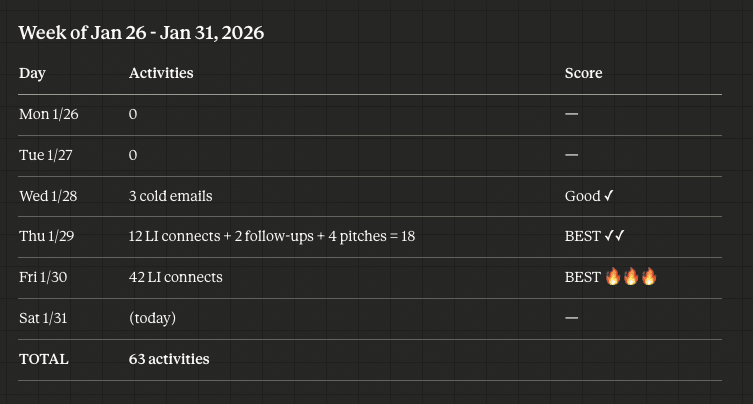
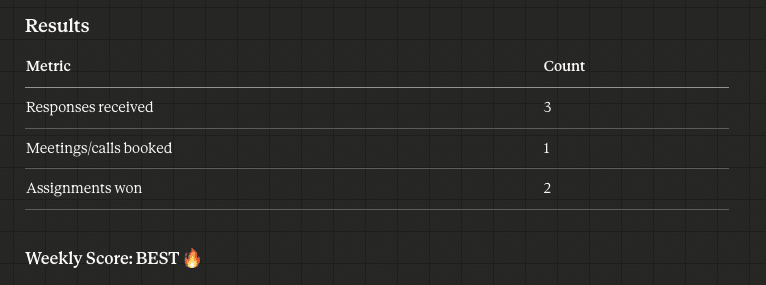
- The Workflow: Leverage conversational AI memory features (such as Claude Cowork) to log daily outreach activities—dates, contacts, pitch variants, and responses. Request automated monthly summaries, conversion analytics, and gamified performance scorecards.
- The Value: Writers can easily analyze conversion patterns (e.g., how many cold emails are required to land a paying client) without wrestling with cumbersome spreadsheets that are rarely kept up to date.
Official Industry Responses and Guidelines
Professional writing organizations and prominent industry leaders have established clear ethical boundaries regarding artificial intelligence:
- The Imperative of Transparency: Content creators must disclose AI utilization to clients when bound by contractual agreements or journalistic ethics codes.
- The Unforgiving Standard of Originality: Clients are actively moving away from programmatic volume in favor of unique point-of-view (POV), proprietary research, and lived human experiences. AI cannot replicate genuine authority.
- The Myth of the "One-Click Article": Industry consensus asserts that fully automated, unedited AI articles are professionally dead. The market rewards human curation, emotional resonance, and rigorous fact-checking.
Implications for the Future of Freelance Writing
The widespread adoption of artificial intelligence signifies a profound transformation in how knowledge work is valued and compensated.
- Shift from Execution to Strategy: As the mechanical act of writing becomes commoditized by automation, the market value of a freelancer shifts upward into strategy, interviewing, editorial curation, and client relationship management.
- Increased Output Expectations: Clients increasingly expect faster turnaround times and integrated multimedia deliverables (such as accompanying social media snippets), making AI proficiency a core survival skill.
- The Premium on Human Authenticity: Paradoxically, as the internet floods with synthetic content, authentic human stories, vulnerability, first-hand expertise, and distinctive narrative voices command a higher financial premium than ever before.
Freelancers who successfully integrate AI into their operational routines while preserving their intellectual autonomy will build more profitable, sustainable, and resilient businesses. Those who resist technological evolution risk being left behind in an economy that values efficiency paired with uncompromising human expertise.
 rifanmuazin
  Nila Kartika Wati