

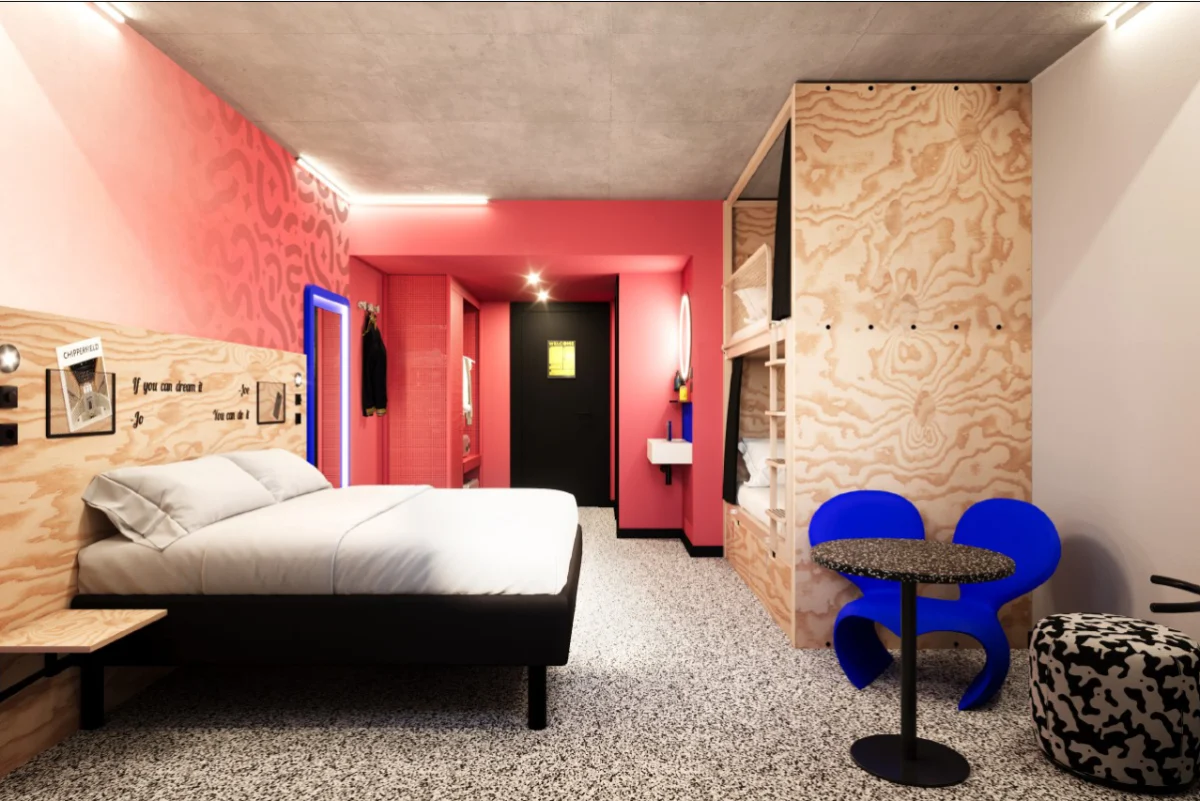
The traditional boundaries of the hospitality industry are dissolving. For decades, the student housing sector—a niche real estate asset class defined by long-term leases and utility-heavy management—was the exclusive domain of specialized operators and academic institutions. However, a seismic shift is underway. Hospitality titans Accor and Meliá Hotels International are increasingly encroaching on this territory, signaling a broader industry pivot toward the "hybrid hospitality" model.
By integrating student living with traditional hotel operations, these major players are looking to emulate the success of pioneers like The Social Hub, turning student residences into multi-purpose, revenue-generating ecosystems that blend accommodation, co-working, and communal lifestyle amenities.
Main Facts: The New Hybrid Frontier
The core of this trend lies in the realization that student housing no longer needs to be a siloed, utilitarian endeavor. Instead, it is being reimagined as a dynamic real estate asset.
The strategy currently being deployed by global brands revolves around a mixed-use operational model. Under this framework, a single property can simultaneously serve the needs of a long-term student resident, a transient business traveler, and a local entrepreneur in need of co-working space.
Accor, Europe’s largest hotel group, has begun integrating its lifestyle brand, JO&JOE, into student housing projects. This approach allows the group to leverage its expertise in social design and communal spaces to attract a younger demographic while maintaining the operational efficiencies of a hotel. Similarly, Meliá Hotels International is exploring deep-level synergy with Stoneshield, an investment firm that has recently cemented its position as a major stakeholder in the Spanish hotel group.
This is not merely an experiment in real estate; it is a strategic diversification of revenue streams. By layering hospitality services over student housing, these companies are effectively hedging against the volatility of the traditional tourism cycle.
Chronology: The Emergence of the "Social Hub" Model
The evolution of this trend can be traced through a series of key developments over the past few years, setting the stage for the current interest from major hotel groups:
- 2012: The Social Hub (formerly The Student Hotel) launches its first property, introducing the "hybrid" concept to the European market. The model is built on the premise of a "complete campus" that houses students during the academic year and tourists or professionals during the summer months.
- 2022: The Social Hub secures a massive capital injection from Singapore’s sovereign wealth fund, GIC, and Dutch pension fund manager APG. This move signals to the broader institutional market that hybrid student housing is a scalable, institutional-grade asset class.
- May 2024: Accor officially announces a partnership with developer Aken Écosystèmes. The deal includes the deployment of the JO&JOE brand into at least five student housing projects across France, marking one of the first major forays by a global hospitality giant into the sector.
- May 2024: Stoneshield Capital increases its stake in Meliá Hotels International to 9.5%, becoming the second-largest shareholder. This move is immediately viewed by market analysts as a catalyst for future operational partnerships between the two entities.
- July 13, 2024: Meliá CEO Gabriel Escarrer confirms to El Confidencial that the group is in active discussions to manage student residences owned by Stoneshield.
Supporting Data: Why the Sector is Ripe for Disruption
The convergence of hospitality and student housing is supported by strong macroeconomic fundamentals. According to market analysts, several key drivers are fueling this interest:
- Supply-Demand Imbalance: In major European university cities—from Paris to Madrid to Amsterdam—the demand for student housing significantly outstrips supply. This creates a resilient, counter-cyclical revenue stream that is largely independent of general economic downturns.
- Asset Utilization Rates: Traditional hotels often suffer from seasonal "low seasons." By integrating student housing, operators ensure that rooms are occupied for 12 months a year, with students filling the properties during academic terms and transient hotel guests utilizing them during the summer.
- Capital Efficiency: Pension funds and institutional investors, like GIC and APG, have signaled a high appetite for hybrid assets. The ability to bundle student housing with co-working spaces and F&B (food and beverage) outlets increases the "net operating income" per square meter compared to traditional single-use residential or hotel projects.
- Market Penetration: The "Gen Z" demographic, which represents both the current student population and the future of the travel market, prioritizes community, digital connectivity, and flexible living. Hospitality brands are uniquely positioned to meet these demands through professionalized amenity management that specialized student housing operators often lack.
Official Responses and Strategic Positioning
The official stance of the companies involved remains focused on "synergy" and "diversification."
Accor’s Perspective:
Accor’s investment in the JO&JOE brand is a cornerstone of their lifestyle division. By bringing a hotel-standard experience to the student market, Accor is betting that students will pay a premium for a lifestyle-branded experience. A spokesperson for Accor noted that the collaboration with Aken Écosystèmes is designed to "redefine the living experience for the next generation of students," emphasizing that the integration of hotel-grade services—such as 24/7 reception, concierge-style support, and high-end security—adds significant value to the property owner.
Meliá’s Silence and Strategy:
While Meliá declined to provide a formal comment following the El Confidencial report, the internal logic is clear. Gabriel Escarrer’s public admission that the group is in talks with Stoneshield highlights a shift toward "asset-light" management. By managing the assets owned by a shareholder like Stoneshield, Meliá can expand its footprint without the capital expenditure of purchasing real estate, allowing them to focus on what they do best: operational excellence and brand management.
The Social Hub’s Role:
As the de facto industry leader, The Social Hub has maintained that the secret to their success is the "blurred lines" between guest segments. By creating a physical environment where a PhD student, a corporate traveler, and a remote-working digital nomad share the same lobby, they create a community that drives loyalty. Their continued expansion serves as the benchmark that Accor and Meliá are now attempting to replicate.
Implications: A New Era for Hospitality
The move by major hotel groups into the student housing segment has profound implications for the real estate and hospitality industries.
1. The Death of the "Pure Play" Hotel
For decades, the hospitality industry was divided into clear segments: luxury, midscale, budget, and extended stay. The hybrid student housing model suggests that the future of hospitality is "community-centric" rather than "service-centric." Hotels are becoming social platforms, and students are becoming the primary anchor tenants of these platforms.
2. Operational Challenges
Transitioning from a hotel model to a student housing model is not without risks. Hotel groups must navigate the complexities of long-term tenancy laws, different regulatory frameworks for student dorms, and the cultural challenge of managing a population that expects a "home" rather than a "stay." Mismanaging this could lead to brand dilution, where the "cool" lifestyle image of a brand like JO&JOE is at odds with the functional requirements of university life.
3. Institutional Investment Shifts
The entry of global players like Accor will likely attract more institutional capital to the sector. Pension funds and real estate investment trusts (REITs) prefer working with established global brands that offer a level of operational transparency and management expertise that local, boutique operators may lack. This will likely lead to a "professionalization" of the student housing market, where properties are managed with the same rigor as five-star resorts.
4. Urban Development Impacts
As these hybrid models expand, they are likely to change the fabric of university cities. By turning dormant, off-campus housing into active, multi-use hubs, these hospitality giants are contributing to the "activation" of city centers. This could lead to a more fluid integration of academic life with the local economy, potentially revitalizing neighborhoods that were previously quiet during summer breaks.
Conclusion: The Future is Hybrid
The convergence of Accor, Meliá, and the hybrid housing sector is the most significant trend in modern hospitality. It represents a fundamental shift in how we perceive the utility of space. As the lines between learning, living, and traveling continue to blur, the brands that can successfully bridge these worlds will hold a significant competitive advantage. The era of the "student dormitory" as a sterile, temporary room is ending; the era of the "hybrid campus" has officially begun.
 Basiran
  Pevita Pearce
  Evan Lee Salim