


The global wellness tourism sector has evolved from a niche luxury market into a multi-billion-dollar economic engine, with travelers increasingly seeking transformative, spiritually grounded experiences. At the epicenter of this paradigm shift is Sedona, Arizona. Renowned for its towering crimson sandstone formations and celebrated "energy vortexes," this high-desert city has synthesized its striking natural geography with high-end hospitality.
Sedona’s premier spa resorts are no longer merely offering standard aesthetic treatments; they are pioneering holistic, place-based therapeutic programs that integrate geological, indigenous, and scientific wellness practices. This report examines the main facts driving Sedona’s wellness economy, the historical chronology of its development, key supporting data, industry responses, and the long-term implications of this booming travel sector.
1. Main Facts: The Intersection of Geography, Geology, and Healing
Sedona’s status as a world-class wellness destination is structurally tied to its unique environmental assets. Geologically, the region is defined by the Schnebly Hill Formation—layered red sandstone rich in iron oxide, which glows brilliantly under the Southwestern sun. Beyond the visual appeal, the area’s global reputation is anchored by its "energy vortexes." These specific geographic sites—most notably Bell Rock, Cathedral Rock, Boynton Canyon, and Airport Mesa—are believed by practitioners to be swirling centers of subtle energy conducive to healing, meditation, and self-exploration.
                   [ Sedona's Core Wellness Ecosystem ]
                                    │
         ┌──────────────────────────┼──────────────────────────┐
         ▼                          ▼                          ▼
   [ Geological Assets ]     [ Energy Vortexes ]     [ Luxury Hospitality ]
   • Red Sandstone           • Bell Rock             • Integrated Spas
   • Iron Oxide Minerals     • Boynton Canyon        • Indigenous Therapies
   • High-Desert Microclimate• Cathedral Rock        • Regenerative Cuisine
In response to this unique environment, the local hospitality industry has developed a highly specialized luxury ecosystem. The premier spa resorts of Sedona do not merely operate within the landscape; they are architecturally and programmatically integrated into it. These properties offer therapies that utilize local clay, botanical extracts, and energy-balancing rituals designed to mirror the surrounding terrain. By blending ultra-luxury amenities with deeply localized spiritual practices, these resorts cater to a demographic of affluent travelers seeking psychological restoration alongside physical pampering.
2. Chronology: From Sacred Ancestral Lands to Global Spa Capital
The evolution of Sedona from a sacred wilderness to a commercial wellness epicenter spans centuries, marked by distinct cultural and economic shifts:
Pre-Columbian Era to the 19th Century: Sacred Indigenous Geography
For millennia, the Yavapai-Apache, Hopi, and Navajo nations regarded the red rocks of Sedona (particularly Boynton Canyon) as sacred ground. These lands were treated as places of spiritual pilgrimage, medicine gathering, and ceremony rather than permanent settlement. The preservation of these spiritual associations laid the groundwork for the area’s contemporary reputation.
Mid-20th Century: The Artistic and Cinematic Awakening
In the 1940s and 1950s, Sedona’s dramatic landscapes became the backdrop for classic Hollywood Westerns, bringing national visibility to the region. Concurrently, surrealist artists, including Max Ernst, migrated to the area, drawn by its surreal geology. This established Sedona as a haven for creative and alternative thinkers.
1980: The "Vortex" Phenomenon is Codified
The modern wellness era began in earnest in 1980 when psychic medium Page Bryant identified and named the specific energy vortexes around Sedona. This codification catalyzed the "New Age" movement, transforming Sedona into an international destination for spiritual seekers, healers, and alternative therapists.
Late 1990s to Present: The Institutionalization of Luxury Wellness
Recognizing the sustained demand for spiritual tourism, major hospitality brands and boutique developers began investing in luxury infrastructure. Simple motels and spiritual retreats were replaced or augmented by world-class resorts. Properties like Mii amo (at Enchantment Resort) and L’Auberge de Sedona formalized wellness tourism, combining high-end hospitality with spiritual, holistic, and clinical spa therapies.
3. Supporting Data: The Economics of Wellness Tourism
The growth of Sedona’s wellness hospitality sector is supported by robust macroeconomic data. Wellness tourism is one of the fastest-growing segments of the global tourism economy.
                          GLOBAL WELLNESS TOURISM GROWTH
                          (Projected Market Size in USD)

  Year  │ Market Size
  ──────┼──────────────────────────────────────────
  2020  │ $$$ $436 Billion
  2022  │ $$$$$$ $651 Billion
  2027* │ $$$$$$$$$$$$ $1.4 Trillion (Projected)

Source: Global Wellness Institute (GWI)- The Global Wellness Economy: According to the Global Wellness Institute (GWI), the global wellness tourism market was valued at $651 billion in 2022 and is projected to reach $1.4 trillion by 2027, growing at an annual rate of 16.6%.
- The Premium of the Wellness Traveler: GWI data reveals that international wellness tourists spend an average of 41% more per trip than typical international tourists. Domestically, wellness travelers spend roughly 175% more than average domestic tourists, making them a highly lucrative demographic for municipal tax bases and local economies.
- Local Economic Impact: The Sedona Chamber of Commerce & Tourism Bureau reports that tourism generates over $1 billion in annual economic impact for the region, supporting more than 10,000 local jobs. A significant portion of this revenue is directly driven by spa, wellness, and outdoor recreation expenditures.
4. Deep Dive: Sedona’s Premier Wellness Resorts
To understand how Sedona’s wellness economy operates on a practical level, it is necessary to analyze the properties that define its luxury market. Each of these resorts has carved out a distinct niche, balancing physical therapy with spiritual and environmental immersion.
                      SEDONA'S PREMIER SPA RESORTS

  ┌───────────────────────┬────────────────────────┬──────────────────────┐
  │ Resort Name           │ Signature Focus        │ Price Point (Entry)  │
  ├───────────────────────┼────────────────────────┼──────────────────────┤
  │ L'Auberge de Sedona   │ Forest & Creek Therapy │ From $300 / night    │
  │ Enchantment Resort    │ Indigenous & Canyon    │ From $664 / night    │
  │ The Wilde Resort      │ Active Recovery        │ From $207 / night    │
  │ Amara Resort & Spa    │ Modern & Casual CBD    │ From $340 / night    │
  │ Hilton Bell Rock      │ Energy & Adventure     │ From $291 / night    │
  └───────────────────────┴────────────────────────┴──────────────────────┘
L’Auberge de Sedona
- Location: 301 L’Auberge Ln, Sedona, AZ 86336
- Aesthetic and Environment: Situated along the banks of Oak Creek, L’Auberge de Sedona offers a forested, creekside contrast to the surrounding desert cliffs. Designed to blend into the canopy of sycamore trees, the resort emphasizes auditory and visual tranquility.
- Wellness Philosophy: The resort’s L’Apothecary Spa focuses on sensory connection to nature. Guests can design custom botanical blends using local rosemary, juniper, and clay. Accommodation options include specialized spa cottages featuring outdoor showers and private decks steps from the creek.
- Culinary Integration: Cress on Oak Creek offers a fine-dining, farm-to-table menu utilizing ingredients sourced from Northern Arizona, reinforcing the philosophy of internal and external purification.
Enchantment Resort
- Location: 525 Boynton Canyon Rd, Sedona, AZ 86336
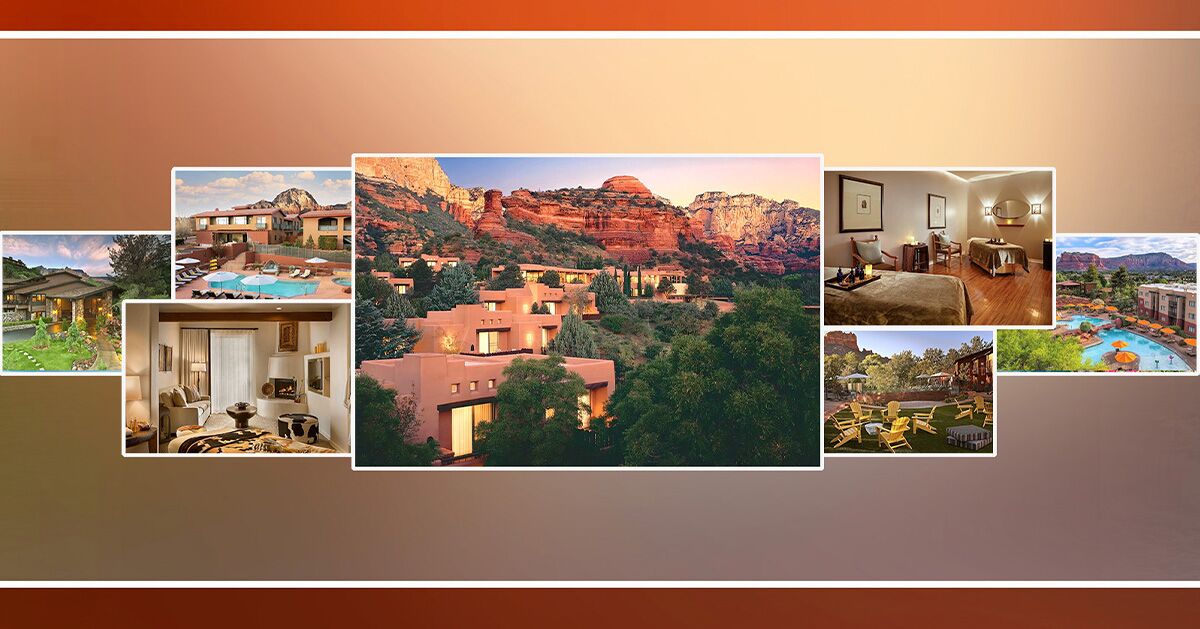
- Aesthetic and Environment: Spanning 70 acres deep within Boynton Canyon, Enchantment Resort is framed by towering red rock canyon walls. The architecture uses low-slung adobe structures designed to minimize visual disruption to the natural skyline.
- Wellness Philosophy: The resort is globally renowned for its connection to Mii amo, a destination spa undergoing continuous refinement. Treatments are heavily influenced by Indigenous traditions, utilizing Native American-inspired therapies, inner-guided meditation, and connection rituals. The resort also offers extensive outdoor programming, including guided mountain biking and vortex hikes.
- Target Demographic: High-net-worth individuals seeking deep, multi-day spiritual retreats and absolute privacy.
The Wilde Resort and Spa
- Location: 2250 W State Rte 89A, Sedona, AZ 86336
- Aesthetic and Environment: Positioned as an upscale, contemporary basecamp, The Wilde balances modern design with rugged outdoor accessibility. The property features meticulously landscaped courtyards, a physical labyrinth for walking meditation, and expansive fire pits.
- Wellness Philosophy: The Wilde Haven Spa targets active recovery. It caters to travelers who spend their days hiking or cycling the red rocks and require intensive physical therapy—such as deep tissue massage, hot stone treatments, and hydrotherapy—in the evening.
- Amenities: Steam rooms, hot tubs, and a dedicated relaxation lounge designed to transition guests from rugged outdoor exploration to deep physical rest.
Amara Resort and Spa
- Location: 100 Amara Ln, Sedona, AZ 86336
- Aesthetic and Environment: Located in Uptown Sedona along Oak Creek, Amara offers a modern, social, and vibrant atmosphere. Following a comprehensive renovation, the property features a clean, earthy aesthetic with bold Southwestern accents.
- Wellness Philosophy: Amara positions itself as a casual yet sophisticated wellness sanctuary. Its full-service spa is known for incorporating contemporary wellness trends alongside traditional therapies, offering specialized CBD-infused treatments and ceremonial rain dance massages.
- Key Amenities: A zero-edge infinity pool overlooking the red rocks, yoga classes, and the SaltRock Southwest Kitchen, which serves clean, regional cuisine and craft cocktails.
Hilton Sedona Resort at Bell Rock
- Location: 90 Ridge Trail Dr, Sedona, AZ 86351
- Aesthetic and Environment: Situated in the Village of Oak Creek near the iconic Bell Rock formation, this resort offers a spacious, family-friendly, and adventure-centric alternative to more secluded boutique properties.
- Wellness Philosophy: The resort’s Eforea Spa bridges the gap between conventional athletic recovery and esoteric energy work. Alongside traditional facials and massages, the spa offers specialized "Energy Rituals," including professional numerology, life palm readings, sound bowl therapies, and guided energy vortex education.
- Key Amenities: An adjacent championship golf course, tennis courts, and a robust outdoor fitness center, catering to travelers who view physical fitness as an integral component of wellness.
5. Industry Responses and Operational Perspectives
The rapid growth of wellness tourism in Sedona has drawn praise from hospitality leaders and scrutiny from environmentalists and local officials.
Hospitality Industry Insights
Spa directors in Sedona emphasize that the modern traveler’s expectations have shifted. "Guests are no longer satisfied with simple pampering," notes a regional spa director. "They are looking for emotional resilience, mental clarity, and a sense of place. Our treatments must tell the story of Sedona’s geology and cultural history to feel authentic."
                  [ Evolving Demographics of Wellness ]

         Past Expectations                   Modern Demographics
  ┌──────────────────────────────┐     ┌──────────────────────────────┐
  │ • Passive relaxation         │     │ • Active, holistic recovery  │
  │ • Standard massage therapies │  ►  │ • Epigenetics & bio-hacking  │
  │ • Isolated spa facilities    │     │ • Place-based spiritualism   │
  │ • Pampering focus            │     │ • Eco-conscious operations   │
  └──────────────────────────────┘     └──────────────────────────────┘
The Sustainable Tourism Response
In response to the massive influx of visitors, the Sedona Chamber of Commerce & Tourism Bureau developed the Sedona Sustainable Tourism Plan. This initiative directly addresses the environmental footprint of wellness tourism, urging resorts to adopt water-conservation practices, eliminate single-use plastics, and educate guests on "Leave No Trace" principles when visiting sacred vortex sites.
6. Implications: The Future of Wellness Tourism and Its Challenges
The trajectory of Sedona’s spa and wellness industry carries significant implications for the broader travel market, local ecosystems, and the communities that host them.
Environmental Degradation and Overtourism
The very asset that draws millions of wellness tourists—Sedona’s fragile high-desert environment—is threatened by its popularity. Trail erosion, traffic congestion, and noise pollution around key vortex sites present a paradox: the pursuit of individual peace and wellness can collectively degrade the natural tranquility of the destination. Resorts are increasingly tasked with managing this impact by offering on-site wellness experiences, such as private labyrinths and indoor sound baths, to reduce foot traffic on public lands.
Cultural Appropriation vs. Respectful Integration
As resorts continue to market treatments inspired by Indigenous traditions, the hospitality industry faces ongoing ethical scrutiny regarding cultural appropriation. Forward-thinking resorts are addressing this by partnering directly with Native American consultants, elders, and artisans. This ensures that ceremonies, ingredients, and terminologies are utilized respectfully, with economic benefits returning to indigenous communities.
The Evolution of "Science-Backed" Wellness
Looking ahead, the wellness travel demographic is demanding a synthesis of spiritual mysticism and clinical science. Future industry growth in Sedona will likely see the integration of advanced therapies—such as IV nutrient therapy, sleep-science programs, and biomarker analysis—alongside traditional energy work and botanical therapies.
Conclusion
Sedona’s spa resorts have successfully transformed a stunning geological landscape into a highly sophisticated, multi-tiered wellness economy. By offering a spectrum of experiences—from the deeply spiritual, indigenous-inspired programs of Enchantment/Mii amo to the active, athletic recovery models of The Wilde—Sedona serves as a blueprint for how destination-driven hospitality can thrive. However, the long-term viability of this model will depend heavily on the industry’s ability to balance luxury commerce with aggressive environmental stewardship and authentic cultural respect.
 Raul Delapena Setiawan
  Nila Kartika Wati
  Iffa Jayyana