

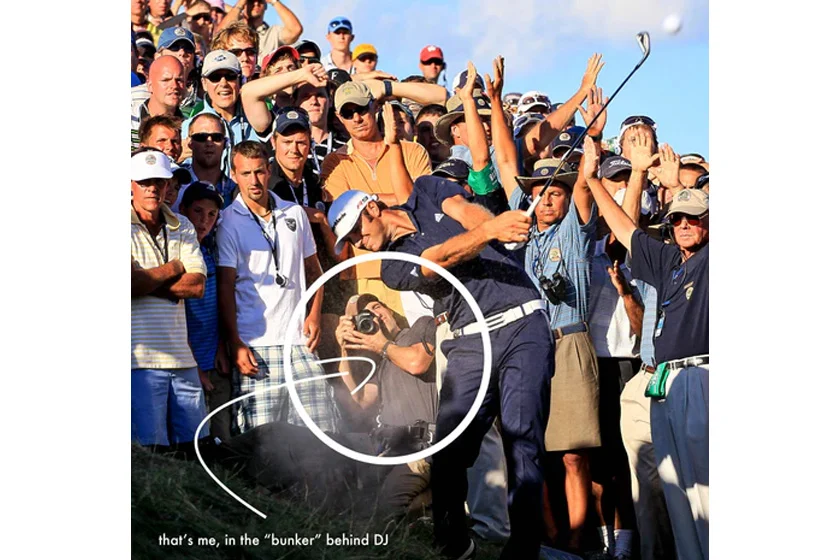
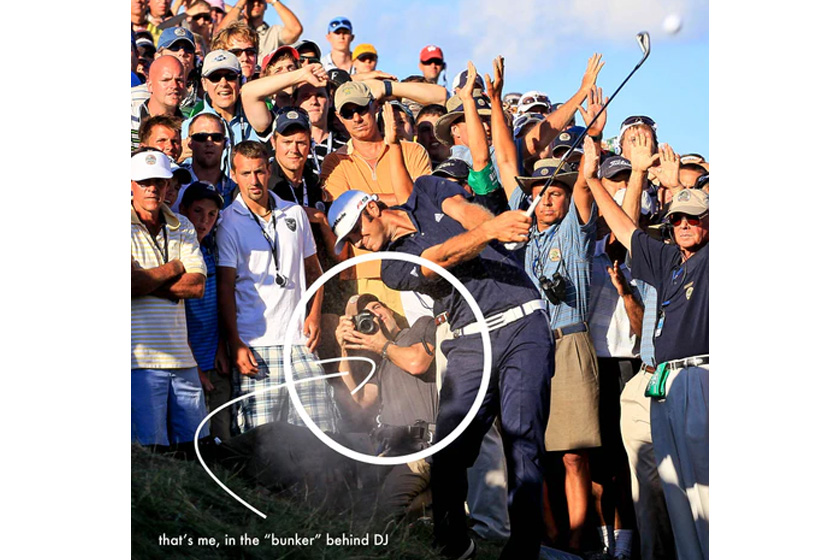
To understand the design philosophy of Allan Henry, you must first abandon the notion of the "gear designer" as a mere sketch artist. For two decades, Henry stood on the sidelines for USA Today, a professional photographer hauling heavy glass and dual camera bodies through the high-pressure, high-stakes environment of championship sports. In that world, ergonomics is not a marketing buzzword; it is a survival mechanism. An extra pound or a poorly positioned harness doesn’t result in mere aesthetic dissatisfaction—it results in physical fatigue that degrades the quality of one’s work during an eight-hour event.
Henry’s transition from gear user to gear creator was born from this unromantic, utilitarian reality. With the launch of the Atlas One series, the brand is stepping away from the rugged backcountry mountain peaks that defined its award-winning Adventure and Athlete packs to tackle a different, more elusive challenge: the everyday carry (EDC) ecosystem.
Main Facts: A New Blueprint for Daily Transit
The Atlas One is not an iteration of previous successes; it is a ground-up reconstruction of what an urban-to-travel camera bag should be. Built on the principle of the "One Body, One Lens" footprint, the system rejects the "general-purpose box" approach that plagues most camera bag manufacturers.
Key specifications and features include:

- The Day Pack (20–25L): An ultra-slim, 4.5-inch deep profile designed for the minimalist urban commuter.
- The Getaway Pack (25–32L): A deeper, clamshell-opening travel companion optimized for carry-on compliance across global airlines.
- The Mission Pack (27–30L): A specialized technical variant featuring an integrated "Origami Camera Core" and magnetic side-access doors for rapid deployment of telephoto lenses.
- Material Science: A modular approach to textiles, where Henry utilizes lightweight ripstops for face panels to reduce weight and high-denier technical fabrics for perimeter walls to enhance structural integrity.
Chronology: The Year of Living Dangerously (with a Prototype)
In an industry driven by quarterly product cycles and the frantic pace of Kickstarter milestones, Henry chose a path of "deliberate deceleration."
The 365-Day Test: Rather than rushing to market, Henry committed to a full-year, real-world stress test. He lived with a single, finalized prototype for 365 days, refusing to alter a single stitch or seam. This was not a passive experiment; it was a rigorous data-gathering exercise.
- Months 1-3 (The Honeymoon): The initial phase focused on immediate ergonomics and load-bearing comfort.
- Months 4-9 (Seasonal Stress): By carrying the bag through four distinct seasons, Henry monitored how technical textiles reacted to extreme UV exposure, temperature fluctuations, and moisture.
- Months 10-12 (Pattern Settlement): The final quarter was dedicated to observing how the frameless, modified yoke shifted under weight and identifying where friction naturally occurred on the body panel.
This process allowed the final production pattern to be informed by a mountain of multi-seasonal data, ensuring that the "Atlas One" would not only look good on day one but perform as intended on day 365.
Supporting Data: Why Focus Groups Stripped the Clutter
When Henry began sketching the Atlas One, he operated under a common designer’s bias: he assumed his existing community—a group of photographers accustomed to the rugged, feature-heavy utility of the Athlete pack—would demand more. He expected them to ask for more attachment points, more pockets, and more complex organizational modules.
The Reality Check:
Henry assembled focus groups of long-term Atlas users to validate these assumptions. The response was a decisive rebuke of the "more is better" mentality. The community’s needs boiled down to two non-negotiable pillars: uncompromising comfort and flawless build quality.
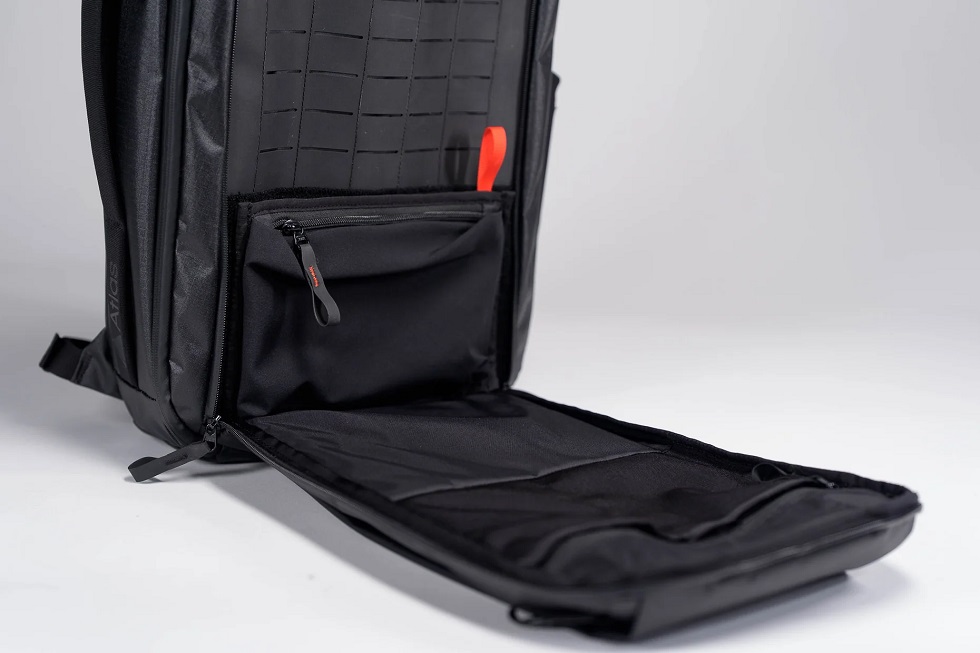
Consequently, Henry executed a "subtractive design" strategy. He stripped away the bells and whistles, pouring his manufacturing budget into the core touchpoints—the straps, the back panel, and the structural internal cleanliness. By cutting the "clutter," he was able to source higher-quality hardware and refined manufacturing lines, resulting in a product that feels more premium because it is less distracted.
Official Perspective: The Independent Design Lab
In a discussion regarding the brand’s trajectory, Henry emphasizes that Atlas Packs is not a corporate entity seeking global retail dominance. Instead, it operates as an "independent design laboratory."
"When you manage the entire lifecycle—from the initial sketch to the direct-to-consumer delivery—you gain a level of agility that mass-market brands simply cannot replicate," says Henry.
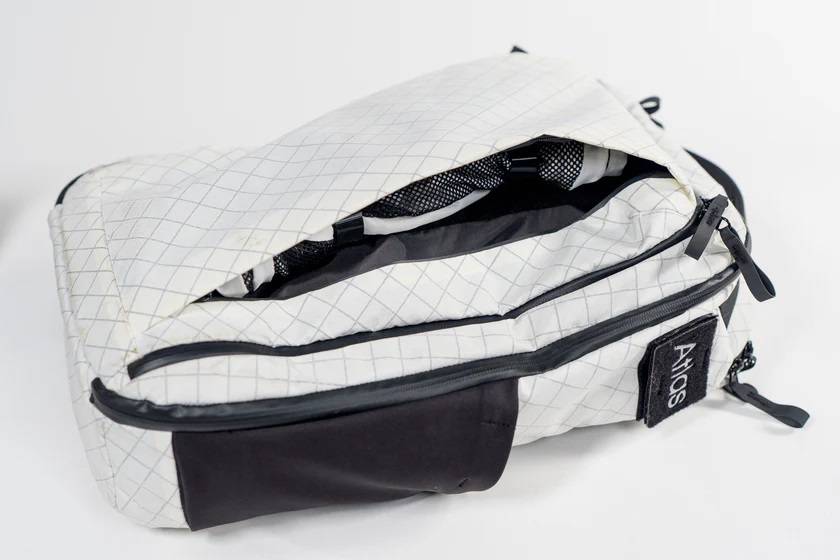
This agility is reflected in the brand’s pricing model. Atlas employs a "size-agnostic" approach to cost, where prices are dictated by the technical complexity and the cost of the raw textiles utilized in a specific batch, rather than the physical volume of the bag. This creates a transparent relationship between the maker and the user; you aren’t paying for the brand’s marketing overhead or "lifestyle" markup. You are paying for the fabric science and the R&D that went into the specific unit you are carrying.
Implications: The Future of Micro-Brand Manufacturing
The arrival of the Atlas One serves as a compelling proof of concept for the future of independent soft goods design. As the market for technical gear becomes increasingly saturated with generic, mass-produced items, Atlas Packs has carved out a niche by doubling down on the "Human-Centered Design" movement.
1. The Death of the "General-Purpose Box"
The industry has long been obsessed with creating the "do-it-all" bag—a box that tries to be a gym bag, a camera bag, and a laptop sleeve simultaneously, often succeeding at none of them. By focusing on the "One Body, One Lens" geometry, Atlas is signaling a shift toward specialized, intentional carry. Users are becoming more sophisticated; they no longer want a bag that accommodates everything they might need, but rather a tool that optimizes what they actually use.
2. The Power of Direct Feedback
The success of the Atlas One illustrates that the most effective focus group is not a demographic survey, but a community of users who already own your product. By listening to the, "no, we don’t want more pockets," feedback, Henry successfully pivoted his brand toward a more sustainable and high-quality production path.
3. Sustainable Design through Longevity
Perhaps the most significant implication is environmental. By creating a product that is designed to endure, and by testing it for a full year before release, Henry is countering the "fast fashion" trend that has permeated the outdoor gear industry. A bag that doesn’t need to be replaced after two years of heavy use is, by definition, more sustainable than a cheaper, feature-heavy alternative that fails at the zippers or seams within six months.
Conclusion: Caring More About the Fundamentals
The Atlas One is more than a new backpack; it is a manifesto on the necessity of patience in a high-speed world. By moving away from the sprawling, technical architecture of his earlier backcountry designs, Allan Henry has proven that true minimalist design is not about doing less—it is about caring more about the fundamentals that remain.
In an industry often distracted by the next "big" feature or the race to the bottom in manufacturing costs, Atlas Packs has maintained a steadfast eye on the ball. Whether you are a professional photographer working a sideline or a traveler navigating the nuances of international carry-on requirements, the Atlas One stands as a testament to what happens when a designer trusts their community, honors their own experience, and refuses to cut corners in the pursuit of perfection.
For the gear enthusiast, the Atlas One is a reminder that the best equipment is the kind that disappears—the kind that stops feeling like a "bag" and starts feeling like an extension of your own movement through the world. By prioritizing precision, patience, and a deep, intimate connection to the end-user, Atlas Packs has not just built a product; they have built a blueprint for the modern, independent creative who demands that their gear work as hard as they do.
 Asep Darmawan
  Layla Zulfa
  Iffa Jayyana