

Would you be surprised if you realized that your daily carry—the items you tuck into your bag, slip into your pockets, or wear on your back—is a curated collection of space-age survival gear? The materials engineered to withstand the brutal vacuum of space, the bone-chilling cold of the lunar surface, and the violent heat of atmospheric reentry didn’t stay "up there." They returned to Earth, finding new life as the quiet, high-performance foundations of our everyday lives.
From the memory foam padding your shoulder straps to the reflective lining of your emergency blanket, these items trace a clear, documented lineage back to the extreme problem-solving sessions of the space program. This is not a matter of vague inspiration or "marketing speak." It is a testament to the rigorous, government-contracted, patent-licensed reality of technology transfer. Since 1976, NASA’s Technology Transfer Office has published Spinoff, an annual chronicle cataloging how extraterrestrial innovation has fundamentally transformed terrestrial existence.
The Anatomy of a Spinoff: Main Facts
The journey of a space-born technology is rarely a straight line. It is a messy, human, and deeply fascinating process. Some technologies were born within the halls of NASA’s research centers; others were conceived by private innovators who saw a need and knocked on the agency’s door; many were developed by NASA-funded contractors who spun off into commercial powerhouses. Regardless of the origin, the result is the same: solutions to the most extreme environments on (or off) the planet have been repurposed to solve the trivial, yet necessary, problems of daily life.
We are looking at five distinct technologies that transitioned from life-critical space assets to consumer essentials, illustrating how innovation thrives when it is forced to move beyond its original, confined context.
Chronology of Innovation: A Historical Perspective
The timeline of these technologies is inextricably linked to the fervor of the Cold War space race.
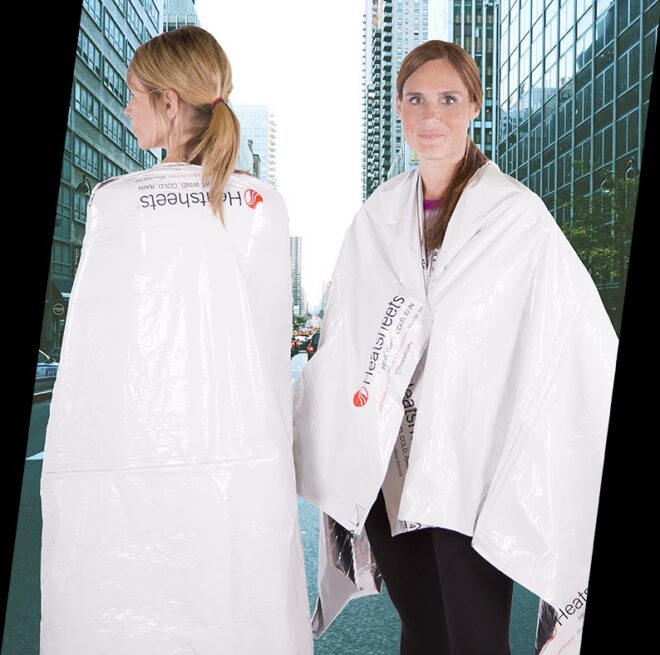
- 1964: NASA’s Marshall Space Flight Center initiates the development of multi-layer insulation (MLI) to protect spacecraft from the 280-degree temperature swings encountered in low Earth orbit.
- 1966: NASA’s Ames Research Center develops "slow spring-back foam" to improve pilot crash protection, which later evolves into modern memory foam.
- 1968: Fisher’s pressurized ink cartridge—developed in response to NASA’s need for a reliable, gravity-independent writing instrument—makes its debut on the Apollo 7 mission.
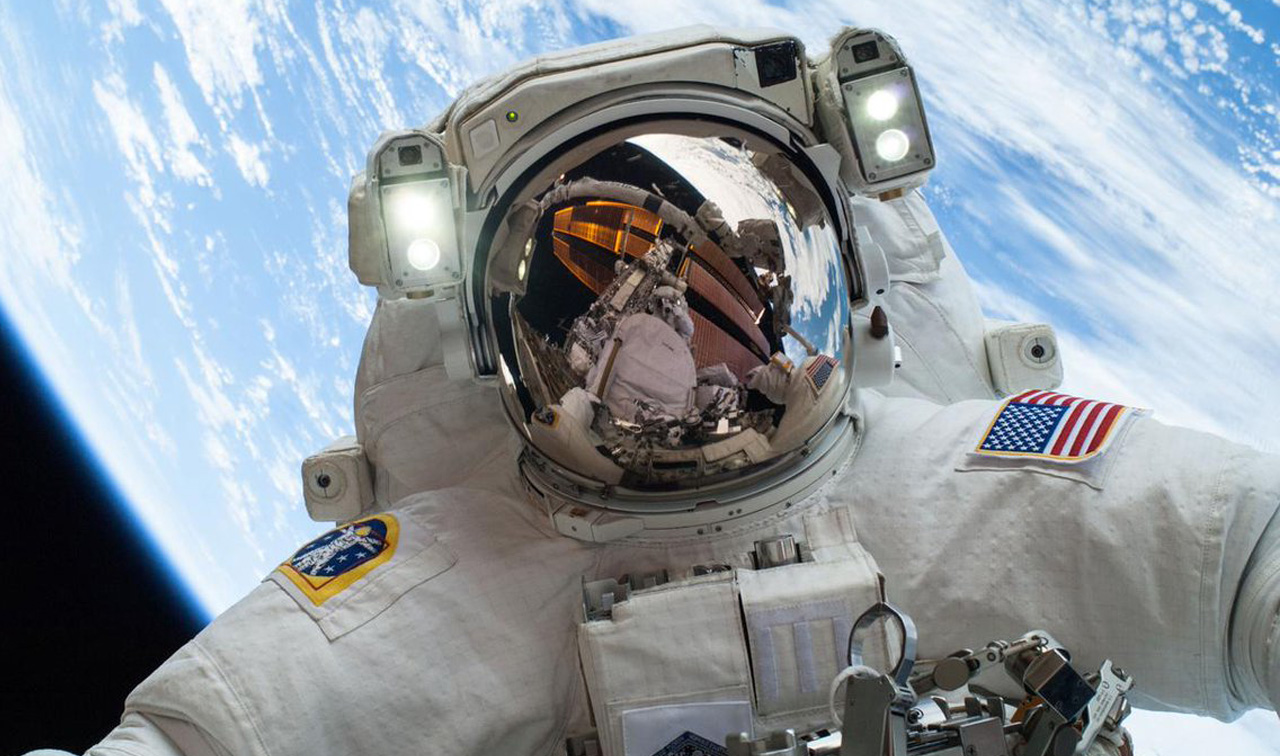
- 1970s: The Lewis Research Center (now Glenn Research Center) pioneers direct ion deposition to create diamond-like carbon (DLC) coatings to protect optical visors from space abrasion.
- 1993–1999: A decade of NASA-funded SBIR contracts leads Aspen Systems to perfect flexible aerogel blankets for cryogenic fueling systems, eventually reaching the outdoor apparel market by the late 2000s.
Supporting Data: The Physics of Performance
The success of these technologies lies in their ability to manipulate fundamental physics where conventional materials fail.
The Gold Foil Legacy
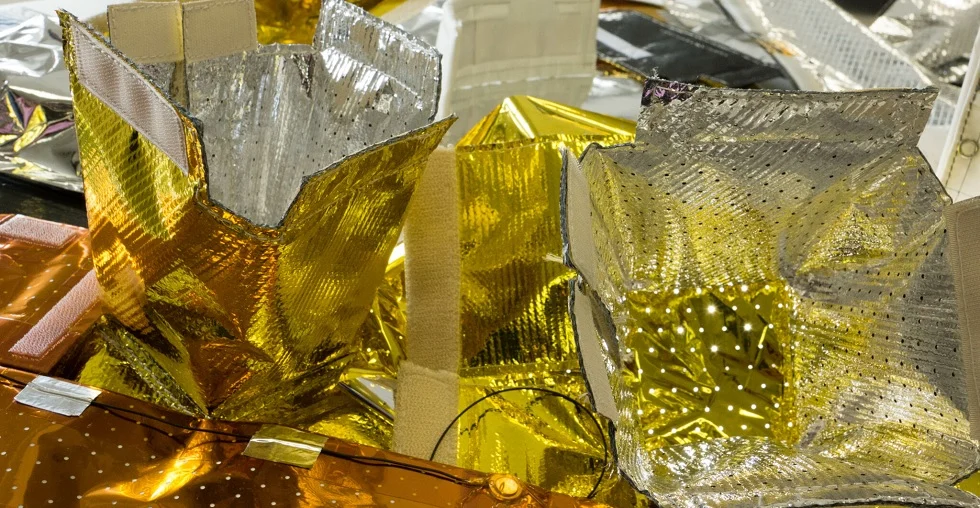
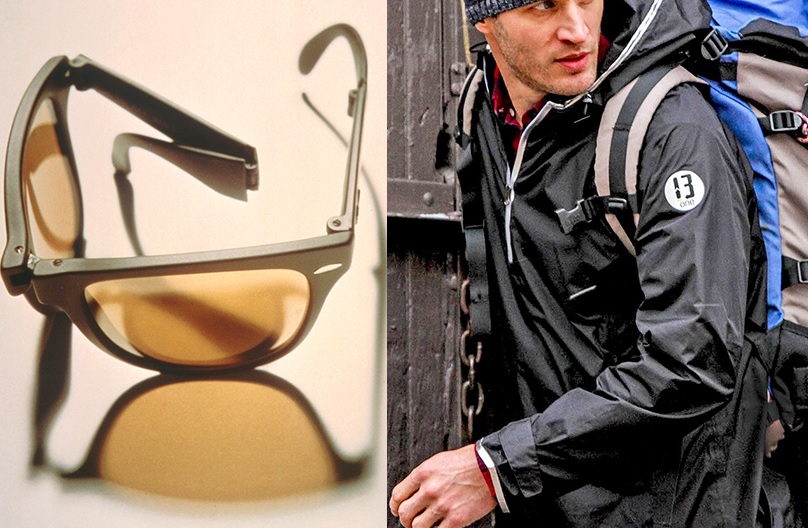
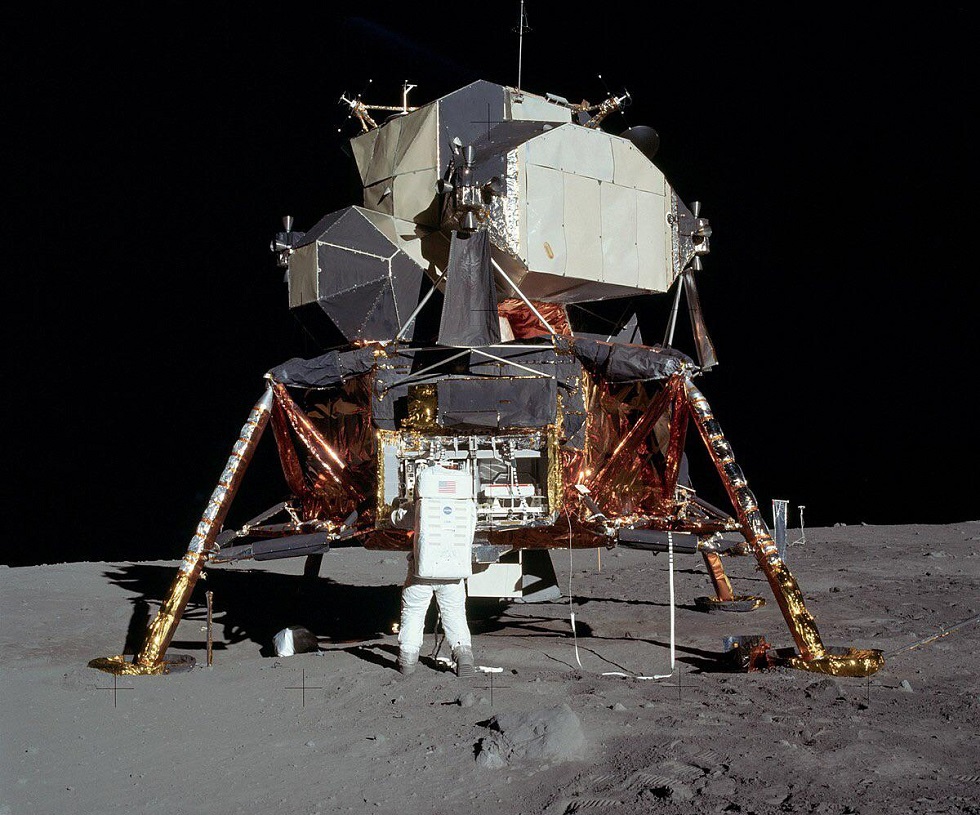
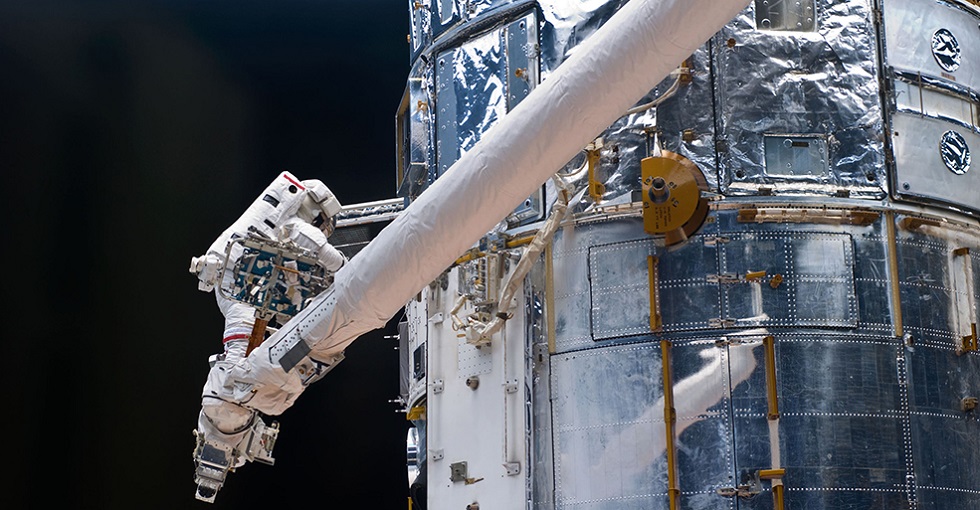
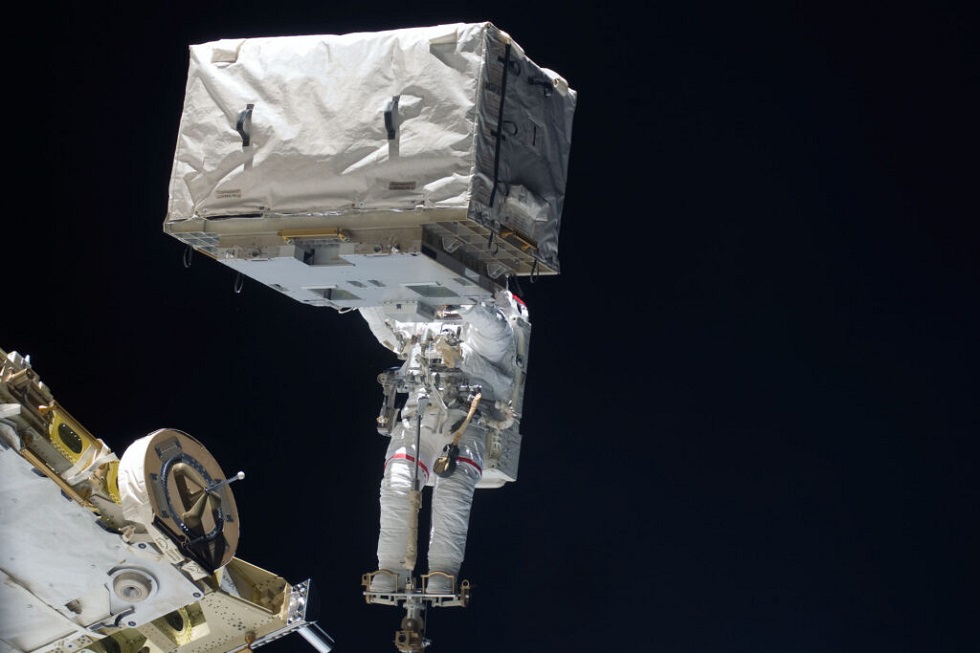
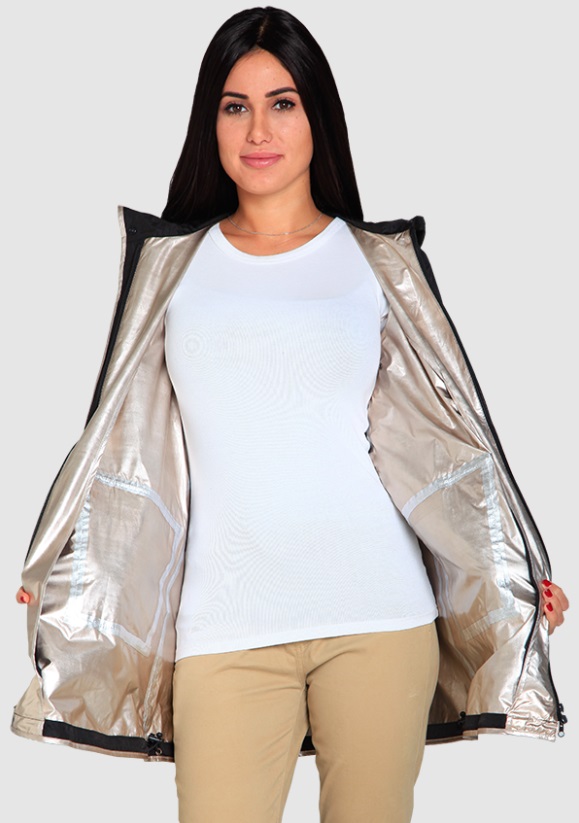
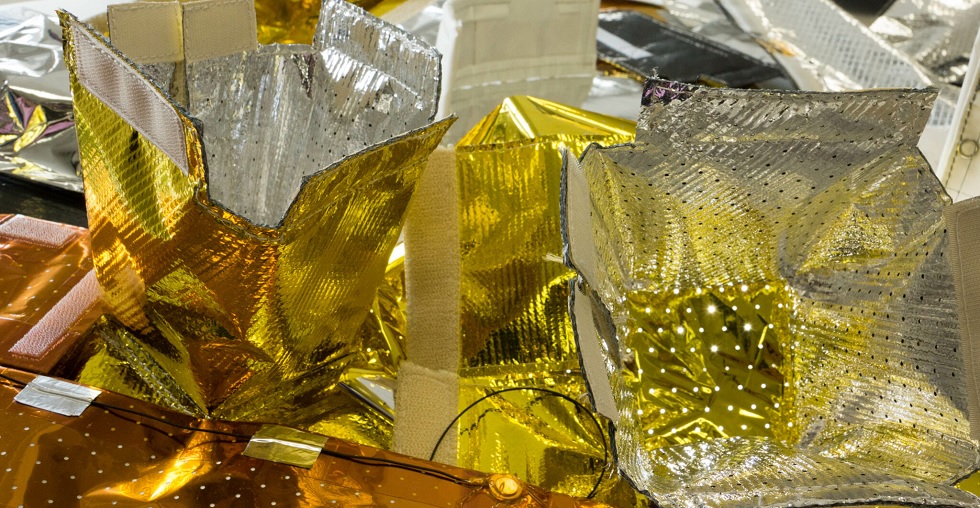
The iconic "gold foil" seen on the Apollo Lunar Module and the James Webb Space Telescope is, in fact, multi-layer insulation (MLI). By alternating thin plastic films with vacuum-deposited metallic layers, engineers created a material that reflects up to 97% of radiated heat. When a primary supplier ceased operations in the 1980s, the technology was pivoted into the commercial sector as "Heatsheets." Today, this identical physical principle is found in everything from marathon finish-line blankets to high-performance rain jackets using "Ultraflect" fabric, proving that a material designed to keep a moon lander from freezing can effectively keep a commuter warm.
Diamond-Hard Optical Clarity
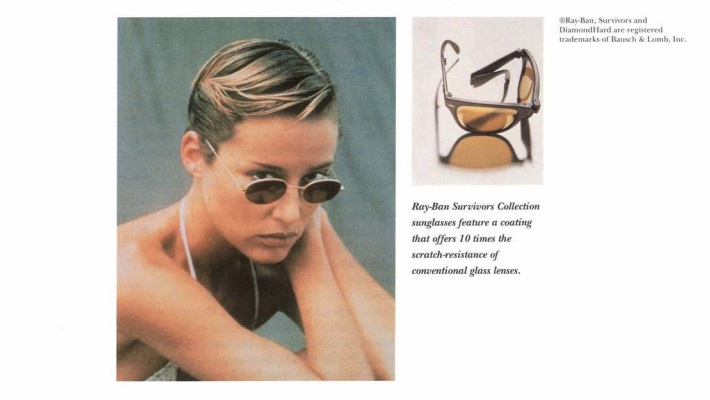
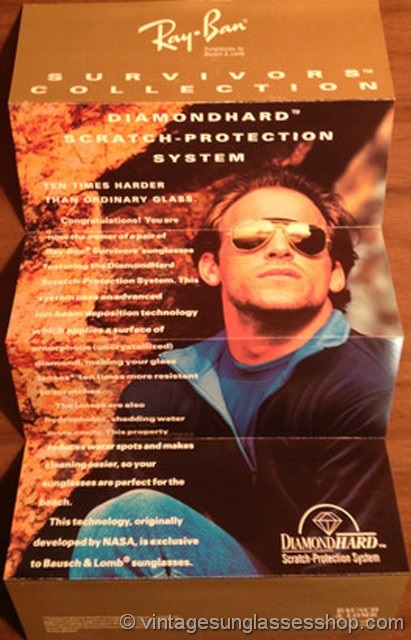
In the 1970s, the challenge was preventing microscopic particle impacts from blinding an astronaut. NASA’s solution was Diamond-Like Carbon (DLC). By using an ion generator to grow a nanometer-thin film of carbon atoms, they created a surface harder than conventional glass. Licensed by Bausch & Lomb for the "Ray-Ban Survivors Collection," this technology delivered lenses ten times more scratch-resistant than industry standards, setting a new benchmark for optical durability that persists in high-end eyewear today.
Viscoelasticity and the Memory Foam Revolution
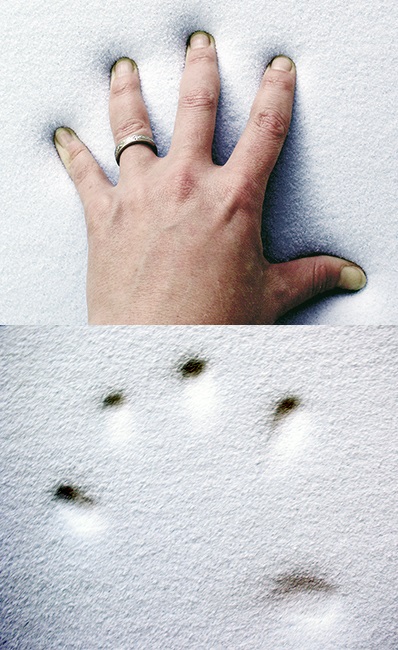
Charles Yost’s development of "slow spring-back foam" at Ames Research Center was initially about managing G-force impact. By creating an open-cell polyurethane foam that could distribute energy rather than absorbing it at a single point, Yost created the gold standard for pressure relief. Once Fagerdala World Foams solved the manufacturing scale issues, the medical field adopted it for pressure-sore prevention. Now, it is the primary component in high-end backpacks, where it allows heavy loads to feel significantly lighter by conforming to the wearer’s body—a direct application of aerospace crash-protection logic.
Aerogel: The Ultimate Insulator
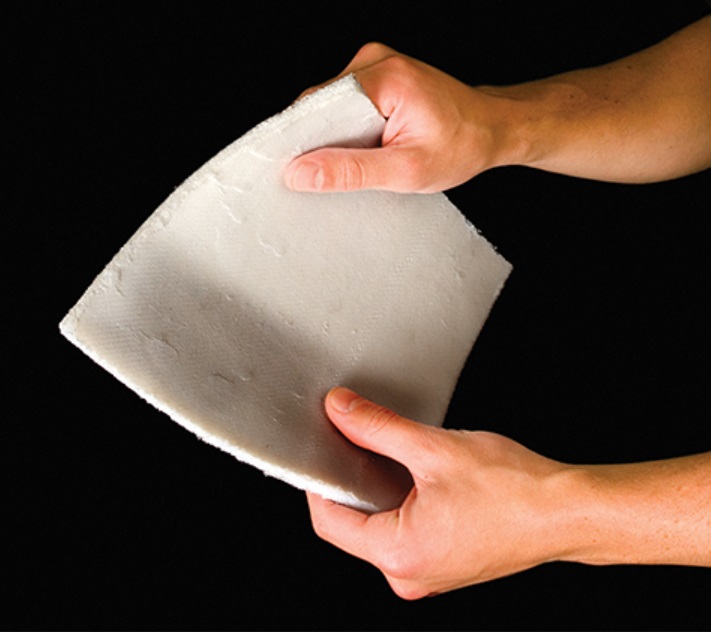
Aerogel is perhaps the most impressive material in this collection. Composed of over 95% air, it holds the record for the lowest thermal conductivity of any known solid. When James Fesmire at Kennedy Space Center sought a way to insulate liquid hydrogen at -253°C, he turned to aerogel. The breakthrough was making it flexible. By wrapping fibers in an aerogel shell, the material became a textile. Today, brands like SITKA Gear and Outdoor Research use aerogel-infused synthetic fill, providing insulation that is thinner, lighter, and more effective than traditional down, especially in wet conditions.
The Fisher Space Pen
Often cited as the ultimate example of over-engineering, the Fisher Space Pen is actually a triumph of chemical engineering. Paul Fisher’s solution to leaking was to create a thixotropic ink—a gel that behaves like a solid until the shear force of the pen’s ball tip turns it into a liquid. Tested at the Manned Spacecraft Center, these pens operate in a temperature range of -35°C to 120°C and can write over grease and underwater. It remains the standard for astronauts and has become a staple for anyone who values reliability over gimmicks.
Official Responses and Industry Recognition
NASA’s commitment to this process is institutional. The Space Foundation’s "Space Technology Hall of Fame" regularly inducts these products, acknowledging that the agency’s mandate extends beyond exploration to the betterment of life on Earth. Organizations like the Spinoff office act as a bridge, ensuring that when a patent is licensed, the private sector has the resources to turn a laboratory curiosity into a scalable, consumer-ready product.
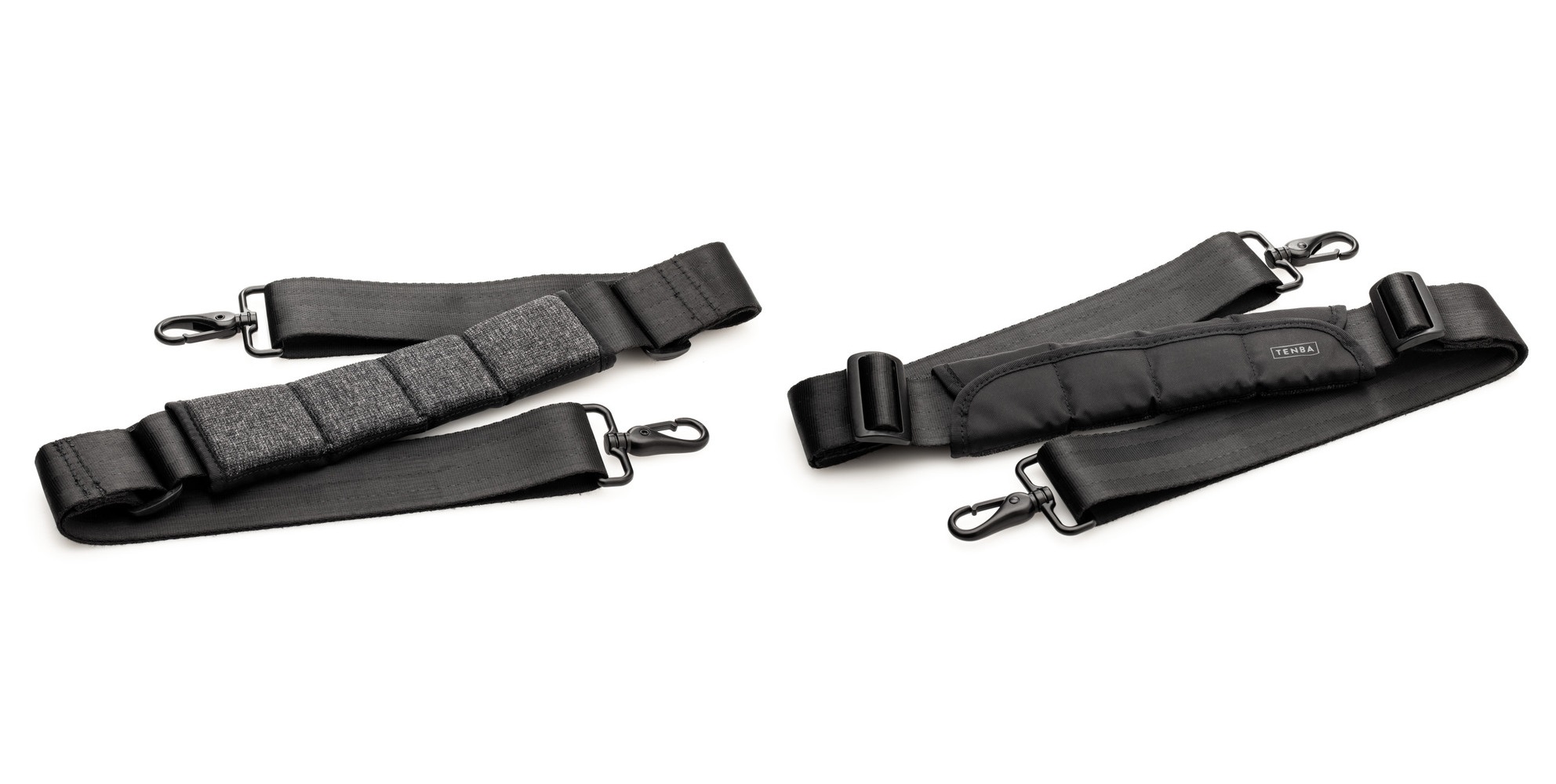
Industry leaders in the outdoor and apparel space, such as PrimaLoft and Tenba, frequently cite these NASA-developed technologies in their marketing, acknowledging that their competitive edge—whether it be the "Cross Core" aerogel insulation or the memory foam in a camera bag strap—originates in the extreme requirements of space flight.
Implications: The Future of Carry
The implications for the "carry" industry are profound. As we look toward the future of space exploration, particularly the Artemis program and potential Mars missions, the demand for even lighter, stronger, and more resilient materials will only grow.
The history of these five technologies suggests a clear pattern: space exploration acts as an incubator for material science. When we push the boundaries of what is possible in the vacuum of space, we invariably lower the barrier for what is possible in our daily lives.

Whether it is the pen you use to sign a document, the jacket you wear to combat a winter storm, or the mattress that supports you at night, you are engaging with a legacy of engineering that began with a mission to leave this planet. The "space age" isn’t a historical chapter that ended with the moon landings; it is an ongoing reality that continues to dictate the performance, durability, and utility of the very things we carry every single day. The next time you adjust your backpack strap or unfold an emergency blanket, remember: you are carrying a piece of the cosmos with you.
 Asep Darmawan
  Layla Zulfa
  Iffa Jayyana