

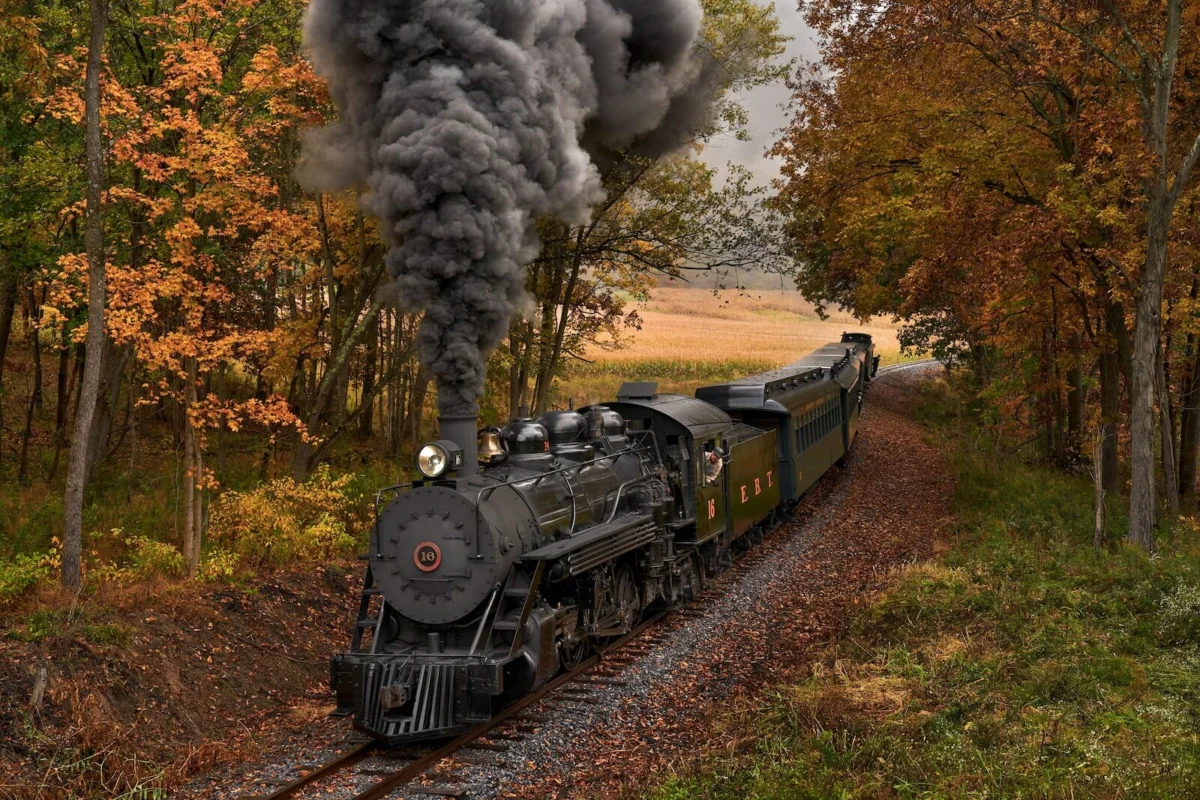
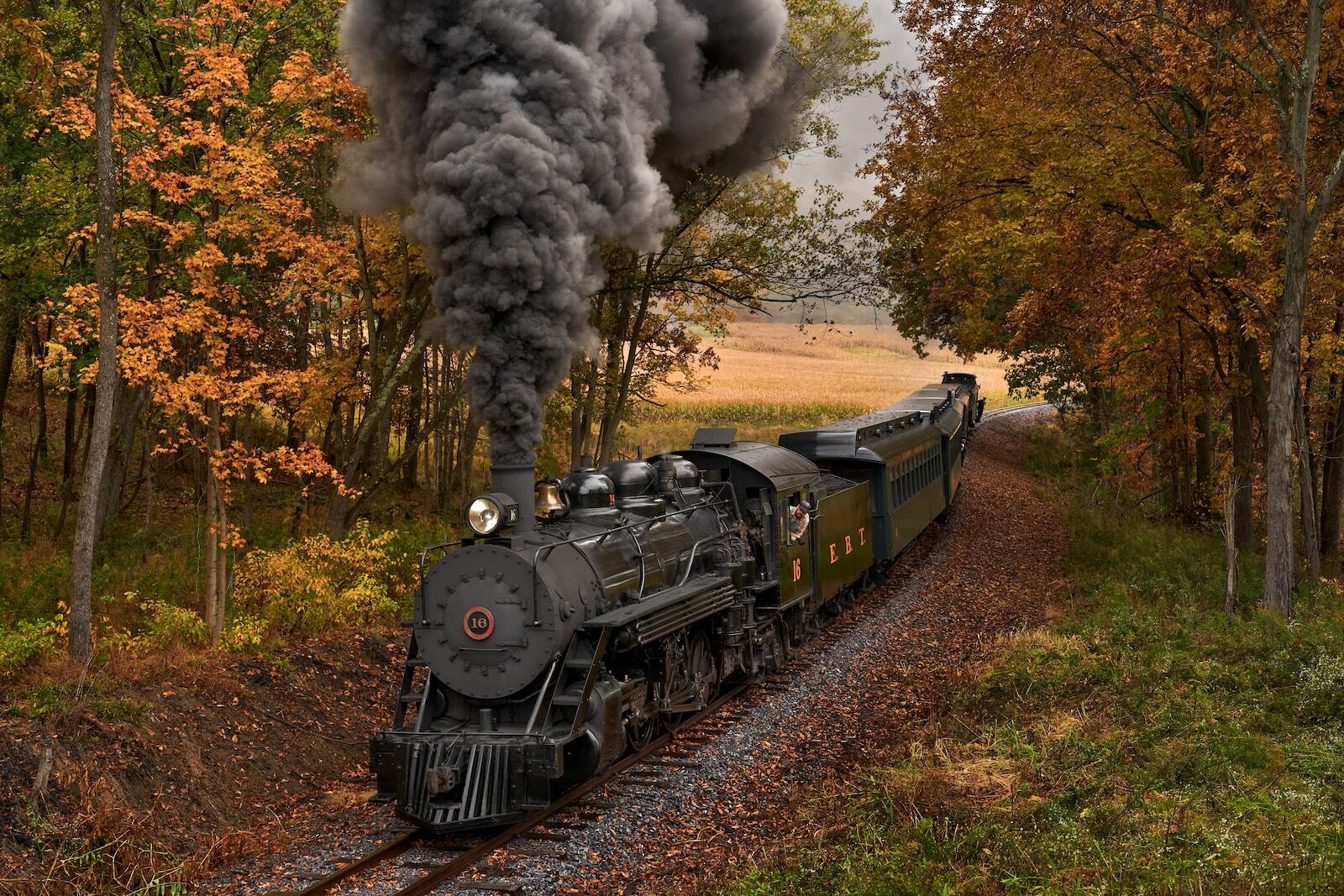
ORBISONIA, Pennsylvania — As the crisp autumn air settles over the rolling hills of Huntingdon County, a hauntingly familiar sound echoes through the Aughwick Valley: the sharp, rhythmic chuffing of a coal-fired steam locomotive and the deep resonance of its brass whistle. This is not a ghost from Pennsylvania’s industrial past, but rather the living, breathing reality of the East Broad Top Railroad (EBT).
Constructed in the reconstruction era of the 19th century, the East Broad Top is recognized as a marvel of American engineering. Today, it stands as the only surviving three-foot, narrow-gauge common carrier railroad east of the Rocky Mountains. For travelers, history enthusiasts, and preservationists alike, the railroad represents an extraordinary time capsule—a rare window into the Gilded Age of American industry that has not only survived but is once again thriving.
Main Facts: The Living History of the East Broad Top
The East Broad Top Railroad is a registered National Historic Landmark situated in Rockhill Furnace and Orbisonia, Pennsylvania. Unlike standard-gauge railroads, which utilize a track width of 4 feet, 8.5 inches, the EBT was built to a narrow gauge of exactly 3 feet. This narrower profile allowed the railway to navigate the sharp curves and steep gradients of Central Pennsylvania’s mountainous terrain at a fraction of the construction cost of standard lines.
+--------------------------------------------------------------------------+
|                        EAST BROAD TOP RAILROAD AT A GLANCE               |
+--------------------------------------------------------------------------+
| Location:          Orbisonia/Rockhill Furnace, Huntingdon County, PA     |
| Track Gauge:       3 feet (Narrow Gauge)                                 |
| Founded:           1872                                                  |
| Status:            National Historic Landmark (Designated 1964)          |
| Key Attraction:    Century-old, coal-fired Baldwin steam locomotives     |
| Core Offerings:    Northbound & Southbound Excursions, Machine Shop Tours |
+--------------------------------------------------------------------------+
While the railroad operates seasonal excursions throughout the year—ranging from the chilly runs of the February Winter Spectacular to festive holiday trains in December—it is during the autumn season that the EBT truly shines. Through October 31, vintage trains depart the historic Orbisonia Station every Friday, Saturday, and Sunday. These weekend excursions are powered by the railroad’s legendary, century-old Baldwin Mikado steam locomotives, offering passengers an immersive journey through some of the finest fall foliage in the Mid-Atlantic region.
Chronology: From Coal Hauler to Living Museum
To understand the significance of the East Broad Top, one must examine its timeline—a narrative defined by industrial boom, sudden silence, miraculous preservation, and eventual resurrection.
  1872: Construction begins on the EBT narrow-gauge line.
   |
  1873: First trains run, hauling semi-bituminous coal from the Broad Top Mountain.
   |
  1956: Industrial operations cease; the line is sold to the Kovalchick Salvage Company.
   |
  1960: Tourist operations begin under Nick Kovalchick, saving the line from the torch.
   |
  1964: Designated a National Historic Landmark.
   |
  2011: Operations temporarily cease; the railroad enters a decade of dormancy.
   |
  2020: The non-profit East Broad Top Foundation purchases the property.
   |
  2021: Regular passenger excursions resume.
   |
  Present: Ongoing restoration of locomotives, rolling stock, and historic shop facilities.
The Industrial Era (1872–1956)
Chartered in 1856, construction on the EBT did not begin in earnest until 1872. The line was primarily built to transport high-quality semi-bituminous coal from the mines of the Broad Top Mountain coalfield to the Pennsylvania Railroad main line in Mount Union. For over eight decades, the EBT served as an economic lifeline for the region, carrying coal, timber, iron ore, and passenger traffic. However, as the demand for coal plummeted post-World War II and regional mines closed, the railroad’s operations became unsustainable. Freight and passenger services officially ended in April 1956.
The Era of Preservation (1956–2020)
When the last whistle blew in 1956, the railroad was purchased by the Kovalchick Salvage Company, a scrap metal dealer. In most instances, such a purchase spelled the immediate destruction of the tracks and locomotives. However, Nick Kovalchick, president of the company, recognized the historical value of what he had acquired. Rather than dismantling the line, he left everything intact—the locomotives in their stalls, the tools in the machine shops, and the track in the ground.
In 1960, Kovalchick reopened a portion of the line for tourist excursions. This effort earned the railway a National Historic Landmark designation in 1964. The Smithsonian Institution subsequently described the site as one of the most intact, unaltered 19th-century industrial sites remaining in the United States. Though tourist operations paused in 2011, the site remained meticulously guarded by volunteers and the Friends of the East Broad Top (FEBT).
The Modern Resurrection (2020–Present)
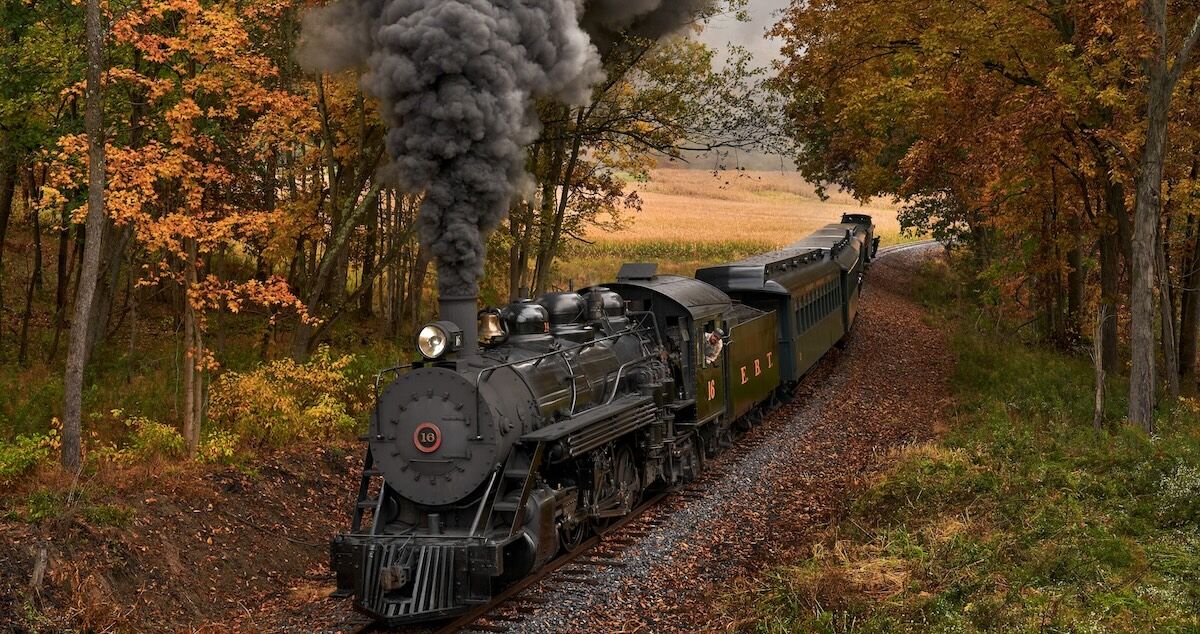
In February 2020, the newly formed, non-profit East Broad Top Foundation—backed by prominent rail industry philanthropists—announced the purchase of the railroad. Despite the challenges of the global pandemic, the foundation embarked on a massive restoration project. Tracks were rehabilitated, historic passenger cars were rebuilt, and Locomotive No. 16, a 1916 Baldwin-built 2-8-2 "Mikado," was painstakingly restored to operation. In 2021, the steam hissed back to life, and regular heritage passenger services officially resumed.
Supporting Data: Excursion Offerings, Classes of Service, and Logistics
Today’s East Broad Top Railroad offers a diverse matrix of passenger experiences designed to accommodate casual tourists, families, and dedicated rail historians alike.
The Autumn Excursion Routes
During the peak autumn season, the railroad operates two primary routes departing from the historic Orbisonia Station:
- The Northbound Colgate Grove Excursion: This is the railroad’s signature autumn ride. It consists of a 9-mile, one-hour roundtrip journey through the farmlands, valleys, and dense forests of the Aughwick Valley. Passengers who wish to fully immerse themselves in the autumn scenery can opt to disembark at Colgate Grove—the halfway point of the journey—for a 1.5-hour picnic layover, catching a subsequent train back to Orbisonia later in the day.
- The Southbound Pogue Excursion: Heading in the opposite direction from Orbisonia Station, this route takes passengers over a stretch of track that had not seen regular passenger traffic in nearly 70 years. Unlike the northbound route, there is no layover at the end of the line; the train reverses near the rural community of Pogue. Due to its historic novelty, the Southbound Pogue Excursion operates on select dates only. For the upcoming seasons, travelers should plan around targeted dates such as September 12 and October 3, 2026.
To encourage visitors to experience both directions of the historic line, the railroad offers a combo package that saves riders $10 per person when purchasing tickets for both routes simultaneously.
Classes of On-Board Service
The EBT offers four distinct classes of accommodation, allowing passengers to customize their historical journey:
- Enclosed Coaches: Classic, historically accurate wooden and steel passenger cars featuring padded seats and operable windows that allow the autumn breeze—and the sound of the steam engine—to drift through the cabin.
- Open-Air Cars: Perfect for photographers and foliage enthusiasts, these cars feature outward-facing bench seats and a protective overhead sunshade, offering unobstructed panoramic views of the passing countryside.
- The Historic Caboose: For a more intimate, nostalgic experience, visitors can ride in a genuine vintage caboose, offering a unique perspective of the train’s movement.
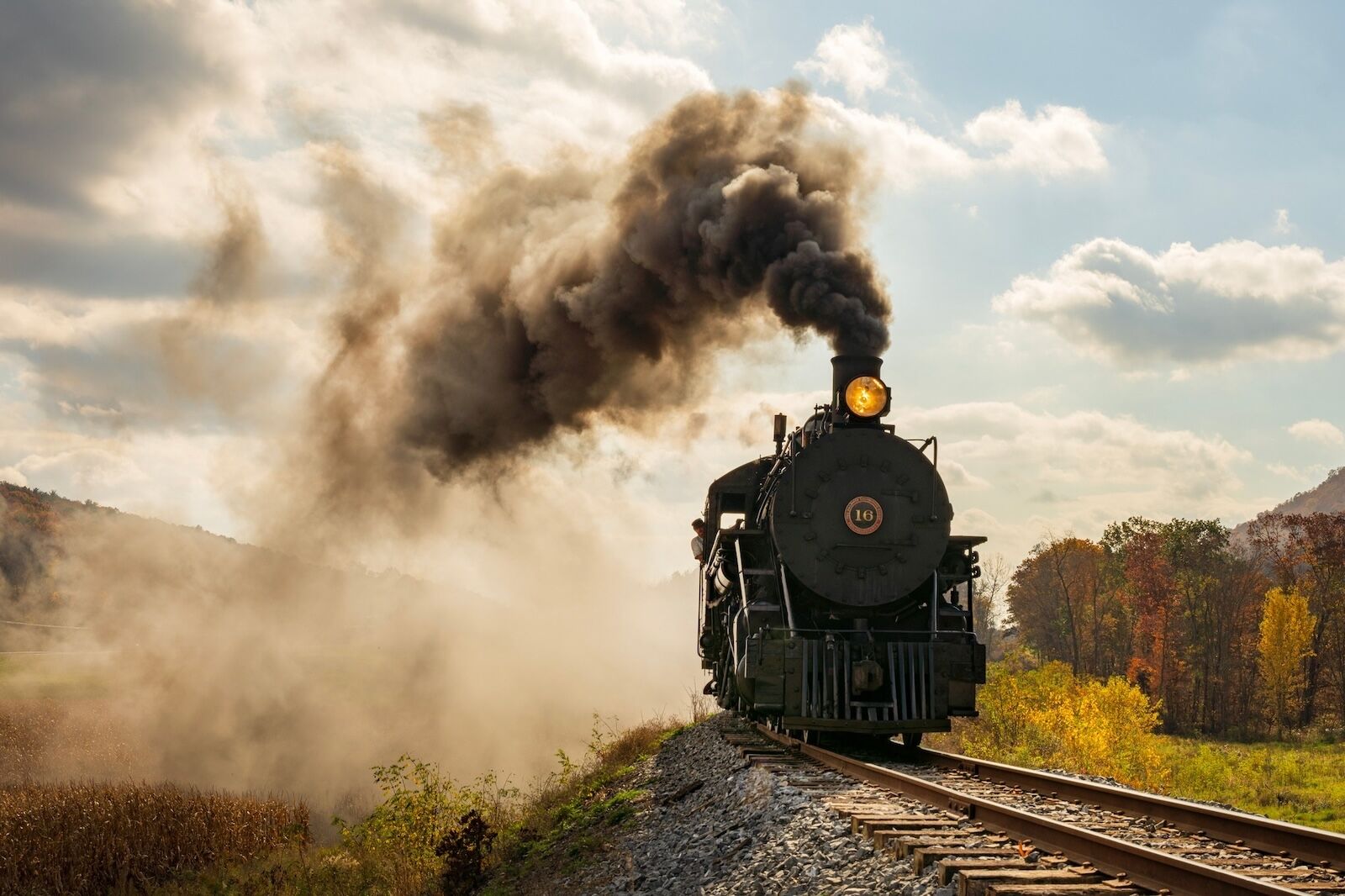
- The Cinder Car: A completely roofless, open-sided car designed for the purist. This car puts riders closest to the action. Because it is positioned near the coal-fired locomotive, riders will experience real coal smoke and cinders. Note: Protective eyewear or sunglasses are highly recommended for passengers choosing this option.
+-----------------------------------------------------------------------+
|                    STANDARD EXCURSION TICKET PRICING                  |
+-----------------------------------------------------------------------+
| Class of Service        | Adult Ticket Price | Child Ticket (Ages 2-12)|
+-------------------------+--------------------+------------------------+
| Coach / Open-Air / Cinder| $25.00             | $15.00                 |
| Historic Caboose        | $30.00             | $20.00                 |
| Under Age 2 (Lap Child) | Free               | Free                   |
+-----------------------------------------------------------------------+
Every excursion train is equipped with at least one ADA-accessible car to ensure the historic experience is open to all visitors.
The Pumpkin Patch Express (Seasonal Family Event)
For families traveling with young children, the railroad hosts the popular Pumpkin Patch Express. Scheduled for October 10, 11, 17, 18, 24, 25, and 31, 2026, this specialized autumn event departs at 10:00 AM, 11:30 AM, 1:00 PM, and 2:30 PM.
This 2.5-hour experience includes a scenic train ride to Colgate Grove, where families disembark for a 90-minute layover filled with seasonal activities, including:
- Hay bale wagon rides
- Mini-golf and bounce houses
- Pumpkin decorating stations
- Costume contests
Every child’s ticket includes a pumpkin harvested from the local patch to take home.
+-----------------------------------------------------------------------+
|                    PUMPKIN PATCH EXPRESS PRICING                      |
+-----------------------------------------------------------------------+
| Class of Service        | Adult Ticket Price | Child Ticket (Ages 2-12)|
+-------------------------+--------------------+------------------------+
| Coach / Open-Air        | $28.00             | $22.00                 |
| Historic Caboose        | $32.00             | $26.00                 |
+-----------------------------------------------------------------------+
Guided Historic Depot and Machine Shop Tours
Beyond the train rides, the East Broad Top features an incredibly preserved industrial facility. Visitors can purchase combo tickets to take guided tours of the historic Rockhill Furnace depot complex. This tour includes:
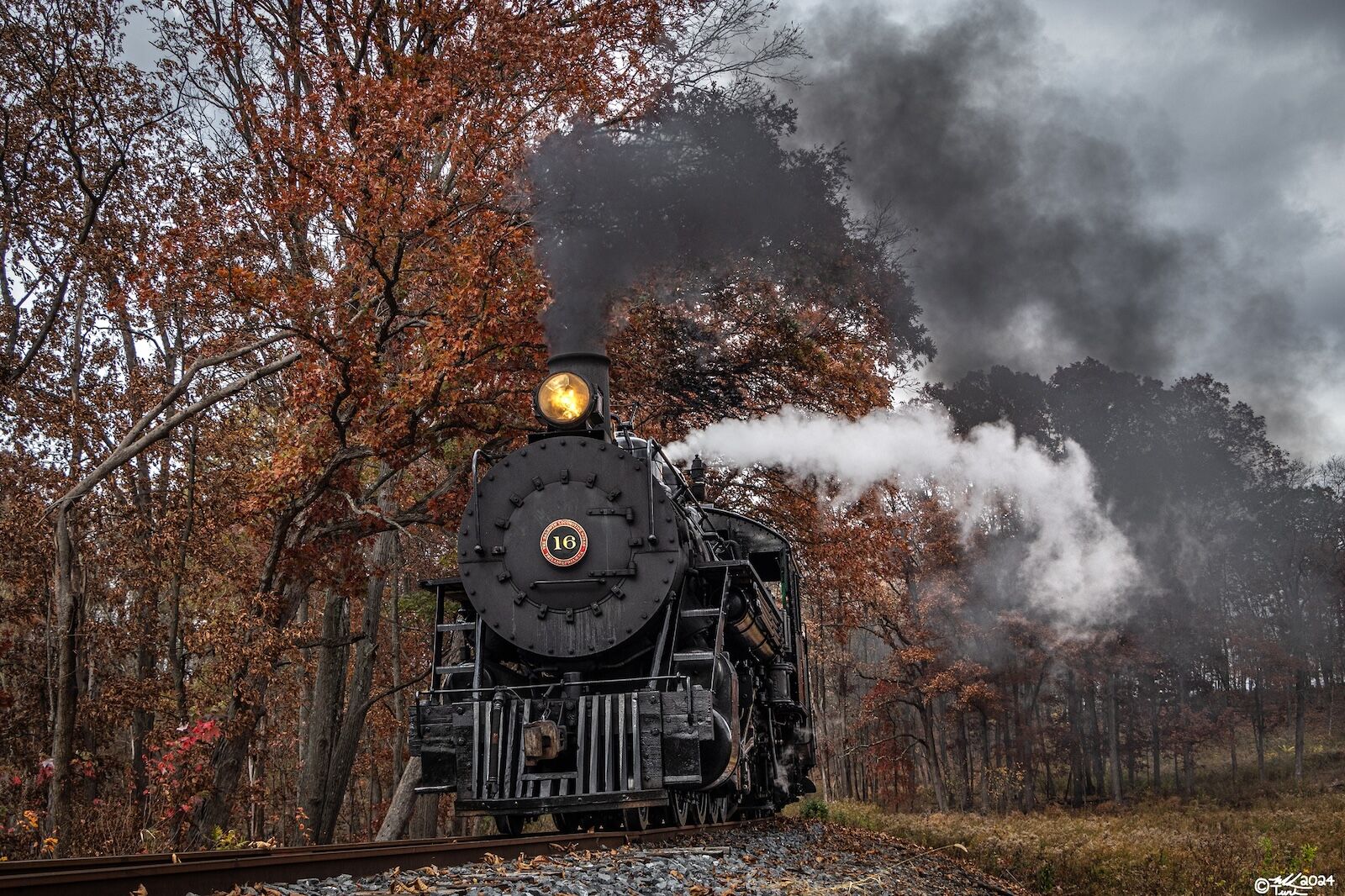
- The Roundhouse: A semi-circular brick structure dating back to the early 1900s, where the railroad’s fleet of six historic Baldwin steam locomotives is housed and maintained.
- The Belt-Driven Machine Shop: Acclaimed as the largest and most complete belt-driven machine shop remaining in the United States. This facility still utilizes a complex overhead system of line shafts, pulleys, and leather belts—powered originally by a steam boiler and later by an electric motor—to run historic metalworking lathes, drills, and planers from the 19th century.
Logistics Tip: Visitors planning to combine a train excursion with a guided shop tour should budget approximately three hours for the complete experience. Because these tours and rides frequently sell out, advance online reservations are highly recommended. Tickets are not sent via email; visitors must check in at the Orbisonia Station ticket window 30 minutes prior to their scheduled departure time to pick up their physical boarding passes.
Official Responses and Expert Perspectives
The successful preservation and continued revival of the East Broad Top have drawn widespread praise from historic preservationists, industrial historians, and tourism officials.
The Smithsonian Institution has long emphasized the unique national value of the site, noting that while many heritage railroads exist across the globe, almost none possess their original, intact maintenance-of-way facilities, machine shops, and complete locomotive fleets on the exact site where they operated historically. "The East Broad Top is not a collection of gathered artifacts," noted one archival report. "It is an organic, cohesive industrial ecosystem that survived by a series of preservation miracles."
In a statement reflecting on the ongoing restoration efforts, representatives from the East Broad Top Foundation emphasized the dual mission of historical education and community revitalization:
"Our goal has never been just to run a tourist train, but to preserve an irreplaceable piece of American industrial heritage. When visitors walk into our belt-driven machine shop or hear the whistle of a century-old steam engine, they are experiencing the exact sights, sounds, and smells that defined the lives of Pennsylvania workers 120 years ago. We are keeping those skills and that history alive for future generations."
Local tourism officials in Huntingdon County have also lauded the railroad’s comeback, pointing to a significant uptick in regional hospitality, dining, and lodging revenue since the steam trains resumed operations in 2021. The railroad acts as a primary anchor destination for the Raystown Lake region, drawing tens of thousands of heritage tourists annually.
Implications: Heritage Tourism and the Future of Steam
The story of the East Broad Top Railroad carries profound implications for the fields of historic preservation, rural economic development, and environmental history.
The Economics of Heritage Tourism
For deindustrialized rural communities in Central Pennsylvania, the transition from an extractive economy (coal mining and iron smelting) to a tourism-driven economy is a vital path forward. The EBT demonstrates that industrial infrastructure, once viewed as obsolete liabilities, can be transformed into premier cultural assets. The influx of visitors from across North America directly supports local bed-and-breakfasts, craft breweries, restaurants, and retail shops, proving that preserving history is not just culturally enriching, but economically lucrative.
The Educational Imperative
In an increasingly digital and automated world, physical, mechanical history offers an invaluable educational resource. The EBT’s belt-driven machine shop serves as a living classroom for students, engineers, and historians. It provides a tactile, visual explanation of the mechanical principles—leverage, torque, steam pressure, and metallurgy—that laid the groundwork for modern American manufacturing.
+--------------------------------------------------------------------------+
|                  THE PRESERVATION TRIFECTA OF THE EBT                    |
+--------------------------------------------------------------------------+
| 1. INFRASTRUCTURE: Preservation of original narrow-gauge tracks, bridges, |
|    and the intact Rockhill Furnace depot complex.                        |
|                                                                          |
| 2. MACHINERY: The survival of the largest belt-driven machine shop in the|
|    U.S., maintaining 19th-century industrial capabilities.               |
|                                                                          |
| 3. ROLLING STOCK: A complete fleet of six original Baldwin Mikado steam   |
|    locomotives, keeping authentic steam engineering alive.               |
+--------------------------------------------------------------------------+
The Environmental Balance of Steam Preservation
Operating coal-fired steam locomotives in the 21st century presents unique challenges, particularly regarding environmental stewardship and sustainability. The EBT Foundation must balance historical accuracy with modern environmental consciousness. By maintaining high-efficiency firing techniques and sourcing high-quality, low-sulfur coal, the railroad minimizes its environmental footprint while keeping the sensory magic of steam alive. Furthermore, the preservation of the surrounding Aughwick Valley corridor ensures that acres of forest and farmland remain protected from invasive development, preserving both the historic viewshed and the local ecosystem.
As the East Broad Top Railroad continues to restore its remaining fleet of locomotives and expand its active trackage further south, it stands as a shining beacon of what is possible when community passion, philanthropic investment, and rigorous historical preservation converge. For those climbing aboard this autumn, the journey is more than just a scenic ride through the changing leaves—it is a trip back in time on the rails of American history.
 Raul Delapena Setiawan
  Nila Kartika Wati
  Iffa Jayyana