

For seasoned cruise enthusiasts, part of the thrill of planning a vacation lies in the hunt for onboard bargains. Savvy travelers routinely monitor the Cruise Planner for pre-cruise sales, snapping up discounts on specialty dining venues, beverage packages, internet bundles, and spa treatments. Securing these amenities ahead of time not only guarantees availability once onboard but often yields substantial savings compared to purchasing them at regular onboard rates.
However, a recent wave of deep discounts offered by Royal Caribbean International has turned out to be too good to be true. Passengers who thought they had scored an extraordinary deal on upscale poolside accommodations aboard the line’s massive, high-demand vessels are finding their reservations abruptly canceled—and they are being asked to rebook at significantly higher prices.
The incident has ignited widespread frustration across social media and online cruise forums, raising questions about pricing transparency, digital error policies, and consumer rights in the modern cruising industry.
Main Facts: The "Port Day Casita" Controversy
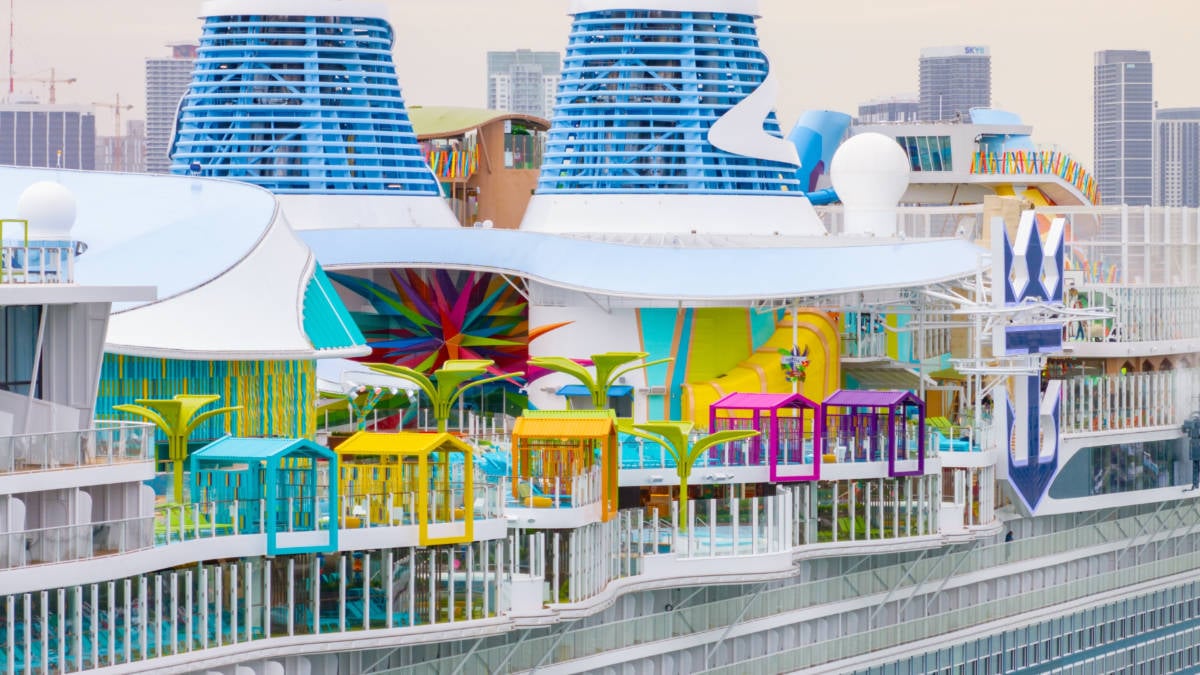
At the center of the dispute are the coveted "Port Day Casita" reservations available on select Royal Caribbean ships, most notably across the line’s flagship Icon-class and Oasis-class vessels—some of the largest and most technologically advanced cruise ships in the world.
Strategically situated on the bustling pool decks, these luxury private loungers offer an elevated escape from the traditional scramble for deck chairs. Renting a casita includes a prime poolside location, dedicated personalized service, bottled water, a dedicated charging outlet, and complimentary welcome drinks. While these private retreats can be booked for both port days and sea days—with sea days carrying a notably higher price tag due to higher demand—certain promotions and pre-cruise sales historically shave off up to 35% or more from the standard rental fees.
In recent days, multiple passengers browsing their Royal Caribbean Cruise Planner accounts noticed an uncharacteristic price drop. Port-day casita rentals, which typically command hundreds of dollars, were suddenly priced at less than $200—with some individual bookings dropping as low as $120.
Believing they had capitalized on a lucrative pre-cruise sale, guests eagerly completed their checkouts. Within hours, however, those celebrations turned to dismay. Royal Caribbean began issuing automated cancellation notices to impacted travelers, citing an internal pricing error. Shortly after the cancellations were processed, the exact same casitas reappeared in the online portal, but with price tags soaring past $380.
The sudden reversal has left hundreds of affected guests questioning whether the incident was a genuine technological glitch or a controversial "bait-and-switch" tactic designed to generate artificial booking volume before correcting the rates.
Chronology of Events: From Excitement to Cancellation
The timeline of the pricing error unfolded rapidly across digital platforms, catching both passengers and the cruise line off guard.
Phase 1: The Discovery and Booking Surge
The anomaly began when travelers reviewing their upcoming itineraries noticed unusually steep discounts on port-day casita rentals in the pre-cruise portal. News of the bargain quickly spread through private Facebook groups, dedicated cruise forums, and word-of-mouth. Believing it was a limited-time promotional push—perhaps tied to an unannounced flash sale—guests rushed to secure the inventory. Many booked casitas for upcoming sailings across the Icon-class fleet, including Icon of the Seas, Star of the Seas, and Legend of the Seas.
Phase 2: The Automated Cancellations
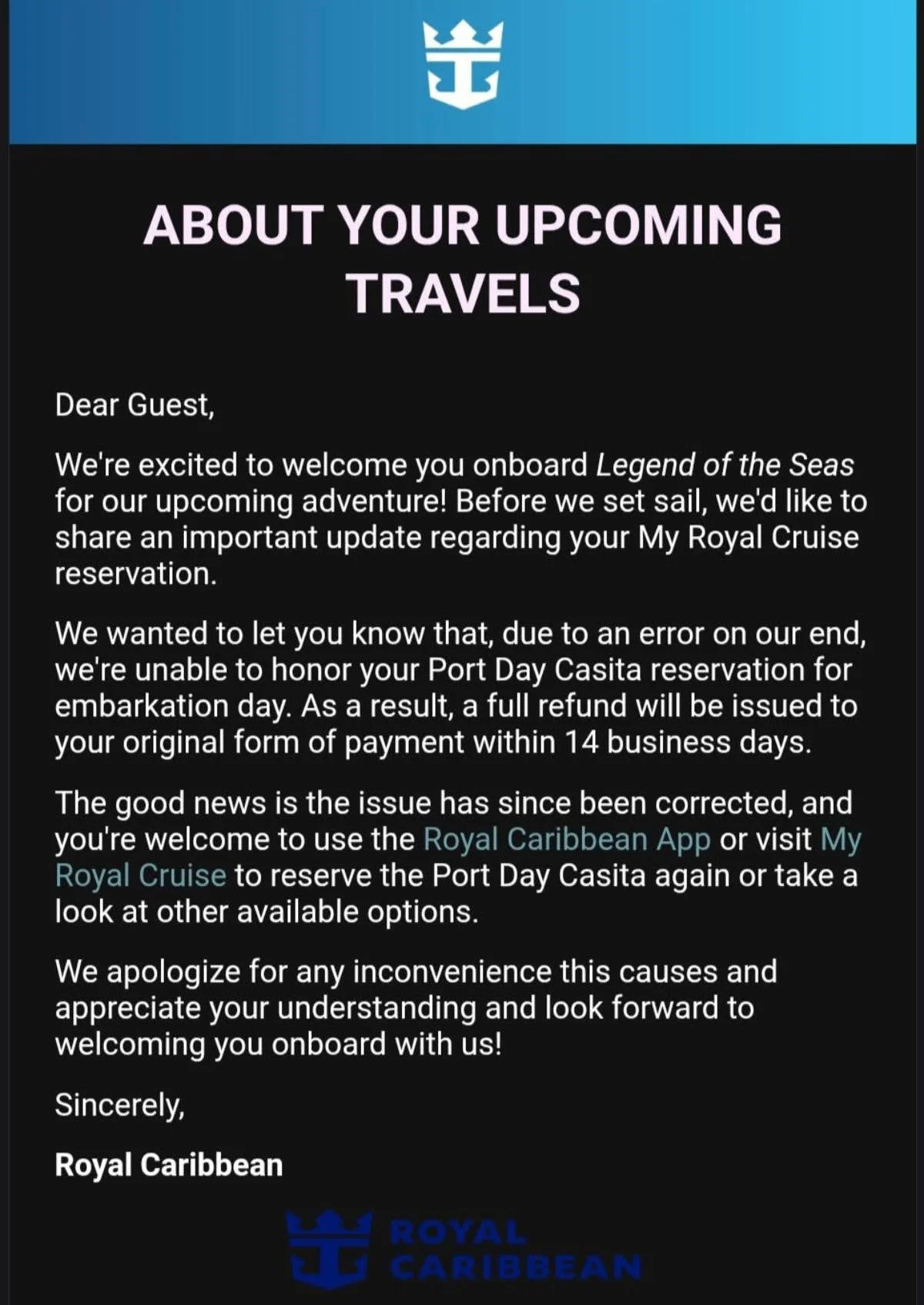
Within 24 to 48 hours of the booking surge, the first wave of cancellation emails hit passenger inboxes. The notices were uniform, brief, and lacking in detailed customer service nuance. The official communication read:
"Due to an error on our end, we’re unable to honor your Port Day Casita reservation for embarkation day. As a result, a full refund will be issued to your original form of payment within 14 business days."
The notification also noted that the technical issue had since been corrected, inviting guests to return to the portal and rebook the amenities at the updated, correct market rate if they still wished to secure a casita.
Phase 3: Community Backlash and Discovery of Repricing
As notifications multiplied, passengers began comparing notes online. The realization that their reservations had been wiped out—only for the identical spaces to be relisted at triple or quadruple the price—triggered immediate outrage.
One prominent post shared in a popular Royal Caribbean Facebook group captured the general sentiment: “I had booked a casita for $120 when they had a sale. They canceled my reservation and now that same casita is $384.”
Supporting Data: Understanding Casita Pricing and Fleet Economics
To understand why these specific reservations caused such a stir, it is helpful to examine the standard economics of onboard amenities within Royal Caribbean’s fleet.
The cruise line’s newest ship classes—specifically the Oasis-class and the record-breaking Icon-class—represent massive investments in onboard real estate. With passenger capacities frequently exceeding 5,000 to 7,600 guests per sailing, pool deck space is at an absolute premium.
- Standard Port Day vs. Sea Day Pricing: Because most passengers disembark to explore destinations during port stops, demand for poolside amenities drops significantly on port days compared to sea days. Consequently, cruise lines routinely discount port-day rentals to incentivize onboard spending while ships are docked.
- Baseline Costs: On a typical 3-night weekend sailing aboard a ship like Utopia of the Seas, standard port-day casita rentals hover around $350 before promotional discounts.
- The Scale of the Error: A drop to $120 represented roughly a 65% discount—deeply uncharacteristic even for aggressive pre-cruise sales, which typically max out around 35% off. This stark deviation from normal pricing models ultimately served as the primary indicator that an administrative or algorithmic error had occurred within the digital inventory system.
Official Responses and Legal Context
Cruise line contract terms and conditions heavily favor operators when digital or human errors occur. The Passage Contract—a legally binding agreement every passenger accepts upon booking a cruise—virtually universally includes clauses protecting cruise operators from honoring glaringly erroneous pricing.
The Right to Correct Errors
Cruise lines, airlines, and hospitality providers maintain the legal right to cancel and refund purchases made at incorrect prices. Whether the mistake stems from a manual data-entry slip by a pricing manager or a complex software glitch during a website update, corporations are generally not legally compelled to absorb massive financial losses resulting from obvious administrative mistakes.
Consumer Rights vs. Goodwill
While Royal Caribbean is legally permitted to void the transactions and issue full refunds (pledged to hit original forms of payment within 14 business days), the move carries significant public relations implications.
Many consumers argue that even if an error occurred, honoring the price—or offering a partial onboard credit as a gesture of goodwill—would go a long way toward preserving customer loyalty. Instead, the heavy-handed cancellation process has reinforced consumer cynicism, with many passengers openly tossing around accusations of deceptive business practices.
Implications for Future Cruise Planning
This latest incident highlights broader vulnerabilities within the digital ecosystems of the modern cruise industry. As cruise lines increasingly shift their inventory management, shore excursions, and specialty amenities to automated online portals, the risk of systemic glitches grows exponentially.
1. Increased Scrutiny on "Too Good to Be True" Deals
Experienced cruisers are taking note. While flash sales and deep pre-cruise discounts will remain a staple of cruise line marketing strategies, consumers are learning that extreme pricing anomalies are rarely honored if they deviate too far from established market baselines. If a luxury amenity is priced at a fraction of its normal cost, passengers should mentally prepare for the possibility of a cancellation notice.
2. The Delicate Balance of Customer Trust
For a company like Royal Caribbean—which prides itself on high guest satisfaction scores and a fiercely loyal repeat-cruiser base—handling systemic errors with empathy is critical. When automated cancellations are sent out without personalized explanations or compensatory gestures (such as a discounted rebooking rate), it damages the relational equity built between the brand and its most enthusiastic advocates.
3. Technological Resilience
As cruise lines continue to roll out next-generation software to manage dynamic pricing models across massive fleets like the Icon-class, robust quality assurance checks will be vital. Preventing pricing anomalies before they go live in consumer-facing portals is far more effective than rectifying errors post-purchase through disruptive cancellations.
Historical Precedents: A Recurring Industry Challenge
Pricing glitches are by no means unique to Royal Caribbean, nor are they a brand-new phenomenon in the cruise sector:
- Carnival Cruise Line (May 2026): Cruise Hive previously reported on widespread booking cancellations across Carnival’s fleet after a systems outage and website update accidentally generated ultra-low cruise fares. Passengers who booked during the glitch saw their reservations voided.
- Royal Caribbean (2019): In a rare exception to the rule, Royal Caribbean experienced a major website glitch that priced daily beverage packages at a mere $18 per day instead of the standard $55 rate. While the line initially canceled the discounted packages, mounting consumer backlash eventually forced a policy reversal, and the company chose to honor the low rate for affected guests.
Whether Royal Caribbean will alter its stance on the Port Day Casita cancellations remains to be seen. For now, impacted travelers are left to decide whether to pay the newly inflated rates to secure their private poolside retreat or forgo the amenity entirely, serving as a reminder that in the world of online travel planning, if a deal looks too good to be true, it very often is.
 Asro
Asro  Suro Senen
  Basiran