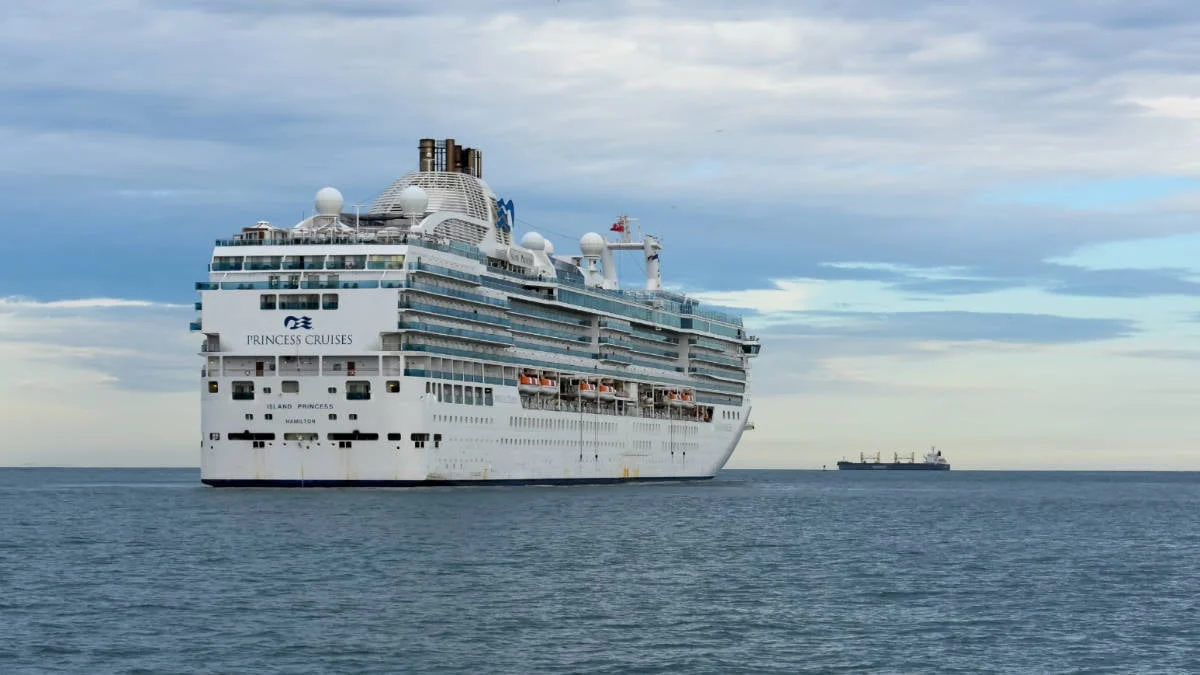
VANCOUVER, CANADA — In an increasingly competitive and tightly managed cruise market, Princess Cruises has extended a surprisingly generous offer to travelers booked on an upcoming autumn voyage. Guests holding reservations aboard the 2,210-passenger Island Princess for a September 16, 2026 departure are being courted with a 100% cash refund, a matching Future Cruise Credit (FCC), and compensation for independent travel expenses if they voluntarily surrender their cabins.
The move highlights the immense popularity of specific shoulder-season repositioning itineraries along the Pacific Coast, while simultaneously underscoring the delicate logistical balancing act cruise lines must perform when passenger demand outstrips ship capacity.
Main Facts of the Offer
The itinerary at the center of the compensation scheme is a four-night Pacific coastal cruise aboard the Island Princess, scheduled to depart from Vancouver, British Columbia, on September 16, 2026, and terminate in Los Angeles, California. Unusually for coastal repositioning cruises, the voyage features three consecutive sea days along the Pacific seaboard and zero scheduled port calls before its final arrival in Southern California.
Despite the lack of shore excursions, the short-duration sailing proved exceptionally popular with travelers looking for a quick maritime getaway. To mitigate high demand, Princess Cruises began dispatching targeted communications to select booked guests, dangling a financial incentive that many travelers have found difficult to refuse.
According to notifications reviewed by industry observers, the compensation package includes:
A 100% Full Refund: Complete reimbursement of all monies paid toward the base cruise fare, returned to the original form of payment.
A 100% Future Cruise Credit (FCC): A matching credit equal to 100% of the base fare paid, valid for use on future Princess Cruises bookings for up to two years from issuance.
Travel Expense Reimbursement: Up to $800 per guest to cover non-refundable, independent travel arrangements, such as pre-booked airline tickets and hotel stays, disbursed upon receipt of valid documentation.
While the offer is subject to internal capacity goals and availability, early reactions from the cruise community indicate that a substantial number of passengers are eager to take the cruise line up on the deal.
Chronology of Events and Itinerary Context
To understand why Princess Cruises is offering such steep financial incentives to reduce passenger counts, it is vital to examine the operational timeline of the Island Princess surrounding the mid-September sailing.
Late Summer 2026:Island Princess operates its final stretch of Alaska itineraries as part of Princess Cruises’ largest-ever regional deployment season, which features eight ships operating in northern waters.
September 16, 2026 (Morning): The vessel concludes a 7-night "Voyage of the Glaciers" itinerary, traveling south from Whittier, Alaska, and docking in Vancouver at approximately 7:30 a.m.
September 16, 2026 (Afternoon): Following a rapid turnaround in Vancouver, the ship is scheduled to embark on the heavily sought-after 4-night Pacific coastal cruise down to Los Angeles.
September 20, 2026: The Island Princess arrives in the Port of Los Angeles.
September 20, 2026 (Afternoon): The ship immediately embarks on a lucrative 16-night Panama Canal voyage, carrying guests from Los Angeles all the way to Fort Lauderdale, Florida, where it is scheduled to arrive on October 6.
This tight scheduling means that inventory adjustments must be handled well in advance. Because the Vancouver-to-Los Angeles coastal leg acts as a critical repositioning bridge between the Alaska summer season and the Panama Canal winter deployment, maintaining precise control over passenger manifests is operationally vital for the cruise line.
Supporting Data and Passenger Reactions
As of mid-2025, the September 16, 2026 voyage is listed as entirely sold out across official booking channels on the Princess Cruises website. In the cruise industry, a completely sold-out status is often a preliminary indicator of potential overbooking—a practice where lines accept slightly more reservations than physical cabins to account for projected passenger cancellations.
While Princess Cruises has stopped short of publicly confirming that the ship is technically oversold, social media channels have lit up with commentary from affected travelers. In an unofficial Facebook group dedicated to the sailing, one passenger expressed delight after calculating the net value of the buyout offer:
"It was ok for us! It’s a nowhere cruise and we’re going to Hawaii in 2 months!" the traveler shared online. "For some reason they gave us a bigger credit than what we paid for the cruise. Couldn’t resist!"
Another guest, who brought the offer to light on the social platform Threads, was unequivocal regarding the root cause of the solicitation: "My cruise overbooked and not enough rooms for all the travelers," they posted.
Industry analysts note that cruise lines frequently utilize targeted buyouts when computerized yield management models project that natural cancellations will fall short of over-capacity thresholds. By offering voluntary incentives, lines can sidestep the logistical and public relations nightmare of "bumping" passengers at the pier on embarkation day.
Official Responses and Corporate Strategy
Princess Cruises has maintained a measured public posture regarding the situation, emphasizing that the buyout notifications are voluntary and subject to stringent confirmation procedures. In their notices to guests, company representatives explicitly urged travelers not to cancel existing independent flights or hotel reservations until they have received official, written confirmation that their request to alter their travel plans has been approved by the cruise line.
This strategy is not entirely unprecedented for the brand. Cruise Hive recently reported on a nearly identical scenario involving the Emerald Princess, where guests booked on a sold-out September 1 sailing to Alaska were handed lucrative financial packages to surrender their staterooms.
By proactively managing capacity through voluntary financial incentives, Princess Cruises avoids the forced involuntary denied-boarding scenarios that occasionally plague the broader travel and aviation sectors. However, the cruise line has not yet clarified what secondary measures—such as higher cash bonuses or forced reassignments—might be implemented if too few passengers step forward to voluntarily relinquish their bookings.
Broader Implications for the Cruise Industry
The unfolding situation aboard the Island Princess highlights several key trends defining the modern cruise economy:
1. Robust Post-Pandemic Demand
The fact that travelers are willing to snap up "nowhere cruises"—voyages featuring zero port stops and purely days at sea—demonstrates that consumer appetite for life at sea remains exceptionally high. Passengers are increasingly treating ships themselves as the primary destination, prioritizing onboard relaxation over traditional sightseeing ashore.
2. The Economics of Yield Management
Cruise pricing models are increasingly sophisticated, utilizing real-time data to maximize revenue per square foot. When high-demand repositioning segments (such as the Alaska-to-California transition) intersect with popular ship classes, maximizing occupancy becomes a high-stakes game. Offering 100% cash refunds paired with matching future cruise credits may seem expensive on paper, but it prevents costly disruptions and preserves customer loyalty far better than turning guests away at the gangway.
3. Protection for Independent Travelers
The inclusion of up to $800 in independent travel expense reimbursements reflects a growing industry recognition that cruise passengers often book complex, multi-component vacations involving flights, rental cars, and hotels. By covering these ancillary costs, Princess Cruises removes the primary friction point preventing travelers from accepting a voluntary cancellation.
Outlook for Booked Guests
For those holding reservations on the September 16, 2026 sailing, the decision ultimately boils down to personal travel flexibility. For guests like those heading to Hawaii a few months later, trading a portless coastal transit for a full refund, a free future cruise, and extra travel money is an unmissable windfall. For others committed to the specific dates of the Vancouver-to-Los Angeles run, the voyage will proceed as planned—albeit on a ship operating at absolute maximum capacity.
As the departure date approaches, all eyes will remain on how effectively Princess Cruises balances its inventory on one of the Pacific Northwest’s most popular autumn maritime transitions.



 Asep Darmawan
  Pevita Pearce
  Asro
Asro 