

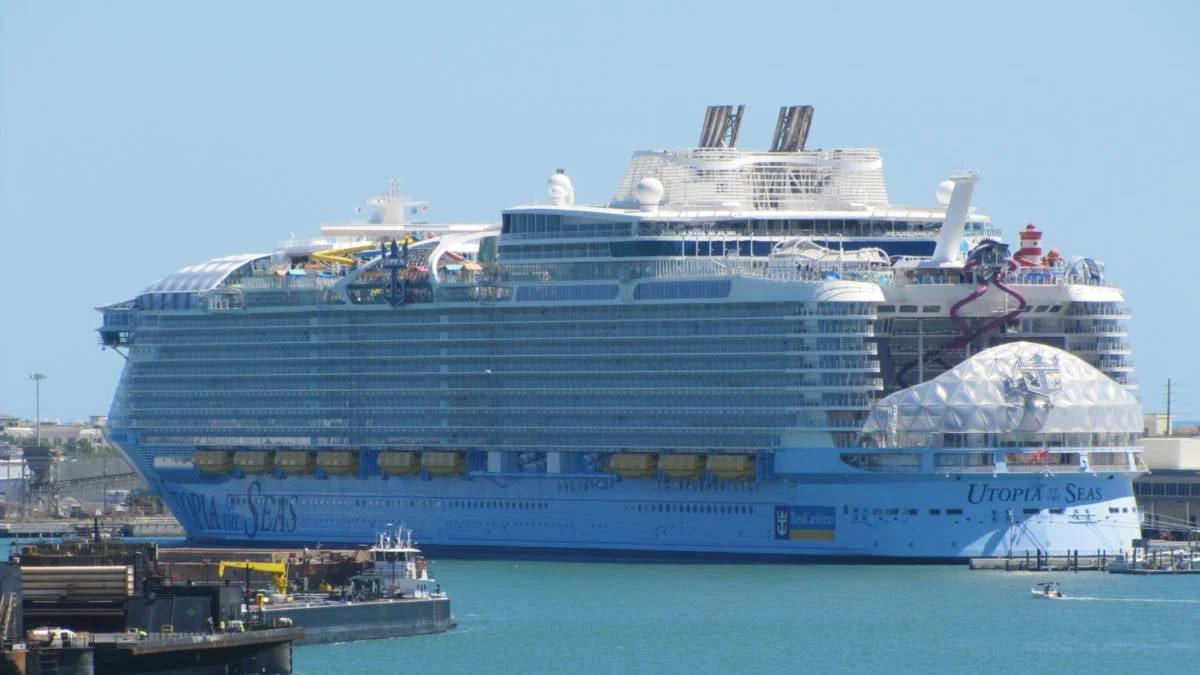
The maritime industry, while synonymous with luxury and precision, is often subject to the complex realities of mechanical engineering. This week, Royal Caribbean’s newest crown jewel, the Utopia of the Seas, encountered an unexpected setback that rippled through its vacation schedule. As a vessel designed to represent the pinnacle of modern cruising, the ship’s delayed departure from Port Canaveral serves as a poignant reminder that even the most advanced technology is not immune to the unpredictable nature of nautical operations.
The Situation at Port Canaveral: An Overview
The Utopia of the Seas, a massive Oasis-class vessel capable of carrying 5,668 passengers, found itself unexpectedly tethered to the docks of Port Canaveral, Florida, on Monday, July 20. Originally scheduled for a 4:00 PM departure to kick off a 4-night Bahamas itinerary, the ship remained stationary as night fell, leaving thousands of guests in a state of uncertainty.
The vessel, which had been anticipated to call at Royal Caribbean’s private island, Perfect Day at CocoCay, and the vibrant port of Nassau, faced a significant disruption that forced the cruise line to scramble for a revised logistics plan. While mechanical issues are not uncommon in the cruise industry, the visibility of this particular delay—occurring on one of the world’s most anticipated new ships—drew immediate attention from passengers, industry analysts, and the media.
Chronology of the Disruption
The events of July 20 began as a standard embarkation day, but quickly deviated from the carefully curated schedule.
Monday, July 20: The Silent Standoff
Passengers began boarding the Utopia of the Seas with the expectation of a 4:00 PM departure. However, as the afternoon stretched into evening, the ship remained firmly docked at the terminal. Reports from passengers on social media indicated a lack of immediate clarity, with guests being informed simply that the vessel was contending with a "mechanical issue."
One passenger, a seasoned cruiser on their 51st voyage, captured the mood of the terminal, noting at 9:36 PM that the ship had not yet moved. The atmosphere onboard shifted from excitement to frustration as the reality of the delay set in. For many, this was not just a delay in departure, but a compression of their hard-earned vacation time.
Tuesday, July 21: The Late Departure
As the sun rose on Tuesday morning, the ship finally began its journey. While some passengers reported a departure time of approximately 5:00 AM, data from the Cruise Ship Tracker provided a more precise, albeit later, picture, showing the vessel clearing the harbor after 7:00 AM. This departure, roughly 15 hours behind schedule, necessitated an immediate revision of the ship’s itinerary to ensure that the primary destinations—CocoCay and Nassau—could still be accommodated within the remaining timeframe.
The Ripple Effect: Itinerary Revisions
When a cruise ship loses a full day of travel, the domino effect on port logistics is significant. Royal Caribbean’s operational team had to move quickly to minimize the impact on the guest experience.
- Original Plan: The voyage was set to call at Perfect Day at CocoCay on July 21, followed by Nassau on July 22, with a return to Port Canaveral on July 24.
- The Revised Reality: Because the ship did not reach the Bahamas in time for the original July 21 call, the cruise line converted that day into a "sea day." The itinerary was then restructured so that the ship would visit Nassau first on July 22, and move the visit to Perfect Day at CocoCay to July 23.
By shifting the private island visit to the final full day, Royal Caribbean ensured that guests would still get to experience the destination, which is located conveniently close to the Florida coast—approximately 185 to 195 miles from Port Canaveral. This adjustment, while not ideal for those who had planned their excursions based on the original schedule, was a tactical necessity to salvage the essence of the Bahamas getaway.
Understanding Mechanical Vulnerability on Modern Vessels
Modern cruise ships are essentially floating smart cities, powered by redundant engine systems, complex propulsion units (often Azipod systems), and sophisticated computer networks. When a ship experiences a "mechanical issue," it typically refers to one of three categories:
- Propulsion Deficiencies: The most common culprit. If the Azipods—the rotating underwater propellers that drive the ship—experience a failure, the vessel loses its ability to maintain the speeds required to meet rigid port schedules.
- Power Generation Issues: Large cruise ships require immense electrical loads to power everything from cabin air conditioning to massive LED screens and kitchen galleys. A failure in the main power plant can result in a loss of power that must be rectified before the ship is legally cleared to sail.
- Safety/Regulatory Compliance: Sometimes, a ship may be mechanically sound enough to float but may have a sensor or a critical safety system—such as fire suppression or navigation radar—that is not functioning to code. In such cases, the captain is prohibited from leaving port until the system is certified.
While Royal Caribbean has remained tight-lipped regarding the specific nature of the Utopia’s mechanical fault, the fact that the ship was able to depart at a reduced or corrected capacity suggests that the issue was either resolved through repair or bypassed by technical override.
Industry Implications and Passenger Sentiment
The Utopia of the Seas is a flagship vessel, having entered service only in July 2024. For a ship of this stature, technical glitches are particularly sensitive. They raise questions about the reliability of new hardware and the pressure cruise lines face to keep massive vessels on tight, high-volume schedules.
The Role of Transparency
In the age of social media, passengers are often the first to report issues. The frustration expressed by guests in this instance was largely tied to the lack of early information. In the cruise industry, the "information vacuum"—the period between a problem occurring and an official announcement being made—is often where brand reputation is tested. Royal Caribbean’s ability to pivot the itinerary quickly was a success, but the initial delay left a lingering sour note for some.
The "Maiden Season" Factor
It is worth noting that new ships often experience "teething problems." Complex systems that perform perfectly during sea trials can sometimes act differently under the sustained, high-demand conditions of commercial operation. Industry analysts often view the first six months of a new vessel’s life as a period of optimization, where engineers fine-tune the ship’s performance to match the real-world demands of its itinerary.
Looking Ahead: What Does This Mean for Future Sailings?
As the Utopia of the Seas continues its service, the focus shifts to ensuring that this incident was an isolated event rather than a systemic flaw. For future passengers, this incident serves as a reminder of the importance of travel insurance. When booking a cruise, the "Contract of Carriage" almost universally grants the cruise line the right to change itineraries due to mechanical or safety concerns. While disappointing, such changes are legal and standard within the industry.
Royal Caribbean, a leader in the sector, has a vested interest in ensuring the Utopia maintains its reputation for excellence. With its state-of-the-art facilities, from the AquaTheater to its diverse dining options, the ship is designed to be a destination in itself. Even with a modified itinerary, the luxury experience offered by the Oasis-class remains intact.
Conclusion: Sailing Through Uncertainty
The delay of the Utopia of the Seas was a disruption of logistics, not a disaster of safety. By prioritizing the repair of the vessel while in port, Royal Caribbean ensured that the voyage could proceed with the necessary safety margins. While the shift in the itinerary was an inconvenience, it highlights the agility required to manage the world’s largest cruise ships.
As the industry moves forward, the focus will remain on the Utopia of the Seas to prove that it can deliver the seamless, high-performance experience that guests expect. For the passengers on the July 20 sailing, the story may be one of a rocky start, but for the cruise line, it remains a critical test of their operational resilience in the face of the inevitable mechanical challenges that come with mastering the seas. As the ship continues its tenure, the hope is that the lessons learned during this delay will lead to even greater reliability for future travelers looking to escape to the Bahamas.
 Asep Darmawan
  Pevita Pearce
  Asro
Asro 