

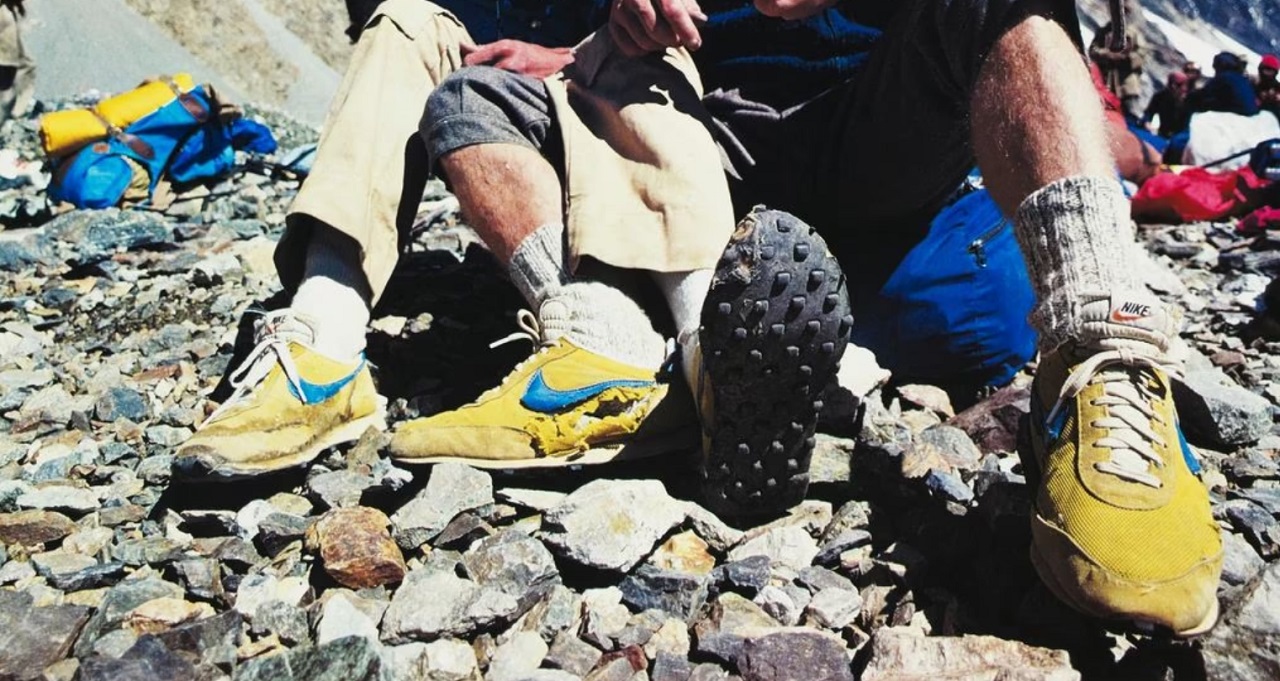
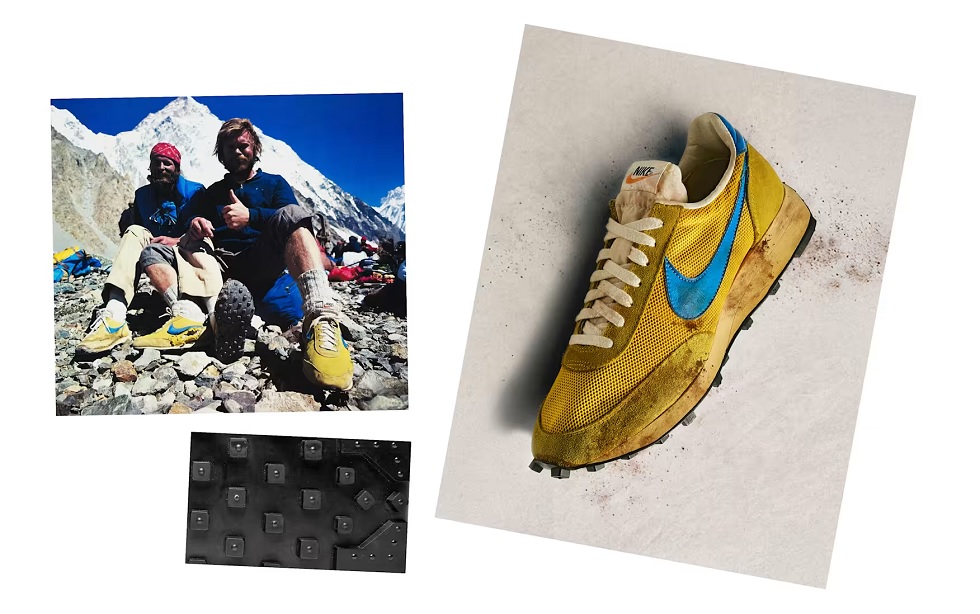
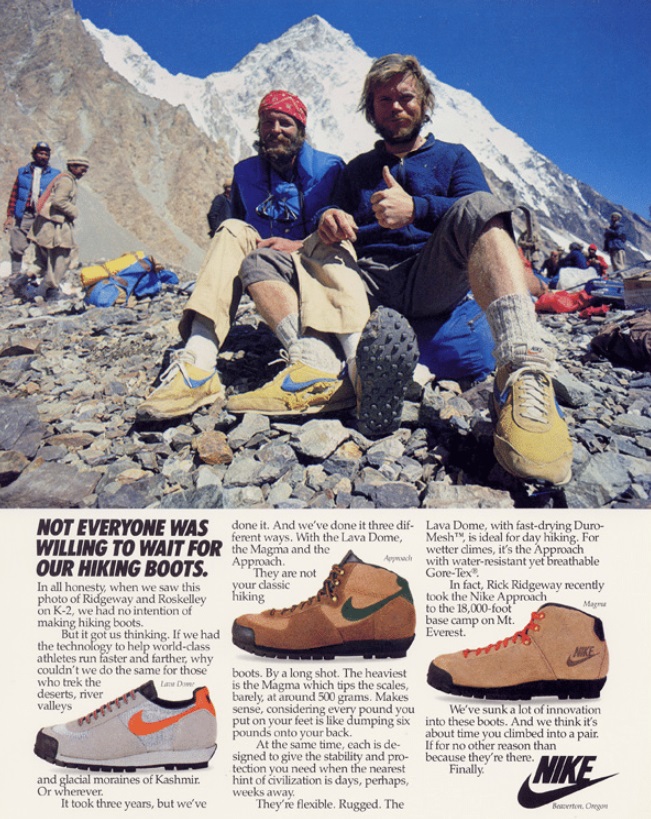
There is a single, grain-heavy photograph that explains the soul of Nike ACG better than any multi-million dollar marketing campaign ever could. Two men sit at the base of K2, their faces gaunt, etched with the exhaustion of 68 days spent battling the "Savage Mountain." Behind them, the jagged, snow-streaked ridgelines of the Karakoram range loom like monoliths. But the detail that captures the imagination isn’t the terrain—it’s their feet. They are wearing torn, battered yellow Nike running shoes. One of the men gives a weary thumb-up to the camera.
Those shoes were a last-minute addition—a gift from a young, scrappy Oregon company that, at the time, had no business being in the mountaineering industry. That was 1978. Today, nearly five decades later, Nike ACG—All Conditions Gear—is attempting to navigate its most ambitious pivot yet: earning its way back into the high-stakes world of technical outdoor performance while reconciling its dual identity as both a mountain pioneer and a streetwear icon. It is a task far harder than it sounds.
A Legacy Forged in High Altitudes: The 1978 Genesis
In 1978, K2 was a graveyard of ambition. It had been successfully climbed only twice, and American expeditions had failed four times since 1938. The mountain was whispered to be "the American mountain"—a derogatory title mocking the nation’s inability to conquer it.
Jim Whittaker, the first American to summit Everest, led the 1978 charge. His team, composed of Seattle climbers and adventurers, was chronically underfunded. They cold-called brands for support, and among the few that answered was an ascending Oregon footwear company: Nike.
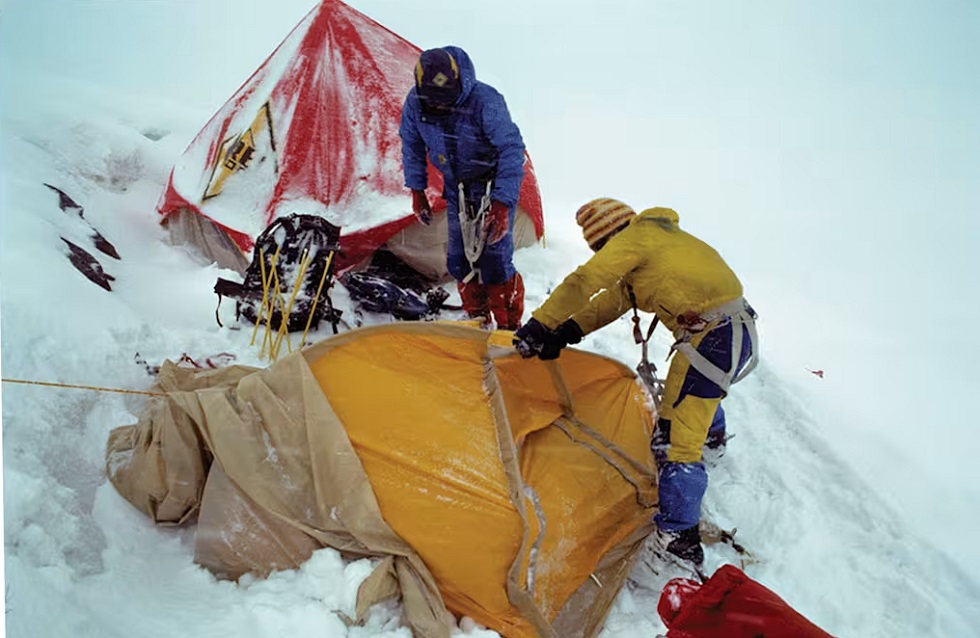
The expedition was a brutal exercise in endurance. Nine storms in rapid succession decimated camps. On September 6, Louis Reichardt and Jim Wickwire reached the summit, with Reichardt accomplishing the feat without supplemental oxygen after a hose failure. The descent was harrowing; Wickwire, forced to change film in sub-zero temperatures, was stranded in the dark, surviving one of the highest bivouacs in history.
However, the "Nike story" began at base camp. Rick Ridgeway and John Roskelley had trekked 110 miles to the foot of the peak in the "Long Distance Vector" (LDV), a road shoe designed by Bill Bowerman. While traditionalists relied on stiff, heavy European leather boots, the LDVs were light, flexible, and breathable. By the time the climbers reached base camp, the shoes were shredded, held together by nothing more than tape, glue, and sheer willpower. Upon returning home, they sent the ruined shoes back to Beaverton with a simple, revolutionary brief: make it tougher, keep it light, and build it for the wild.
The Evolution of "Light is Right"
Nike listened. The feedback from K2 became the blueprint for the early 1980s, birthing the Lava Dome, the Approach, and the Magma. These shoes challenged the industry orthodoxy that ruggedness required weight.
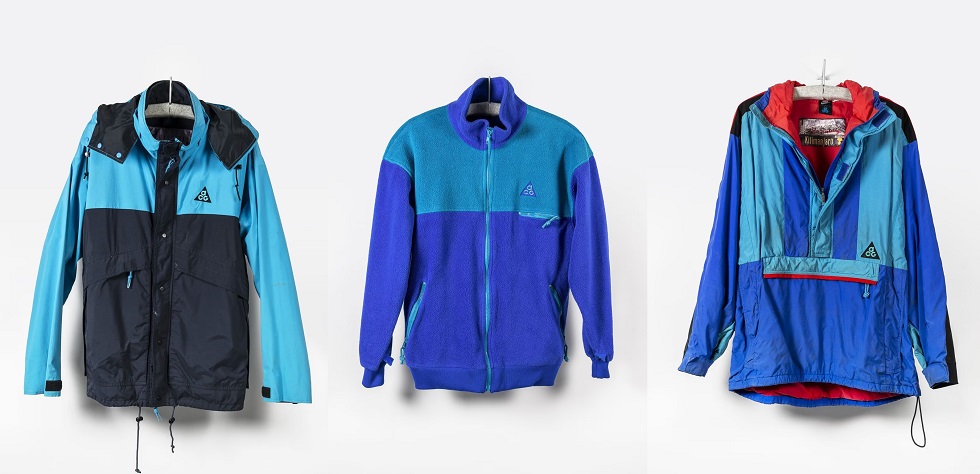
By the mid-80s, Nike had a disparate collection of hiking and trail products floating in a corporate void. In 1987, a team led by Kirk Richardson—a true mountaineer—sought to unify these experiments. They adopted four pillars: high performance, durability, versatility, and functional excellence. They borrowed a phrase already used in the running division for all-weather apparel, and in 1989, "All Conditions Gear" (ACG) was born.
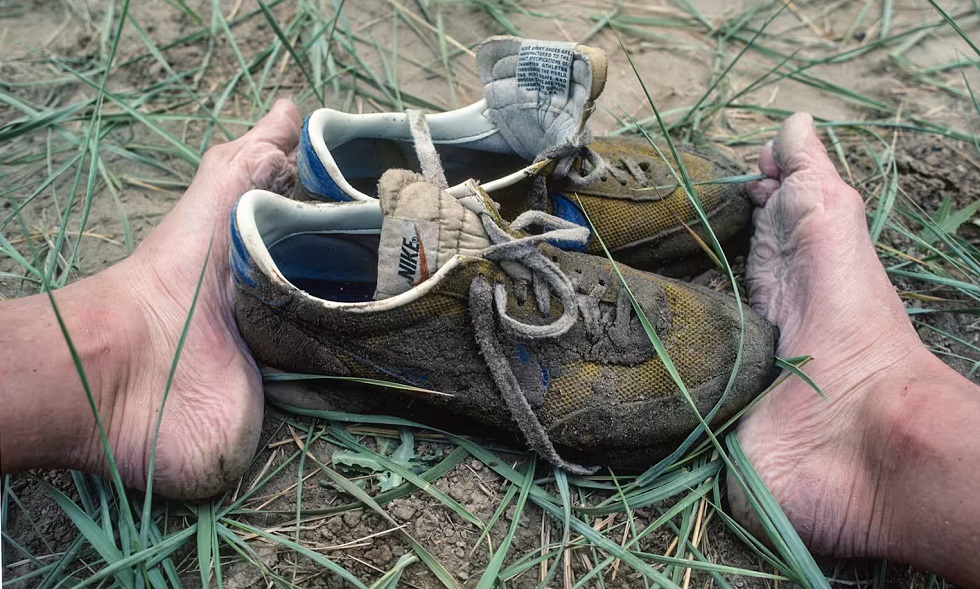
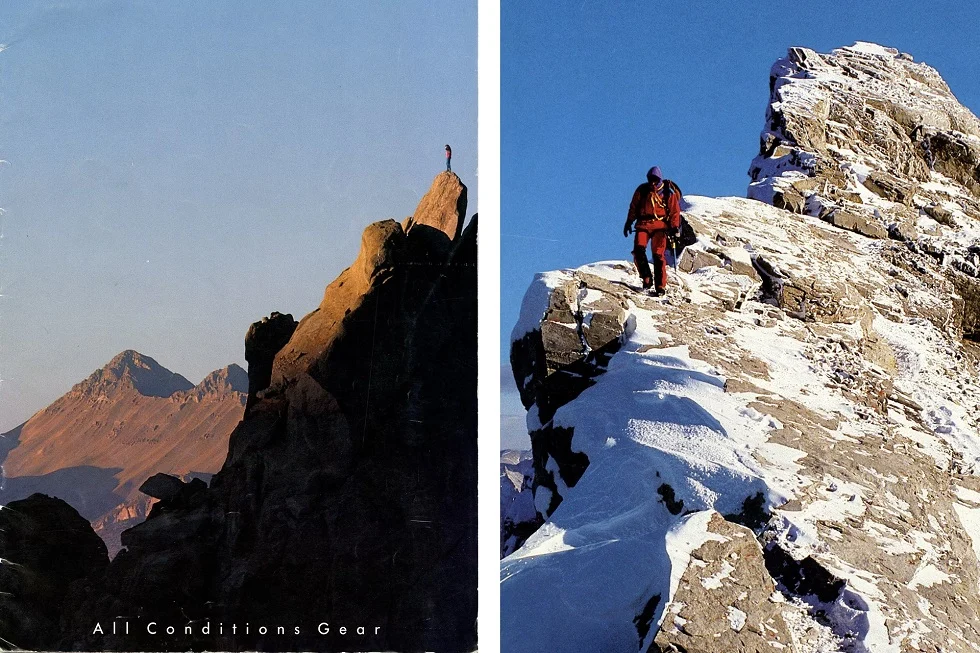
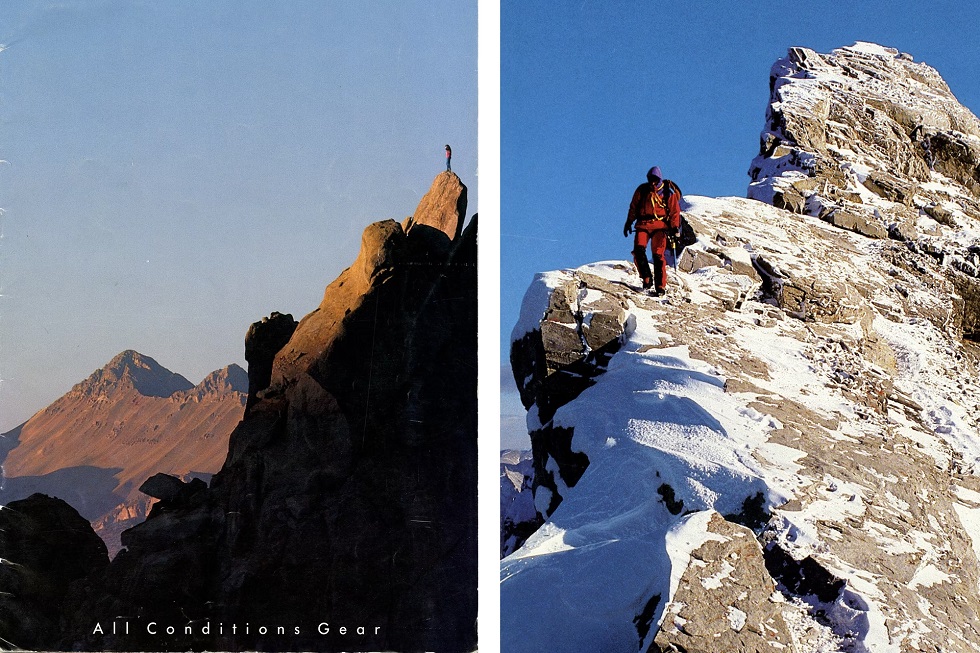
The brand’s launch was marked by a distinct, irreverent tone. Whether shooting climbers on Moab’s Castleton Tower or plastering "before-and-after" volcanic eruption patches on jackets, ACG didn’t take itself too seriously—but it took its engineering deadly seriously.
The Mowabb and the Golden Era of Design
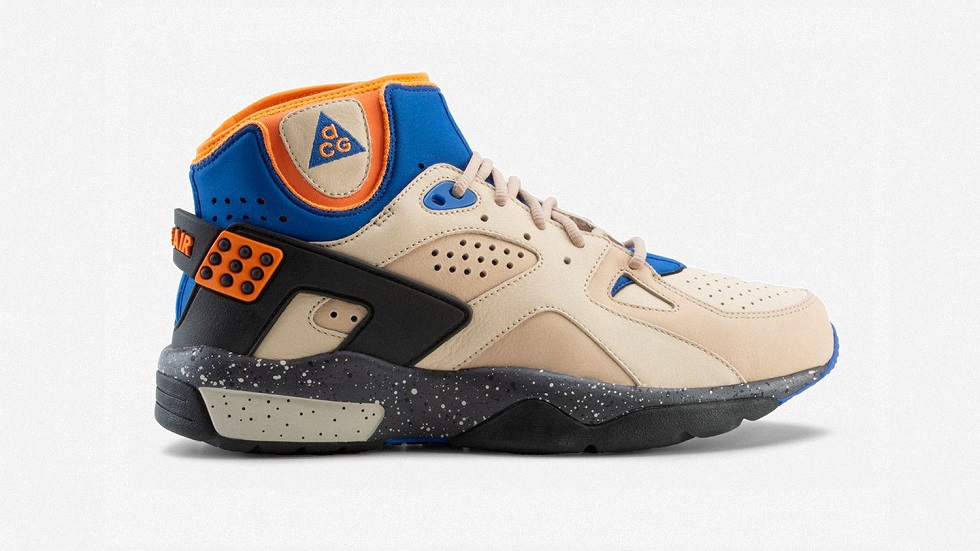
If the 80s were about discovery, the 90s were about the creative explosion of ACG. In 1991, legendary designer Tinker Hatfield introduced the Air Mowabb. Inspired by the landscape of Moab, Utah, the shoe fused the Huarache’s neoprene bootie with the ruggedness of a hiking boot, finished with a signature speckled midsole.
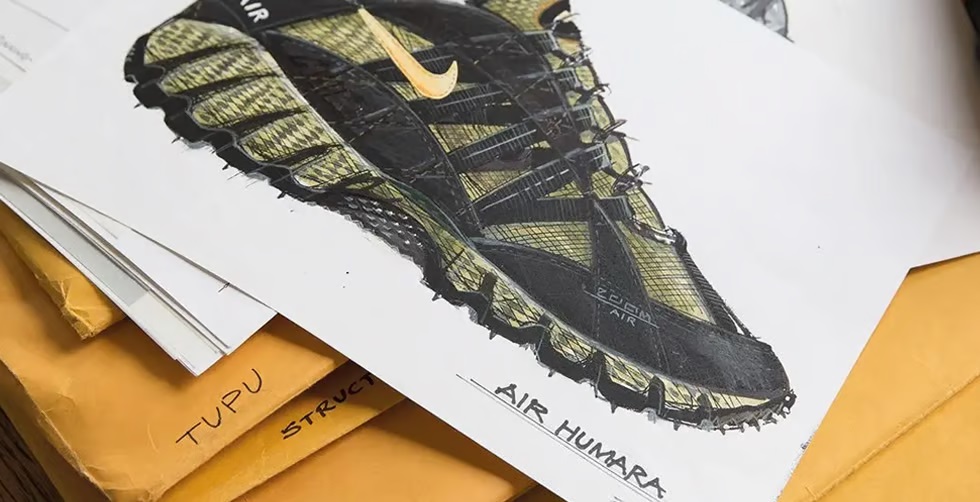
It was a cultural lightning rod. Following the Mowabb, the 1993 Air Deschutz and 1994’s Air Moc showcased the brand’s willingness to experiment. Designers like Peter Fogg brought an aircraft-interior design sensibility to rugged silhouettes like the Air Humara. ACG became the laboratory where Nike let its most inventive minds run wild.
However, success brought a peculiar problem. ACG’s designs were so aesthetic that they transcended the trail. By the late 90s, the brand was as common on the streets of Tokyo and New York as it was on the peaks of the Cascades. This blurring of lines eventually paved the way for "gorpcore"—a movement that celebrated outdoor gear as high fashion.
The Errolson Hugh Experiment
By 2008, the spirit of ACG had largely faded, reduced to a legacy label. In 2014, Nike CEO Mark Parker attempted a radical rebrand by tapping Errolson Hugh, the visionary behind Berlin’s techwear label Acronym.
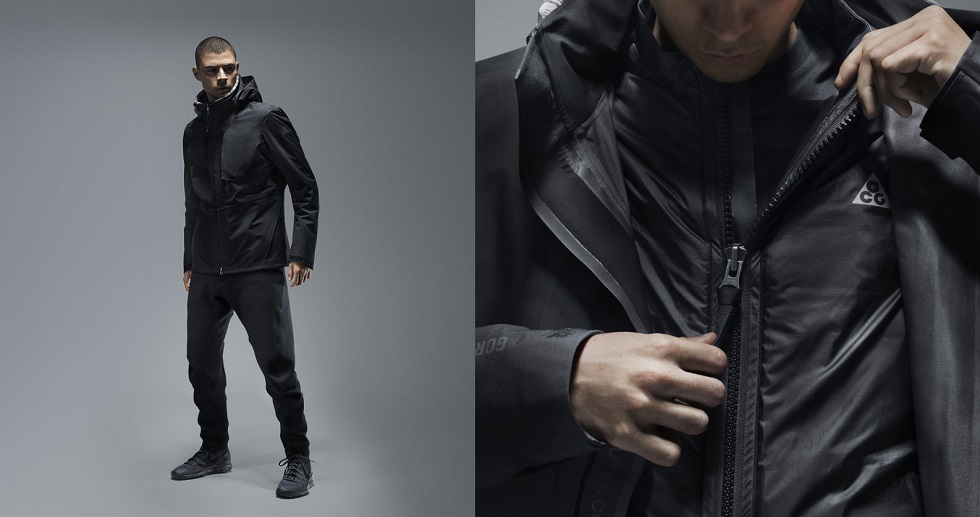
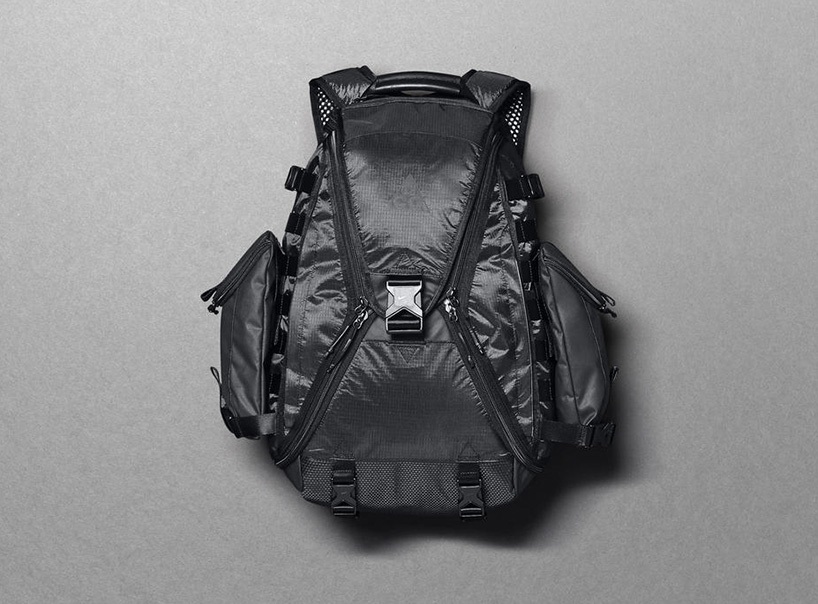
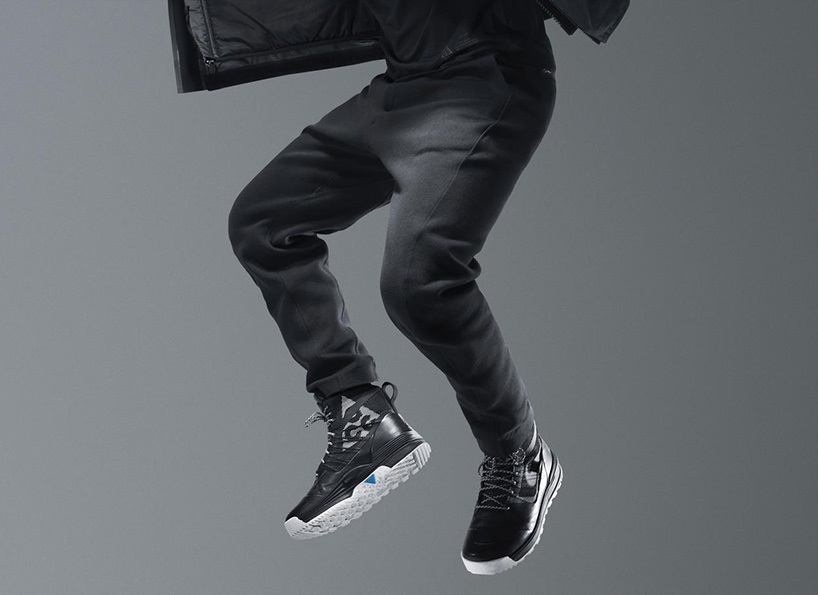
The mission was "sport utility for the city." The neon colors were replaced by stealthy blacks, GORE-TEX laminates, and articulated silhouettes. It was a masterclass in urban performance, selling out instantly and influencing a generation of designers. But by 2018, the partnership concluded, and the brand pivoted back toward retro-sportswear, re-releasing classics like the Air Mada and Goadome to satisfy the growing gorpcore market.
The Reckoning: Nike’s Strategic Pivot
The period between 2020 and 2024 proved to be a sobering chapter for Nike. A heavy reliance on digital direct-to-consumer sales, combined with a retreat from wholesale partners, led to a vacuum in retail. Newer, agile competitors like On, Hoka, and Salomon flooded the trail-running space, capturing the market share Nike had left undefended.
The market crash of 2024, which saw Nike’s valuation plummet by $28 billion, served as the catalyst for change. The return of veteran Elliott Hill as CEO signaled a shift: sport was back at the center, and wholesale was back on the agenda. It became clear that to compete, Nike didn’t just need to sell shoes; they needed to reclaim their credibility on the trail.
The 2026 Relaunch: Recommitting to All Conditions
On February 2, 2026, Nike officially reintroduced ACG as a dedicated outdoor-performance brand, absorbing the Nike Trail division. The focus is no longer just on "lifestyle" but on hardcore trail running, hiking, and alpine exploration.
The new product lineup is aggressive. From the flagship Ultrafly to the rugged Zegama, and the introduction of the GOATEK outsole compound—designed to reduce reliance on external suppliers like Vibram—the brand is signaling a return to its engineering roots.
Athletes are the new heart of the operation. Unlike the static endorsements of the past, the "All Conditions Racing Department" is a living, breathing laboratory. Testers are given unmarked prototypes and tasked with one thing: feedback.
Beyond the Logo: Cultural Integration
ACG’s 2026 strategy is less about billboard ads and more about "utility-as-marketing." The All Conditions Express—a custom train running through the Italian Alps—and the partnership with Rivian to create the "Ultimate Aid Station" are designed to solve real-world problems faced by ultra-runners.
By sponsoring the Broken Arrow Skyrace with a record-breaking $150,000 purse and investing in the youth-focused "Trail Futures NTN," Nike is attempting to build an ecosystem rather than a customer base. They are trying to be useful, not just visible.
The Trust Problem and the Future
Despite the marketing blitz, the trail community remains skeptical. Ultra-runners possess long memories and a discerning eye for authenticity. The first generation of the new Ultrafly struggled to displace incumbents like Salomon or Norda, and critics note that the brand still carries the heavy baggage of its streetwear past.
There is also the ongoing tension between the "performance" ACG and the "fashion" ACG. While the trail-racing team pushes the boundaries of human endurance in the Orobic Alps, the brand continues to drop high-fashion capsules with collaborators like Cactus Plant Flea Market.
This duality is the brand’s greatest challenge and its greatest strength. As the lines between urban living and outdoor exploration continue to dissolve, ACG occupies a unique, albeit crowded, space.
Ultimately, ACG’s path forward is defined by its past. In 1978, the brand found its purpose in a box of ruined shoes sent by two exhausted men. In 2026, it is trying to find its way back there. Whether this resurrection succeeds will not be decided by train rides in Italy or clever marketing stunts in Los Angeles. It will be decided, as it was on K2, on the trail: one mile at a time, often off-trail, and far away from the gaze of the city. For Nike, the trail back to the top is long, and there are no shortcuts.
 Iffa Jayyana
 Ali Ikhwan
 rifanmuazin
