

By: Maritime News Desk
Published: October 2026
Main Facts
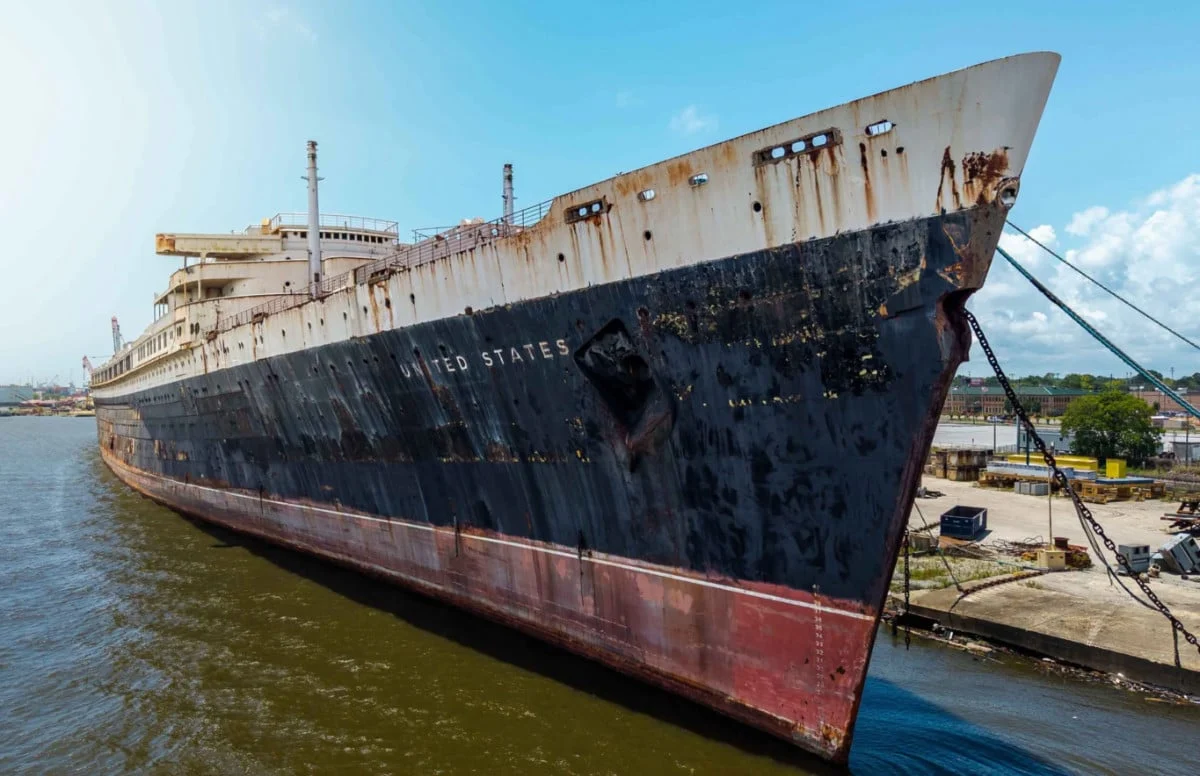
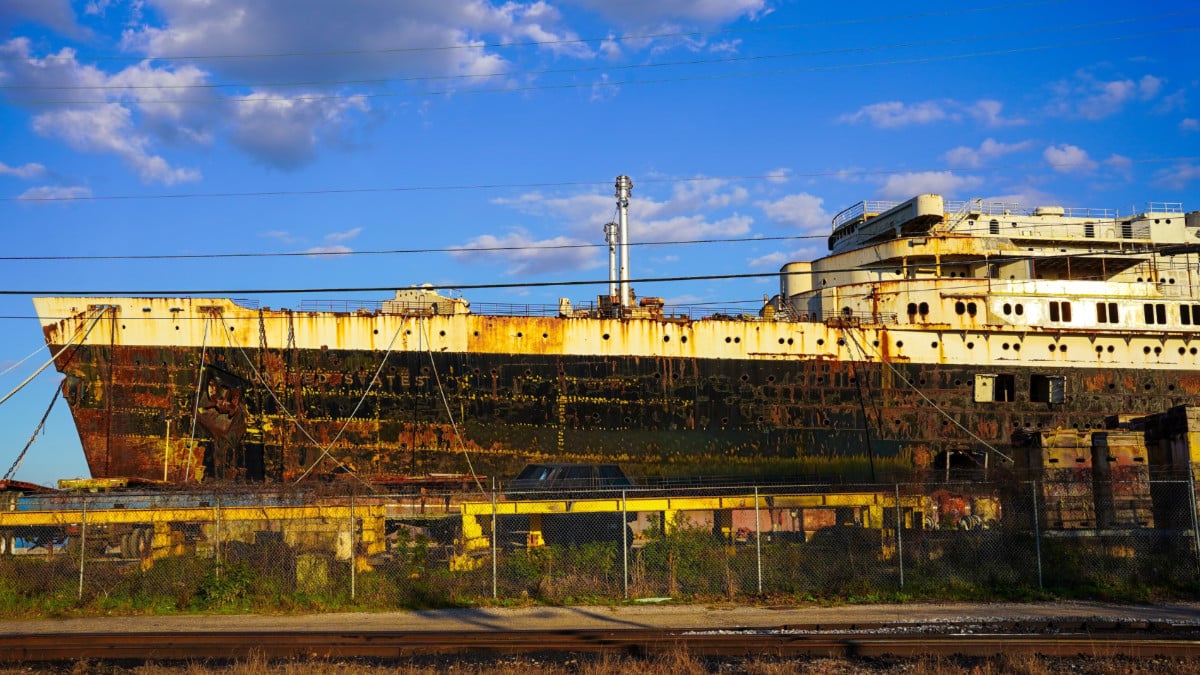
The legendary mid-century ocean liner SS United States—once celebrated as the fastest passenger ship to ever cross the Atlantic Ocean—is entering the final days of her storied existence. In what represents a monumental shift from majestic luxury liner to an ecological and tourist landmark, local authorities have finalized the timeline for her historic sinking.
According to official announcements made by the Okaloosa County Board of County Commissioners, the historic vessel is scheduled to be deployed on Thursday, November 12, 2026. She will be intentionally scuttled approximately 22 nautical miles southwest of Destin-Fort Walton Beach, Florida, coming to rest at precise coordinates $30^circ 07.148′ textN, 86^circ 46.755′ textW$.
Once the operation is successfully completed, the SS United States will officially claim the title of the world’s largest artificial reef. This transition is designed not only to dispose of the aging hull in an environmentally responsible manner, but also to create a thriving marine habitat and a world-class destination for recreational scuba divers and eco-tourists.
Ahead of the deployment, strict maritime security protocols have been enacted. The U.S. Coast Guard Sector Mobile has established a dynamic 100-yard moving safety zone to protect the ship and spectators during her initial river transit out of Alabama. Furthermore, a strict one-nautical-mile exclusion zone will be enforced around the sinking site on the day of the deployment. These measures are designed to safeguard workers, maritime traffic, and the general public from the complex physical hazards associated with scuttling a vessel of this unprecedented magnitude.
Chronology of the Final Departure
The logistical countdown to the sinking of the SS United States involves a tightly coordinated timeline managed by local government agencies, federal maritime authorities, and industrial marine contractors.
- Monday, October 26, 2026: The Okaloosa County Board of County Commissioners officially announces the deployment date, time, and coordinates during a public briefing, setting off final preparations for the maritime community.
- Wednesday, November 11, 2026 (1:30 PM): A public send-off ceremony is scheduled to take place at the Destin-Fort Walton Beach Convention Center. The event will feature historical retrospectives, guest speakers, and light refreshments to honor the ocean liner’s illustrious career.
- Monday, November 9, 2026: The ocean liner is slated to depart Modern American Recycling Services of Alabama (M.A.R.R.S.) Pier 4, located along the Mobile River. Protected by a 100-yard moving safety zone enforced by the U.S. Coast Guard, the ship will begin her final tow out of Mobile Bay toward the Gulf of Mexico.
- Thursday, November 12, 2026 (9:00 AM): AJ’s Seafood and Oyster Bar in Destin, Florida, opens its doors for a live public viewing party, offering maritime enthusiasts a communal space to watch the final hours unfold.
- Thursday, November 12, 2026 (10:00 AM): Marine engineering teams are expected to initiate the scuttling operations, weather permitting. Trained technicians will execute the controlled flooding process that will permanently place the ship on the ocean floor.
Supporting Data and Technical Specifications
Transforming a massive, historical passenger liner into a safe and productive underwater ecosystem requires extensive engineering, deep-sea environmental science, and meticulous preparation.
- Geographic Positioning: The vessel will rest approximately 22 nautical miles southwest of Destin-Fort Walton Beach, Florida, at coordinates $30^circ 07.148′ textN, 86^circ 46.755′ textW$.
- Depth and Accessibility: The ocean liner will settle in an upright position in approximately 180 feet of water. Crucially, her top superstructure and decks are engineered to rest just 55 to 60 feet below the surface. This specific depth profile makes the upper portions of the wreck safely accessible to all levels of certified divers, from recreational enthusiasts to advanced technical explorers.
- Environmental Remediation: Before receiving clearance for deployment, the ship underwent extensive environmental remediation. Workers removed all asbestos, polychlorinated biphenyls (PCBs), hydrocarbons, and other potentially hazardous materials to ensure the marine ecosystem remains completely unpolluted.
- Marine Architecture for Wildlife: Specialized cuts and openings have been meticulously sliced into the ship’s hull and interior bulkheads. These modifications serve a dual purpose: they allow divers to safely navigate the interior corridors without becoming trapped, and they provide natural pathways for local marine life—such as sea turtles, goliath grouper, and schools of pelagic fish—to colonize the artificial reef structure.
Official Responses and Maritime Safety Regulations
The sheer scale of scuttling a vessel the size of the SS United States demands rigorous oversight from federal and local regulatory bodies. The United States Coast Guard has issued clear directives to ensure that the historic event proceeds without incident.
In statements released by the USCG Sector Mobile and Panama City outposts, officials emphasized that public safety is the paramount priority during the towing and sinking operations.
"This stand-off distance is necessary to ensure the safety of workers onboard the S.S. United States, and to protect the public from hazards associated with the sinking of a large vessel," the USCG explained in an official public advisory.
"Unauthorized vessels approaching too close to the S.S. United States at the sinking location may be boarded by USCG law enforcement personnel, and vessel operators may be subject to civil penalties or other enforcement action."
To balance public enthusiasm with strict safety guidelines, county officials have partnered with digital media providers to ensure global access. Those unable to travel to the Florida panhandle can view the entire operation in real time via a dedicated online livestream hosted at thessus.com.
Implications: Tourism, Ecology, and Preservation
The final resting place of the SS United States marks the end of an era for classic transatlantic travel, but it simultaneously ushers in a new chapter focused on regional economic development, marine conservation, and land-based historical preservation.
Economic and Ecological Boost
For Okaloosa County and the broader Florida panhandle, the arrival of the liner is expected to serve as a major catalyst for eco-tourism. Artificial reefs in the region consistently generate millions of dollars in economic activity by attracting international scuba divers, sport fishermen, and maritime tourists. Ecologically, the massive steel framework will quickly become encrusted with corals, sponges, and barnacles, forming a complex food web that supports local fish populations and enhances biodiversity in the Gulf of Mexico.
Land-Based Preservation
While divers explore the submerged hull, land-bound visitors will still have ample opportunity to connect with the liner’s storied heritage. The SS United States Conservancy has formulated comprehensive plans for a dedicated museum and visitor experience. This facility will house personal narratives, archival documents, and historical artifacts that chronicle the ship’s mid-century dominance of the seas.
Significantly, portions of the ship’s iconic physical structure—including her massive funnels, radar mast, and a preserved propeller—have already been safely salvaged and placed into secure storage. These architectural centerpieces will be integrated into the upcoming museum exhibits, ensuring that future generations can appreciate the scale, elegance, and engineering brilliance of the "Big U" long after she has settled onto the ocean floor.
 Iffa Jayyana
 Asep Darmawan
 Sagoh
