

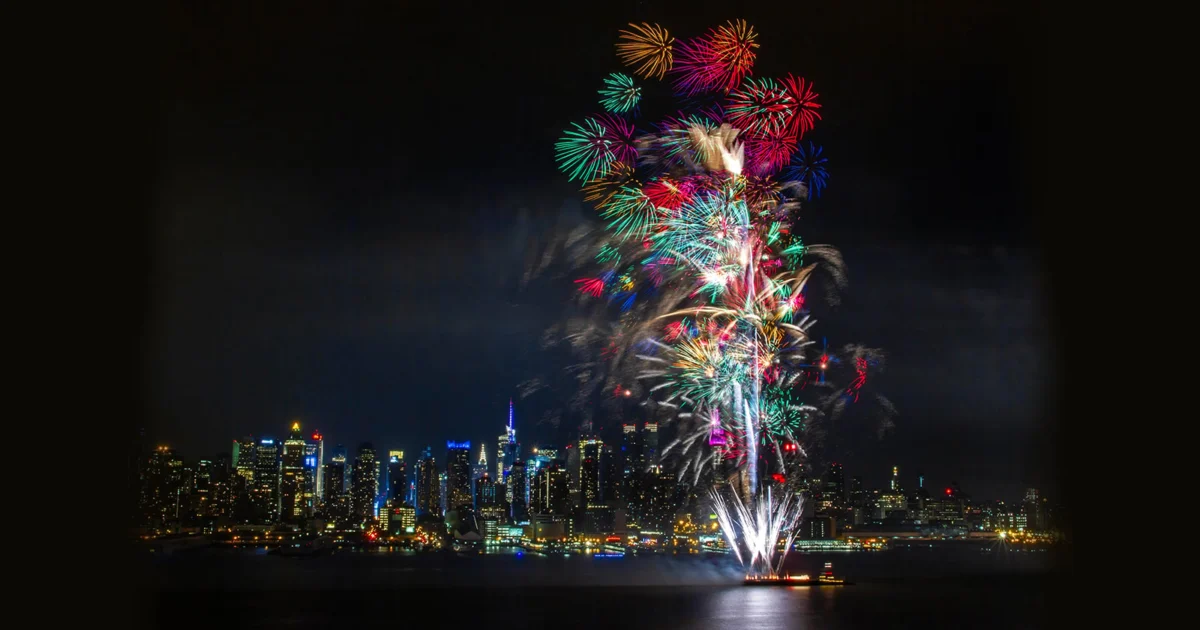
For generations, the standard for fireworks photography has been a locked-down tripod, a low ISO, and a long exposure that turns a fleeting spark into a delicate trail of light. While this "classic" look remains a staple of holiday portfolios, the rapid evolution of digital sensor technology and post-processing capabilities has opened a new frontier for creative expression. Modern photographers are no longer content with merely documenting a display; they are using it as a canvas to explore light, motion, and architectural context.
By moving beyond the default settings, photographers can transform a repetitive pyrotechnic show into a unique artistic statement. Whether you are aiming to freeze the microscopic geometry of a shell at its peak or crafting a painterly, abstract composition, the secret lies in understanding the interplay between camera mechanics and the physics of light.
The Technical Foundations: Why Experimentation Matters
The fundamental appeal of fireworks photography lies in its inherent unpredictability. Even when multiple photographers are positioned side-by-side with identical equipment, the resulting images are rarely the same. This variance is the result of nuanced technical choices—shutter speed, focal plane manipulation, and environmental framing—that shift the photographer’s role from a passive observer to an active orchestrator of the scene.
To elevate your work, you must first move past the "set it and forget it" mentality. While long exposures are effective for capturing the sheer volume of a show, they often result in "light soup"—a cluttered, overexposed mess of white noise. By diversifying your approach, you can create images that are cleaner, more geometrically precise, or more atmospheric, depending on the story you wish to tell.
1. High-Speed Freeze: The Geometry of the Explosion
The most common mistake in pyrotechnic photography is the assumption that the shutter must stay open for several seconds. In reality, the most intricate details—the star patterns, the spider-web filaments, and the vibrant color shifts—happen in a fraction of a second.
Technical Implementation
To capture these details, you must shift your camera into a high-shutter-speed workflow:
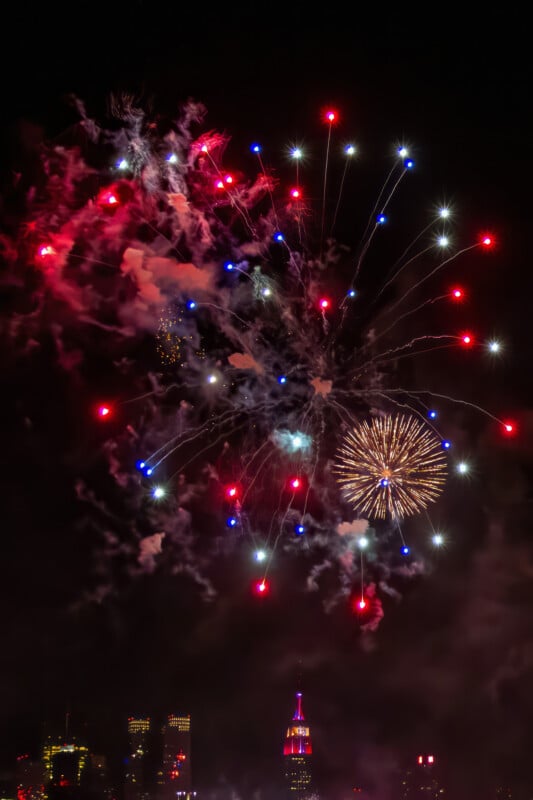
- Shutter Speed: Aim for 1/250 to 1/1000 of a second. This is fast enough to freeze the movement of the sparks, effectively "stopping" the expansion of the burst.
- Aperture and ISO: To compensate for the short exposure time, use a wider aperture (f/2.8 to f/5.6) and an ISO between 400 and 800.
- Focusing Strategy: Autofocus often struggles in the dark. Pre-focusing manually on the expected altitude of the bursts is significantly more reliable. If your lens has a distance scale, set it to the hyperfocal distance or the approximate distance to the sky-burst area.
By utilizing burst mode (continuous shooting), you increase your statistical probability of catching the "perfect bloom"—that singular moment where the shell is fully extended but hasn’t yet begun to drift or fade into smoke.
2. Pull-Focus: Creating Painterly Abstractions
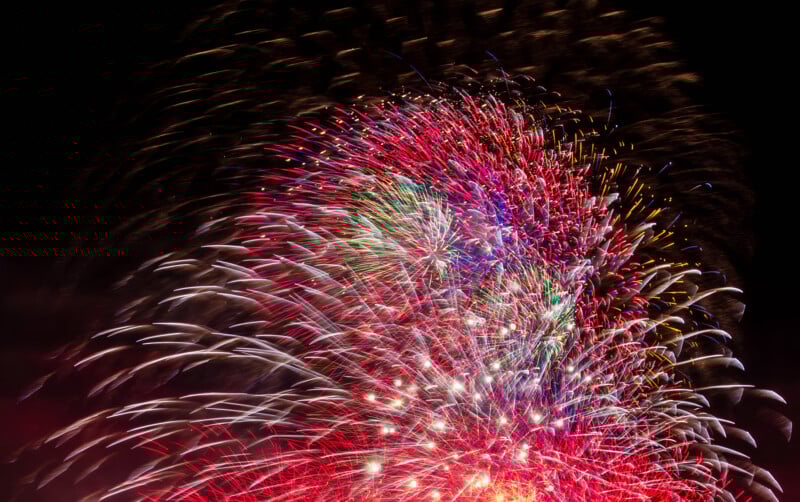
For those interested in the abstract, the "pull-focus" technique is a masterclass in in-camera manipulation. By adjusting the focus ring during a multi-second exposure, you transform a standard firework burst into a dreamlike, impressionistic light painting.
Executing the Effect
- Mount your camera on a sturdy tripod.
- Set a longer exposure: Three to six seconds is the "sweet spot."
- The Manipulation: Begin the exposure with the lens slightly out of focus. As the firework ignites, slowly rotate the focus ring toward the sharp setting. Alternatively, start sharp and pull out of focus as the sparks trail downward.
This creates a unique "bloom" effect, where the light trails grow thicker and softer as they move through the frame. The result is not just a photo of a firework; it is a visual representation of the energy and motion of the display.
3. Contextualizing the Chaos: Wide-Angle Storytelling
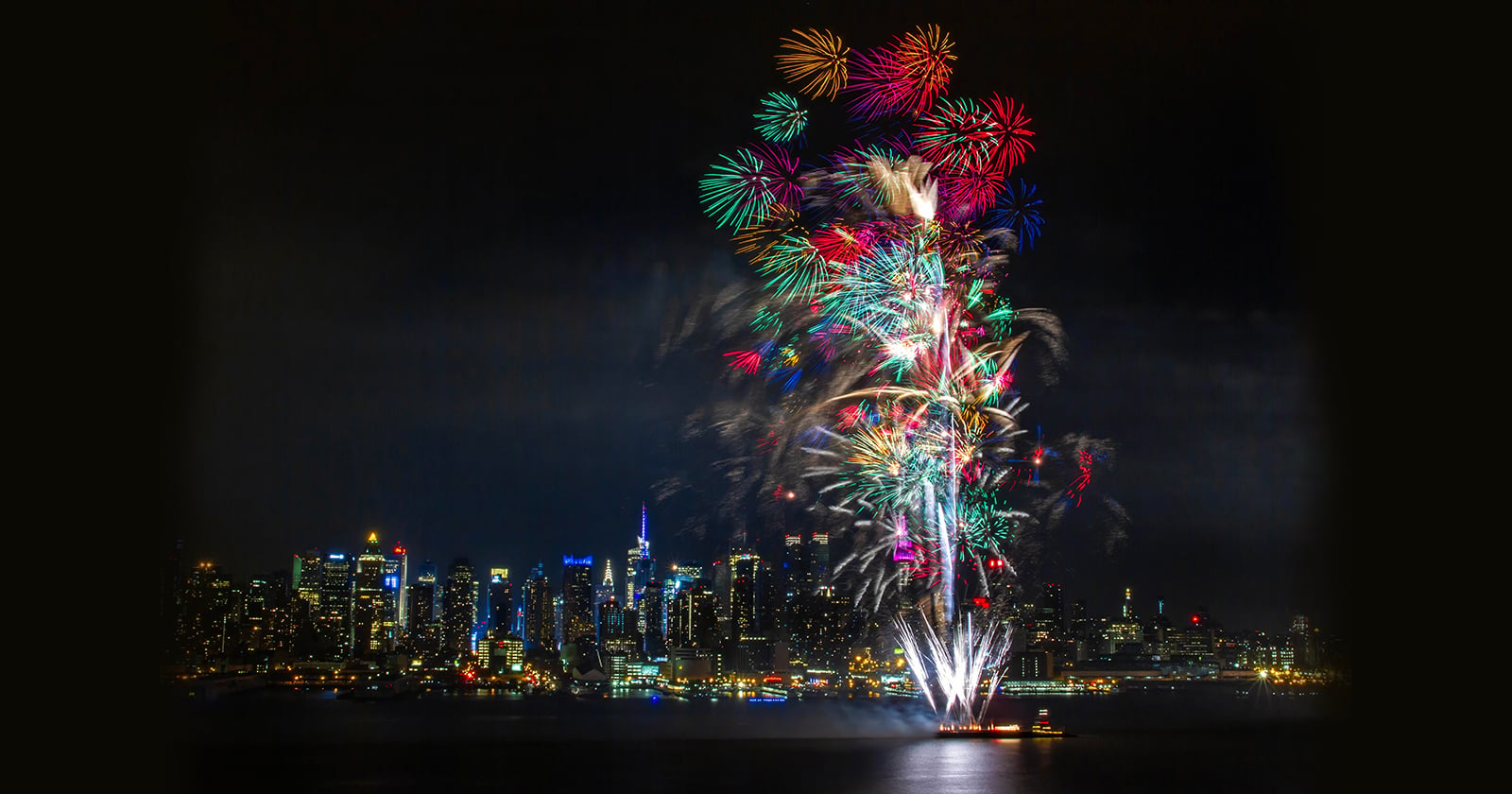
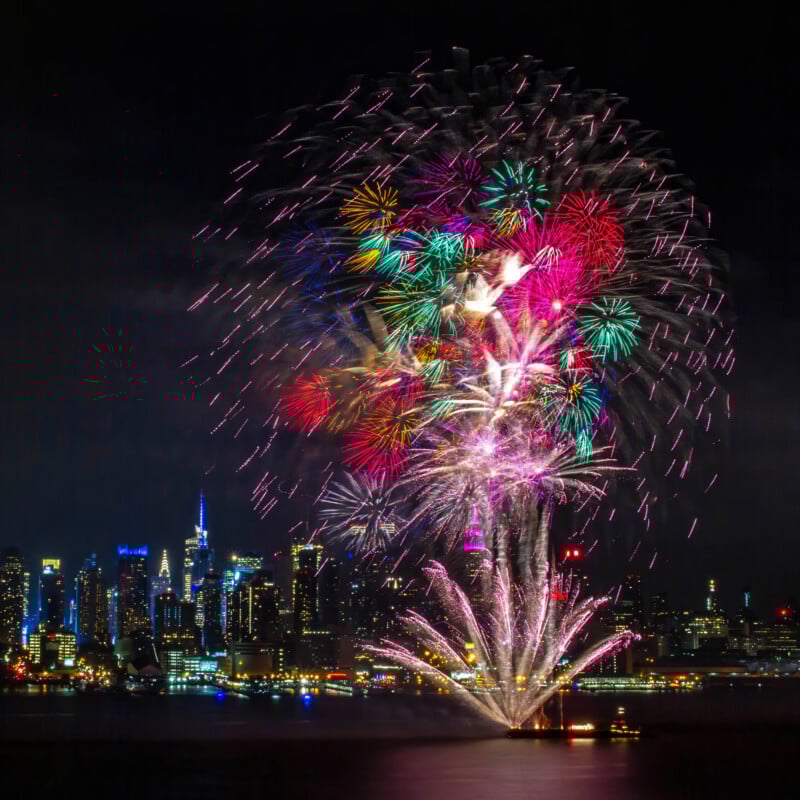
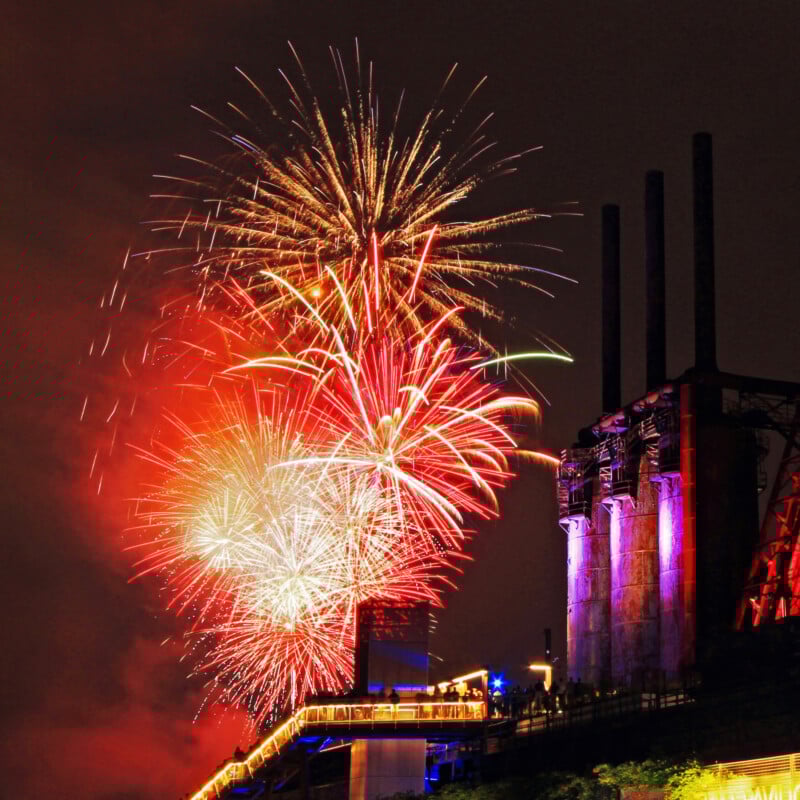
Perhaps the most significant shift in modern landscape-style fireworks photography is the move away from the "isolated burst" toward "contextualized storytelling." A firework in a black void could be anywhere; a firework framed against the Empire State Building, a historic industrial smokestack, or a reflective lake tells a story of place and time.

Compositional Best Practices
- Foreground Interest: Look for silhouettes of the crowd, architectural landmarks, or natural geography. These elements provide scale, emphasizing the sheer size of the pyrotechnic display.
- The Golden Ratio: Use a wide-angle lens to capture the horizon line. Keeping your aperture between f/8 and f/11 ensures that both the foreground and the distant sky remain sharp, creating a cohesive, deep-focus image.
- The Narrative Arc: Don’t just focus on the fireworks. Look for the "aftermath"—the way the smoke catches the light of the city, or the way the crowd reacts to the finale. These human elements turn a simple event photo into a compelling piece of photojournalism.
4. Multi-Exposure Stacking: The Cleaner Grand Finale
The "Grand Finale" is the bane of many photographers. The rapid, sequential firing of shells creates a massive amount of particulate smoke, which, in a long exposure, reflects light and creates a hazy, washed-out result.
The Stacking Workflow
Rather than one long exposure, capture a series of shorter exposures (1–4 seconds) throughout the finale.
- Consistency is Key: Use a tripod and keep your composition locked. Use manual exposure settings so every frame is identical.
- The "Lighten" Blend Mode: Once you return to the studio, import your sequence into Photoshop as layers. By changing the blend mode of each layer to "Lighten," the software will only keep the brightest pixels (the firework trails) and discard the darker, smoke-filled background.
- Refinement: This technique allows you to "build" a finale that looks as vibrant as what you saw with your naked eye, without the clutter of excessive smoke.
5. The "Black Card" Technique: An Analog Classic
Before the advent of digital stacking, photographers used a simple, low-tech tool to achieve similar results: a piece of black cardstock. This method is still highly effective and offers a level of control that digital post-processing often struggles to replicate.
The Mechanism
Using Bulb mode, you hold the shutter open for 30 to 45 seconds. However, you are not recording continuously. You place a piece of opaque black cardstock in front of the lens whenever a firework is not actively exploding.

- Selective Exposure: You only remove the card when a desirable burst occurs.
- Why it Works: This prevents the background ambient light (like city lights) from overexposing the sensor during the gaps between bursts. It allows you to "paint" the sky with specific, high-quality fireworks, creating a custom composition in a single RAW file.
Implications for Future Creative Work
The common thread across all these techniques is the transition from "capture" to "creation." As digital sensors improve their dynamic range and low-light noise performance, the constraints that once dictated the "proper" way to shoot fireworks have largely evaporated.
For the modern photographer, the challenge is no longer about whether their equipment can handle the light; it is about their ability to visualize a final image and use their tools to construct it. Whether you are a professional looking to add a unique flair to a commercial portfolio or an enthusiast hoping to capture a more personal vision of a holiday celebration, the key is to experiment.
The next time you head out to a show, leave the default "fireworks mode" behind. Instead, choose a technique, study the rhythm of the display, and treat the night sky as your personal canvas. The result will be something far more meaningful than a simple documentation of the event—it will be your own, unique artistic interpretation of the light.
Photography and techniques courtesy of Kate Garibaldi.
 Suro Senen