

For the modern freelance writer, the difference between a profitable career and a burnout-inducing grind often comes down to one thing: efficiency. Every minute spent transcribing a 20-minute interview is a minute that cannot be billed, researched, or used to craft a compelling narrative. In an era where subject matter expert (SME) interviews often exceed 3,000 words, the traditional method of manual transcription—listening, pausing, typing, and rewinding—is an antiquated relic that threatens the viability of a freelance business.
As of 2026, tools like Otter.ai have moved from the "experimental" category to the "essential" toolkit. With over 40,000 students having navigated the Location Rebel freelance writing course, the consensus is clear: the ability to automate the grunt work of content creation is the defining factor in scaling a writing career to the first $1,000 and beyond.
The Evolution of the Interview Workflow
Historically, the freelance writing workflow was bottlenecked by the transcription process. A standard 20-minute interview with a high-level industry expert would require at least 60 to 90 minutes of dedicated post-call labor just to get the raw text onto the page. This manual process introduced several friction points:
- Split Focus: The writer, forced to act as a stenographer, often missed the nuance of the conversation while struggling to type at the speed of speech.
- The "Blind" Angle: Without a transcript immediately available, writers struggled to identify the core narrative arc of their story until days after the call, often requiring a second, time-consuming review of the audio.
- Accuracy Hazards: Frantic typing inevitably led to errors, misquotes, and the loss of critical, off-the-cuff insights that often serve as the "hook" for a high-quality feature article.
Since 2020, the integration of AI-driven transcription tools like Otter.ai has fundamentally shifted this chronology. By offloading the transcription to an automated engine, the writer is free to focus on the content of the interview rather than the capture of it.
Supporting Data: The ROI of Automation
The math behind adopting AI transcription is compelling. For a typical freelance project—such as a 1,000-word article for a fintech publication—the compensation might be $1,200.
The Traditional Model:
- Research: 1 hour
- Interview/Transcribing: 3 hours (including manual transcription)
- Writing/Outlining: 3 hours
- Total: 7 hours
- Effective Hourly Rate: ~$171/hour
The AI-Integrated Model:
- Research: 1 hour
- Interview: 20 minutes (0.3 hours)
- Transcription Cleanup: 10 minutes (0.15 hours)
- Writing/Outlining: 3 hours
- Total: 4.45 hours
- Effective Hourly Rate: ~$270/hour
By reclaiming roughly 60 to 90 minutes per interview, a freelancer can effectively increase their hourly rate by nearly 60%. When applied across three or four interview-based articles per month, the $100 annual investment in a "Pro" subscription pays for itself within the first few weeks of operation.
Feature Spotlight: Beyond Simple Text
Modern transcription isn’t just about text-on-page; it is about data retrieval. The most sophisticated tools, such as Otter.ai, have evolved to include features that turn audio files into searchable databases.
AI Chat Search and Intelligence
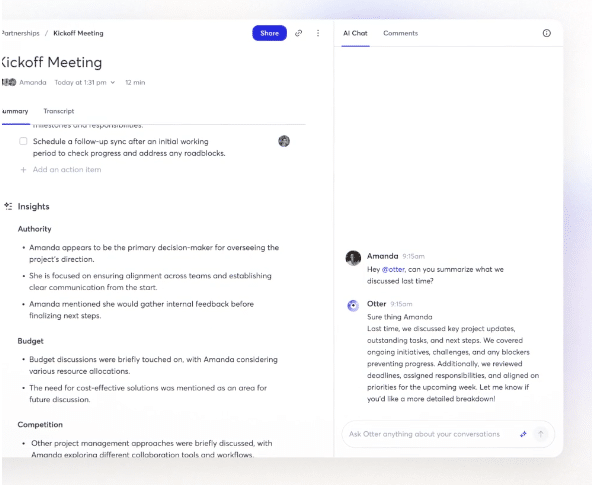
One of the most significant advancements is the ability to query the transcript. Instead of scrubbing through a 45-minute recording to find a specific mention of "AI personalization" or "credit card fraud," the writer can simply ask the AI chatbot within the platform. The tool then returns the relevant quotes, often summarizing the context. This allows for rapid synthesis of complex topics, enabling writers to produce higher-quality, more authoritative content in less time.
Linked Audio Playback
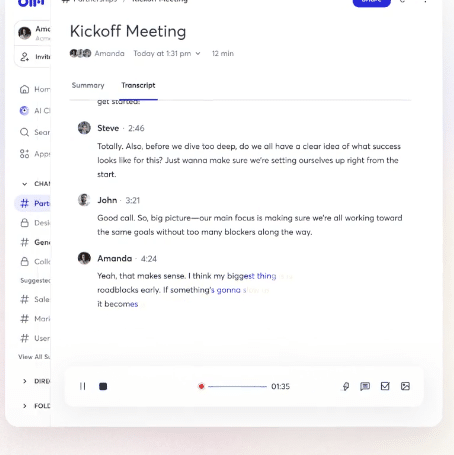
Accuracy remains the primary concern for any professional writer. To bridge the gap between AI speed and human precision, these tools link specific text segments to their corresponding audio timestamp. If a name sounds garbled or a technical term seems incorrect, a single click plays the exact snippet of audio. This verification process ensures that the "80–85% accuracy" typical of current AI models is elevated to 100% human-verified accuracy in seconds.
Navigating the Limitations
Despite the clear advantages, professional writers must be aware of the operational limitations of AI transcription services:
- The Hardware Constraint: Most AI tools require the "Speaker Mode" or native system sound capture to function effectively. If a writer is wearing headphones, the tool may only record their side of the conversation. This necessitates a quiet, private environment or a specific setup that allows for system-wide audio capture.
- The Attribution Gap: While these tools are excellent at word recognition, they can struggle with speaker identification in multi-person settings or webinars. Professional standards require that the writer manually verify the attribution of every quote to avoid embarrassing errors in publication.
- Contextual Nuance: AI still struggles with industry-specific jargon or heavy accents. While the error rate is low, it is non-zero, making the "human-in-the-loop" verification step an absolute requirement for journalistic integrity.
Why Not Human Transcription?
The argument for human transcription services—which generally offer higher accuracy—is often outweighed by the constraints of modern freelance deadlines. In the fast-paced world of digital media, a turnaround time of three to five days is often impossible. When an article must be researched, interviewed, and drafted within a single week, the "instant availability" of AI-generated transcripts is a non-negotiable advantage.
While human services provide a "cleaner" product, the delay in receiving the transcript creates a bottleneck that prevents the writer from entering the drafting phase. For the modern freelancer, speed is the ultimate competitive advantage.
Implications for the Freelance Economy
The rise of accessible AI tools marks a shift in the freelance economy from "labor-intensive" to "intellect-intensive." By automating the administrative burden of transcription, freelancers can focus on:
- Higher-Level Strategic Thinking: Spending more time on story structure and angle development.
- Volume Scaling: Taking on more clients or higher-complexity projects without sacrificing quality.
- Improved Client Relationships: Being able to engage more deeply with interview subjects during calls leads to better source rapport and more exclusive, high-value information.
The Verdict: A Necessary Investment
The decision to adopt an AI transcription tool like Otter.ai is essentially a decision about the value of your time. If you are a freelancer who conducts regular SME interviews, client meetings, or research calls, the $100/year "Pro" subscription is not merely an expense—it is a tool that compounds your productivity.
The free plans provided by these services are, in themselves, a low-risk testing ground. Every writer should, at a minimum, trial these tools on their next two to three projects. The goal is to see if the tool fits your specific workflow. If it saves you even one hour per month, it has effectively paid for itself. If it saves you five hours, it is one of the most profitable investments you can make in your business.
As we look toward the future of freelance writing, the barrier to entry is lowering, but the standard for quality and speed is rising. Those who embrace these technological efficiencies will find themselves with more time, more revenue, and a significantly higher ceiling for their career growth. The question is no longer whether you can afford to use these tools, but whether you can afford not to.
 Asep Darmawan
  Raul Delapena Setiawan
  Asro
Asro 