


The freelance landscape has undergone a seismic shift. In the span of just a few years, artificial intelligence has moved from a speculative novelty to a foundational component of the modern digital economy. For the freelance writer, the current climate is binary: those who view AI as a disruptive adversary are struggling to stay afloat, while those who treat it as a force multiplier are scaling their operations with unprecedented efficiency.
If you are a freelance writer and you are not leveraging AI, you are quite literally working harder than you need to. However, there is a profound distinction between using AI as a sophisticated assistant and using it as a crutch. The former leads to a thriving, high-value business; the latter leads to the production of generic, "soulless" content that clients can spot—and reject—the moment it hits their inbox.
The State of the Industry: Why AI Isn’t Going Anywhere
AI tools have become ubiquitous, fundamentally changing how we research, draft, and manage our business workflows. The reality is that the freelance writer of 2026 is no longer just a wordsmith; they are a project manager, a researcher, and an editor.
The writers who are winning in this environment are those who offload the "cognitive drudgery" to AI. They delegate the tedious, repetitive tasks to algorithms so that they can dedicate their limited human bandwidth to the work that carries a premium: original critical thinking, primary research, deep-dive interviews, and authentic relationship building.
Chronology of the Shift: From Blank Page to Automated Workflow
The integration of AI into the writing process has evolved rapidly. Initially, writers used LLMs (Large Language Models) as basic chatbots. Today, the workflow is far more sophisticated.
- The Era of Experimentation (2022-2023): Writers first began using AI for simple ideation, often treating tools like ChatGPT as a parlor trick.
- The Era of Integration (2024-2025): Professionals began building "stacks." They started combining transcription tools (Otter.ai), research engines (Perplexity), and editorial assistants (Grammarly) into a cohesive, daily habit.
- The Current Landscape (2026 and beyond): We are now in the age of "Agentic AI." Tools like Claude Cowork have shifted the paradigm from merely writing to managing entire business operations—including marketing tracking, CRM-style follow-ups, and complex content repurposing.
10 Strategic Ways to Leverage AI for Professional Gain
To stay ahead, freelancers must adopt a strategic framework. Here are ten ways to use AI to enhance your value, not replace it.

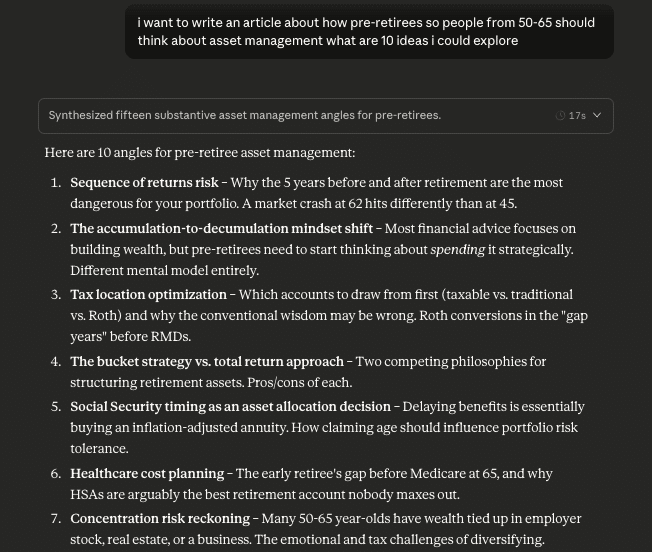
1. Conquering the "Blank Page Syndrome"
The most significant barrier to entry for any project is the initiation phase. Staring at a blinking cursor is not just a waste of time; it is a drain on creative energy. AI excels at breaking this paralysis. By prompting tools like Claude or ChatGPT for ten distinct angles on a topic, you aren’t asking the machine to write the article; you are asking it to provide the "clay" that you will eventually sculpt.
2. Architectural Outlining
Before a single sentence is drafted, a clear structure is mandatory. AI can assist by suggesting subheadings and logical flows based on your specific target audience and goal. By feeding the AI your research notes, you can generate a robust framework that ensures your argument is sound, allowing you to focus on the nuance of the prose.
3. The Digital Research Assistant
Research is often the most time-consuming aspect of freelance writing. Using tools like Perplexity, you can instantly pull verified statistics and sources. This does not replace the necessity of reading the source material, but it allows for rapid "triaging." You can quickly determine if a study is relevant, saving hours of unproductive reading.
4. Refining Cold Outreach
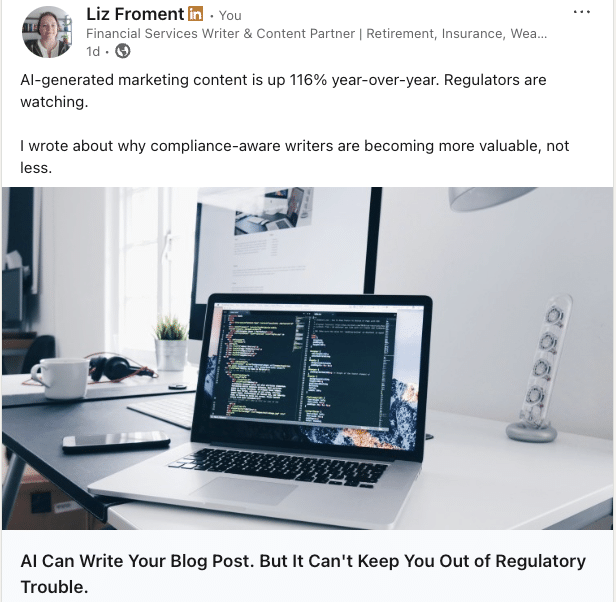
Writing letters of introduction (LOIs) is often the most tedious task for a freelancer. AI can draft multiple versions of an outreach email, but the human element is non-negotiable. The secret is to use AI to build the "skeleton" of the email and then manually inject a highly personalized first sentence. That final touch of human research—mentioning a recent company award or a specific project—is what separates a successful pitch from spam.
5. Headlines and Hooks
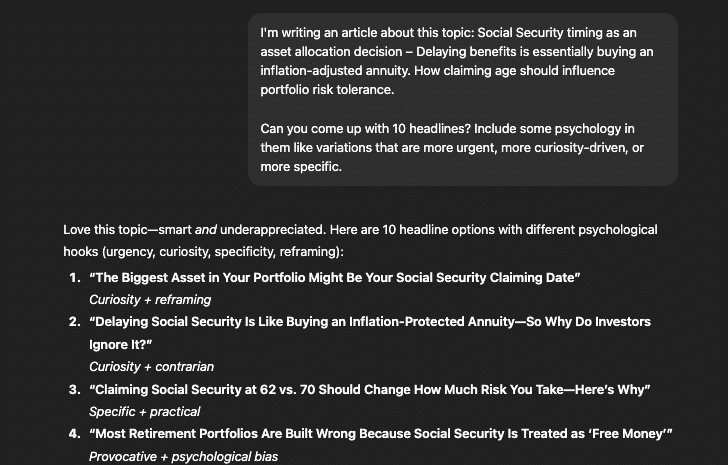
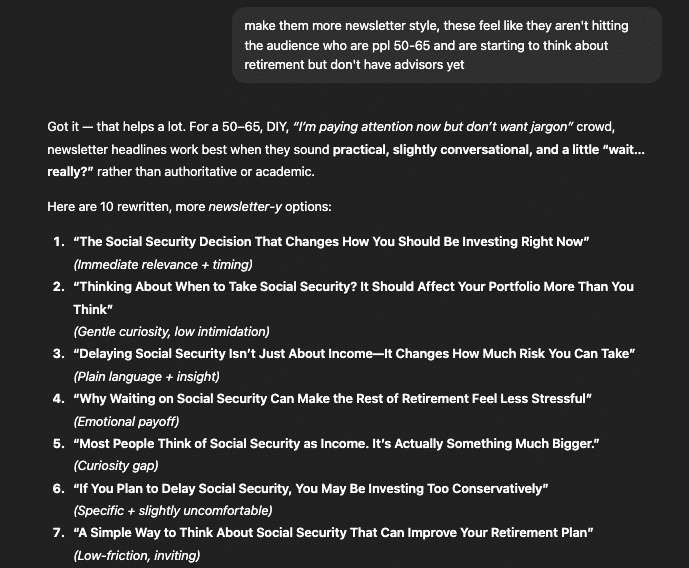
Click-through rates (CTR) are the lifeblood of content. AI can generate dozens of headline variations in seconds. While the output might not always be perfect, it provides a starting point that you can iterate upon, combining the best elements of multiple suggestions to craft a headline that is both punchy and accurate.
6. The "Fresh Eyes" Edit
Every writer knows the danger of "blindness" after staring at a document for hours. AI can serve as a second pair of eyes, highlighting wordiness, passive voice, or unclear logic. By asking the AI to role-play as your target reader, you can gain valuable feedback on what parts of your argument are confusing or underdeveloped.

7. Strategic Content Repurposing
A single 1,500-word blog post should never be a "one-and-done" effort. AI allows you to instantly transform long-form content into a series of LinkedIn posts, Twitter threads, or newsletter snippets. This maximizes the return on your intellectual investment without requiring hours of additional labor.
8. Mastering SME Interviews
Subject Matter Expert (SME) interviews require preparation. Use AI to generate a list of probing, high-level questions based on your specific interview angle. This ensures you make the most of the expert’s time and avoid asking basic questions that could have been answered with a quick web search.
9. Transcribing and Synthesizing
Tools like Otter.ai have changed the game for long-form interviews. By using the built-in chat features to summarize long transcripts, you can extract the best quotes and thematic points in minutes. Always verify these against the audio, but use AI to navigate the "wall of text."
10. Data-Driven Marketing Tracking
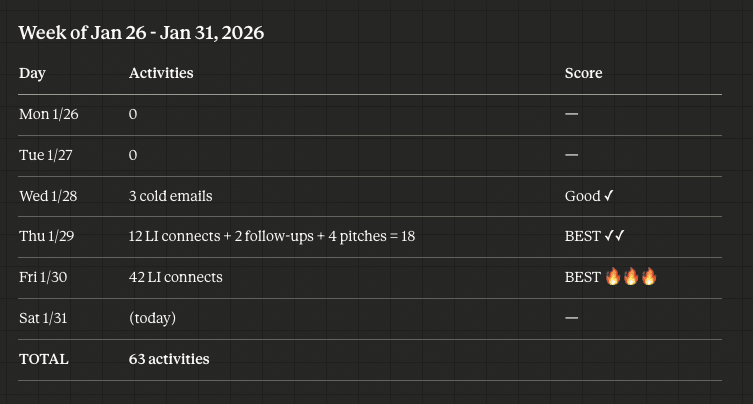
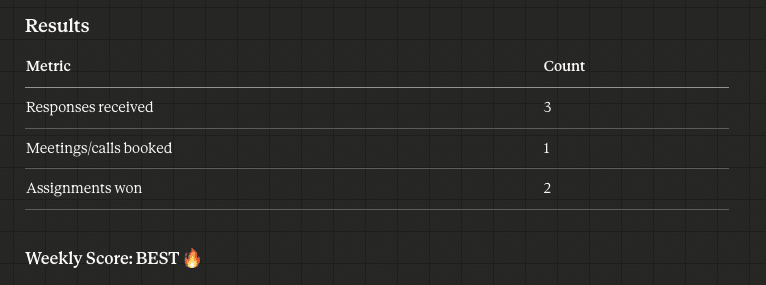
If you hate spreadsheets, let AI manage your metrics. By feeding your outreach activities into a tool like Claude, you can track your conversion rates over time. This helps you identify patterns: which niches respond best to your pitch, when your follow-up rate drops, and when it is time to pivot your service offering.
The Implications: What NOT to Do
While these tools are powerful, they come with risks. The most common pitfall is the "copy-paste trap."
- Avoid using AI to write your final draft: It lacks the "voice" and personal experience that clients pay for.
- Never skip the fact-check: AI can hallucinate. If you include an incorrect stat, your credibility as a professional is gone.
- Don’t rely on generic prompts: The quality of the output is entirely dependent on the specificity of your instructions.
Final Thoughts: The Human Advantage
The bottom line is that AI is a tool, not a replacement for human intellect. In a future where mediocre content is free and infinite, high-quality, human-centric writing becomes more valuable than ever.
By offloading the "tedious" 80% of your workflow to AI, you gain the freedom to double down on the 20% that requires true expertise: the synthesis of ideas, the building of relationships, and the unique perspective that only you can bring to the page. The freelancers who thrive will be those who view these tools not as a threat to their livelihood, but as the engine that allows them to scale their impact without sacrificing their sanity.
 Asep Darmawan
  Raul Delapena Setiawan
  Asro
Asro 