

Overview: A Vacation Interrupted
A routine four-night Caribbean getaway took a dramatic turn on July 16, 2026, when a 29-year-old passenger aboard the Carnival Sunrise required an emergency medical evacuation shortly after departing Miami, Florida. The incident, which unfolded just as the vessel was clearing the channel, serves as a sobering reminder of the inherent complexities and medical limitations of deep-sea travel, even for those who adhere strictly to safety protocols.
The Carnival Sunrise, a 101,509-gross-ton vessel, was scheduled to embark on a round-trip voyage to Princess Cays and Nassau in the Bahamas. However, the excitement of the departure was cut short when the ship’s medical team identified an urgent situation involving a pregnant passenger. The subsequent intervention by the United States Coast Guard (USCG) highlights the rapid coordination required between cruise operators and federal maritime authorities when a passenger’s health status shifts from stable to critical.
The Chronology of the Incident
The sequence of events began on the afternoon of July 16. As the Carnival Sunrise departed PortMiami at approximately 3:30 p.m. EDT, the vessel navigated through Government Cut—the primary shipping lane connecting the port to the vast expanse of the Atlantic Ocean.
Shortly after the vessel cleared the harbor, the ship’s security manager contacted Sector Miami watchstanders to report that a 29-year-old female guest was experiencing acute pregnancy complications. Given the potential severity of the situation, the cruise line initiated its emergency protocol, requesting immediate assistance from the Coast Guard.
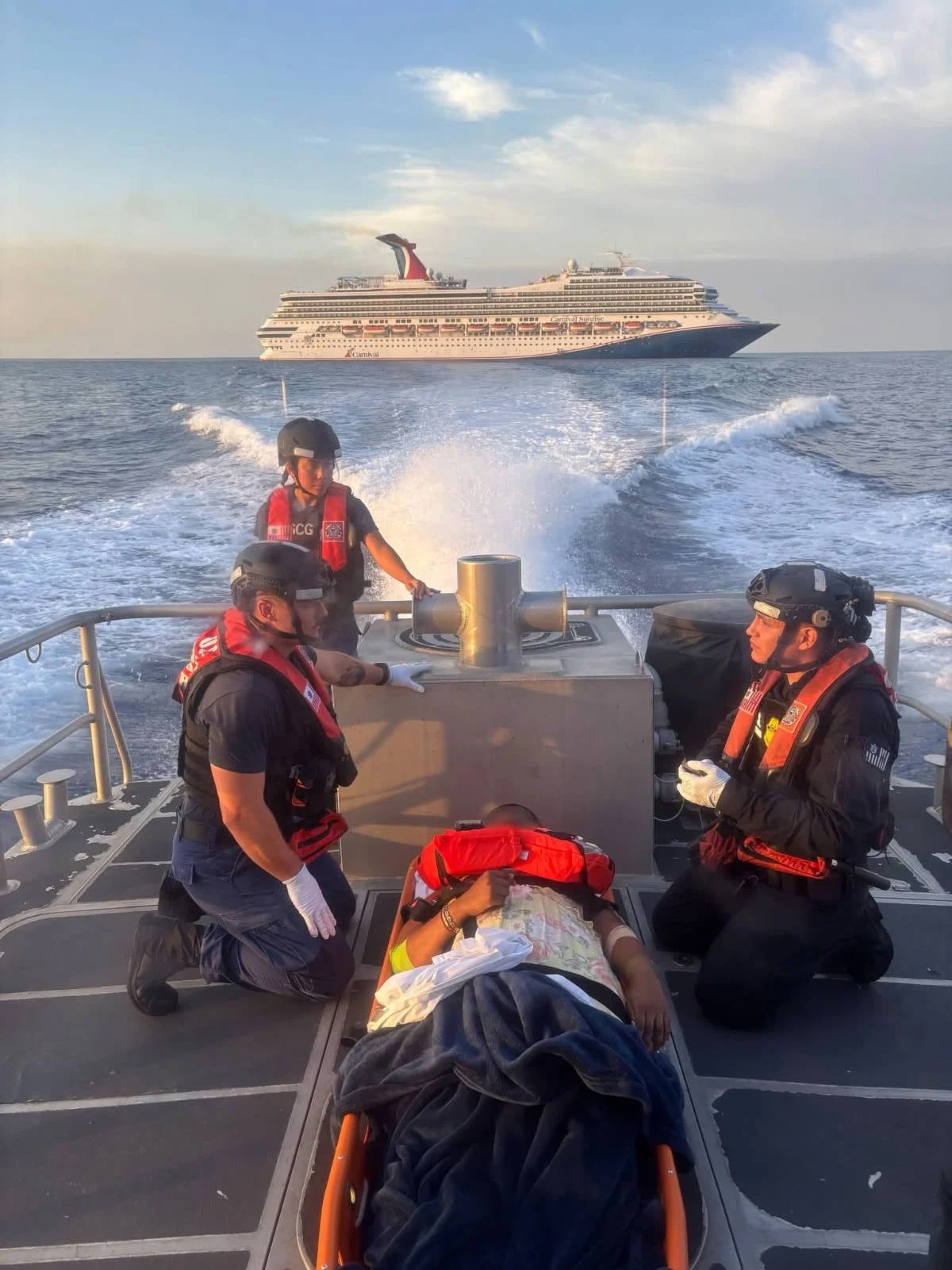
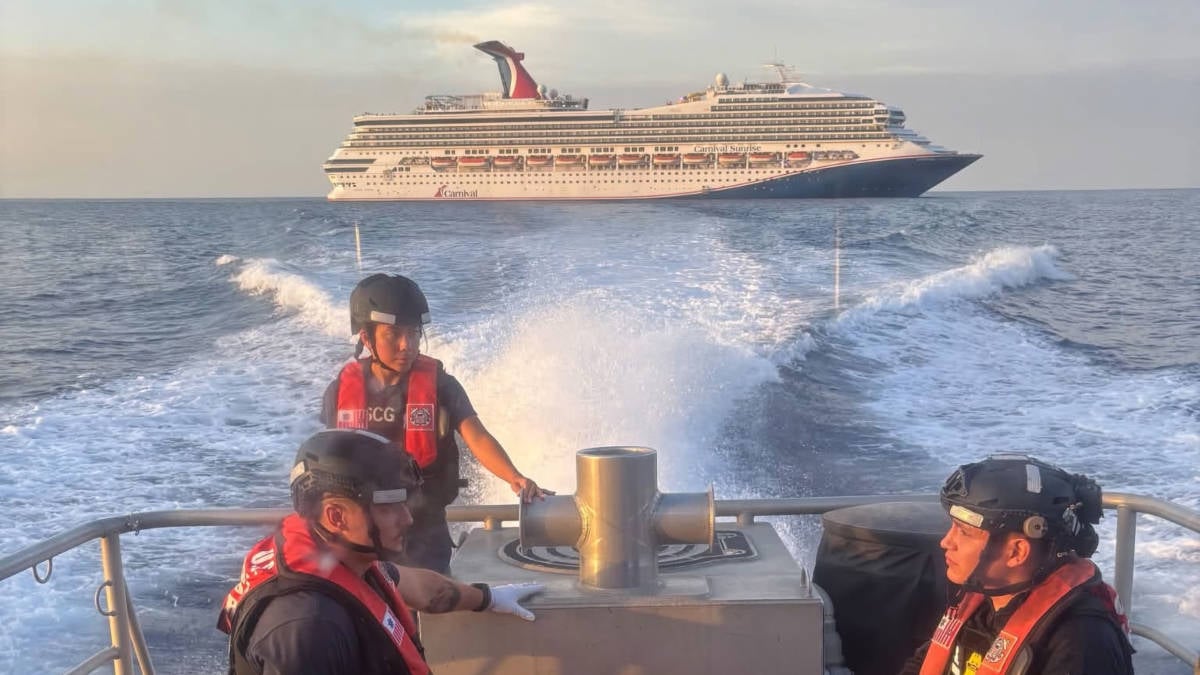
At approximately 4 miles northeast of Government Cut, the Carnival Sunrise slowed its transit. A boat crew from Coast Guard Station Miami Beach was dispatched to intercept the cruise ship. Upon arrival, the rescue team successfully performed a high-seas medical evacuation, transferring the patient from the cruise ship to the Coast Guard vessel.
The patient was rushed back to shore, where an awaiting ambulance stood ready to transport her to Mount Sinai Medical Center in Miami Beach. As of the latest reports, the vessel resumed its journey to the Bahamas, maintaining a steady speed of 9 knots. While the cruise line has not issued a formal statement regarding the specific condition of the passenger or the nature of the complications, the incident resulted in no disruption to the ship’s broader itinerary.
Supporting Data and Maritime Logistics
The logistical success of this evacuation underscores the robust relationship between the cruise industry and the USCG in the Florida region. Cruise ships, while essentially "floating cities," possess medical facilities that are equipped for primary care, stabilization, and minor procedures. However, they are not—and cannot be—equipped as full-service maternity hospitals.
Cruise ships are classified as commercial passenger vessels, and their medical centers are designed to act as triage units. When a condition exceeds the capabilities of the ship’s medical staff, the captain is responsible for determining whether to divert to the nearest port or to coordinate an at-sea evacuation if the distance from land permits. In this instance, because the Carnival Sunrise had only recently departed, a boat transfer was both safe and efficient, avoiding the necessity of a full vessel diversion that would have impacted thousands of other guests.
Understanding Cruise Line Pregnancy Policies
The incident has reignited public discourse regarding the strictness of pregnancy-related travel policies in the maritime industry. Unlike air travel, where passengers can often fly well into their third trimester with a doctor’s note, cruise lines maintain a rigid "24-week rule."
Why the 24-Week Limit Exists
Carnival Cruise Line’s policy is explicit: "For your own safety and the safety of your unborn child, you must not be beyond your 24th week of pregnancy by the end of the cruise to be allowed to sail."
The rationale behind this policy is multifaceted:
- Neonatal Care Limitations: Most premature infants born before the 24th week of gestation require highly specialized neonatal intensive care (NICU) services. A cruise ship lacks the incubators, ventilators, and specialized neonatologists required to sustain such a patient.
- Medical Liability and Safety: Cruise lines must balance the needs of the individual with the safety of the entire manifest. If a ship were forced to divert to a port without a high-level trauma center or specialized obstetric care, the delay could jeopardize the life of both the mother and the infant.
- Physician Verification: Every expectant mother is required to provide medical documentation confirming she is fit to travel. Even with this verification, the reality of pregnancy is that complications can emerge without warning.
Comparative Analysis: Cruising vs. Air Travel
The contrast between aviation and maritime regulations is stark. Airlines generally permit domestic travel for pregnant women up to 36 weeks and international travel up to 28–32 weeks. This discrepancy often confuses passengers, leading to scenarios where guests are denied boarding at the terminal.
The primary difference lies in accessibility. In the event of a medical emergency on an airplane, the flight can be diverted to an airport within an hour or two. At sea, a cruise ship may be hundreds of miles from the nearest hospital. Even with advanced shipboard medical equipment, the "golden hour"—the critical period where medical intervention is most effective—is much harder to manage on a ship than on land.
Past Precedents and Enforcement
The industry’s commitment to these policies is not merely a suggestion; it is a strictly enforced contractual obligation. In 2024, an incident involving the Carnival Luminosa drew national attention when a guest was denied boarding because she was 26 weeks pregnant.
Because the pregnancy policy is detailed in the cruise ticket contract—a document that every passenger legally acknowledges upon booking—the cruise line is generally under no obligation to provide a refund for guests who show up in violation of the rule. The Carnival Sunrise passenger, however, was likely within the required window at the time of boarding, highlighting the distinction between a passenger who ignores policy and one who suffers an unforeseen medical event.
Implications for Future Travelers
For expectant mothers, the Carnival Sunrise incident is a sobering reminder that "fit to travel" is not the same as "immune to complications." Medical professionals often advise that even if a pregnancy is considered low-risk, the stress of travel, changes in diet, and the motion of the ocean can exacerbate existing conditions or trigger new ones.
Travelers are urged to consider the following before booking a cruise:
- Travel Insurance: Standard travel insurance may not cover pregnancy-related complications if they are deemed "pre-existing" or if they occur after a certain gestational age. "Cancel for any reason" (CFAR) coverage is often recommended.
- Consultation with OB-GYN: A discussion with a healthcare provider should focus specifically on the duration of the cruise and the distance from major medical centers.
- Awareness of Limitations: Passengers should familiarize themselves with the ship’s medical capabilities, which are typically outlined on the cruise line’s official website.
Official Stance and Conclusion
While Carnival Cruise Line has remained silent on this specific incident, such silence is standard for the industry to protect the privacy of the passenger under HIPAA and other international maritime privacy regulations.
The successful evacuation of the guest serves as a testament to the effectiveness of current maritime emergency protocols. By maintaining clear boundaries and working closely with agencies like the US Coast Guard, cruise lines ensure that while they cannot mitigate every risk, they are prepared to respond to the most critical emergencies with speed and professional rigor.
As the Carnival Sunrise continues its voyage, the focus returns to the safety of the remaining guests, while the maritime community reflects on the importance of the 24-week threshold—a policy that, while sometimes frustrating to travelers, serves as a vital safeguard in the challenging, unpredictable environment of the open sea.
 Asep Darmawan
  Pevita Pearce
  Asro
Asro 