

By Staff Reporter
July 20, 2026
Port Canaveral, one of the world’s busiest cruise hubs, became the site of a coordinated law enforcement operation on Friday, July 17, 2026. While thousands of travelers arrived at the Space Coast terminal anticipating sun-drenched itineraries in the Bahamas, six individuals found their vacation plans abruptly terminated by the Brevard County Sheriff’s Office (BCSO).
The operation, which targeted individuals with active arrest warrants and probation violations, served as a stark reminder that cruise terminals remain a focal point for authorities monitoring those attempting to evade the justice system. While the cruise lines themselves remained untainted by the legal issues of their guests, the arrests highlighted the seamless integration between port security and regional law enforcement.
The Incidents: A Breakdown of the Arrests
The Friday sweep resulted in the apprehension of six individuals, each facing varying degrees of legal trouble ranging from minor court violations to serious, high-profile felony charges.
The Atlanta Duo
Among the most notable detainees were 24-year-old Martell Murray and his companion, 24-year-old Kenderia Burney, both residents of Atlanta, Georgia. According to the Brevard County Sheriff’s Office, the pair arrived at the terminal expecting to board a cruise ship. Instead, they were met by deputies who executed outstanding warrants.
The nature of Murray’s warrant was particularly severe; officials confirmed he was wanted for a violation of his release conditions related to pending murder charges. Burney, meanwhile, was taken into custody on an active warrant for a violation of probation. In a display of characteristic dark humor, the BCSO noted on social media that while the pair had hoped to "vacation together" at sea, they would instead be spending their time at "Ivey’s Iron Bar Lodge"—the department’s colloquial term for the local jail. Both individuals are currently being held without bond.
Minor Violations and Probation Breaches
The third and fourth arrests involved 38-year-old Veronica Hamlet of Tampa, Florida, and 66-year-old James Brewton of Allendale, South Carolina. Hamlet was taken into custody for failure to appear in court, while Brewton faced a warrant for probation violation. Both were processed through the jail system over the weekend; Hamlet was released Saturday on a $1,000 bond, while Brewton secured his release on a $500 bond shortly thereafter.
The final two arrests involved disembarking passengers whose identities remain shielded by law enforcement. These individuals were reportedly on felony probation and had failed to obtain the necessary legal authorization to leave the country. By departing on a cruise, they inadvertently violated the terms of their probation, leading to their immediate arrest upon returning to the terminal.
Official Responses: The "No Escape" Policy
The Brevard County Sheriff’s Office has made it clear that their presence at the port is proactive and persistent. Utilizing social media to broadcast the results of the sweep, the department emphasized that geographical location is no barrier to accountability.
"Whether you’re from Florida or Alaska, if you come to Brevard County and break the law—or in this case have a warrant—you better believe that we will lock you up!" the Sheriff’s office declared in a statement.
This approach serves a dual purpose: it acts as a deterrent to those who might believe that traveling—particularly on a cruise—offers a "blind spot" in the national criminal database, and it reinforces the agency’s commitment to public safety at high-traffic infrastructure hubs. The BCSO frequently leverages its social media presence to poke fun at the irony of fugitives attempting to travel, a strategy that has gained significant attention and serves to heighten awareness that local law enforcement is consistently monitoring travel databases.
Port Canaveral’s Operational Context
Despite the heightened police activity, the port’s operations remained entirely uninterrupted. The arrests were handled with surgical precision, ensuring that the embarkation and debarkation of thousands of other passengers continued without delay.
Ships in Port
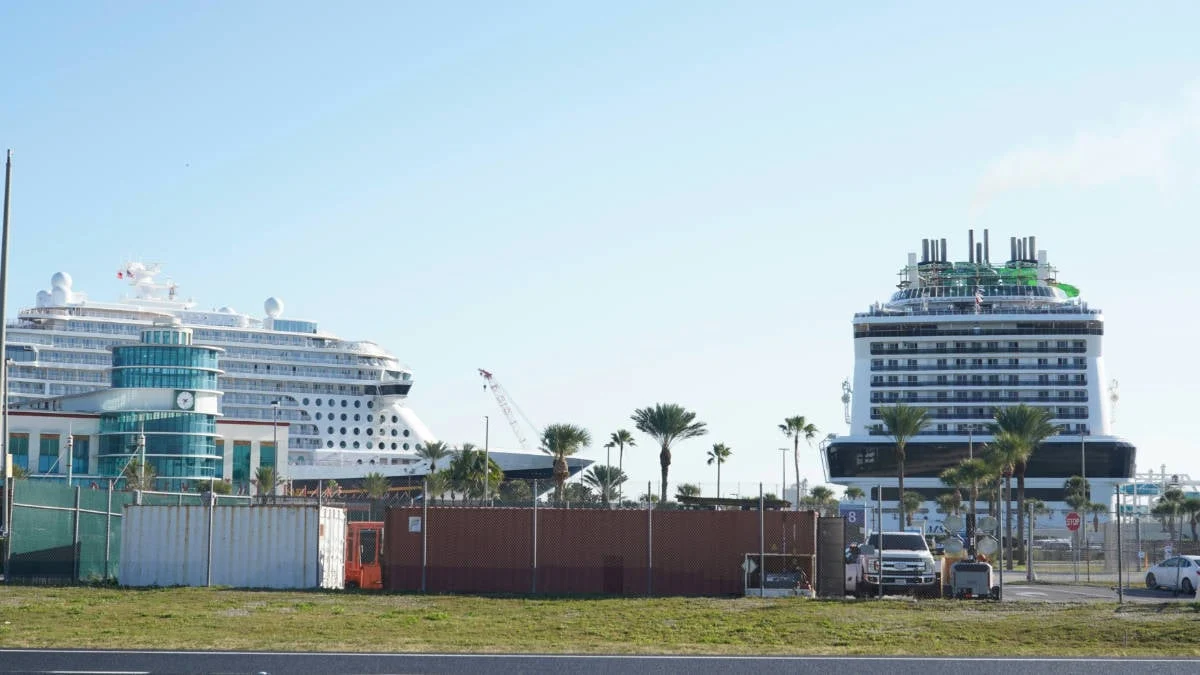
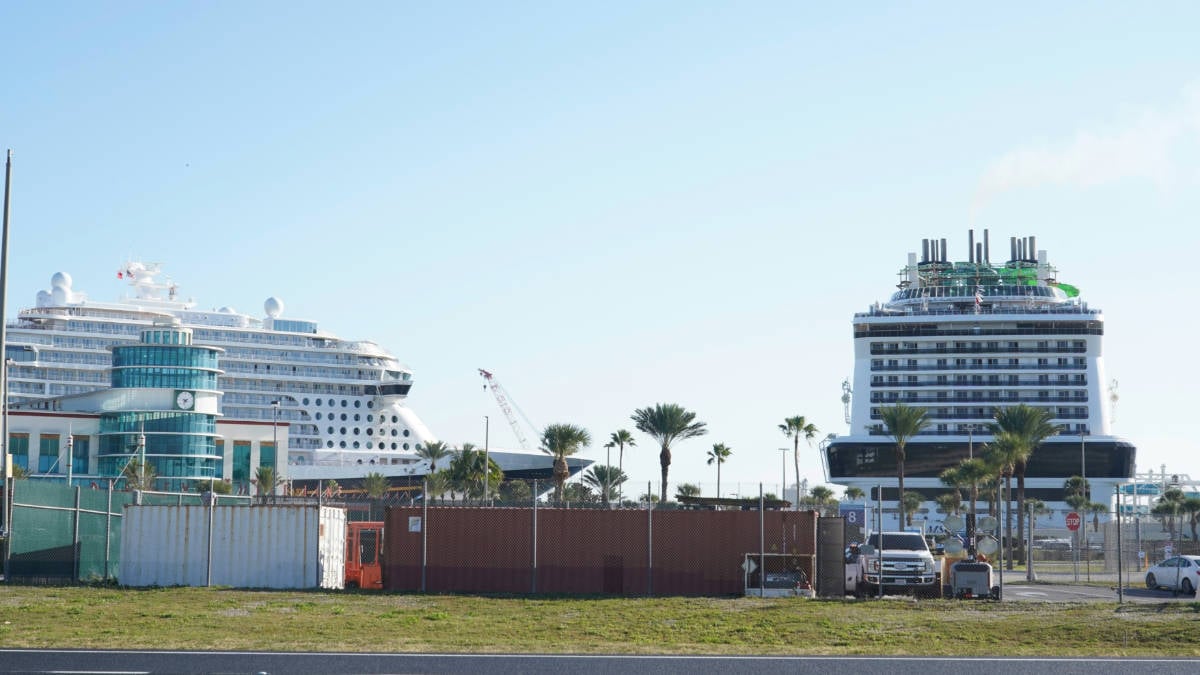
Three major vessels were docked at Port Canaveral during the sweep, each representing a massive logistical operation:
- Carnival Glory (Carnival Cruise Line): A 2,980-guest vessel that had just concluded a 4-night Bahamas itinerary, including stops at Nassau and the private destination of Celebration Key.
- Disney Wish (Disney Cruise Line): A sprawling family-oriented ship with a capacity of 4,000 guests, having returned from a 4-night cruise to Nassau and Castaway Cay.
- Utopia of the Seas (Royal Caribbean): The largest ship in port, this Oasis-class behemoth can accommodate 5,668 guests at double occupancy. It had just returned from a 4-night Bahamas run to Nassau and Perfect Day at CocoCay.
It is important to clarify that the cruise lines themselves were not involved in the legal violations of the passengers. There were no reports of unrest, violence, or criminal activity occurring aboard the ships themselves. The arrests were strictly a matter of pre-existing warrants being served upon the individuals’ arrival at or departure from the terminal.
Implications: The Reality of Modern Travel Security
The events of July 17 are far from an isolated anomaly. As security technology and the integration of criminal databases have improved, cruise terminals have become increasingly hostile environments for those with outstanding legal issues.
A Pattern of Enforcement
Cruise Hive and other maritime news outlets have documented a steady stream of such arrests over the past few years. These incidents range from the mundane to the bizarre:
- December 2024: A Kentucky man was apprehended at PortMiami for failing to pay more than $100,000 in child support.
- 2025: A Pennsylvania woman was taken into custody for the misappropriation of GoFundMe funds, which she had allegedly used to finance her cruise vacation.
The spectrum of criminal behavior intercepted at cruise terminals is remarkably broad, including charges of embezzlement, drug possession, casino fraud, the planting of hidden cameras, credit card fraud, and even human trafficking and sexual assault.
Why Cruise Ports?
For fugitives, a cruise may seem like an ideal escape—a way to leave the country and move between islands with relative anonymity. However, modern cruise travel requires extensive documentation, including passports or government-issued identification, which must be scanned through databases linked to federal and local law enforcement.
When a guest checks in for a cruise, their identity is vetted through multiple security layers. If an outstanding warrant is flagged by these systems, the information is immediately routed to the appropriate local jurisdiction—in this case, the Brevard County Sheriff’s Office.
Furthermore, because cruise ships must clear customs upon returning to the United States, they are essentially "ports of entry." This provides a controlled environment where authorities can verify the status of every person returning to the country, making it nearly impossible for those on probation or with felony warrants to return unnoticed.
Conclusion: The End of the "Cruise Escape" Myth
The incident at Port Canaveral on July 17, 2026, serves as a definitive case study in the effectiveness of modern border and port security. The "run away to sea" trope, once a staple of fiction, is effectively dead in the era of digital surveillance.
For the six individuals arrested, the dream of a Bahamas getaway concluded in a booking room. For the thousands of other guests, the incident was merely a background note in a successful travel day. As the Brevard County Sheriff’s Office continues its mandate, travelers would do well to remember that while the ocean is vast, the reach of the law is significantly longer. Whether embarking or disembarking, the terminal is not an exit from the legal system—it is a checkpoint.
 Lina Hope
  Suro Senen
  Asep Darmawan