

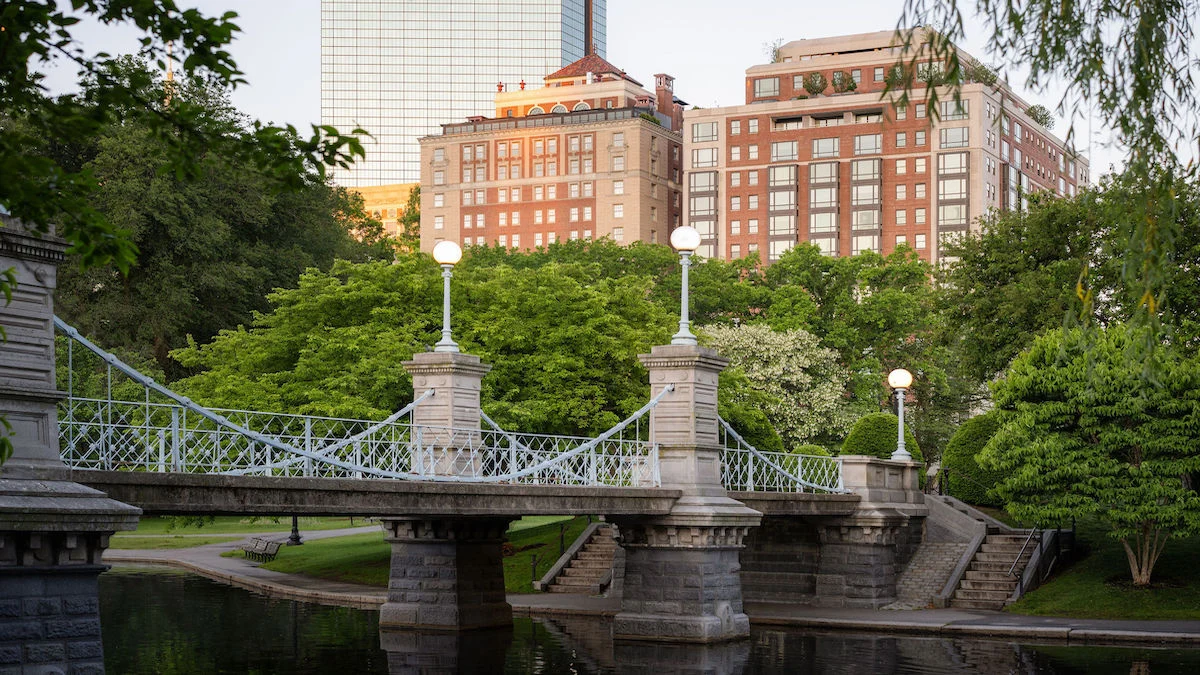
BOSTON — For decades, the global luxury traveler’s map of the United States was anchored by the usual suspects: the glittering towers of Manhattan, the sprawling estates of Beverly Hills, and the tropical opulence of Miami. Boston, while respected for its academic prowess and revolutionary history, often played the role of the understated cousin—refined, certainly, but perhaps a bit too traditional for the avant-garde traveler.
That narrative has been decisively rewritten. As of July 2026, Boston has emerged as a powerhouse of ultra-luxury hospitality, boasting a density of five-star accommodations that rivals London’s Mayfair or Paris’s 1st Arrondissement. The city is currently witnessing a "Golden Age" of hospitality, marked by the simultaneous expansion of established icons and the arrival of global brands that chose Boston as their gateway to the North American market.

Main Facts: A Summer of Unprecedented Expansion
The summer of 2026 marks a pivotal moment for the Boston hospitality sector. The city’s two Four Seasons properties—Four Seasons Hotel Boston (overlooking the Public Garden) and Four Seasons Hotel One Dalton Street (the glass-clad spire in the Back Bay)—have both unveiled massive upgrades designed to capture the growing "ultra-long-stay" market.
Key developments include:

- Residential-Style Integration: Both Four Seasons properties have introduced "The Residences Suites," curated for guests staying 30 days or longer. These units feature full kitchens, private elevators, and bespoke office spaces, catering to the "super-commuter" executive.
- Culinary Evolution: Three new Michelin-aspirant restaurants are opening across the city’s luxury hotels this month, including a rooftop concept at One Dalton and a heritage-focused Italian eatery at the Public Garden location.
- The Raffles Effect: Raffles Boston, which recently celebrated its first full year of operation as the brand’s North American flagship, has maintained an unprecedented 92% occupancy rate in its signature suites, signaling a massive appetite for the brand’s legendary butler service.
- The Newbury’s Dominance: The Newbury Boston, housed in the 1927 building that once served as the world’s first Ritz-Carlton, has successfully positioned itself as the city’s most fashionable independent stay, blending heritage architecture with Ken Fulk’s contemporary design.
Chronology: From 1927 to the 2026 Boom
To understand Boston’s current status, one must look back at the century-long evolution of its skyline.
1927: The Foundation
The luxury story began in 1927 with the opening of The Ritz-Carlton, Boston. It was a landmark moment—the first time the Ritz-Carlton name was used in the United States. For eighty years, this single property defined Bostonian luxury: white-glove service, social prominence, and a strict dress code.

2000–2010: The First Wave of Modernity
The turn of the millennium saw the arrival of the Four Seasons on Boylston Street and the Mandarin Oriental in the Back Bay. These properties introduced the "modern luxury" concept to the city, shifting the focus from purely traditional decor to wellness-centric amenities and expansive spas.
2019–2023: The High-Rise Revolution
The completion of One Dalton Street in 2019 provided Boston with its first true "skyscraper" luxury hotel. This was followed by the high-stakes gamble of the Raffles Boston, a $400 million project that broke ground during a global pandemic and opened to international acclaim, proving that Boston could support a "vertical" luxury ecosystem.

2024–2026: The Residential Shift
Post-pandemic travel patterns changed the requirements of the elite traveler. By early 2026, the trend of "bleisure" (business and leisure) had evolved into permanent flexibility. Hotels began converting standard guest rooms into larger suites to accommodate families and remote-working executives who stay for weeks rather than days.
Supporting Data: The Economics of Boston’s 5-Star Surge
The data supporting Boston’s ascent is compelling. According to the 2026 Q2 Hospitality Report, Boston’s Average Daily Rate (ADR) for luxury properties has climbed to $1,150, a 14% increase year-over-year.

| Metric | 2021 Data | 2026 Projections/Actuals |
|---|---|---|
| Luxury Room Inventory | 2,400 | 3,850 |
| Average Suite Size (Sq Ft) | 650 | 980 |
| International Guest % | 22% | 38% |
| Michelin-Star Rated/Equivalent Venues | 2 | 7 |
Furthermore, the "suite-to-room" ratio in Boston has shifted. In 2020, suites made up roughly 12% of the city’s luxury inventory. As of July 2026, that number has risen to 24%, driven largely by the renovations at The Langham and the expansion of the "Heritage Suites" at The Newbury.
The investment in wellness is equally staggering. The total square footage of luxury spa facilities in the city has increased by 40% since 2022, with the Mandarin Oriental and Raffles leading the charge with "bio-hacking" treatments and private recovery lounges.

Official Responses: Voices from the Vanguard
Industry leaders suggest that Boston’s success is a result of its unique "European-American" hybrid identity.
"Boston has always had the bones of a great European city—the walkability, the history, the culture," says Marcus Avery, a senior analyst at Global Hospitality Insights. "What we are seeing now is the infrastructure finally catching up to the prestige. When Raffles chose Boston over New York or Los Angeles for their first North American hotel, it sent a shockwave through the industry. It was a validation of Boston’s global standing."

A spokesperson for Four Seasons Hotels and Resorts commented on the 2026 expansion: "Our guests are no longer just visiting Boston for a university graduation or a medical consultation. They are living here for months at a time. The new residential suites at One Dalton and our Public Garden property are a direct response to a client base that demands the service of a hotel but the footprint of a Beacon Hill townhouse."
At The Newbury, General Manager Carlos Silva emphasizes the importance of local flavor: "Luxury today isn’t about being identical to a hotel in Dubai or Hong Kong. It’s about being ‘of the place.’ Our guests want to see the Public Garden, they want to dine at Contessa, and they want to feel the history of the 1920s in the architecture. We provide that bridge between the past and the future."

Implications: What This Means for the Future of the Hub
The transformation of Boston into a luxury hotel powerhouse has far-reaching implications for the city’s economy and urban planning.
1. The "High-Net-Worth" Migration
The abundance of ultra-luxury stays is attracting a new demographic of high-net-worth individuals (HNWIs) who are using these hotels as "test drives" for permanent relocation. This has buoyed the luxury real estate market in the Back Bay and Seaport districts, as guests transition from hotel suites to multi-million dollar penthouses.

2. Culinary and Cultural Gravity
The influx of wealthy travelers has created a "trickle-up" effect for the city’s arts and dining scenes. The Museum of Fine Arts and the Boston Symphony Orchestra have reported record-breaking donations and attendance from international visitors, while the city’s culinary scene has moved beyond "chowder and lobster" to become a legitimate rival to New York’s dining landscape.
3. Infrastructure Pressure
With the increase in international arrivals, Logan International Airport has had to accelerate its private terminal expansions. The demand for "frictionless" travel—from the tarmac to the hotel suite—has led to a surge in luxury chauffeur services and private concierge startups within the city.

4. The Competition for Talent
The most significant challenge facing this boom is the labor market. With ten world-class hotels competing for the same pool of elite concierges, sommeliers, and butlers, wages in the hospitality sector have reached historic highs. This has turned Boston into a destination not just for travelers, but for hospitality professionals seeking the pinnacle of their careers.
Conclusion
As the sun sets over the Charles River on this July evening, the lights flickering on in the towers of the Back Bay tell a story of a city transformed. Boston is no longer a stopover; it is a destination. Whether it is the classic elegance of the Four Seasons, the sky-high innovation of Raffles, or the curated chic of The Newbury, the city has proven that it can honor its 400-year history while simultaneously defining the future of luxury. For the global traveler in 2026, the question is no longer "Why Boston?" but rather, "Which hotel?"
 Ammar Sabilarrohman
  Iffa Jayyana