

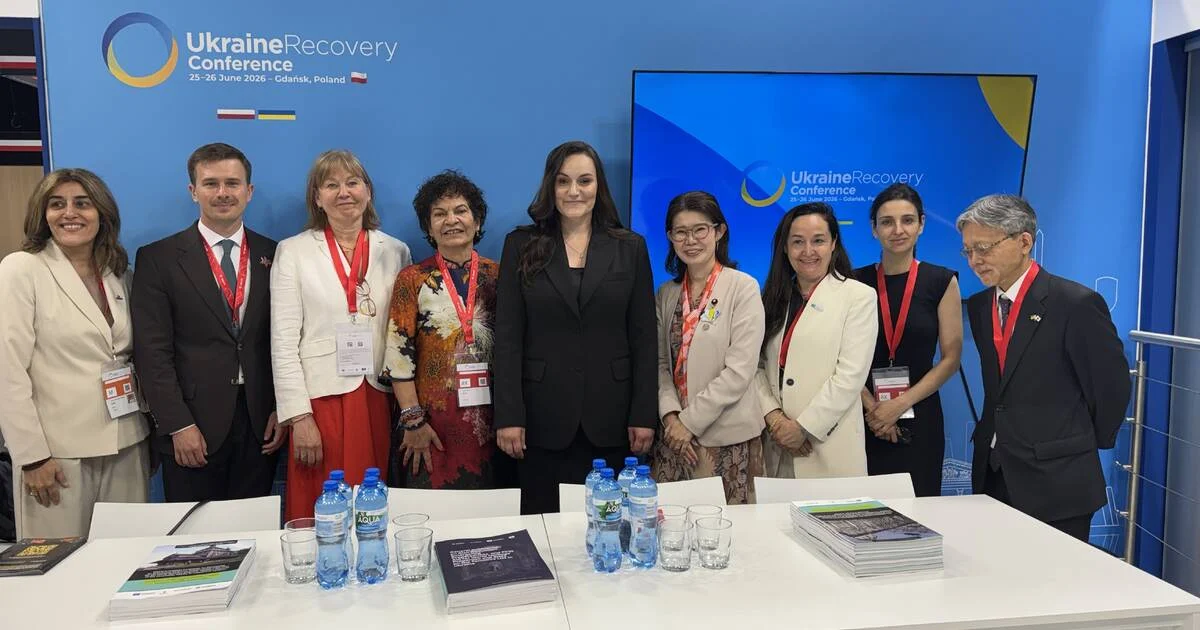
GDAŃSK, POLAND — In a landmark demonstration of international solidarity and technical foresight, UNESCO officially handed over a comprehensive suite of strategic tools designed to fortify the protection and management of Ukraine’s World Heritage sites. The presentation took place on 25 June 2026, during the high-level Ukraine Recovery Conference (URC) in Gdańsk, signaling a new, structured phase in the global effort to shield cultural identity from the ravages of ongoing conflict.
This initiative represents the culmination of more than three years of intensive, collaborative labor involving UNESCO, the Ministry of Culture of Ukraine, and two of the World Heritage Committee’s primary advisory bodies: the International Council on Monuments and Sites (ICOMOS) and the International Centre for the Study of the Preservation and Restoration of Cultural Property (ICCROM). The success of this framework is deeply rooted in the grassroots contributions of over 150 Ukrainian heritage professionals, whose boots-on-the-ground expertise in site management provided the essential data required to tailor these tools to the brutal realities of wartime conservation.
The Architecture of Resilience: A New Strategic Framework
The package of guidelines unveiled in Gdańsk is not merely a collection of manuals; it is a coherent, operational framework designed to bridge the gap between immediate crisis response and long-term recovery. Funded by the generous support of the Government of Japan, these tools provide Ukrainian authorities and site managers with a robust methodology to navigate the complex hazards posed by missile strikes, fire, and structural degradation caused by the conflict.
Bridging Emergency and Recovery
The framework is meticulously aligned with UNESCO’s Culture in Emergencies (CURE) approach. It ensures that protection is not a static task but a dynamic continuum. The tools are divided into three critical areas:
- Immediate Emergency Preparedness: Practical, field-oriented protocols for protecting physical structures against direct kinetic impacts.
- Strategic Management: Updated governance models for World Heritage properties to reflect the realities of operating under martial law.
- Long-term Recovery Roadmaps: Defined benchmarks for the restoration of sites and their eventual removal from the List of World Heritage in Danger.
Chronology of Collaboration (2023–2026)
The development of this toolkit did not occur in a vacuum. It was the result of a deliberate, phased progression that began shortly after the intensification of the conflict in 2022.

- Initial Assessment (Mid-2023): UNESCO dispatched specialized missions to conduct rapid damage assessments, identifying the most vulnerable cultural sites across Ukraine. This period established the baseline for the "Tentative List" review.
- Capacity Building and Network Formation (2024): UNESCO, in partnership with ICOMOS and ICCROM, launched a nationwide training program. Over 150 Ukrainian professionals—architects, archivists, and site curators—were engaged to document threats and develop localized risk reduction strategies.
- Methodology Development (2025): The insights gathered were codified into formal, actionable guidelines. This year was marked by intense peer review and the testing of "Emergency Response Preparedness" plans at major properties like the Saint-Sophia Cathedral.
- Formal Adoption and Handover (June 2026): The finalized framework was integrated into the broader recovery strategy presented at the Ukraine Recovery Conference in Gdańsk, marking the transition from theoretical development to active implementation.
Targeted Interventions: Protecting Key Landmarks
The effectiveness of these tools is best illustrated by their application to Ukraine’s most iconic heritage sites. The framework provides specific, structured methodologies for two categories of high-value sites:
Kyiv’s Sacred Heritage
For the Kyiv: Saint-Sophia Cathedral and Related Monastic Buildings and the Kyiv-Pechersk Lavra, the guidelines provide granular risk analysis. These plans go beyond simple documentation; they include operational protocols for hazard mitigation, such as the reinforcement of archival storage and the establishment of "safe zones" for physical artifacts. By addressing threats ranging from fire to structural collapse, these frameworks ensure that the spiritual and architectural heart of Kyiv remains intact despite the volatility of the surrounding urban environment.
The Odesa Historic Centre
The Historic Centre of Odesa poses a different set of challenges, specifically concerning its maritime urban fabric and its status as a site currently on the List of World Heritage in Danger. The new recommendations focus on the revision of the Management Plan. This involves integrating emergency governance into the city’s administrative structure, ensuring that heritage preservation is not treated as a secondary concern during municipal crisis management but as a primary pillar of Odesa’s social and economic resilience. Furthermore, the strategic roadmap provides clear, measurable indicators for the "Desired State of Conservation," offering a tangible pathway for the international community to monitor progress toward the eventual removal of the city from the "In Danger" list.
Official Responses and Strategic Significance
The handover in Gdańsk was met with significant praise from international stakeholders, who view this project as a template for future crises.
In a statement during the conference, a UNESCO representative remarked: "This initiative demonstrates the value of sustained international cooperation. Thanks to the support of Japan and the collaboration of all partners, including ICOMOS and ICCROM, UNESCO has been able to develop tools that not only support Ukraine, but also provide valuable reference models for other countries facing crisis situations worldwide."
This sentiment underscores a shift in the global paradigm of cultural heritage management. Heritage is increasingly viewed not as a static artifact of the past, but as a vital component of a nation’s psychological and structural recovery. By providing the tools to protect these sites, the international community is effectively investing in the future stability and continuity of the Ukrainian state.
Implications: A Call for Sustained Engagement
While the delivery of these tools is a major achievement, the document emphasizes that the work has only just begun. The framework is intended to be a living, evolving set of instructions that requires consistent financial and technical backing to remain effective.
Strengthening National Capacity
A core implication of this initiative is the empowerment of local experts. By training over 150 professionals, UNESCO has effectively decentralized the protection of heritage. This ensures that even if communication lines are disrupted or external support is delayed, the local capacity to react to immediate threats remains high. This human-centric approach is perhaps the most sustainable aspect of the entire program.
Resource Mobilization and International Coordination
The framework serves as a "call to action" for international donors. By creating a standardized, transparent, and professionalized set of guidelines, UNESCO has made it significantly easier for Member States to direct funding toward specific, high-impact interventions. The project bridges the gap between the chaotic, often uncoordinated nature of emergency response and the structured, long-term goals of international development.
The Role of Culture in Peace and Stability
Ultimately, the protection of World Heritage in Ukraine is an affirmation of the values underpinning the 1972 World Heritage Convention. It is a declaration that culture is not a casualty of war but a driver of peace. By safeguarding the physical symbols of Ukraine’s history, the international community is helping to preserve the identity of a nation, ensuring that when the conflict ends, the foundation for cultural, social, and economic reconstruction remains intact.
UNESCO continues to call upon all Member States and international partners to support the scaling up of these operational frameworks. As the situation on the ground remains fluid, the need for continued technical assistance and flexible funding is paramount. Through this collaborative effort, the world is witnessing a historic commitment to the principle that while buildings may be damaged by war, the cultural legacy they represent must be guarded with unwavering resolve.
As the conference in Gdańsk concluded, the consensus was clear: the tools provided today are the bedrock upon which the Ukraine of tomorrow will be rebuilt—a nation whose identity remains as resilient as the monuments it seeks to preserve.
 Asep Darmawan
  Evan Lee Salim
  Jia Lissa