

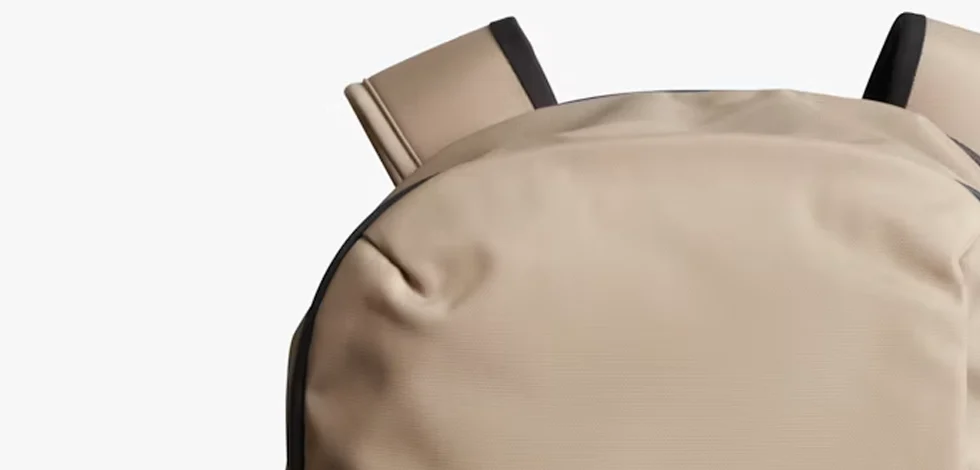
In the world of industrial design and soft-goods manufacturing, the most profound innovations are often the most invisible. While consumers frequently fixate on high-tech textiles, aerospace-grade buckles, or complex suspension systems, the true structural integrity of a world-class backpack or carry solution often hinges on a deceptively simple sewing technique: the dart.
For the uninitiated, a dart is a fundamental geometric maneuver borrowed from the annals of high-fashion tailoring. It is a tapered fold of fabric, sewn into place to manipulate the shape of a two-dimensional material, effectively forcing it to conform to a three-dimensional form. To understand the dart is to understand how we turn flat, lifeless sheets of nylon, Cordura, or leather into the ergonomic, volume-efficient vessels that define modern carry.
Main Facts: The Anatomy of a Dart
At its most basic level, a dart is a triangular wedge of fabric pinched out of the pattern and stitched shut. The process is a masterclass in structural engineering: a designer takes a flat plane, identifies a point where they wish to introduce curvature or depth, and removes a precise triangular segment. Once the edges of that triangle are brought together and sewn, the fabric is forced into a permanent, three-dimensional "pop."
Why Designers Rely on Darts
The primary function of the dart is volume optimization. In manufacturing, every additional seam is a potential point of failure and an added cost in labor and materials. By utilizing darts instead of complex multi-panel construction, designers can:
- Create Organic Contours: Darts allow for rounded shapes—such as the curve of a pack base or the dome of a lid—without requiring curved pattern pieces, which are notoriously difficult to sew.
- Minimize Seam Stress: Because a dart creates a permanent structural fold, it reduces the amount of tension placed on surrounding stress points, effectively increasing the longevity of the bag.
- Enhance Aesthetics: A well-placed dart can turn a boxy, industrial-looking bag into a sleek, streamlined piece of equipment by softening sharp angles and creating elegant, tapered lines.
Chronology: From Parisian Ateliers to Tactical Packs
The history of the dart is not a story of modern bag design, but rather a legacy of human ingenuity in textile manipulation.
The Evolution of Tailoring (Pre-20th Century)
The dart has been a staple of garment construction for centuries. Early corset makers and dressmakers realized that the human body is inherently curved, while woven fabrics are inherently flat. To achieve a fitted silhouette, they had to "dart" the fabric at the waist, bust, and hips. This allowed for the transition from the loose, shapeless tunics of the Middle Ages to the form-fitting silhouettes of the Renaissance and beyond.
The Mid-Century Shift to Industrial Carry
As the outdoor industry began to emerge in the 1960s and 70s, designers looked toward established textile disciplines to solve the problem of volume. Early pack makers—pioneers who were often modifying existing canvas gear—realized that they couldn’t simply box-stitch everything if they wanted the pack to sit comfortably against the lumbar spine.
The Modern Era: Precision and Automation
Today, the dart has evolved from a manual "eyeballing" technique to a precision-engineered necessity. With the advent of Computer-Aided Design (CAD) software, modern carry designers can calculate the exact degree of curvature required for a specific volume, simulating the dart’s impact on the final bag shape before a single stitch is made.
Supporting Data: Engineering Volume without Complexity
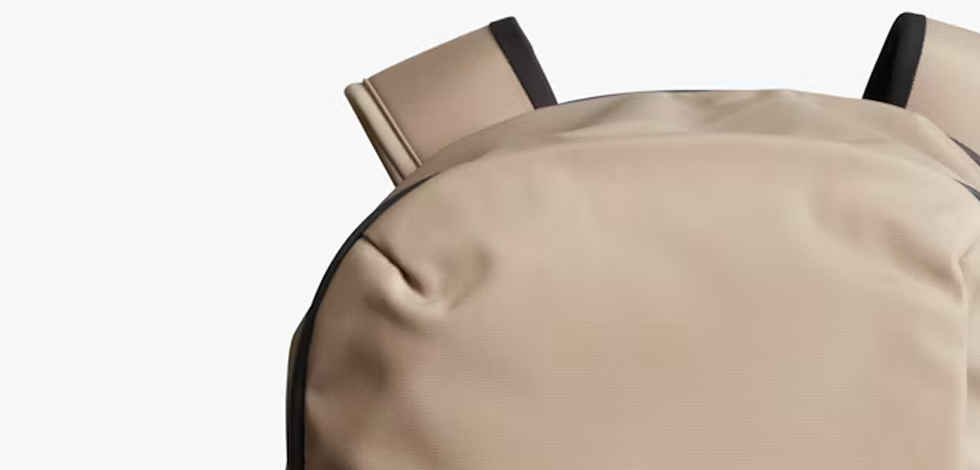
To appreciate the efficiency of the dart, one must look at the math of "surface development." If a designer wants to create a rounded bottom for a backpack, they have two options: use a complex, multi-panel design with circular seams, or use a flat panel with strategic darts.
Data on Efficiency and Material Savings
- Panel Reduction: Utilizing darts can reduce the number of panels in a bag’s construction by up to 20%. Fewer panels mean fewer seams, which directly translates to reduced manufacturing time and lower risk of seam failure.
- Weight Reduction: Because darts eliminate the need for redundant fabric overlaps (which are often required when joining multiple panels), they contribute to the "ultralight" movement. Every gram saved on seam tape and thread counts in professional-grade gear.
- Structural Load Bearing: In testing, a darted base corner often exhibits higher tear resistance than a corner joined by a standard perpendicular seam. This is because the dart distributes the load across the folded fabric rather than concentrating it on the stitch line.
Official Perspectives: Insights from the Design Bench
We spoke with several anonymous industry designers who emphasize that the dart is the "secret handshake" of the carry world.
"When you see a bag that looks ‘sculptural’ rather than ‘boxy,’ look for the darts," says one lead designer for a major technical apparel brand. "If you don’t use darts, you’re forced to use complicated gussets or elasticized edges. Darts are the most elegant solution because they work with the fabric, not against it. You’re essentially telling the fabric where it wants to live in 3D space."
Another design engineer noted, "Consumers rarely see the dart. It’s often tucked away on the underside of a lid or the bottom corners of a pack. But if we removed them, the bag would lose its ergonomic shape instantly. It would go from a high-performance tool to a simple sack."
Implications: The Future of Soft-Goods Construction
As we look toward the future of the carry industry, the role of the dart is expanding alongside advancements in material science.
Sustainability and the Dart
The global push for more sustainable manufacturing is forcing brands to reconsider their waste. Traditional pattern cutting often results in significant "off-cut" waste. By utilizing clever dart placement, designers can minimize the number of pieces required to construct a bag, leading to more efficient nesting of patterns on the fabric roll and, ultimately, less landfill waste.
The Rise of Advanced Textiles
The introduction of laminate fabrics, such as X-Pac and Dyneema, has added a new challenge for the dart. These stiff, non-stretch materials are harder to fold and sew than traditional nylon. As a result, the industry is seeing a shift toward "tapered darts" and "heat-welded darts," where the fold is secured not just by thread, but by high-frequency welding. This ensures that the dart remains as durable as the fabric itself, pushing the boundaries of what a flat sheet of technical laminate can become.
Final Reflections
The dart is a testament to the fact that you do not need more complexity to achieve better results. In a market saturated with "feature-rich" bags—many of which rely on excessive pockets, zippers, and heavy hardware—the dart stands as a reminder of the power of simplicity. It is an architectural principle that has traveled from the runways of Paris to the base camps of the Himalayas.
Whether you are carrying a laptop to the office or gear for a summit push, your bag likely relies on this invisible triangle. It is the structural heartbeat of the carry world, transforming the flat into the functional, and the simple into the sophisticated. Next time you reach for your pack, take a moment to look at the corners. That tiny fold isn’t just a seam—it is the very foundation of the shape you carry.
Summary of Key Findings
- Definition: A dart is a triangular fold used to transition 2D materials into 3D shapes.
- Application: Essential for volume management in backpack lids, bases, and pockets.
- Efficiency: Reduces panel counts, lowers manufacturing costs, and minimizes seam failure points.
- Industry Impact: Integral to both fashion tailoring and technical outdoor gear, currently driving sustainability efforts by reducing fabric waste.
By mastering the dart, designers continue to push the envelope of what is possible in soft-goods engineering, ensuring that our gear remains as functional as it is beautiful. As the industry moves toward more complex materials and higher performance standards, the humble dart remains a constant, proving that sometimes, the most sophisticated design is the one that was there all along.
 rifanmuazin
 Neng Nana
