

By Industry Correspondent
September 25, 2026
In an era where the friction between hotel management companies and asset owners has reached a fever pitch, Hyatt Hotels Corporation is attempting to chart a different course. As inflationary pressures, rising labor costs, and a complex macroeconomic landscape strain the profitability of hotel real estate, the industry has seen a growing chorus of discontent from owners toward major global brands.
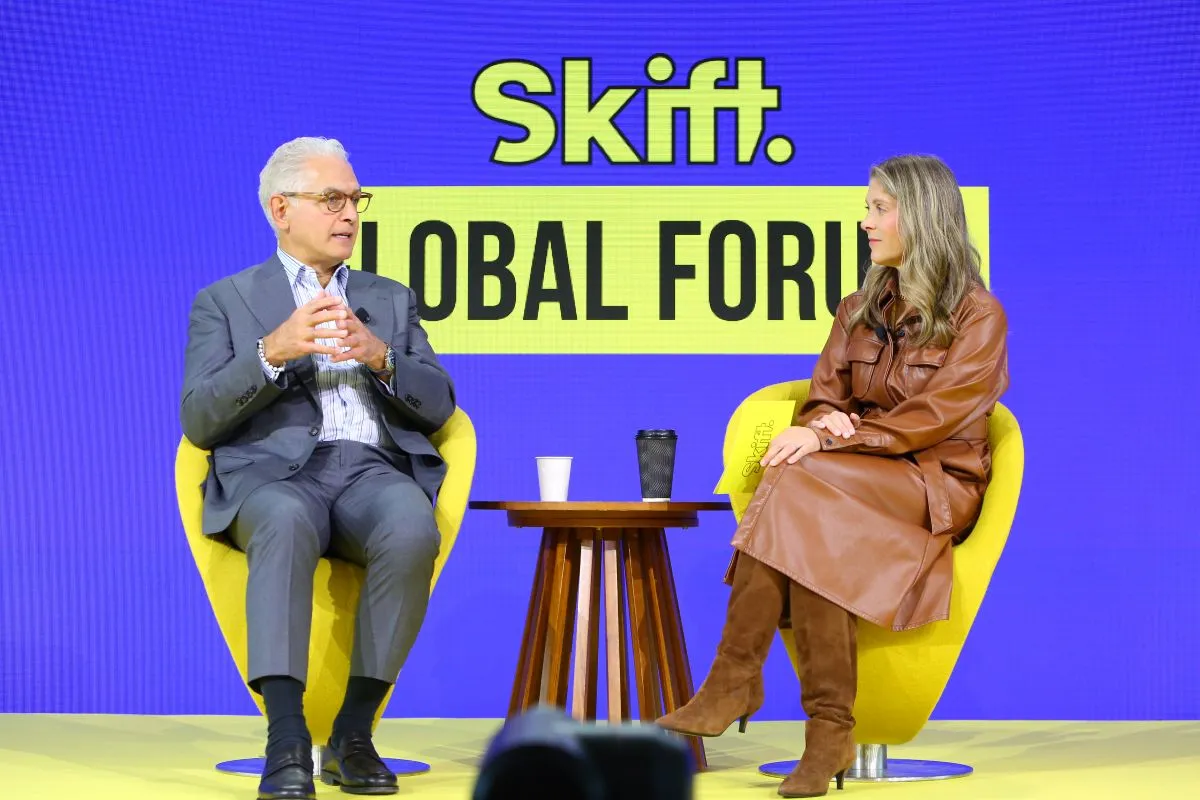
At the Skift Global Forum in New York City this week, Hyatt Chairman, President, and CEO Mark Hoplamazian addressed this growing divide. His message was not one of defensive corporate posturing, but rather a call to embrace a specific operational philosophy: "The mindset of an owner."
For Hoplamazian, the strategy is simple but rarely practiced at scale: "The mindset of being an owner leads you to put yourself in the shoes of an owner, and really understand you have to eat your own cooking every day."
The Evolution of Hyatt’s DNA
To understand why Hyatt believes it is uniquely positioned to bridge the gap between brand and owner, one must look at its history. For 67 of its nearly 70-year existence, Hyatt operated not merely as a franchise licensor or a management company, but as a significant owner of its own real estate.
This legacy is not just historical trivia; it is the cornerstone of the company’s current operational strategy. Unlike some competitors that shifted to "asset-light" models decades ago to appease Wall Street, Hyatt spent the vast majority of its life experiencing the same market volatility as the third-party investors currently filling their portfolios.
The Pandemic Crucible
The true test of this "owner-first" mentality arrived in early 2020. When the COVID-19 pandemic paralyzed the global travel industry, Hyatt found itself in the same precarious position as every other owner. The company was not shielded by a remote corporate headquarters; it was bleeding cash alongside its partners.
"We thought that the break-even level for some of our larger hotels was about 43% occupancy," Hoplamazian recounted to an audience of industry leaders at the Skift Global Forum. "Within six months, through radical re-engineering of our processes and cost structures, we got it down to 22%."
This achievement was not just an internal victory; it became a blueprint for the brand’s future relationship with its partners. Rather than keeping these efficiencies behind closed doors, Hyatt took the unprecedented step of inviting Host Hotels & Resorts—the largest lodging real estate investment trust (REIT) in the world and Hyatt’s most significant third-party owner—to its corporate offices.
Chronology of a Shifting Relationship
The relationship between hotel brands and owners has historically been transactional. Brands seek growth through room expansion, while owners seek maximum return on investment (ROI). When fees rise or performance stagnates, the tension is palpable.
- 1957–2024: The "Asset-Heavy" Era. Hyatt maintains a high percentage of owned assets, fostering a culture of operational sensitivity.
- 2020–2021: The Pandemic Pivot. Hyatt successfully slashes break-even occupancy points by nearly 50%, a feat accomplished through intensive data analytics and labor model restructuring.
- 2022–2025: The Post-Pandemic Friction. As global travel surges, owners push back against rising "junk fees" and management costs. Many brands struggle to justify their margins to increasingly skeptical owners.
- September 2026: The Open Playbook. Hyatt explicitly leans into its history of ownership to differentiate its value proposition, emphasizing transparency and collaborative operational design.
Supporting Data: The Case for Owner-Centricity
The industry-wide friction stems from a misalignment of goals. Recent surveys from hospitality consulting firms indicate that over 60% of hotel owners feel that brand groups are "out of touch" with the local operational realities of their properties.
Hyatt’s response, as outlined by Hoplamazian, relies on three pillars of data-driven transparency:
- Direct Communication: By sharing the "playbook" developed during the pandemic, Hyatt provided third-party owners with the same granular insights their own internal management teams used. This removes the "black box" nature of management fees.
- Occupancy Sensitivity: Hyatt’s ability to lower break-even points serves as a key performance indicator (KPI) that proves to owners that the brand is focused on bottom-line profitability, not just top-line revenue growth.
- Capital Allocation Efficiency: By understanding the owner’s burden, Hyatt’s management teams are reportedly more conservative with capital expenditure (CapEx) requests, prioritizing projects that drive direct, verifiable ROI for the property owner.
Official Responses and Industry Sentiment
The reception to Hyatt’s approach has been generally positive, though analysts warn that the industry’s structural challenges remain.
"Hyatt is playing the long game," said a senior equity analyst specializing in hospitality real estate. "By acknowledging the pain of the owner, they are creating a brand loyalty that goes beyond guest preferences. If you are an owner, you want to sign a management agreement with someone who understands that if you lose money, they lose money. That’s a powerful incentive."
However, not all industry observers are convinced that history alone can solve the current crisis. Critics point out that even with an owner-centric mindset, the pressure to deliver shareholder value to the brand’s own investors can create conflicts of interest. The challenge for Hyatt will be maintaining this collaborative spirit as it continues to expand its global footprint through acquisitions and rapid franchising.
Implications for the Future of Hospitality
The "owner-first" strategy has profound implications for the future of hotel management:
1. The Death of the "Black Box" Management Model
The era where brands could dictate terms and hide behind complex fee structures is ending. Hyatt’s move to share its internal playbooks with partners like Host Hotels suggests a move toward "Open Architecture Management," where the owner is treated as a partner in operations rather than a passive financier.
2. Operational Agility as a Competitive Advantage
In a world of unpredictable economic cycles, the brand that can help an owner lower their break-even point is the brand that will win the most management contracts. Hyatt is positioning itself not just as a marketing and loyalty platform, but as an operational optimization partner.
3. A Return to "Skin in the Game"
The industry may see a shift back toward brands keeping a portion of their assets on the balance sheet. By having "skin in the game," brands like Hyatt can prove their commitment to the long-term success of their properties, creating a powerful differentiator in a crowded marketplace.
Conclusion: A New Standard of Partnership
As Hyatt moves toward its 70th anniversary, the company is betting that its history of ownership will be its greatest asset. In the high-stakes environment of the mid-2020s, trust has become the scarcest commodity in the hotel industry.
By inviting its largest owners into the fold and demonstrating a willingness to share the secrets of operational survival, Hyatt is attempting to transform the brand-owner relationship from one of adversarial negotiation to one of collaborative stewardship. Whether this strategy will be enough to quell the broader industry discontent remains to be seen, but for now, it represents the most sophisticated attempt yet to solve the fundamental problem of hotel ownership in the modern age.
"We don’t just ask our owners to trust us," Hoplamazian concluded. "We show them the math, we show them the history, and we show them that we are in the exact same boat. That is the only way to build a sustainable future in this industry."
 Layla Zulfa
  Nana Muazin
  Muslim