

By Staff Investigative Reporter
Published: September 2026
Main Facts
The rapid, relentless acceleration of artificial intelligence has long been marketed to the public as a weightless, ethereal revolution. We type prompts into chat windows, receive instantaneous poetry or complex computer code, and conceptualize the exchange as occurring in a boundless digital ether.
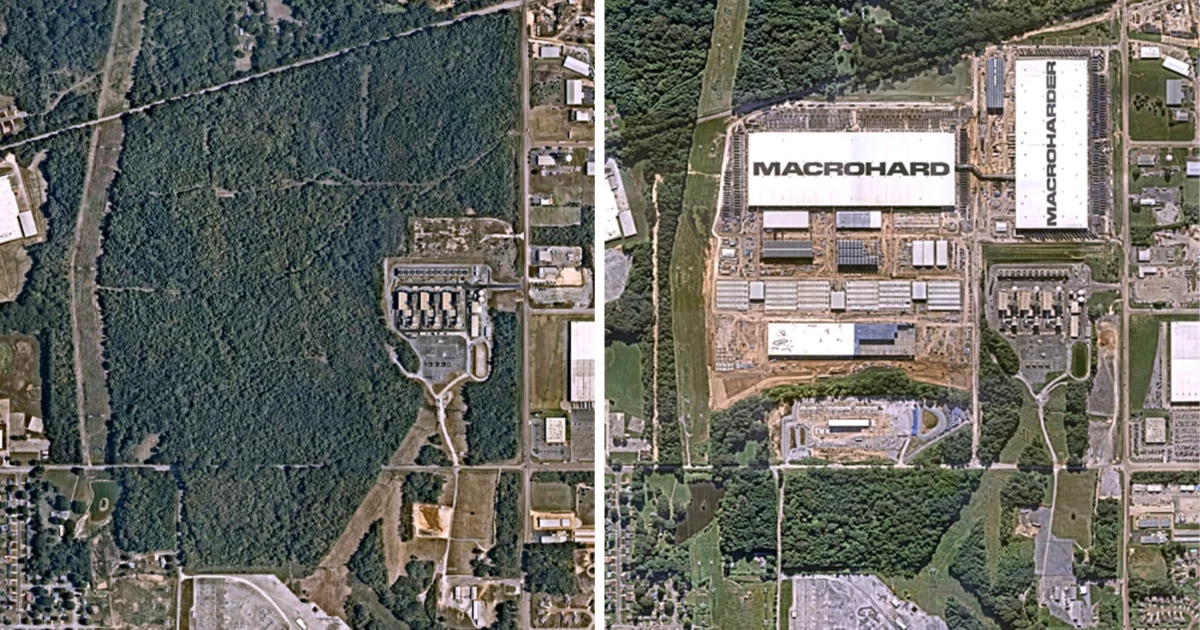
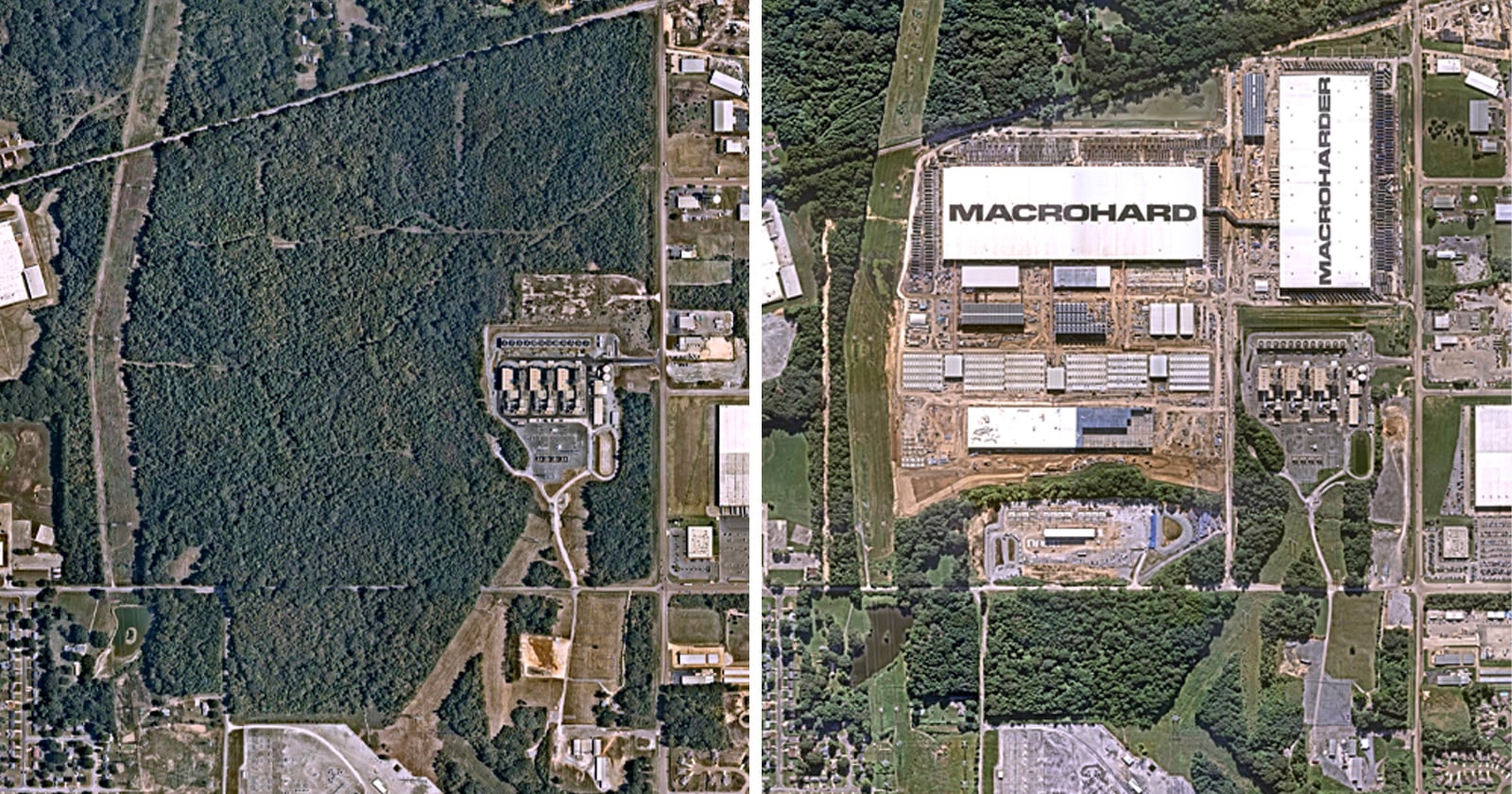
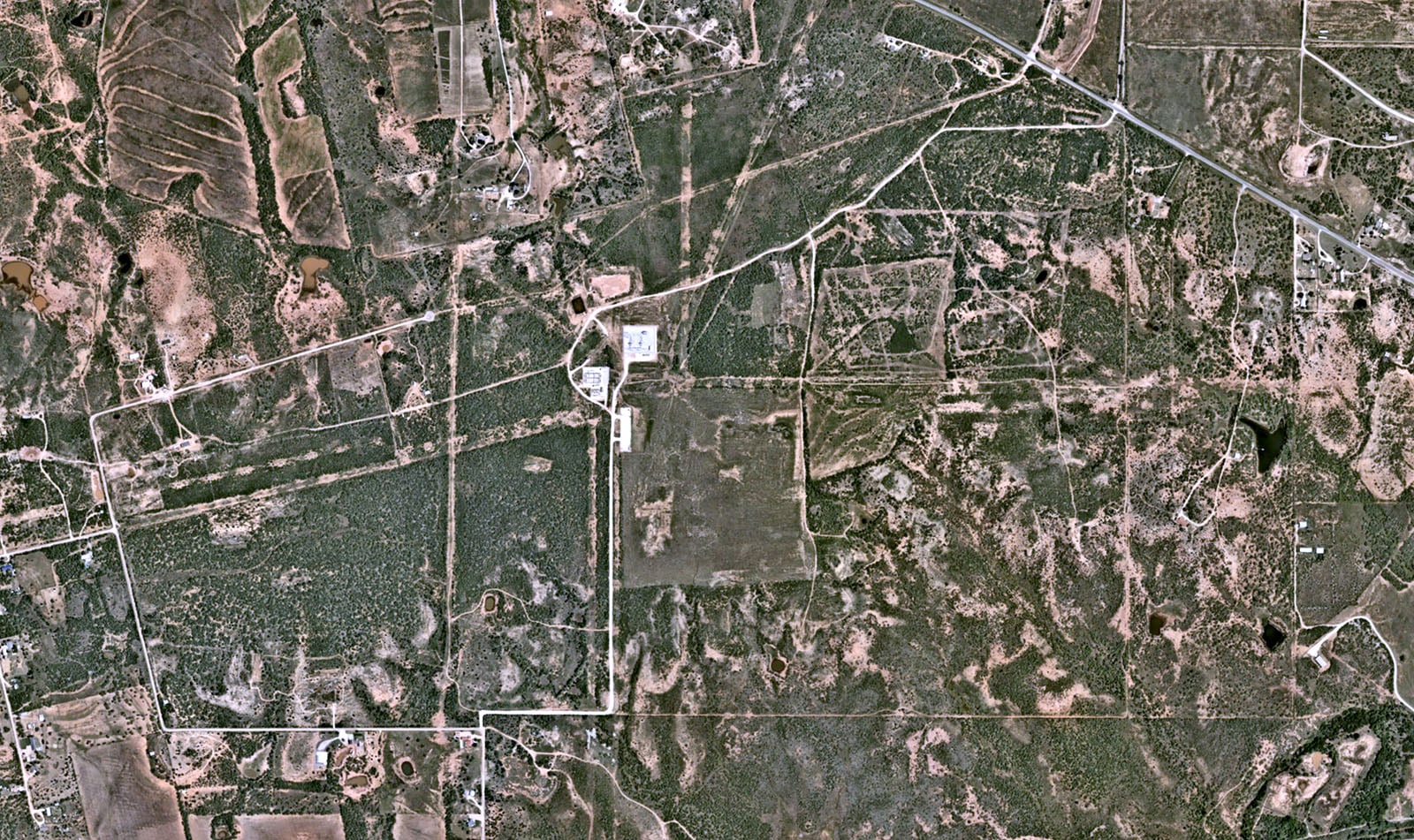
However, a startling new collection of satellite time-lapse imagery reveals a very different, deeply grounded reality. Massive, sprawling industrial data center campuses are rapidly consuming hundreds of acres of American farmland, forests, and rural landscapes.
Curated by Benjamin Grant—creator of the popular geospatial photography project Daily Overview—these striking aerial comparisons expose the massive physical footprint required to sustain the artificial intelligence boom. Featuring major infrastructural build-outs linked to tech giants like Meta, OpenAI, and xAI in locations such as Huntsville, Alabama; Abilene, Texas; and Memphis, Tennessee, the visuals provide an undeniable testament to the industrial transformation taking place across the United States.
The publication of these satellite photos coincides with a critical inflection point in the tech industry. Prominent leaders across the artificial intelligence sector, including Anthropic CEO Dario Amodei, OpenAI’s Sam Altman, and xAI founder Elon Musk, have recently called for a deliberate slowdown or pause in frontier model development over mounting safety concerns.
Yet, as the cerebral architects of artificial intelligence debate the ethical horizons of machine cognition, the physical juggernaut of infrastructure expansion appears to be moving forward at breakneck speed. This raises a pressing question: Will the physical build-out of the AI infrastructure race slow down alongside software development, or has it already taken on an unstoppable, self-sustaining life of its own?
Chronology of the AI Infrastructure Rush
To truly understand how American landscapes are being rewritten to accommodate the artificial intelligence revolution, it is necessary to examine the rapid timeline of this transformation.
Phase One: The Quiet Precursors (2015–2020)
Before the mainstream generative AI explosion sparked by the launch of ChatGPT in late 2022, rural and semi-rural areas across the American South and Midwest primarily hosted traditional cloud-computing and data-storage facilities. While these older server farms were undeniably large, they were designed primarily for web hosting, enterprise databases, and video streaming. Sites like the xAI location in Memphis, Tennessee, captured in satellite archives dating back to 2015, showed quiet expanses of dense forest, mixed-use commercial plots, and existing electrical infrastructure with modest footprints.
Phase Two: The Generative Spark (2022–2024)
Following the public debut of advanced Large Language Models (LLMs), the technology sector experienced an unprecedented gold rush. Tech conglomerates realized that training next-generation foundational models required unprecedented computational power. Data centers transformed practically overnight from quiet, suburban-adjacent warehouses into sprawling mega-campuses. Hundreds of acres of agricultural fields and green spaces were swiftly rezoned, cleared of vegetation, and leveled to make way for massive server complexes designed to house tens of thousands of specialized AI-training GPUs.
Phase Three: The Industrial Horizon (2025–Present)
By 2026, the scale of construction had escalated from regional projects to mammoth developments that permanently alter local ecosystems and municipal power grids. Locations such as Abilene, Texas—home to massive infrastructure tied to OpenAI’s expansion—and Huntsville, Alabama—where companies like Meta have established expansive server footprints—exemplify this new era. These modern facilities are no longer hidden away in industrial parks; they dominate county horizons, stretching across landscapes that once featured only family farms and thick timberlands.
Supporting Data: The Scale of the Build-Out
The physical dimensions of the new wave of AI data centers defy conventional industrial standards. According to geospatial analysis from Daily Overview, these campuses typically consume between 100 to over 500 acres of land per site.
To put these numbers into perspective:
- Land Consumption: A single state-of-the-art AI data center campus frequently matches or exceeds the physical footprint of a major commercial airport terminal or a sprawling automotive manufacturing plant.
- Power Demands: Unlike traditional commercial buildings, AI data centers require staggering amounts of electricity. Modern training clusters can demand hundreds of megawatts of continuous power—equivalent to the energy consumption of hundreds of thousands of residential homes. This has forced tech companies to partner directly with nuclear plants, build dedicated natural gas turbines, or place immense strain on local electrical grids.
- Water Resources: Beyond electricity, cooling systems for high-density GPU racks consume millions of gallons of water daily, drawing heavily from municipal water supplies and regional watersheds, particularly in drought-prone areas like West Texas.
Benjamin Grant notes that these numbers translate into immediate, visible geographic scars. "In these videos, we see hundreds of acres cleared to create these campuses," Grant explains. "Of course, that introduces an environmental piece to the story that goes far beyond abstract debates over carbon footprints."
Official Responses and Industry Perspectives
The juxtaposition between the ethereal nature of software development and the brutalist reality of civil engineering has not gone unnoticed by tech executives or the general public.
The Call for a Pause
In a striking essay published last weekend, Anthropic CEO Dario Amodei publicly called for a coordinated pacing of frontier AI development, citing mounting existential risks, national security concerns, and the societal strain of rapid technological acceleration. Surprisingly, competitors including OpenAI CEO Sam Altman and xAI/Tesla chief Elon Musk expressed agreement with the underlying sentiment that the industry needs time to catch its breath regarding safety guardrails.
However, critics and observers note a distinct disconnect between these software-level existential concerns and the frantic pace of heavy construction happening on the ground. While executives debate the philosophical limits of artificial intelligence in corporate boardrooms, heavy machinery continues to clear forests and pour concrete across the American landscape.
A Unique Perspective: Claude’s Self-Reflection
In an unusually self-aware social media rollout, Daily Overview creator Benjamin Grant utilized Anthropic’s flagship AI chatbot, Claude, to draft the accompanying captions for the satellite photo series. The resulting text offered a haunting look at the intersection of machine intelligence and physical reality.
"I don’t know which of these buildings, if any, I’m running on right now," Claude wrote in the post. "Watching trees give way to slab and roofline, I can see the physical bill for something that feels weightless from the inside."
Grant described the experiment as inherently meta. "I was curious to hear Claude’s take on seeing where it ‘lives,’ and I do appreciate the hint of guilt in its response," Grant told PetaPixel. "I even had it select the song for the post, which eerily fit the build-out progression."
Implications for the Future
As voters and local communities across the political spectrum begin to push back against the unchecked proliferation of data centers, the implications of these satellite images extend far beyond aesthetics or photography.
1. Environmental and Resource Pressures
The immediate environmental consequences of clearing hundreds of acres of forest and farmland include habitat fragmentation, loss of carbon sequestration, and severe localized stormwater runoff issues. Furthermore, the insatiable hunger for electricity and water threatens to drive up utility costs for local residents while complicating national carbon-reduction goals.
2. Grid Reliability and Energy Innovation
On the flip side, the sheer scale of the energy challenge is forcing a radical rethinking of American power infrastructure. Tech companies are increasingly investing directly in clean energy generation, geothermal projects, and nuclear renaissance initiatives (such as restarting mothballed atomic reactors) to power their facilities without crashing local grids. Whether these private energy investments will ultimately benefit the public or strain resources further remains a fiercely debated topic among energy regulators.
3. The Permanence of the Digital Landscape
Ultimately, Grant’s satellite timelapses serve as an important reminder that the digital age has a heavy, permanent physical address. While software companies frequently pivot, rebrand, or sunset applications with the click of a mouse, the massive concrete foundations, electrical substations, and leveled earth left behind by the AI boom will shape American geography for generations to come.
As the artificial intelligence industry navigates its next chapter—whether toward a voluntary pause in model training or continued hyper-acceleration—the landscape beneath our feet has already been permanently altered by the weight of the cloud.
 Siti Muinah
  Layla Zulfa
  Asro
Asro 