

There is a problem hiding in plain sight in every outdoor gear store on earth. Walk the fleece aisle of any well-stocked retailer, and you will see it immediately. It is a problem defined by its ubiquity: the color black.
Dozens of versions of "black" hang side-by-side, each one marginally different from the next in ways that only become visible when you hold two swatches together under high-intensity light. Some lean slightly blue, others possess a subtle warmth, and many carry the faint greyish tint of a less-than-perfect saturation. While these discrepancies might seem like mere manufacturing variance, they represent a deeper, more systemic inefficiency.
This is the reality the outdoor industry has ignored for decades. Every time a brand commissions a new batch of black polyester fleece, they are triggering a cycle of chemical usage, water consumption, and energy expenditure that is, for the most part, entirely redundant. Now, Haglöfs and Polartec are attempting to dismantle this cycle through a radical, common-sense initiative: Standard Issue Black™.
The Anatomy of the Problem: Why Black Isn’t Just Black
To understand why the industry’s obsession with proprietary shades of black is an environmental crisis, one must look at the chemistry of synthetic fabrics. Unlike natural fibers like cotton or wool, which have a natural affinity for water-based dyes, polyester is hydrophobic. It is essentially plastic—a polymer that repels water and, by extension, traditional dyeing methods.
To force pigment into polyester, manufacturers use "disperse dyes." This process requires high-temperature pressure vessels—typically operating at 130°C or higher—to swell the fiber structure, allowing the dye molecules to penetrate the core of the yarn.

Black is the most demanding color in this process. Because there is no single "black" dye molecule that can achieve a deep, true, and light-fast finish on its own, textile engineers must layer multiple dye components together. This requires longer fixation cycles, more complex chemical baths, and significantly higher water usage.
The textile industry is responsible for approximately 20% of global industrial water pollution, with dyeing and finishing operations serving as the primary culprits. Depending on the efficiency of the facility, a single kilogram of polyester can require between 30 and 150 liters of water. By running fragmented, small-batch dye processes for dozens of different "blacks," the outdoor industry is essentially multiplying these environmental costs for no functional benefit to the end user.
Chronology: From Experimental Capsule to Industrial Standard
The journey toward Standard Issue Black™ did not begin in a corporate boardroom, but rather on the cutting room floor.
Phase I: The Black Capsule Project
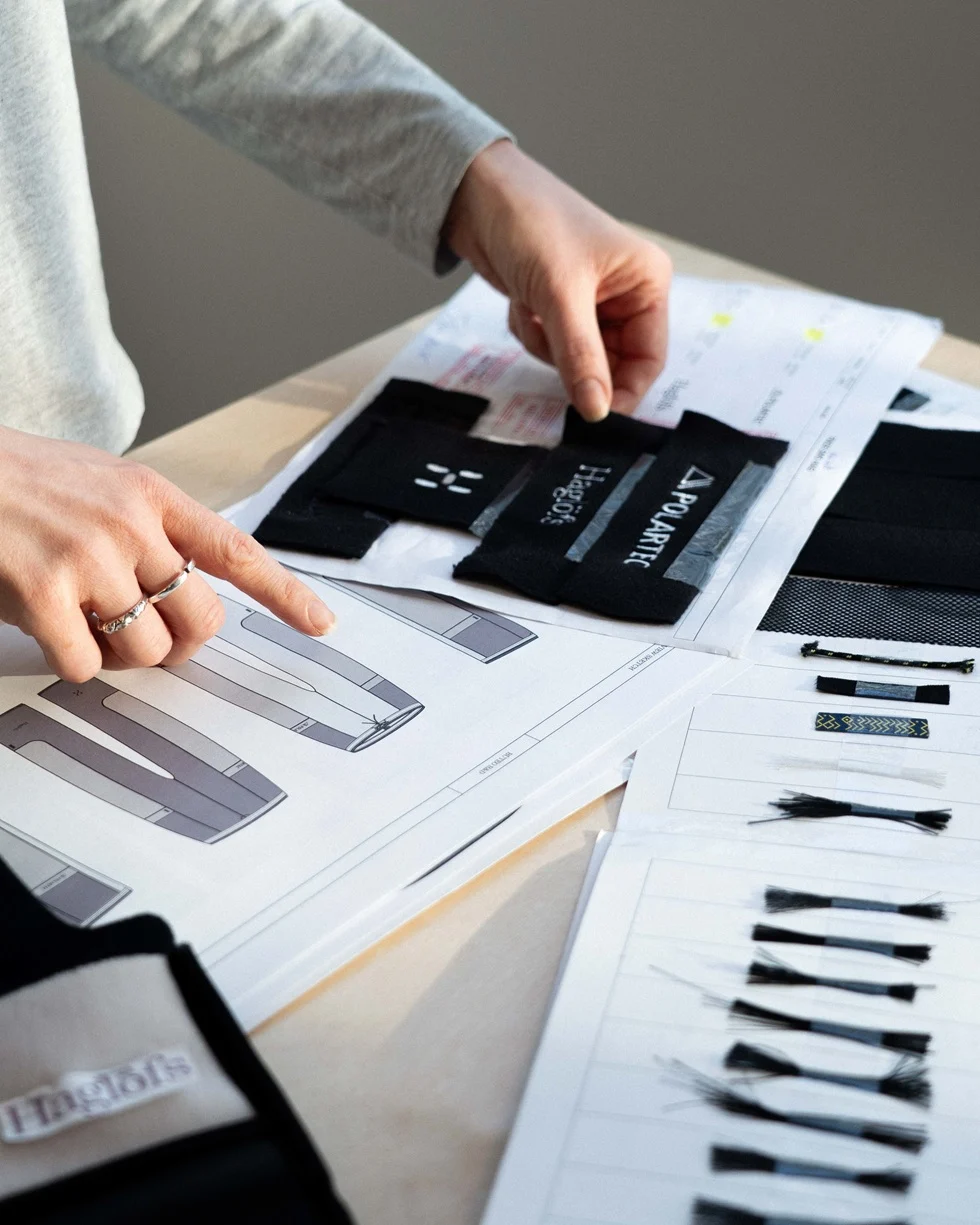
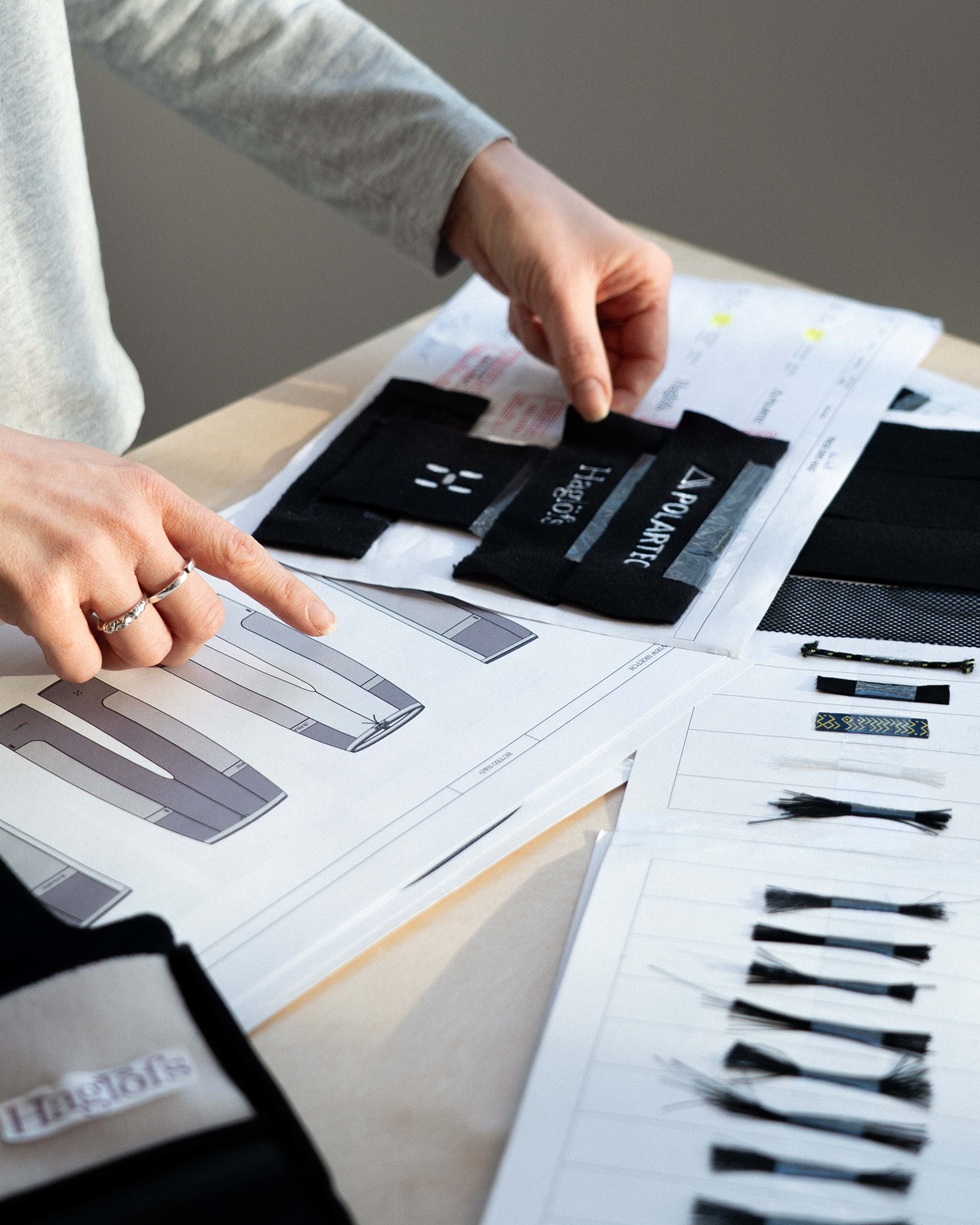
Haglöfs launched the "Black Capsule" collection as a proof-of-concept. The collection, which included a Project Tee, beanie, scarf, and pants, was constructed entirely from leftover black Polartec fleece scraps. Each panel on these garments was tagged with a woven label denoting its original batch number, visually highlighting how many different "blacks" were currently circulating through the supply chain. It was an act of transparency that turned waste into a narrative.
Phase II: The Collaborative Shift
Recognizing that the problem was not just waste, but the process of waste, Haglöfs partnered with textile giant Polartec to standardize the pigment. They decided to settle on a single, high-performance shade of black that would be produced at scale.
Phase III: Implementation
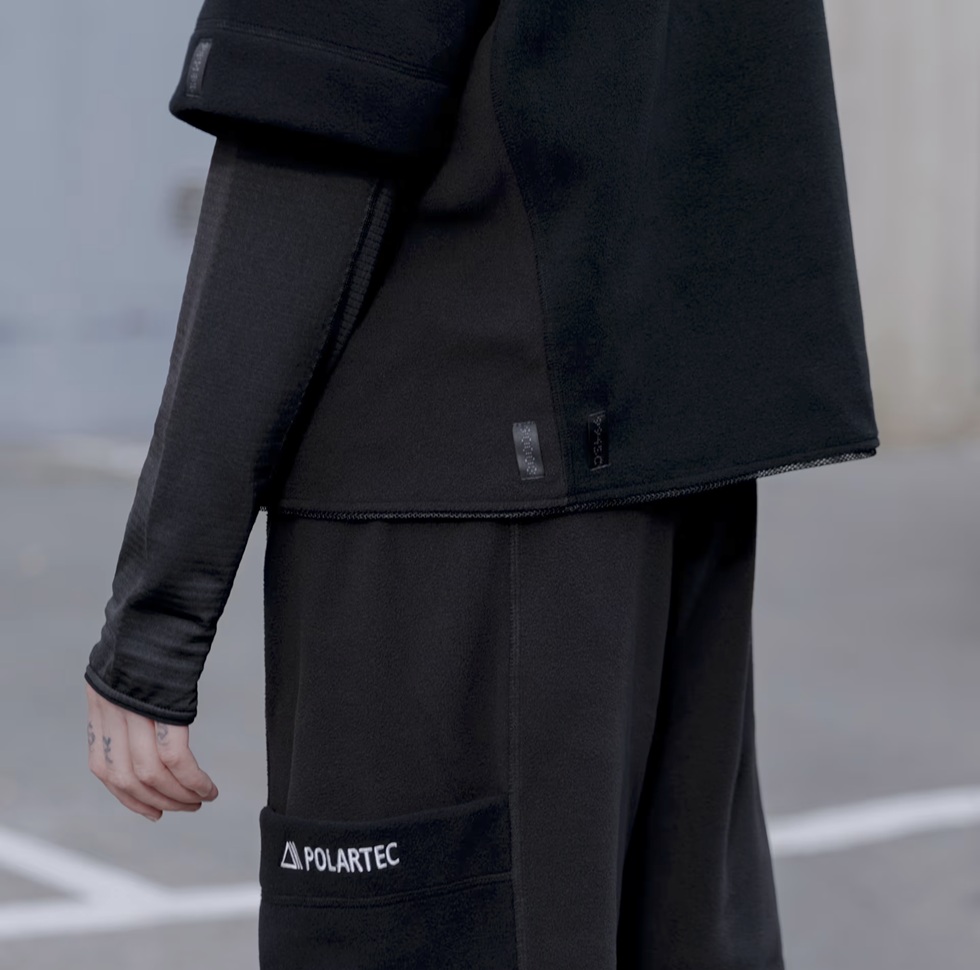
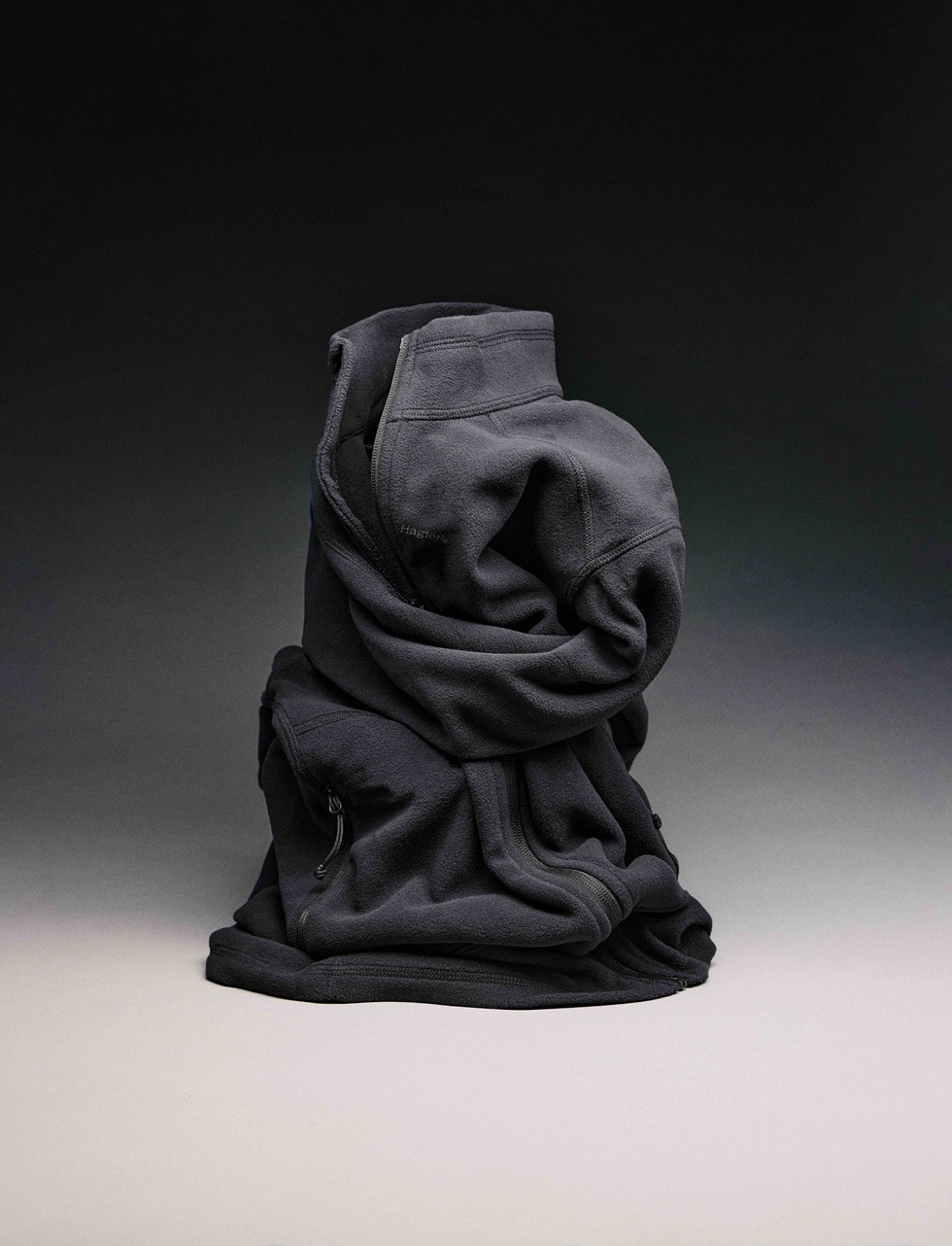
In the FW26 season, the Standard Issue Black™ initiative moved from concept to mass production. The Buteo Mid II jacket became the first flagship product to utilize this universal standard. Unlike the limited-run capsule, the Buteo is a high-volume, core offering. By applying the standard to a best-seller, Haglöfs is proving that the model can function at the scale necessary to drive actual environmental change.
Supporting Data: The Arithmetic of Efficiency
The environmental case for Standard Issue Black™ is rooted in the economics of scale. When dozens of brands independently commission small batches of black fabric, dye houses are forced to reset their machines, clean their vats, and recalibrate their chemical recipes for every single order.
By consolidating these disparate runs into a single, massive, continuous production stream, the efficiency gains are immediate:
- Water Usage: Internal production assessments by Haglöfs suggest a reduction of over 50% in water consumption compared to traditional piece-dyed black fabrics.
- Energy Consumption: By minimizing the number of times dye machines must be heated, cooled, and flushed, there is an estimated 20% reduction in energy usage.
- Chemical Footprint: A single, standardized recipe reduces the need for constant, repetitive testing and chemical re-formulation, lowering the total chemical load per garment.
While these figures are company-supplied, they align with well-established industrial engineering principles regarding batch consolidation. The logic is simple: the fewer the setups, the lower the waste.
Official Responses: The Philosophy of Standardization
Eva Weiss, Head of Design and R&D at Haglöfs, has been the leading voice in defending this initiative against the inevitable critiques of industry traditionalists.
"Standardization doesn’t have to limit creativity," Weiss stated during the rollout. "With the right framework, it gives us the freedom to work together in the same creative direction and make a bigger impact. Having one defined black simplifies the design process, and brands could still differentiate themselves through other colors, cuts, and design elements."
Weiss draws a parallel to the hardware industry, specifically the ubiquity of YKK zippers. Decades ago, the outdoor industry settled on a few standard zipper systems. No one today claims that YKK has stifled the creativity of outdoor jacket design. Instead, standardization allowed designers to focus their energy on architecture, fit, and technical features—the things that actually define a brand’s value.
Standard Issue Black™ argues that color, when it comes to a basic like black, should be viewed with the same pragmatism as a zipper.
The Implications: Moving Beyond "Green Premiums"
The greatest challenge facing Standard Issue Black™ is not technical, but cultural. The outdoor industry is littered with well-intentioned sustainability initiatives that failed because they were too niche or too expensive. Many sustainable innovations fall victim to the "green premium"—the gap between what consumers say they value and what they are willing to pay at the checkout counter.
Standard Issue Black™ is unique because it effectively bypasses the premium. Because the process is more efficient, it is economically neutral—or even beneficial—for both the manufacturer and the brand.
However, the industry faces a significant hurdle: institutional inertia. The "machine" of outdoor manufacturing has been running on fragmented processes for so long that the prospect of alignment feels uncomfortable. For decades, brands have been conditioned to believe that their specific, proprietary "shade" of black is a competitive advantage. In reality, that "advantage" is a ghost.
The success of this initiative depends on whether other major players in the outdoor space are willing to prioritize planetary health over the illusion of proprietary color.
The Path Forward
As Standard Issue Black™ enters its second full season of implementation, the industry is watching. If competitors adopt the standard, it could trigger a domino effect, turning a niche sustainability project into a new global baseline for synthetic textile production. If they ignore it, Haglöfs’ effort will remain a noble, but lonely, protest against a broken system.
The Buteo Mid II jacket is more than just a piece of gear; it is a signal. It asks a simple, piercing question of the entire apparel industry: If the solution to one of our largest environmental problems is already sitting in front of us, why are we still choosing to do it the hard way?
The industry has spent decades optimizing for the "perfect" black. Perhaps it is time to optimize for the responsible one.
 Asep Darmawan
  Layla Zulfa
  Iffa Jayyana