

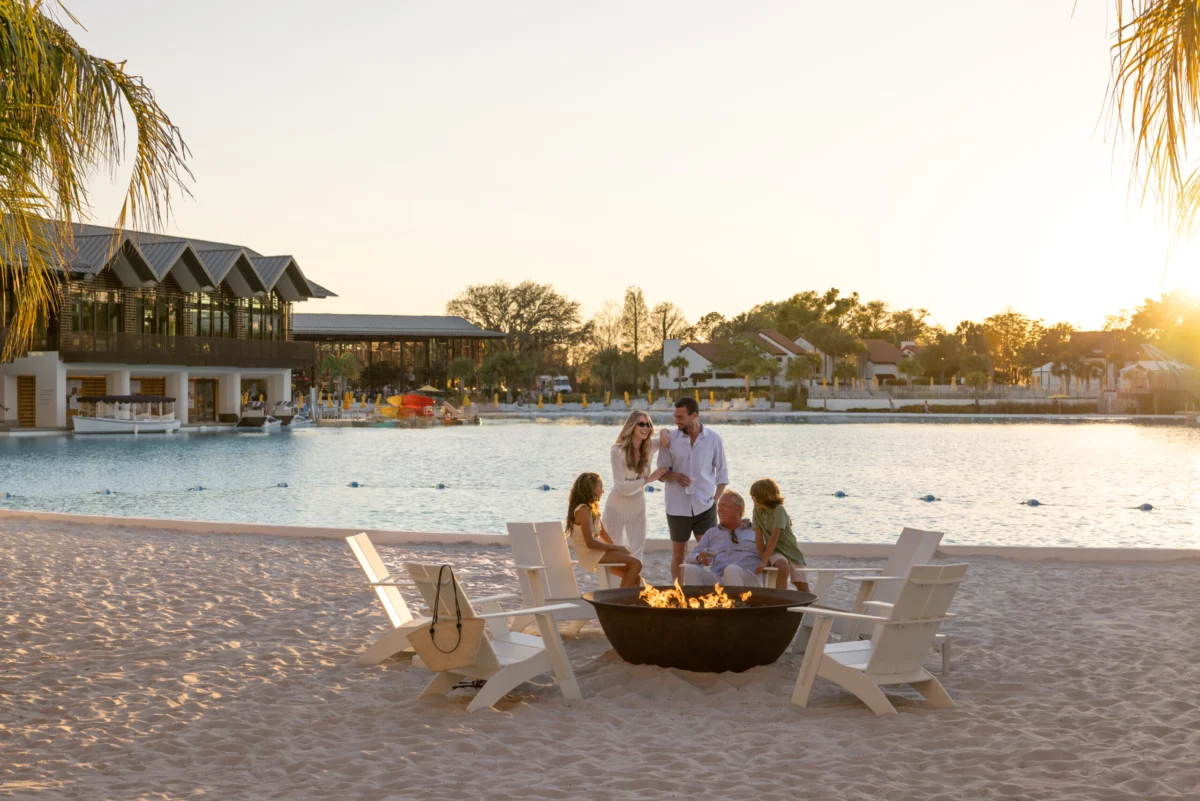
In an era defined by hyper-connectivity through digital devices, a paradoxical crisis has taken hold: global loneliness. As the World Health Organization (WHO) identifies isolation as a pressing public health concern—affecting one in six people worldwide—the travel industry is beginning to pivot. While traditional wellness has long focused on the individual through the lens of spa treatments, fitness, and nutrition, a new frontier is emerging: Relational Wellness.
At the forefront of this shift is the Evermore Orlando Resort, which is conducting a radical experiment in hospitality. By partnering with social scientist Kasley Killam, author of The Art and Science of Connection, the resort is moving beyond standard luxury amenities to intentionally design for—and measure—the strength of human bonds.
The Shift: Redefining Wellness for the Modern Traveler
For decades, the hospitality industry has treated wellness as a solitary pursuit. A successful wellness retreat was typically measured by a guest’s personal vitality, improved sleep quality, or reduced stress levels. However, recent data from Skift Research indicates a major shift in traveler intent: 36% of travelers plan to prioritize health and wellness activities during their trips by 2026.
Evermore Orlando Resort is challenging the industry to expand that definition. The core thesis of their new strategy is that true wellbeing is not just about the state of the individual, but the quality of their social ecosystem. In a world where 72% of Americans report spending in-person quality time with loved ones fewer than two times per month, the resort aims to transform the vacation experience from a mere "break" into a restorative reconnection period.
Chronology of a Relational Strategy
The integration of relational wellness at Evermore did not happen overnight; it was a deliberate evolution of the resort’s physical and operational infrastructure.

- The Foundation (Pre-Opening): The resort was built with a specific architecture—the "home, magnet, slide, and table" concept. By prioritizing multi-bedroom villas that sleep up to 32 people and creating communal hubs like the massive central bay, the resort was physically predisposed to group interaction before the term "relational wellness" was even formalized.
- The Catalyst (The Partnership): Recognizing that physical space was only half the battle, Evermore Hospitality President Elizabeth Mullins engaged Kasley Killam to audit the guest and employee journey.
- The Internal Shift (Current Phase): The resort mapped every internal touchpoint, from job interviews to daily staff lineups, embedding relational challenges into employee culture.
- The Measurement Phase (Future): The resort is now initiating pre- and post-stay surveys to track how intentional design impacts the quality of connections between traveling parties, aiming to create a repeatable data set for the industry.
Supporting Data: Why Connection Matters
The move toward relational wellness is backed by decades of behavioral science. Kasley Killam emphasizes that social health is a distinct, vital pillar of overall wellbeing.
"Decades of research show that human connection is as important as exercise and nutrition," Killam explains. "People with strong relationships aren’t just happier; they have better physical health, stronger immune systems, and higher longevity."
The internal data from Evermore supports this, showing that when the resort’s staff—who often spend more time together than with their own families—are trained to foster connection, their engagement and retention improve. By applying this same logic to guests, the resort creates a "virtuous cycle" of interaction.
Official Perspectives: Building the "Social" Resort
In a recent conversation with Skift Studio, Elizabeth Mullins and Kasley Killam outlined the strategic philosophy behind the resort’s operations.
The Architect’s View: Elizabeth Mullins
"I describe it as a home, a magnet, a slide, and a long table," says Mullins. She argues that the physical design of the resort is the first step in breaking down the barriers that digital life creates. By providing the "long table"—a space where 32 people can sit and share a meal—the resort is creating an environment where deep conversation is the primary amenity.

Mullins also notes a significant trend in guest behavior: "We originally thought there would be one ‘Evermore day’ and the rest would be spent at theme parks. What we’re seeing is closer to two and a half or three days at the resort." Guests are choosing to "catch their breath" at the property, proving that travelers are hungry for spaces that prioritize downtime with loved ones over the "packed itinerary" culture.
The Scientist’s View: Kasley Killam
Killam views the resort as a living laboratory for social health. Her role was to transition from "passive design" to "intentional facilitation."
"Evermore already creates the conditions for people to be together," Killam explains. "The opportunity is to help them connect more intentionally. If a family is gathered around one of those long tables, maybe everyone shares the highlight of the day or practices active listening. Those rituals can change the quality of the time spent together."
Implications for the Future of Hospitality
The experiment at Evermore carries significant weight for the wider hospitality sector. If a resort can prove that it can "manufacture" better relationships, it changes the value proposition of the entire industry.
1. From Personalization to "Party-ization"
The industry has long obsessed over individual guest profiles—their pillow preferences, their food allergies, their loyalty tier. Mullins argues that the future lies in understanding the "party." By designing for the group dynamic rather than just the individual, hotels can offer a more profound level of service.

2. The Rise of Social Health Metrics
Just as hotels track RevPAR (Revenue Per Available Room) or Net Promoter Scores, there is a looming potential for "Social Connection Scores." By surveying guests about their relational outcomes, properties can begin to quantify the "soft" benefits of travel, turning "meaningful memories" into measurable data.
3. The "Post-Trip" Effect
The ultimate goal of the Evermore strategy is to ensure that the relational habits formed during a stay—such as sharing daily highlights or device-free meals—persist once the guest returns home. The resort is currently developing a "field guide" to help families extend the benefits of their stay, positioning the resort as a catalyst for long-term behavior change rather than a one-off vacation provider.
Conclusion: A Moral Responsibility?
The implications of this strategy reach beyond revenue and marketing. In a society struggling with the loneliness epidemic, hospitality leaders like Mullins feel a growing sense of duty.
"I think hospitality has a responsibility here," Mullins concludes. "We have the ability to create and curate experiences. If we design for the relationships within that group, guests can leave more connected than when they arrived."
As Evermore continues to test and iterate its relational wellness strategy, it serves as a wake-up call for the broader travel industry. The future of luxury may no longer be found in the most expensive bed linens or the most exclusive spa menus, but in the ability to provide guests with the space and tools to truly see, hear, and connect with the people they love.

The data suggests the market is ready. Whether or not the rest of the industry follows, Evermore has laid a clear path: the most valuable commodity in 2026 and beyond will be the depth of our human connections.
 Lina Hope
  Basiran
  Pevita Pearce