

Main Facts: The Intersection of Unlimited Beverage Packages and Passenger Safety
The allure of a cruise vacation often includes the carefree indulgence of unlimited food and drink. However, when indulgence crosses the threshold into severe inebriation, cruise operators are legally and ethically bound to intervene. Carnival Cruise Line, widely recognized for its vibrant and fun-loving atmosphere, maintains a strict, zero-tolerance approach toward behavior that compromises passenger safety or the well-being of fellow travelers.
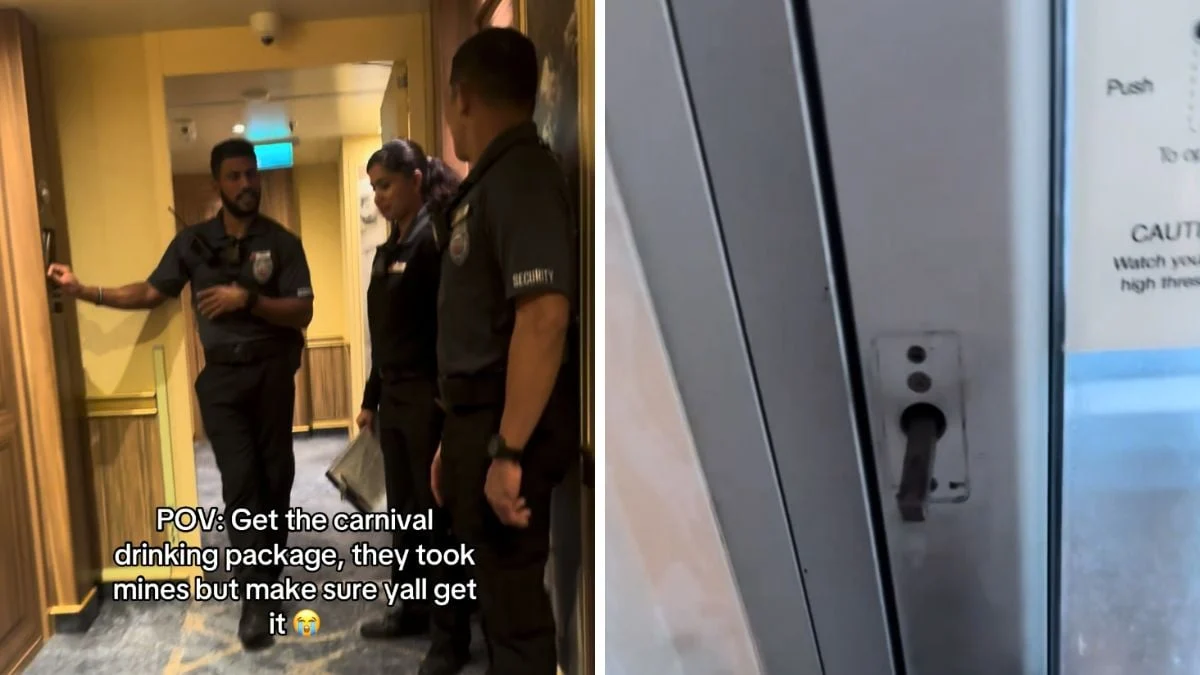
A recent viral incident aboard the Carnival Firenze brought this delicate balance into sharp focus. A passenger—who documented her experience under the TikTok handle @juicyloveboo—learned firsthand the extent to which Carnival’s security teams will go to protect heavily intoxicated guests from themselves. In a 15-second video posted to the social media platform, the user was escorted back to her stateroom by a three-person security detail after consuming an excessive quantity of alcohol. Upon entering her cabin, she discovered a stark intervention: the interior handle of her balcony door had been completely removed.
“Yes, you should get the drinking packages, No you shouldn’t get 15 shots of patron reposado,” the creator noted in the caption of her video, candidly acknowledging her severe state of intoxication. Patron Reposado, a premium tequila aged for a minimum of four months, is celebrated for its smoothness and rich notes of oak and vanilla, making it deceptively easy to overconsume.
The consequences for the passenger extended far beyond a missing balcony handle. According to her subsequent social media commentary, Carnival security personnel confiscated her room key, revoked her popular "Cheers!" beverage package without issuing a refund, and restricted her independent movement around the vessel. While she managed to avoid spending time in the ship’s brig—the onboard holding facility for disruptive individuals—the measures taken by the crew underscore the profound operational challenges cruise lines face in managing alcohol consumption at sea.
Chronology of Events: From Boarding to Viral Backlash
While the precise timeline of the viral incident has been a subject of minor ambiguity, details gathered from the video, background imagery, and the passenger’s own comments paint a comprehensive picture of how the event unfolded aboard the 4,126-guest Carnival Firenze.
The video was officially published on Sunday, August 30, 2026. At the time of posting, the vessel was operating out of its homeport in Long Beach, California, providing three- and four-night round-trip sailings to popular destinations in Mexico. Visual evidence within the TikTok clip—specifically the unmistakable silhouette of the historic Queen Mary visible just outside the closed glass balcony door—confirmed the ship’s location at the Port of Long Beach. Since 1967, the Queen Mary has been permanently moored at the terminal, serving as a floating hotel, museum, and prominent landmark.
On the date the video was published, Carnival Firenze was concluding the final full day of a weekend itinerary that had departed on Friday, August 28, 2026. However, comments left by the creator on her post introduced a layer of historical complexity regarding the voyage’s operational timeline.
In the comments section, the creator remarked, “Can I start by saying that a man died day 1 of the cruise so we had to turn around.” While maritime safety experts and company observers quickly pointed out that the tragic medical emergency had zero connection to the passenger’s alcohol consumption, the mention aligned with previous operational reporting.
Cruise Hive previously documented a critical medical evacuation aboard Carnival Firenze during a late-August sailing, wherein a passenger was rushed ashore in Long Beach following a severe medical crisis on the first full day of the journey. Whether the TikTok creator conflated multiple voyages or was referencing the stressful operational atmosphere of that specific sailing week remains a point of discussion among maritime watchers. Regardless of the broader voyage context, the disciplinary actions taken against the creator occurred swiftly on board, prioritizing immediate risk mitigation over punitive measures like incarceration.
Supporting Data: The Mechanics of the "Cheers!" Package and Onboard Safety Policies
To fully understand the context of the incident, one must examine the operational structure of Carnival Cruise Line’s beverage offerings and the specific security measures deployed when a guest becomes a liability to themselves or others.
The "Cheers!" Beverage Package
Carnival’s "Cheers!" package is a flat-rate, all-inclusive drink program that allows registered guests to consume up to 15 alcoholic beverages per 24-hour period (starting at 6:00 AM and ending at 6:00 AM the following day). The package covers a wide array of options, including spirits, cocktails, beers, wines by the glass, and various non-alcoholic specialty beverages, provided each individual drink does not exceed a specified dollar value threshold (typically $20).
While the package offers substantial financial savings for guests who plan to imbibe regularly throughout their vacation, it also introduces significant regulatory hurdles for the crew. Bartenders, barbacks, and waitstaff are legally and professionally responsible for monitoring the sobriety levels of package holders.
Balcony Safety and Maritime Architecture
Cruise ship balconies are engineering marvels designed to offer breathtaking ocean vistas, but they also represent one of the most hazardous areas on a vessel if misused. Modern cruise ship railings are constructed to meet stringent international maritime safety standards, usually standing at least 42 to 48 inches high with vertical slats to prevent climbing.
However, severe inebriation impairs motor skills, diminishes risk assessment capabilities, and distorts spatial awareness. Intoxicated guests face a drastically elevated risk of accidental falls, attempting dangerous positional stunts for social media clout, or inadvertently tossing heavy items into the ocean. By removing the interior handle of the balcony door—a relatively simple maintenance intervention performed by ship engineers—Carnival effectively neutralizes the hazard without needing to lock the guest entirely in a windowless room or the ship’s brig.
Furthermore, the confiscation of the room key serves a dual purpose: it prevents the guest from accessing unauthorized areas of the ship while incapacitated and halts any further attempts to purchase or acquire additional alcoholic beverages at onboard venues.
Official Responses and Industry Standards
Carnival Cruise Line has long maintained a transparent, proactive stance regarding alcohol management, balancing the vacation expectations of adult travelers with the absolute necessity of maritime safety.
John Heald, Carnival Cruise Line’s prominent brand ambassador and corporate spokesperson, has frequently addressed guest concerns regarding alcohol consumption, behavior policies, and the enforcement of the "Cheers!" package rules. Heald has repeatedly emphasized that Carnival’s frontline crew members—particularly bartenders, mixologists, and security personnel—are rigorously trained to observe behavioral cues indicative of over-consumption.
According to company policy, crew members are fully authorized to refuse service to any individual, regardless of whether that guest has purchased a beverage package, how many drinks they have consumed that day, or the time of the evening. The threshold for intervention is not a rigid numerical count, but rather observable behavioral changes, such as slurred speech, loss of balance, combativeness, or uncoordinated movement.
In past statements addressing viral incidents involving rowdy passengers or excessive drinking, Heald reiterated that Carnival operates as a family-friendly vacation environment. While adults are permitted to enjoy alcoholic beverages, unruly, dangerous, or disruptive behavior will result in swift administrative action. In severe cases, this can include the revocation of beverage packages without financial compensation, confinement to a stateroom, active security monitoring, or even disembarkation at the next port of call at the passenger’s own expense, accompanied by a lifetime ban from the cruise line.
Implications: The Future of Responsible Drinking at Sea
The viral TikTok video and Carnival’s subsequent handling of the situation carry significant implications for the broader cruise industry, social media culture, and passenger etiquette.
The Social Media Paradox
The incident highlights a growing cultural phenomenon: travelers openly documenting their own infractions, policy violations, or embarrassing moments for online engagement. While the creator received millions of views and widespread attention, her candid admission of consuming 15 shots of Patron Reposado in a compressed timeframe also exposed her to intense public scrutiny. More importantly, it provided cruise line security teams and legal compliance officers with clear, self-authenticated evidence of behavioral violations. As digital footprints become increasingly permanent, passengers are finding that behavior once confined to the memories of a vacation cruise can instantly impact their public profiles.
Evolving Cruise Line Policies
As mega-ships continue to grow in capacity—with vessels like the Carnival Firenze and its Excel-class sister ships hosting thousands of guests simultaneously—crowd management and behavioral enforcement are becoming increasingly sophisticated. Cruise operators are utilizing advanced surveillance technology, enhanced security patrols, and data-driven monitoring of beverage package utilization to identify potential flashpoints before they escalate into emergencies.
For the creator of the viral video, the lesson was learned the hard way—albeit with a measure of self-deprecating humor. In her follow-up commentary, she reflected on her miscalculation:
"So I’ve learned I have to start drinking early then space them out. Don’t start at 7pm trying to race the clock because the bars close at 1:30am."
Ultimately, the episode serves as a cautionary tale for modern cruise travelers. While cruise lines like Carnival strive to provide an atmosphere of endless fun and relaxation, the laws of physics, maritime safety regulations, and corporate liability remain absolute. Unlimited beverage packages are designed for enjoyment, not endurance tests, and the modern cruise ship is equipped with the tools, technology, and trained personnel to ensure that safety always reigns supreme over excess.
 Suro Senen
  Basiran
  Sagoh
Sagoh 