

By Aerospace Correspondent
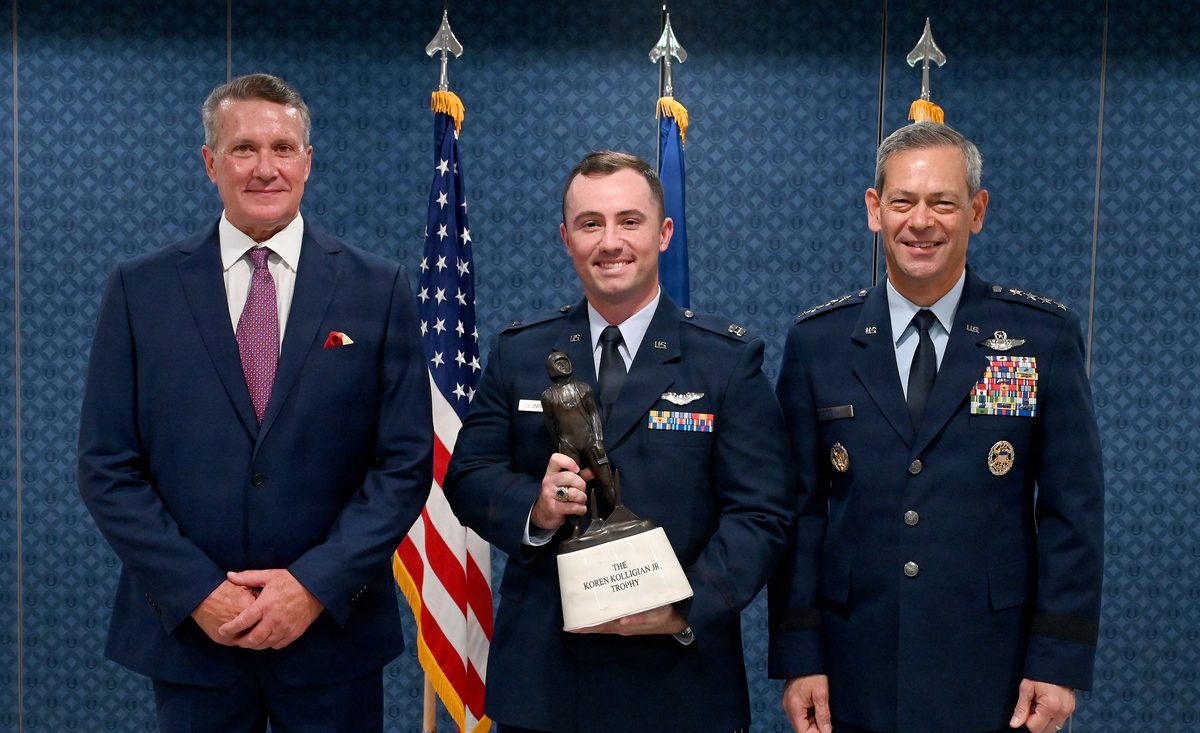
In a display of aviation skill that has been hailed as a masterclass in emergency management, the United States Air Force has officially recognized a pilot who successfully navigated the catastrophic failure of a fifth-generation stealth fighter. Captain Michael Cloninger, an F-22 Raptor pilot assigned to the 90th Fighter Squadron, 3rd Operations Group, was awarded the 2025 Koren Kolligian Jr. Trophy at the Pentagon on September 8, 2026.
The award, presented by US Air Force Chief of Staff General Ken Wilsbach, serves as the service’s most prestigious honor for flight safety. It is reserved for aircrew who demonstrate exceptional airmanship in life-threatening emergencies, specifically those who manage to avert total loss of aircraft or life through cool-headed execution under extreme duress. Captain Cloninger’s achievement is particularly significant, as it involved the survival of an F-22 Raptor—a multi-role platform that is irreplaceable, given the end of its production line in 2011.
The Incident: A Routine Mission Turns Critical
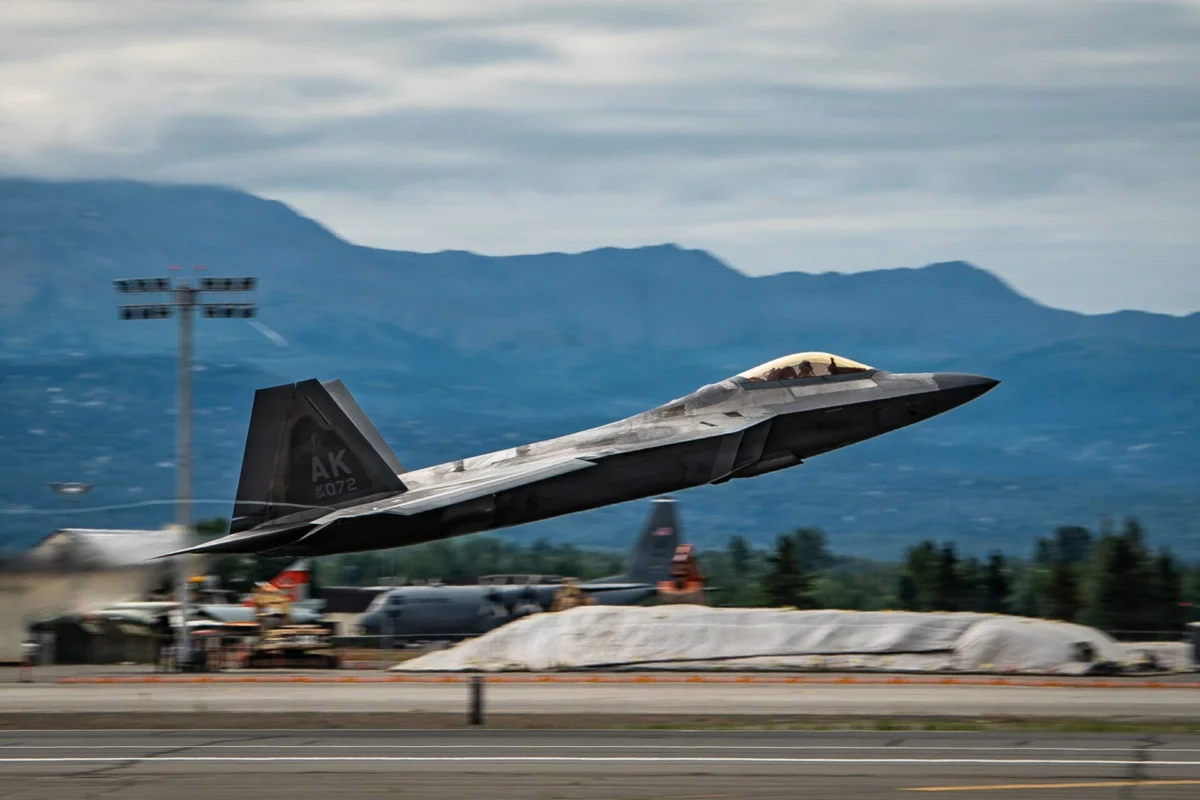
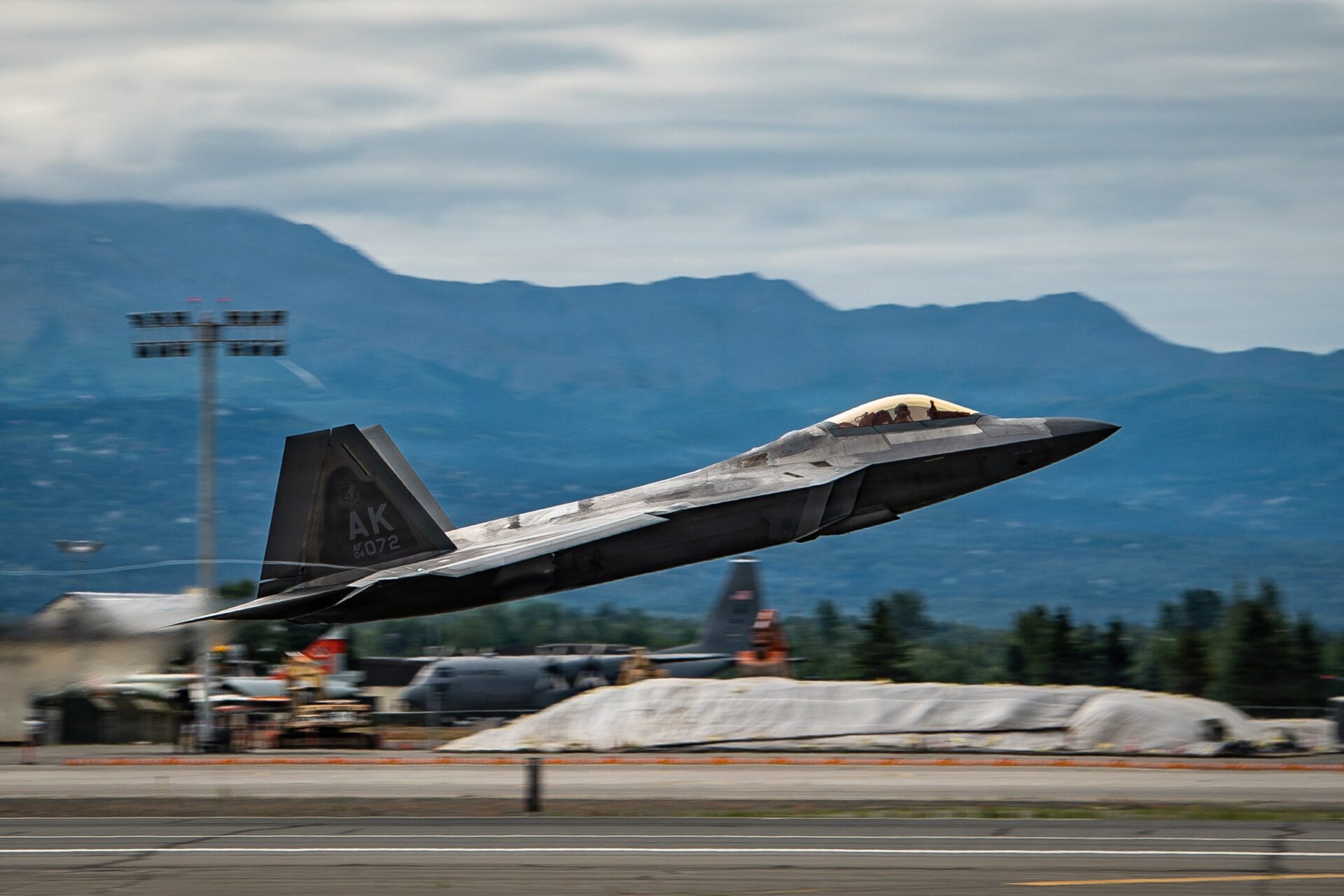
On September 18, 2024, the tranquility of a mission in the US Central Command (CENTCOM) area of responsibility was shattered in an instant. Captain Cloninger was participating in a four-ship formation flight intended to conduct a commemorative flyover marking the anniversary of the Battle of Britain. For any pilot, such a mission requires precision, formation discipline, and heightened situational awareness. However, as the F-22 cleared the runway, the aircraft suffered a structural failure of a magnitude rarely encountered in modern fighter aviation: the right main wheel assembly completely separated from the landing gear strut.
The departure of a primary landing component immediately after takeoff creates a volatile scenario. With the aircraft heavily laden with fuel and combat ordnance, the center of gravity and the structural integrity of the landing sequence are instantly compromised. As the debris fell away, the pilot was forced to transition from a routine formation flight to a high-stakes emergency recovery scenario within seconds.
Chronology of the Crisis
Initial Detection and Communication
Immediately upon sensing the abnormality, the flight lead initiated protocols to assess the situation. The formation discontinued the mission, remaining in a holding pattern near the airfield. Captain Cloninger assumed the lead for navigation and communications, demonstrating an immediate transition into "command and control" mode despite being the pilot in distress.
As Cloninger slowed the aircraft below maximum landing gear extension speed and cycled the gear, his wingmen provided crucial visual confirmation: the entire right main wheel assembly was gone. The aircraft was now effectively riding on a bare strut, with no possibility of a standard three-point landing.
Navigating the "Unknown"
In the high-stress environment of an emergency, pilots rely on "dash-one" technical manuals and established checklists. However, this specific failure—the total loss of a main wheel assembly on an F-22—did not exist in any written procedure.
Faced with a lack of precedent, Cloninger’s decision-making process became the defining factor of the flight. He ruled out an asymmetric touchdown, which would have risked a violent ground loop or catastrophic structural collapse upon contact with the runway. Instead, he opted for a "gear-up" landing—a maneuver that typically guarantees significant airframe damage but offers the best chance of controlled deceleration.
The Hour of Preparation
Cloninger maintained a holding pattern for approximately one hour. This time was not merely for burning fuel to reach a safer landing weight; it was a period of intense coordination. The pilot worked in tandem with the airfield tower, the emergency response teams, and his operations supervisor to calibrate his approach.
During this time, he executed a low approach to allow ground observers a final visual inspection of the aircraft’s belly and gear configuration. Following this, he utilized the emergency alternate flap setting to adjust his descent profile. The final approach was a testament to surgical precision: a shallow, controlled descent that culminated in a perfectly centered touchdown.
Post-Landing Survival
The landing was executed with such finesse that a post-landing fire—a common secondary disaster in belly-landings—was prevented. Upon bringing the F-22 to a halt, Cloninger performed an immediate engine shutdown and successfully executed an emergency egress, vacating the aircraft before ground crews could arrive to secure the scene.
Supporting Data and Technical Implications
The F-22 Raptor is a cornerstone of American air superiority, yet it is a platform with a finite lifespan. With only 178 airframes in service as of early 2025, every single aircraft is considered a strategic asset. The $156 million price tag of the F-22 is only a portion of its true value; the loss of a single airframe represents an irreplaceable reduction in the nation’s high-end tactical capabilities.
An Unprecedented Recovery
Following the incident, the aircraft was subject to extensive diagnostic testing. Against the expectations of many engineers, the damage was deemed repairable. The fact that the aircraft was later flown out of the theater of operations is widely considered an "unprecedented recovery" for a belly-landed F-22.
This incident highlights the ongoing maintenance challenges inherent in aging, high-performance platforms. While the Air Force has recently invested in significant upgrades—such as the contract awarded to Lockheed Martin in 2025 for new infrared defensive sensors—the mechanical strain on the landing gear and airframe remains a point of focus. This was underscored by a separate incident in October 2024 at Kadena Air Base, where an F-22 suffered a tire blowout during takeoff, further emphasizing the rigorous demands placed on these stealth platforms.
Official Responses and the Legacy of the Trophy
General Ken Wilsbach, in his remarks at the Pentagon, underscored the gravity of the situation. "Captain Cloninger faced a failure he could not see, with no warning from the aircraft, while carrying a full combat load," Wilsbach stated. "He flew the aircraft all the way through the emergency, maintaining composure where others might have surrendered to the physics of the situation."
The Koren Kolligian Jr. Trophy holds deep historical weight within the Air Force. Named for First Lieutenant Koren Kolligian Jr., who disappeared off the coast of California in 1955 while piloting a T-33 Shooting Star, the trophy serves as a reminder of the inherent risks of flight. The Kolligian family established the award to honor those who, like Cloninger, use their training to prevent the very outcomes that led to the loss of their ancestor.
Captain Cloninger’s response to the honor was characteristically humble. During the ceremony, he pointedly credited his wingmen and the ground maintenance personnel who were in constant contact with him throughout the emergency. "I wouldn’t be standing here without the help of my team," he said. "They handled the communications and helped me work through the checklists when the manuals didn’t provide the answers."
Implications for Future Training
The survival of the F-22 and its pilot provides a vital case study for the Air Force’s training programs. The event reinforces the necessity of "human-in-the-loop" decision-making, even as aircraft become increasingly autonomous.
- Checklist vs. Cognitive Skill: The fact that no checklist covered this failure reinforces that technical manuals are guidelines, not absolute solutions. The Air Force is expected to use this event to further emphasize "systems-thinking" in pilot training.
- Maintenance and Sustainment: The recovery of the airframe will likely lead to updated structural inspections for the F-22 fleet, particularly regarding wheel assembly integrity, to ensure that such a failure remains a rare anomaly.
- Strategic Readiness: The successful return of the aircraft to flight status ensures that the 90th Fighter Squadron, which had deployed roughly a dozen Raptors to the region to counter regional tensions, did not lose a critical asset during a period of high operational tempo.
The ceremony in September 2026 was more than a recognition of a single act of bravery; it was an acknowledgment of the synergy between the pilot, the support crew, and the engineering robustness of the F-22. As the Air Force continues to manage its transition toward future air dominance platforms, the lessons learned from Captain Cloninger’s calm under fire will undoubtedly serve as a bedrock for the next generation of aviators.
 Asro
Asro  Dwi Wanna
  Evan Lee Salim