

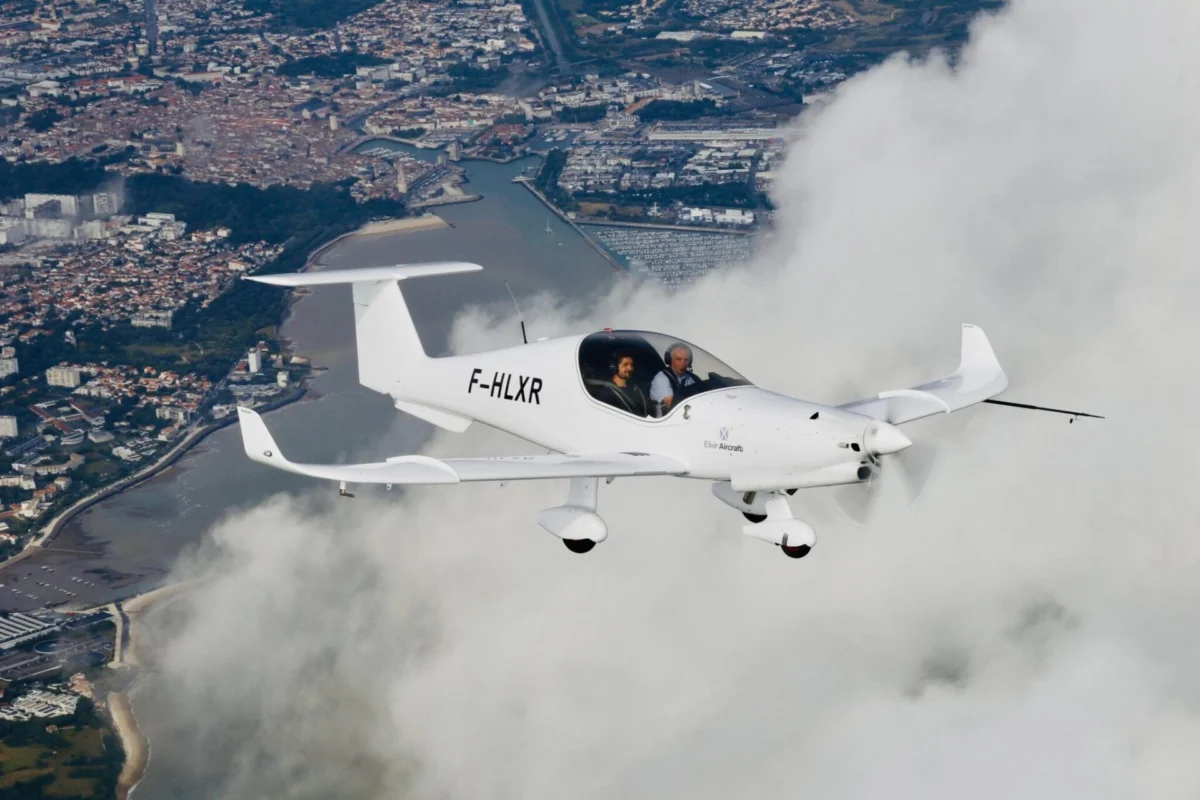
A groundbreaking French turbine engine, developed by Turbotech, is rapidly transitioning from experimental curiosity to a production powerplant, signaling a significant shift in the light aircraft sector. With a growing roster of manufacturers integrating its innovative regenerative turboprop technology into new aircraft models, the future of flight training, personal aviation, and even specialized applications appears set for a powerful, efficient, and simplified evolution.
The past few years have seen Turbotech’s regenerative turboprop engine showcased on various European demonstrators, accumulating valuable flight hours and proving its potential. Now, this innovative technology is moving beyond the realm of research and development, with a tangible impact on the production lines of several prominent light aircraft manufacturers. This marks a pivotal moment for Turbotech, as aircraft makers begin to embrace its engine as a viable and compelling alternative to traditional piston powerplants.
The momentum behind this shift was palpable at EAA AirVenture 2026, where Elixir Aircraft took a significant step forward by signing a memorandum of understanding with Turbotech on July 22. This agreement heralds the industrial development of the Elixir Turbine, a project that has been years in the making. The collaboration follows a comprehensive year of flight testing, which commenced with the turbine aircraft’s initial engine start in February 2025 and its maiden flight just four months later. The immediate next steps for Elixir and Turbotech involve intensive integration work and the pursuit of both EASA and FAA certification, with a targeted entry into service for 2030.
Elixir Aircraft: Charting a Course for Professional Flight Training
Elixir Aircraft is strategically positioning its new turbine-powered offering primarily for professional flight schools. The company envisions the Elixir Turbine as a revolutionary training platform, combining the operational simplicity of single-lever control with extended overhaul intervals and the crucial flexibility to utilize a variety of aviation fuels, including the increasingly important sustainable aviation fuels (SAFs). While specific performance figures and pricing for the production Elixir Turbine remain undisclosed, the company’s commitment to this advanced powerplant underscores its belief in the technology’s transformative capabilities for the training sector.
CubCrafters Carbon Cub ULT: A Faster Track to Turbine Power
In stark contrast to the longer development timelines of some projects, CubCrafters is accelerating its adoption of Turbotech’s engine with the Carbon Cub ULT. This turbine-powered derivative of the popular Carbon Cub UL, unveiled earlier in July, represents a rapid evolution for the Yakima, Washington-based manufacturer. CubCrafters has already opened its order books, accepting $75,000 deposits for the aircraft, with a listed base price of $690,000. Initial deliveries are anticipated to commence in 2027, indicating a swift production and delivery schedule.
The Carbon Cub ULT is engineered with a sophisticated powerplant system, pairing the Turbotech engine with a constant-speed DUC propeller and dual full-authority digital engine controls (FADEC). This advanced integration promises a user-friendly experience, featuring push-button starting and intuitive single-lever power management. The FADEC system diligently manages critical engine parameters, including fuel flow, ignition, engine temperatures, and propeller operation, further simplifying pilot workload and enhancing operational safety.
CubCrafters has released preliminary performance data for the Carbon Cub ULT, estimating an empty weight of 880 pounds and a maximum gross weight of 1,865 pounds, resulting in a substantial useful load of 985 pounds. Preliminary figures suggest a cruise speed exceeding 130 mph, a range of 682 miles, and an endurance of approximately 5.2 hours. Crucially, CubCrafters emphasizes that the aircraft will retain the renowned short takeoff and landing (STOL) capabilities for which the Carbon Cub is celebrated, making it a versatile platform for both backcountry adventures and efficient cross-country travel.
The Carbon Cub ULT is slated to be offered in two configurations: as a factory-built light-sport aircraft (LSA) and through CubCrafters’ experimental amateur-built completion program. The company proudly highlights the Carbon Cub ULT as the first US-manufactured turboprop designed to be eligible for operation by sport pilots under the FAA’s expanded MOSAIC (Modernization of Special Airworthiness Information and Certification) rules. This positioning underscores the aircraft’s potential to attract a new segment of pilots seeking the performance and operational advantages of turbine power.
Wasatch Aero SD3T: A Turbine Vision for Training and Personal Flight
Adding to the growing list of manufacturers embracing Turbotech’s technology is Wasatch Aero, a Utah-based startup developing the SD3T. This aircraft is being designed with a dual focus on the training and personal aircraft markets. The SD3T is described as a turbine-powered iteration of Wasatch’s existing two-seat composite SD3. The company has indicated that the aircraft will be equipped with a FADEC-controlled Turbotech engine, offering an estimated output of 148 horsepower. While the SD3T program remains in its developmental stages, and performance data and production timelines are subject to change, Wasatch Aero’s commitment to Turbotech’s engine signals its confidence in the technology’s suitability for these demanding applications.
Wasatch Aero is currently accepting refundable reservations for the SD3T, though a final aircraft price has not yet been published. The company’s website has provided varying estimates for availability, with some indications pointing towards 2026, while also acknowledging that production timing is still being finalized. This ongoing development highlights the dynamic nature of the light aircraft industry as it integrates emerging technologies.
The Ingenuity of Turbotech’s Regenerative Turbine
At the heart of this aviation revolution lies Turbotech’s innovative regenerative cycle engine, a concept more commonly associated with stationary industrial turbines than with the compact and weight-sensitive world of light aircraft. The core of Turbotech’s technology lies in its ingenious heat recovery system.
Harnessing Wasted Energy: The Regenerative Cycle
A conventional gas turbine expels a significant amount of heat through its exhaust, a considerable portion of which is effectively wasted. Turbotech’s design ingeniously tackles this inefficiency by incorporating a compact heat exchanger positioned between the exhaust gases and the compressor discharge air. This critical component captures a portion of the otherwise lost heat and redirects it to warm the compressed air before it enters the combustion chamber.
The immediate benefit of this pre-heated air is a reduction in the amount of fuel required to achieve the necessary combustion temperatures. By providing a hotter intake charge, the engine needs less fuel to reach optimal operating temperatures, leading to a substantial improvement in fuel efficiency. Turbotech asserts that this regenerative arrangement allows its engines to retain the inherent advantages of turbines – namely, smoothness, compact size, and mechanical simplicity – while achieving fuel consumption figures comparable to modern piston engines.
The key to this remarkable feat is a lightweight microtube heat exchanger, a product of a strategic partnership with the French manufacturer Le Guellec Tubes & Profilés. This advanced component is crucial in enabling the recuperator to be small and light enough for aviation applications, a significant engineering challenge.
Balancing Complexity and Efficiency
The inclusion of a heat exchanger naturally introduces some trade-offs. It adds a degree of weight, volume, and engineering complexity to an engine type traditionally favored for its straightforward airflow path. Turbotech’s engineering prowess has been instrumental in miniaturizing and lightening the recuperator to meet the stringent demands of the aviation industry.
Product Variants and Specifications
Turbotech currently markets its production turboprop engine as the TP-R150, rated at 104 kW (approximately 141 horsepower). The engine boasts an impressive published time between overhaul (TBO) of 3,000 hours, significantly exceeding the typical TBO of many piston engines. Furthermore, its ability to operate on multiple fuel types, including SAFs, makes it a versatile and future-proof powerplant. The engine is designed for a broad range of applications, including airplanes, helicopters, and unmanned aerial vehicles (UAVs).
It is worth noting that the engine naming convention has seen some variation. While Elixir and CubCrafters refer to the engine as the TP-R90, and CubCrafters lists it as the "TP-R90/R150," Turbotech’s current product page clearly identifies the production turboprop as the TP-R150. Earlier documentation from the company also featured both designations, highlighting an evolution in their product nomenclature.
Determining the standalone retail price of the Turbotech engine remains challenging, as the company has not published a standard price list. This makes direct cost comparisons with established piston engines, such as those from Rotax, difficult. The $690,000 price tag for the CubCrafters Carbon Cub ULT, for instance, encompasses the entire aircraft, avionics, propeller, and engine installation, rather than isolating the engine’s individual cost.
From Aerospace Giant to Startup: The Genesis of Turbotech
The story of Turbotech is rooted in the extensive experience of its founders. The company was established in 2017 by four former engineers from Safran, a global aerospace giant. Headquartered at Toussus-le-Noble Airport near Paris, Turbotech is led by co-founder and CEO Damien Fauvet.
The foundational work for the regenerative turbine technology began even earlier. Fauvet revealed that the Turbotech team achieved a significant milestone by winning a French government research prize in 2010. This was followed by the successful operation of a turbogenerator demonstrator on a test bench in 2015, preceding the formal establishment of the company.
The burgeoning potential of Turbotech attracted significant investment and strategic partnerships. In 2018, Safran Corporate Ventures, alongside the French investment firm GO Capital, participated in a €3 million funding round. Furthermore, Safran entered into a technical partnership agreement, providing crucial engineering support and allowing the aerospace conglomerate to evaluate Turbotech’s technology for potential integration into its future product portfolio.
Turbotech has developed two primary product lines stemming from its regenerative turbine core:
- TP-R150: This is the turboprop engine designed to drive a propeller through a reduction gearbox, as seen in the aircraft discussed above.
- TG-R90: This variant functions as a turbogenerator, specifically designed to produce electricity for hybrid-electric aircraft or to recharge batteries in flight.
Beyond Propellers: Exploring Hybrid-Electric and Hydrogen Applications
Turbotech’s innovative engine technology is not limited to conventional propulsion. The company has actively explored its application in emerging aviation sectors. Turbotech has collaborated with Ascendance Flight Technologies, a French developer of hybrid-electric aircraft, testing the TG-R90 turbogenerator. Additionally, the company participated in the BeautHyFuel research program, which focused on testing a light-aircraft turbine powered by hydrogen, underscoring Turbotech’s commitment to sustainable aviation solutions.
A Proven Track Record: Flight Hours Accumulate
Before its widespread adoption by light aircraft manufacturers, Turbotech’s engine had already accumulated valuable flight experience on various airframes. A Turbotech-powered Helyxis CHOPPAIR helicopter took to the skies in 2021. This was followed by the JMB Aircraft VL3 turbine demonstrator in 2022 and a Bristell XL8 installation in 2023. More recently, Gogetair successfully flew and delivered a turbine-powered G750TP utilizing the 104 kW engine. These milestones demonstrate the engine’s reliability and adaptability across different aircraft types.
The Allure of Turbine Power for Light Aviation
The appeal of a small, efficient turbine engine for light aircraft is readily apparent. For flight schools, the promise of engines that can tolerate high utilization and significantly reduce pilot workload is a compelling proposition. Backcountry pilots, who often operate in remote areas, value the enhanced reliability and fuel flexibility offered by turbine engines. Aircraft manufacturers, meanwhile, are eager to provide increased power and performance without sacrificing the fuel efficiency that is crucial in today’s aviation landscape.
Historically, small turbine engines have struggled to meet these requirements at power outputs around 150 horsepower. Traditional small turbines have often consumed considerably more fuel than their piston counterparts, and their higher initial purchase costs have made them difficult to integrate into more affordable aircraft.
Turbotech’s regenerative technology directly addresses these challenges, fundamentally altering the economic and performance calculations for light aircraft. The recent wave of aircraft announcements, from Elixir Aircraft and CubCrafters to Wasatch Aero and others, strongly suggests that manufacturers are increasingly confident in the market’s appetite for this innovative solution and are actively testing buyer interest in the advantages offered by Turbotech’s regenerative turbine. The era of accessible and efficient turbine power in light aviation appears to be dawning.
 Asro
Asro  Reynand Wu
  Dwi Wanna