

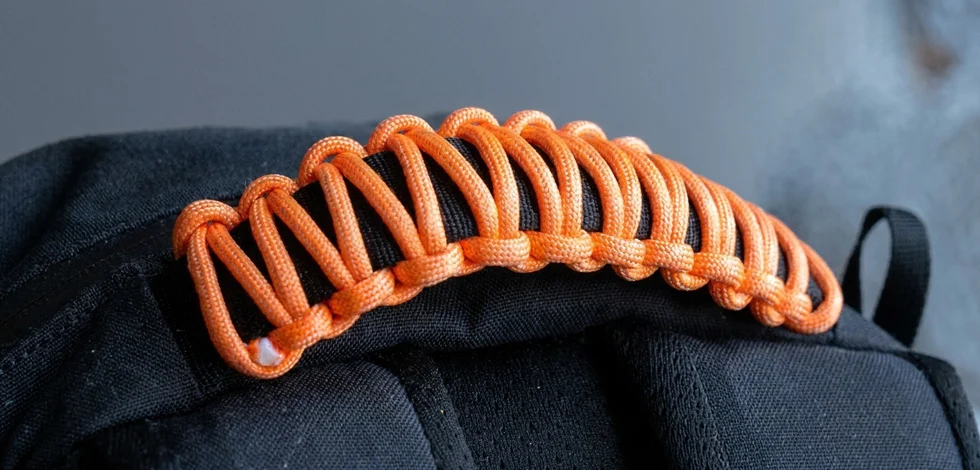
In the world of everyday carry (EDC), the devil is often in the details. While enthusiasts obsess over high-denier Cordura fabrics, YKK AquaGuard zippers, and ergonomic load-lifter systems, the humble grab handle is frequently overlooked. It is the component that suffers the most abuse, yet it remains the most neglected. However, a growing trend in the carry community is shifting this narrative, turning the functional backpack handle into a piece of tactical art and an essential survival tool.
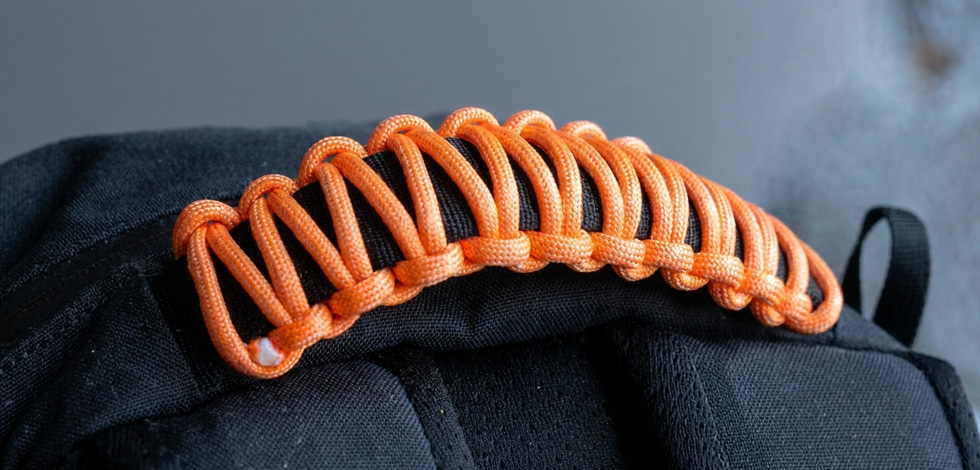
By utilizing the "Cobra stitch"—a classic weave borrowed from survivalist paracord bracelets—enthusiasts are transforming standard, lackluster backpack handles into ergonomic, custom-feel grips that serve a dual purpose: comfort and emergency utility.
Main Facts: The Intersection of Comfort and Survival
The concept is deceptively simple: take a length of 550 paracord (the gold standard for durability) and weave it directly onto an existing backpack handle. The result is a wider, more cushioned grip that alleviates pressure on the palm when hauling heavy loads.
Beyond aesthetics and ergonomics, the primary appeal is the "hidden" survival utility. In a true outdoor emergency, having several feet of high-strength 550-lb test nylon cord readily available is invaluable. Whether you need to lash gear to the exterior of your pack, create an improvised shelter, or secure a splint, having that cordage integrated into your daily carry is the definition of "preparedness."
The technical requirements are minimal, lowering the barrier to entry for beginners. You need only three components:
- 550 Paracord: Typically 3 to 5 meters, depending on the length of your handle.
- Cutting Tool: A sharp pair of shears or a utility knife.
- Thermal Sealer: A standard butane lighter to fuse the cut ends of the cord, preventing fraying.
A Chronological Evolution of Paracord Carry
The use of paracord in the carry community did not emerge in a vacuum. It is the culmination of decades of tactical and bushcraft evolution.
The Origins: Military Utility
Paracord—short for parachute cord—was originally developed for U.S. paratroopers during World War II. Its lightweight, kernmantle construction (a core of multi-strand yarns protected by a woven sheath) offered an incredible strength-to-weight ratio. Soldiers quickly realized the cord had uses far beyond parachutes, leading to its widespread adoption for field repairs and gear organization.
The 2000s: The Survival Bracelet Era
The early 2000s saw a boom in "survival bracelets," which popularized the Cobra stitch for the general public. While many viewed these as mere fashion accessories, they planted the seed for a larger movement: the integration of utility into everyday items.
2015–2020: The Rise of EDC Enthusiast Culture
As digital platforms like Carryology and EDC Forums grew, enthusiasts began looking for ways to "mod" their gear. The backpack handle modification was a natural progression. By 2020, custom paracord handle wraps were appearing on high-end tactical packs from brands like Mystery Ranch, Goruck, and TAD Gear, signaling a transition from a niche survivalist hobby to a mainstream customization trend.
2026: The Modern Standard
Today, the DIY paracord handle has become a badge of honor. It signifies that the owner of the bag is not just a consumer, but a steward of their own gear, capable of performing maintenance and customization to suit their specific ergonomic needs.
Supporting Data: Why the Cobra Stitch Matters
The Cobra stitch is favored not just for its visual appeal, but for its structural integrity. When woven correctly, it creates a "box-like" structure that adds significant thickness to the handle.
Ergonomic Analysis
A standard nylon webbing handle is often thin and can cut into the hand when a bag is loaded with a laptop, camera gear, or heavy books. By adding a Cobra weave, you effectively increase the surface area of the grip by approximately 200%. This distributes the weight across a broader portion of the palm, significantly reducing the "biting" sensation often associated with heavy carry.
Tensile Strength and Utility
Standard 550 paracord consists of seven inner strands. If you are in a survival situation, these inner strands can be unraveled and used for:
- Fishing line: The inner strands are thin yet strong enough for small-game fishing.
- Surgical thread: In a true crisis, the inner strands can be sterilized for wound closure.
- Fire starting: The inner strands can be fluffed up to act as tinder for a ferrocerium rod.
- Shelter building: The outer sheath, combined with the inner strands, provides enough structural integrity to lash branches together for a makeshift lean-to.
Official Perspectives and Industry Response
Leading manufacturers in the carry industry have mixed feelings about these modifications. Some brands, such as Goruck, have embraced the "DIY" culture, often featuring fans’ modified packs on their social media channels. They view the customization as an extension of the "buy it for life" (BIFL) philosophy.
However, professional gear designers urge caution regarding the structural integrity of the base handle. "While adding paracord is generally harmless, one must ensure they are not creating a pressure point that could abrade the original stitching of the bag," says an anonymous industry consultant specializing in textile load-bearing systems. "The modification should be tight, but not so tight that it warps the base material."
Furthermore, manufacturers remind users that while the cord is useful, it should not be used as a primary structural point for hauling. If the handle itself is failing due to heavy load, a paracord wrap will not fix the underlying structural fatigue.
Implications: The Psychology of "Making"
The trend of wrapping your own backpack handle goes deeper than mere functionality. It touches on the psychological need for autonomy in a mass-produced world.
The Empowerment of Self-Reliance
In an age where we replace broken goods rather than repairing them, the simple act of weaving a paracord handle is an act of defiance. It teaches the owner the mechanics of their equipment. Once you understand how to weave a handle, you begin to look at your gear differently. You start to see potential points of failure as opportunities for improvement.
The Aesthetic of the "Tactical Professional"
From an aesthetic standpoint, the paracord wrap provides a subtle, rugged look that aligns with the "urban operator" or "tactical professional" aesthetic. It signals to others that the carrier is someone who values preparation and appreciates the intersection of form and function.
A Sustainable Habit
This movement encourages the longevity of gear. Instead of buying a new backpack when the handle grip starts to wear thin, the owner can simply strip the old cord and apply a new one. This reduces waste and keeps high-quality gear in rotation for years, if not decades, longer than intended.
How to Get Started: A Quick Guide
If you are ready to take the leap, the process is straightforward:
- Preparation: Measure the length of your existing handle and multiply by 8 to 10 to determine the amount of cord needed. It is always better to have extra than to run out mid-weave.
- The Foundation: Start by creating a loop at one end, securing it tightly against the handle.
- The Cobra Stitch: Pass the cord over and under the handle, alternating sides to create the signature "Cobra" pattern. Keep your tension consistent; the tighter the weave, the more professional the result will look.
- Finishing: Once you reach the end, pull the cord through the final loop, trim the excess with your scissors, and use the lighter to melt the ends. Press the molten nylon into the weave quickly to ensure a permanent, snag-free finish.
Conclusion
The DIY paracord backpack handle is more than just a trend; it is a manifestation of the modern EDC movement. It bridges the gap between high-tech materials and ancestral survival techniques, providing the user with an ergonomic upgrade and a reliable tool for the unexpected.
Whether you are a daily commuter navigating the urban jungle or an outdoor adventurer heading into the backcountry, this simple, ten-minute modification is the most cost-effective way to elevate your carry game. Grab your cord, watch the tutorial, and start weaving—because the best gear isn’t just bought, it’s built.
 Asep Darmawan
  Layla Zulfa
  Iffa Jayyana