

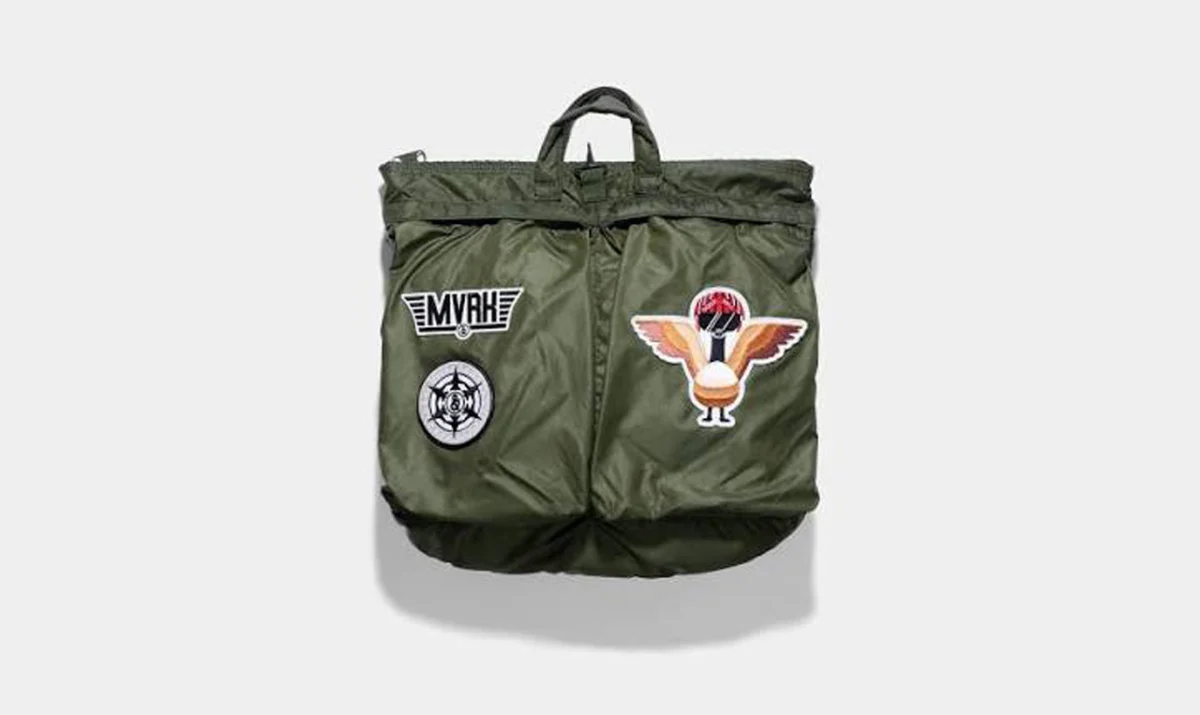
For decades, the helmet bag has occupied a unique, almost hallowed space in the pantheon of carry gear. It is a silhouette defined by paradox: it was engineered for the cramped, high-stakes environment of a cockpit, yet it has become one of the most versatile and coveted accessories in urban fashion. With its signature twin front pockets, boxy central compartment, and utilitarian aesthetic, the helmet bag is a masterclass in functional design. But how did a piece of military-grade protective storage transition from the tarmac to the boardroom and the street?
Main Facts: The Anatomy of an Icon
At its core, the classic helmet bag—specifically the US Air Force-issued flyer’s helmet bag—was designed with a singular, mission-critical purpose: to protect an aviator’s flight helmet and oxygen mask when not in use. Unlike a traditional briefcase or backpack, the helmet bag was designed to be soft-sided yet protective, featuring a quilted lining (often in high-visibility orange) that acted as a shock absorber.
The key design pillars of the classic helmet bag include:
- The Silhouette: A rectangular, slightly square shape that allows for easy insertion and removal of bulky headgear.
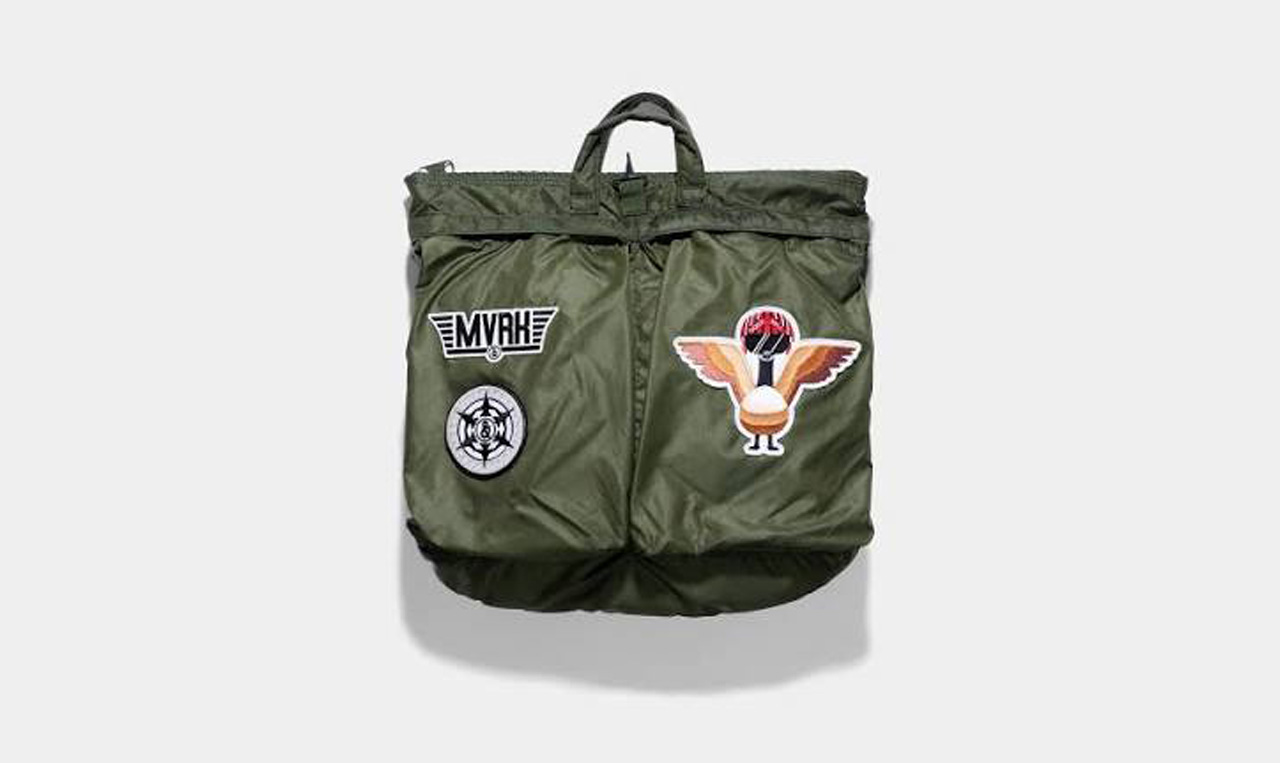
- The Dual Exterior Pockets: Two distinct, large front pockets featuring snap-button or Velcro closures, originally designed to store oxygen masks, flight manuals, or goggles.
- The Materiality: Historically constructed from nylon twill—specifically the same material used in the iconic MA-1 flight jacket—which offered water resistance and lightweight durability.
- The Carry System: A pair of stubby top handles that provide a "briefcase" carry, though later iterations introduced crossbody straps for ergonomic utility.
The bag’s appeal in the civilian world is not merely aesthetic. It is a triumph of "carry architecture." Its simplicity allows for modular organization, while its soft-sided nature makes it infinitely more packable than a rigid briefcase, yet more formal than a standard canvas tote.
Chronology: From the Cockpit to the Catwalk
The trajectory of the helmet bag is a history of post-war military surplus filtering into civilian utility.
1950s–1970s: The Military Origin
During the mid-20th century, as jet aviation evolved, the U.S. military required a standardized way to transport gear. The helmet bag became a staple of the Air Force gear locker. During the Vietnam War era, the design was finalized into the "Flyer’s Helmet Bag," a piece of kit that soldiers often kept long after their service concluded, repurposing them as gym bags or general-purpose haulers.
1986: The "Top Gun" Catalyst
While the bag had a cult following among military enthusiasts and thrifters, its true mainstream explosion can be traced back to 1986. The release of Top Gun solidified the aesthetic of the "flyboy" in the cultural consciousness. Suddenly, the aviator look—the sunglasses, the MA-1 bomber jacket, and the helmet bag—became the aspirational uniform for a generation. The bag was no longer just a functional tool; it was a symbol of adventure, speed, and aviation prestige.
1990s–2000s: The Japanese Influence
The true elevation of the helmet bag into a luxury-adjacent fashion item occurred in Japan. Brands like Porter-Yoshida & Co. recognized that the bag’s DNA was perfect for the urban commuter. Porter’s "Tanker" series became legendary, meticulously recreating the MA-1 aesthetic—the olive-drab or black nylon, the bright orange lining, and the refined hardware—for the city dweller. They added structure and proper carrying straps, bridging the gap between "military surplus" and "designer carry."
2010s–Present: The Democratization
In recent years, the silhouette has become ubiquitous. Fast-fashion giants like Uniqlo have utilized the blueprint to bring the design to the masses, proving that the form factor is universally useful. Simultaneously, high-end brands like Visvim, Head Porter, and various streetwear labels continue to iterate on the design, using premium leathers, technical fabrics like Cordura, and modular attachment points.
Supporting Data: Why It Remains the King of Carry
The longevity of the helmet bag isn’t just nostalgia; it is backed by the physics of carry. In an era where "Everyday Carry" (EDC) is a burgeoning industry, the helmet bag occupies the "Goldilocks" zone.
- Capacity Efficiency: Studies in bag design show that a square, wide-opening compartment is significantly more efficient at storing modern tech (laptops, tablets, chargers) than the vertical, narrow profile of a standard backpack.
- Durability Metrics: The use of nylon twill, initially intended to resist snagging in a cockpit, translates perfectly to urban wear-and-tear. It is lightweight, resists staining, and holds its color over decades.
- The "Orange Lining" Psychological Edge: The choice of "Emergency Orange" (originally intended to make the bag visible if a pilot went down in the wilderness) provides a high-contrast interior. For the modern user, this means finding a black key, a pen, or a USB stick in the bottom of a dark bag is significantly easier.
Official Responses and Industry Perspectives
Design experts have long cited the helmet bag as a benchmark for utilitarian design. In interviews with industry leaders, the consensus is clear: the helmet bag is "future-proof."
"The beauty of the helmet bag is its lack of pretension," says an industry consultant specializing in industrial design. "It doesn’t try to be a laptop bag, a camera bag, or a hiking pack. It is a vessel. By being a vessel, it allows the user to define its purpose. That is the definition of good design."
Furthermore, the secondary market for vintage military-issued bags remains incredibly robust. Collectors on platforms like Grailed or eBay often pay a premium for "deadstock" 1970s bags, citing the specific weave of the original nylon and the "patina" that develops on the metal hardware over time. When companies like Uniqlo launch their own versions, they often see rapid sell-through rates, indicating that the market for this specific silhouette is far from saturated.
Implications: The Future of the Helmet Bag
As we look toward the future of carry, the helmet bag is undergoing a transformation. We are seeing a move toward "Technical Helmet Bags."
1. Sustainability and Material Science
Modern manufacturers are moving away from virgin nylon toward recycled fishing nets and post-consumer plastics. The helmet bag is a prime candidate for this transition because its construction is relatively simple compared to complex backpacks with load-bearing harnesses.
2. Digital-First Utility
The next generation of helmet bags is being designed with internal "tech-cells." While the original bag was for a round helmet, current designs are being optimized for the "mobile office." Expect to see integrated RFID-blocking pockets, padded laptop sleeves that float within the main compartment, and magnetic Fidlock closures that replace the traditional—and sometimes noisy—Velcro.
3. Fashion-Forward Hybrids
We are seeing designers treat the helmet bag as a canvas for high-fashion experimentation. From translucent TPU materials to deconstructed versions that feature oversized pockets and straps, the silhouette is being pushed to its breaking point. However, no matter how much the exterior changes, the soul of the bag—the wide opening and the dual-pocket configuration—remains untouched.
Conclusion: A Legacy of Practicality
The story of the helmet bag is a reminder that the best products are often those that solve a specific problem so effectively that they outlive the problem itself. The cockpit is no longer the primary home of the helmet bag, but the streets of Tokyo, New York, and London are.
Whether it is a vintage surplus find, a meticulous Porter-Yoshida recreation, or a modern high-street interpretation, the helmet bag remains a staple because it works. It balances capacity, accessibility, and style in a way that few other bags can claim. It is, quite simply, the ultimate tote for the modern age. As we continue to move through a world that demands more from our gear, the helmet bag stands as a testament to the idea that sometimes, the best way forward is to look at the designs that have already stood the test of time.
 rifanmuazin
 Neng Nana
