

Main Facts
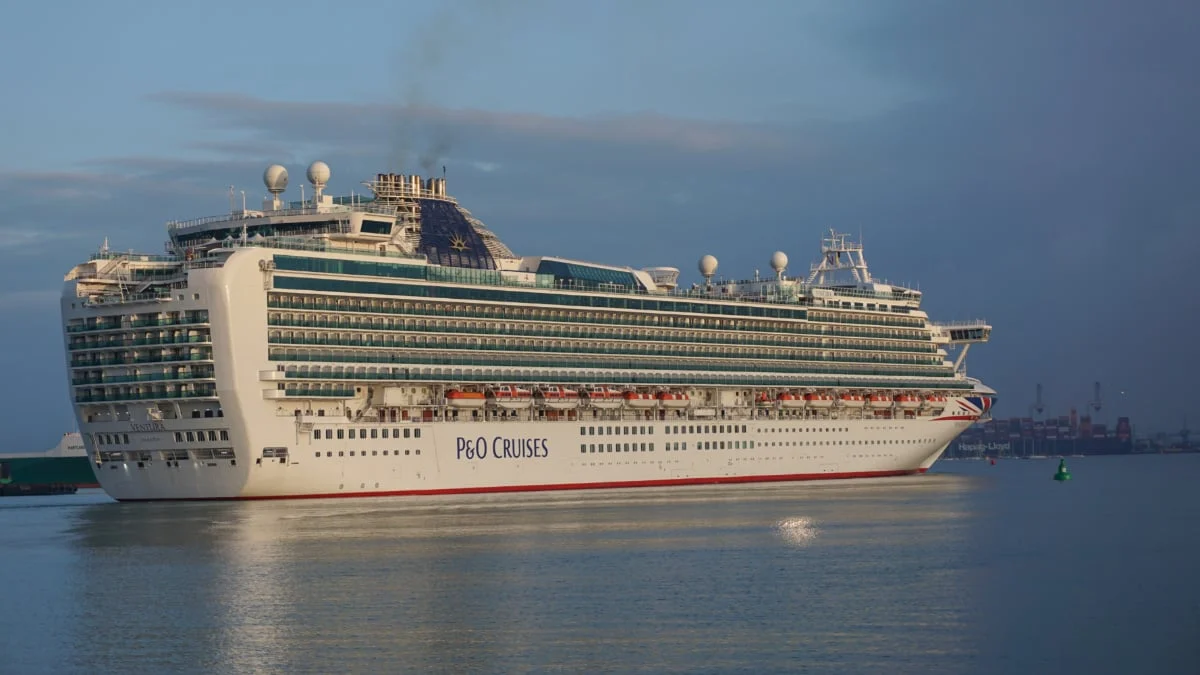
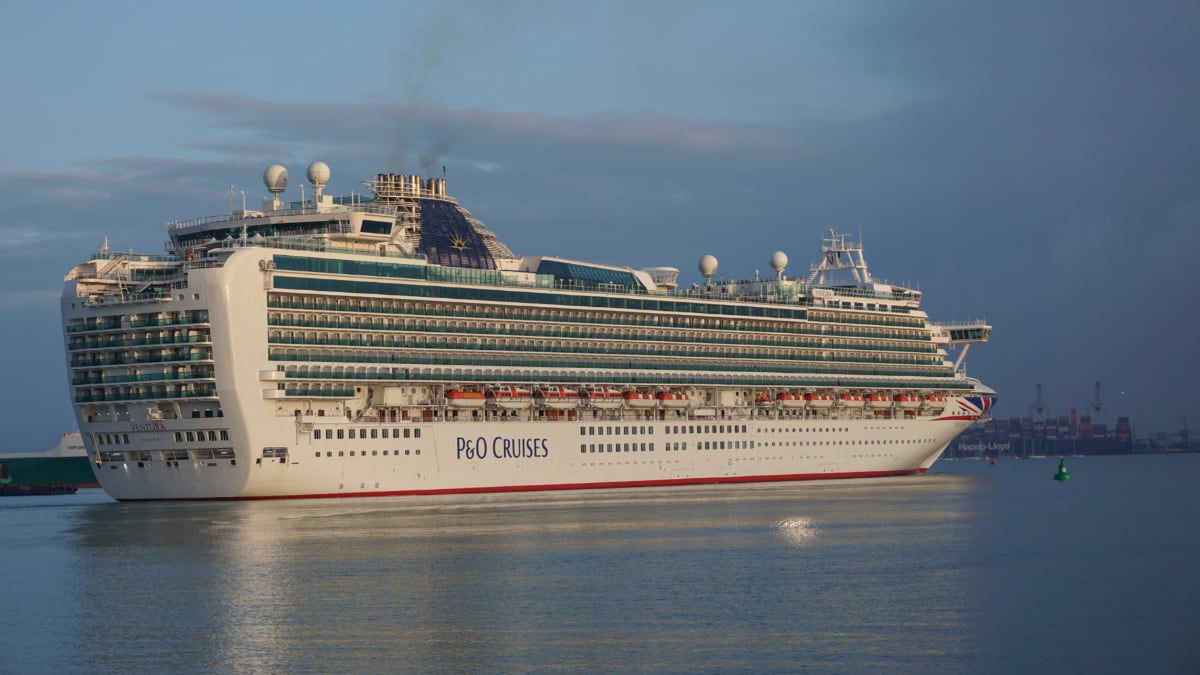
The 3,192-guest cruise vessel Ventura, operated by P&O Cruises, has found itself caught in a compounding web of severe maritime weather and continental civil unrest. The massive ship was forced to return to its homeport in Southampton, United Kingdom, a full 24 hours behind schedule, effectively reducing a highly anticipated 7-night voyage to a compressed 6-night itinerary.
Originally slated to conclude its prior week-long voyage and embark new passengers on Saturday, October 24, 2026, the ship’s operations were upended by the wrath of consecutive low-pressure weather systems—Storm Austen and Storm Boelo. According to official scheduling data from Associated British Ports, rough seas and high winds prevented the vessel from docking safely until the early morning hours of Sunday, October 25, ultimately touching pier at 6:07 a.m.
Compounding the weather-related delays, P&O Cruises made the preemptive decision to cancel the sailing’s first scheduled port of call: Cherbourg, France. This cancellation was directly attributed to ongoing civil unrest, labor strikes, and widespread public demonstrations sweeping across France.
While the ship’s modified itinerary still includes scheduled stops in Porto, Lisbon, and Vigo before returning to Southampton on Saturday, October 31, the dual disruptions have sparked frustration among passengers. In response to the shortened vacation and missed port, P&O Cruises has issued prorated Future Cruise Credits (FCCs). However, the compensation package has met with mixed reactions from travelers who argue that cash refunds or onboard expense reimbursements would be a fairer remedy for a disrupted holiday.
Chronology of Disruptions
To fully understand how a routine turnaround day devolved into a logistical challenge, it is necessary to trace the sequence of events that unfolded over the critical weekend of October 23–25, 2026.
Friday, October 23: Early Warnings Issued
With meteorological forecasts warning of deteriorating conditions across the English Channel due to the impending arrival of Storm Austen and Storm Boelo, P&O Cruises’ Southampton operations team began monitoring port safety parameters alongside local Port Authorities. Realizing that the incoming Ventura would be unable to dock safely on schedule, cruise line executives made the decision to notify booked guests via email on Friday, October 23. The correspondence formally advised future passengers of a 24-hour delay to their embarkation, shifting the boarding process from Saturday, October 24, to Sunday, October 25.
Saturday, October 24: The Storm Peaks at Sea
Saturday was meant to be turnaround day—a bustling operational window where thousands of disembarking passengers clear the vessel to make way for the next wave of vacationers. Instead, Ventura was still battling heavy swells and turbulent weather out at sea. Wind gusts across the English Channel hovered between 35 and 40 miles per hour late into the evening, making safe navigation and precise pier-side maneuvering nearly impossible. Onshore, travelers who had already arrived in Southampton faced unexpected hotel stays and logistical adjustments as they awaited word from the cruise line.
Sunday, October 25: Delayed Arrival and Embarkation
At 6:07 a.m., Ventura finally secured clearance to berth at the Southampton cruise terminal, well behind her original timetable. Despite the late arrival of the physical ship, P&O Cruises maintained the pre-established terminal check-in time slots for guests, instructing them to arrive according to their originally designated schedules on Sunday rather than Saturday.
Simultaneously, the cruise line officially cancelled the port call to Cherbourg, France, citing the dual threats of the late departure from the UK and the volatile safety situation onshore in France due to civil unrest. By 4:00 p.m. on Sunday afternoon, lines of eager passengers finally completed security clearances, boarded the vessel, and watched as Ventura cast off her lines, setting a course south toward the Iberian Peninsula roughly 24 hours later than planned.
Supporting Data and Meteorological Context
The maritime disruptions experienced by Ventura did not happen in a vacuum; they were part of a broader regional weather and social phenomenon that severely impacted Northern European cruise operations in late October 2026.
Weather Systems: Storm Austen and Storm Boelo
The autumn storm season in the North Atlantic and English Channel can be notoriously unforgiving, but the arrival of back-to-back low-pressure systems—officially designated as Storm Austen and Storm Boelo—delivered particularly punishing conditions. While the United Kingdom’s Met Office did not maintain active severe weather warnings specifically for the English Channel by daybreak on Sunday, October 25, supplementary maritime forecasting platforms such as Windy.com recorded sustained gale-force wind speeds ranging from 35 to 40 miles per hour during the critical early morning hours.
These sustained velocities, coupled with high wave heights, created hazardous conditions for large passenger vessels attempting to navigate confined waterways or execute precise docking procedures against concrete piers. Although wind speeds began a slow and steady descent as Sunday progressed, the 24-hour operational window had already been irreversibly compromised.
A Region-Wide Impact
Ventura was far from the only ship forced to alter its course or delay its schedule. The combination of fierce weather systems and French industrial actions/protests created a ripple effect across multiple cruise lines operating out of UK and continental ports:
- MSC Cruises: MSC Virtuosa was similarly held in Southampton longer than anticipated, forcing the cancellation of a planned visit to La Rochelle. Meanwhile, MSC Preziosa also required schedule modifications due to adverse sea states.
- P&O Cruises Fleet: Sister ships Arvia and Iona experienced weather-related adjustments to their itineraries, illustrating that the storms affected vessels of all sizes across the fleet.
- Ambassador Cruise Line: The mid-sized cruise ship Ambition faced comparable itinerary tweaks to navigate around the hostile sea conditions.
Official Responses and Passenger Reactions
As cruise lines increasingly turn to digital communication tools to manage large-scale operational emergencies, the responses from corporate offices and the reactions from affected consumers highlight a growing tension in modern cruise management.
The Corporate Stance: Prorated Future Cruise Credits
In their official communications sent to passengers on October 23, P&O Cruises outlined the operational realities necessitating the changes. The company confirmed that due to the severe meteorological impacts of Storm Austen and Storm Boelo, alongside safety concerns surrounding the civil unrest in France, the itinerary was reduced from seven nights to six.
To mitigate the inconvenience, P&O Cruises offered all impacted guests a Future Cruise Credit (FCC) prorated precisely to the value of one lost day of their cruise. The line emphasized that this credit would apply toward any future booking with P&O Cruises. Furthermore, the company clarified that check-in windows at the terminal remained locked to their original hourly brackets, ensuring a streamlined, albeit delayed, boarding process on Sunday.
Consumer Frustration and the Cash Refund Debate
Despite the administrative logic behind offering Future Cruise Credits, the compensation package met with considerable pushback on social media platforms and travel forums. Many guests expressed dissatisfaction that the compensation was issued as a credit rather than a direct monetary refund.
"The refund should be in cash, not a future cruise credit," posted one disgruntled passenger in a dedicated P&O Cruises Facebook community. "I know it’s not their management’s fault that the weather turned bad, but we are simply not getting the 7-night cruise vacation we paid hard-earned money for."
Another traveler echoed these sentiments, highlighting the inflexibility of using credits: "I haven’t got a future cruise planned with P&O, and honestly, I don’t intend to book another one anytime soon. A credit is useless to me if I choose to sail with a different line next time."
Beyond the primary dispute over credit versus cash, travelers also raised logistical questions regarding auxiliary onboard purchases. Many passengers took to online groups to inquire whether they would receive prorated refunds for pre-purchased beverage packages, specialty dining reservations, and Wi-Fi access plans for the now-shortened six-day duration. Initial notification emails from P&O Cruises did not explicitly address ancillary package reimbursements, leaving many guests seeking individual customer service resolutions once onboard.
Implications for the Cruise Industry
The ordeal faced by the passengers and crew of Ventura underscores several critical vulnerabilities and evolving trends within the contemporary cruise industry.
1. The Compounding Nature of Modern Disruptions
Cruise lines are increasingly forced to navigate multi-layered crises where environmental and geopolitical factors intersect. A weather delay at a homeport does not merely shift a timetable by a day; it can instantly invalidate downstream port reservations, clash with local labor strikes, and throw tightly scheduled pilotage and tugboat arrangements into disarray. As weather patterns become more volatile and civil unrest in key European destinations remains unpredictable, operators must build greater flexibility into their itineraries.
2. Evolving Passenger Expectations and Compensation Policies
The friction between cruise operators and their clientele over compensation models highlights a persistent consumer relations challenge. While maritime law and cruise ticket contracts generally protect lines from financial liability during Acts of God (such as severe storms), the modern consumer—accustomed to the customer-centric service standards of land-based hospitality—often demands cash restitution rather than captive credit. As social media amplifies these grievances in real-time, cruise lines may need to reevaluate how they structure goodwill packages to maintain long-term brand loyalty.
3. Resilience of the Remainder of the Itinerary
Despite the rocky start, Ventura’s current voyage serves as a testament to the adaptability of modern cruise logistics. With Cherbourg successfully excised from the route to avoid both weather delays and civil unrest, the ship’s master and crew successfully realigned the remaining schedule. Passengers on board can still look forward to exploring the historic ports of Porto (Leixões), Lisbon, and Vigo before the vessel concludes its shortened journey upon its return to Southampton on October 31. For the cruise industry at large, Ventura‘s journey stands as a notable case study in crisis management, operational resilience, and the delicate balance between passenger safety and customer satisfaction.
 Nana Wu
 Suro Senen
 Dwi Wanna
