

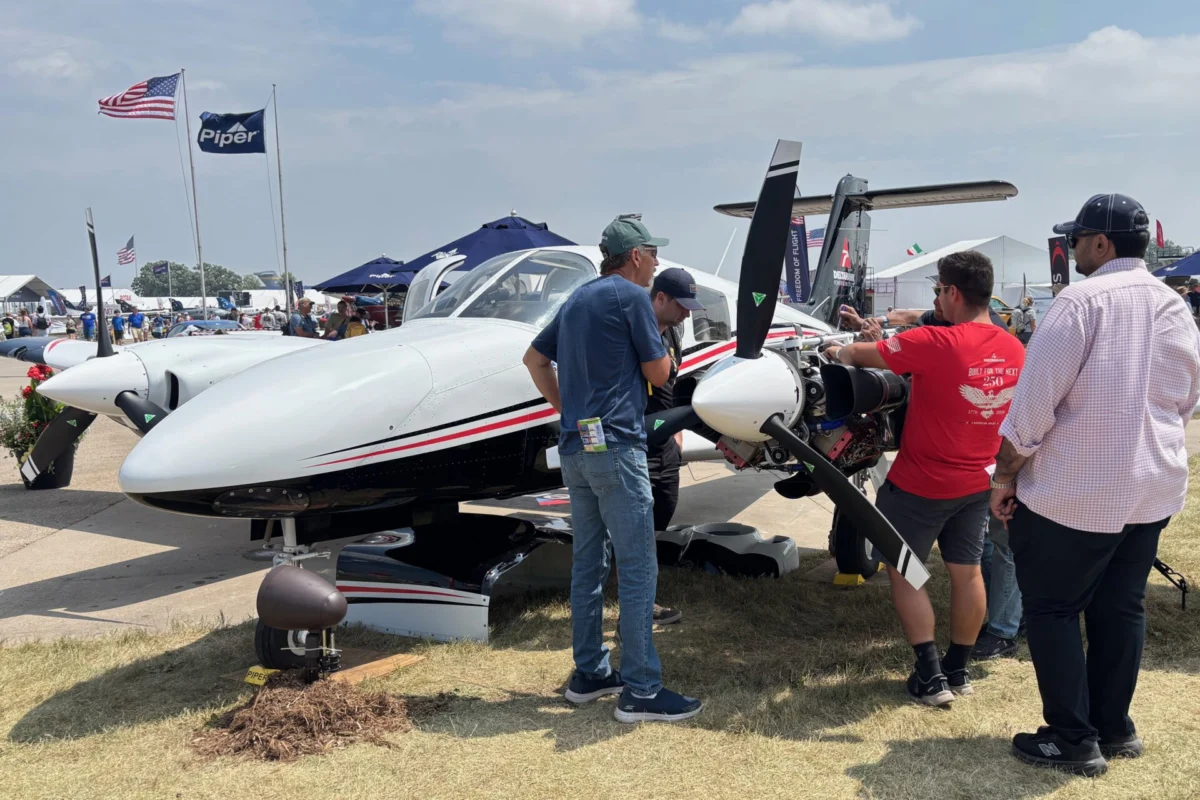
EAA AirVenture Oshkosh 2026 – In a development poised to reshape the landscape of general aviation flight training, Piper Aircraft has unveiled the first flying prototype of its revolutionary DeltaHawk-powered Seminole DX. This cutting-edge variant of the venerable Seminole twin-engine trainer made its highly anticipated public debut at EAA AirVenture Oshkosh 2026, a mere three weeks after completing its maiden flight. The introduction of this Jet A-burning aircraft signifies a substantial leap forward in operational efficiency and performance, particularly for flight schools grappling with escalating avgas costs and availability challenges.
A New Era Dawns for Twin-Engine Training
The Seminole DX represents a strategic collaboration between Piper Aircraft and DeltaHawk Engines, a company renowned for its FAA-certified compression-ignition piston engines. At the heart of this innovative trainer are two DeltaHawk DHK4A180 engines, each meticulously engineered to deliver a robust 180 horsepower. Crucially, these engines are designed to run on readily available Jet A or Jet A-1 fuel, a significant departure from traditional avgas-powered aircraft. This shift promises substantial cost savings and operational advantages for flight training organizations worldwide.
The prototype aircraft is currently immersed in an intensive flight testing program. DeltaHawk and Piper engineers are diligently working to expand the aircraft’s flight envelope, gather critical performance data, and refine systems in preparation for certification. The successful completion of the first flight on July 2nd marks a pivotal milestone in this ambitious project, underscoring the commitment of both companies to bringing this transformative aircraft to market.
Chronology of Innovation: From Concept to First Flight
The journey of the Seminole DX from concept to flight has been a testament to agile development and focused execution. Piper Aircraft first introduced the Seminole DX at EAA AirVenture 2025, generating significant buzz within the aviation community. At that time, the manufacturer projected certification during the third quarter of 2026, with deliveries of 2027-model-year aircraft slated to commence in late 2026 or early 2027. The successful maiden flight on July 2nd of this year, followed swiftly by its prominent display at Oshkosh, demonstrates that Piper and DeltaHawk are on track to meet these ambitious timelines.
The initial flight was a carefully orchestrated event, culminating in four successful traffic-pattern circuits. According to Piper President and Chief Executive Officer John Calcagno, the preliminary data gathered during this inaugural flight has been exceptionally promising. "From Piper’s perspective, we were thrilled to see the prototype complete its maiden flight on July 2 and to have it here on display at EAA," Calcagno stated during a press conference held at AirVenture on July 20th. "The initial performance metrics are exceeding our expectations."
Performance Prowess: Quantifiable Advantages in Fuel Efficiency and Climb
The preliminary data from the Seminole DX’s first flight offers a compelling glimpse into its operational advantages. Calcagno revealed that the aircraft exhibited an impressive climb rate of approximately 1,700 feet per minute. More significantly, fuel consumption was observed to be roughly 35% lower than its avgas-powered counterpart, the standard Seminole.
Piper has further elaborated on these figures, providing detailed projections that highlight the dramatic impact on operational costs. On a typical 700-nautical-mile mission, the estimated fuel cost for the Seminole DX is projected to plummet from approximately $670 for an avgas-burning Seminole to around $320. This represents a reduction of more than half in the fuel expenditure for a single training flight, a critical consideration for flight schools operating on tight budgets.
Published preliminary figures from Piper paint a clear picture of the efficiency gains. The Seminole DX, at 75% power and 6,000 feet, is estimated to burn 15.1 gallons per hour. In stark contrast, the avgas-burning Seminole consumes 23.3 gallons per hour under similar conditions. Beyond fuel savings, the DeltaHawk engines also contribute to enhanced performance. Piper projects a 32% improvement in single-engine climb performance and a remarkable 70% increase in single-engine absolute ceiling. These enhancements translate to greater safety margins and increased operational flexibility for pilots and instructors.
A Global Response: Flight Schools Eyeing the Seminole DX
The strategic decision to power the Seminole DX with Jet A has resonated strongly with flight training institutions, particularly in regions where avgas is either prohibitively expensive or increasingly difficult to procure. Piper has reported a surge of inquiries from flight schools worldwide since the aircraft’s announcement.
"Interest in the Seminole DX has been very good since its announcement at last year’s AirVenture," Calcagno confirmed. "Inquiries have been especially strong in the European and Asia-Pacific flight training markets." This widespread interest underscores the global demand for more cost-effective and accessible training platforms.
A significant early adopter is Skyborne Airline Academy, which placed the first U.S. order for the Seminole DX in September 2025. The academy signed for five aircraft to bolster its training operations at its Vero Beach, Florida, facility. This commitment from a prominent flight training organization serves as a powerful endorsement of the Seminole DX’s potential.
DeltaHawk Engines: Powering the Future of General Aviation
The partnership with DeltaHawk Engines is central to the Seminole DX’s innovative approach. Based in Racine, Wisconsin, DeltaHawk is dedicated to manufacturing FAA-certified Jet A compression-ignition piston engines. Their current certified four-cylinder DHK engine family offers power outputs ranging from 180 to 235 horsepower, catering to a variety of general aviation aircraft.
Beyond the DHK4A180 powering the Seminole DX, DeltaHawk is actively developing smaller two-cylinder engines specifically designed for light trainers, unmanned aerial vehicles (UAVs), and military applications. Furthermore, the company has announced that its engine architecture is being adapted for integration into hybrid-electric propulsion systems, signaling a forward-thinking approach to sustainable aviation. This diversification of their engine offerings positions DeltaHawk as a key player in the evolving general aviation ecosystem.
Piper’s Expanding Fleet and Infrastructure Investments
The unveiling of the Seminole DX at Oshkosh coincided with other significant announcements from Piper Aircraft, demonstrating the company’s robust growth strategy. Piper also revealed a substantial fleet agreement with ATP Flight School. This agreement includes a firm order for six aircraft and options for an additional 25 in 2027.
The firm order comprises three Archer TX aircraft, scheduled for delivery within the next 30 days, and three conventional Seminoles set to arrive in 2027. ATP Flight School, a leading pilot training organization with over 85 training centers, utilizes the Archer for single-engine instruction and the Seminole for multi-engine training. This new agreement will further expand ATP’s fleet capabilities and enhance its training offerings.
In a separate but equally important development, Piper announced plans to construct a new factory service center at its headquarters in Vero Beach, Florida. This state-of-the-art facility will significantly enhance customer support capabilities. The center will feature over 33,000 square feet of indoor space and an additional 11,000 square feet of outdoor service area, spread across two floors. It will accommodate seven indoor aircraft bays and four outdoor bays, providing comprehensive maintenance and support services for customers across the eastern United States, the Caribbean, Mexico, and Central America. Construction is slated to commence later in 2026, with the center expected to open its doors in the fourth quarter of 2027. These strategic investments underscore Piper’s commitment to supporting its growing customer base and ensuring the long-term viability of its aircraft operations.
The introduction of the DeltaHawk-powered Seminole DX, coupled with these fleet expansion and infrastructure development initiatives, solidifies Piper Aircraft’s position as a leader in the general aviation sector, actively shaping the future of flight training with innovative and cost-effective solutions.
 Asro
Asro  Reynand Wu
  Dwi Wanna