

The serene waters off the southern coast of Alaska became the setting for a chilling maritime enigma on the evening of July 18, 2026. Passengers aboard the Emerald Princess, a 3,090-guest cruise liner operated by Princess Cruises, found themselves at the center of a real-life sea mystery when their vessel abruptly deviated from its course to investigate a lone, derelict object drifting in the vast, cold expanse of the Pacific.
What began as an ordinary transit from Endicott Arm Fjord toward Ketchikan—part of a routine seven-day round-trip itinerary originating from Vancouver—transformed into a somber investigation into the remnants of a tragedy that had unfolded over a year prior.
The Encounter: An Orange Speck in the Wilderness
At approximately 8:00 p.m., the tranquil atmosphere on the decks of the Emerald Princess was punctured by an announcement from the ship’s bridge. The captain informed passengers that the vessel would be temporarily altering its course to investigate an unidentified object spotted floating roughly 13 nautical miles southeast of Port Alexander.
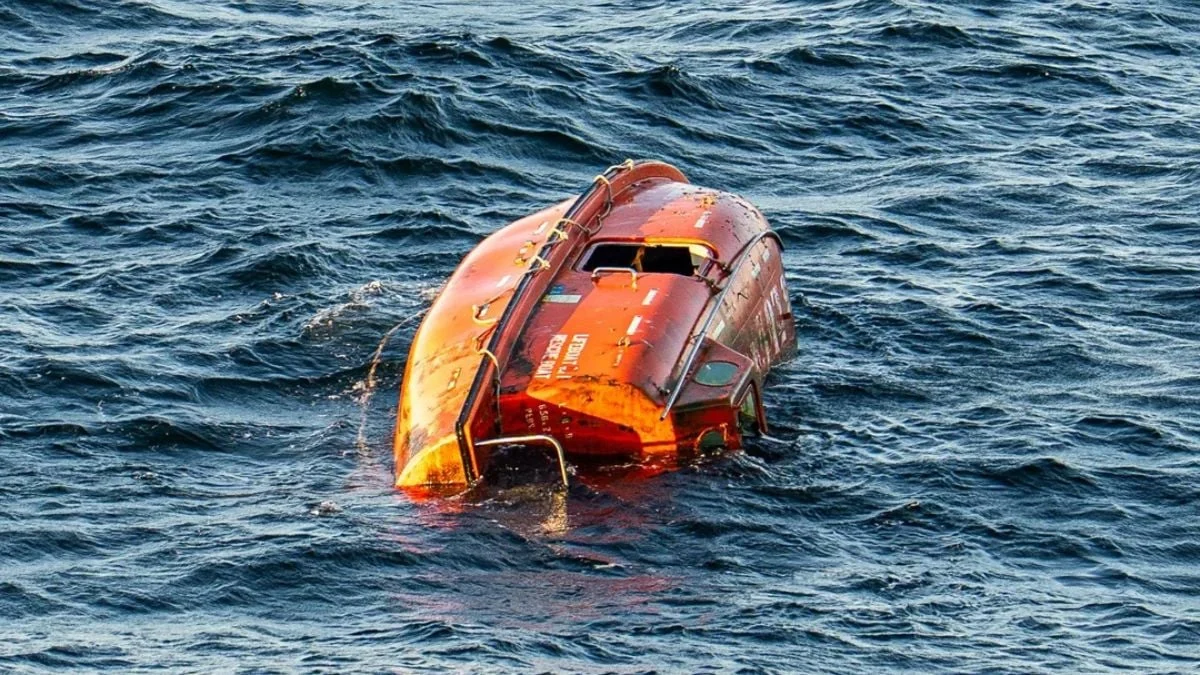
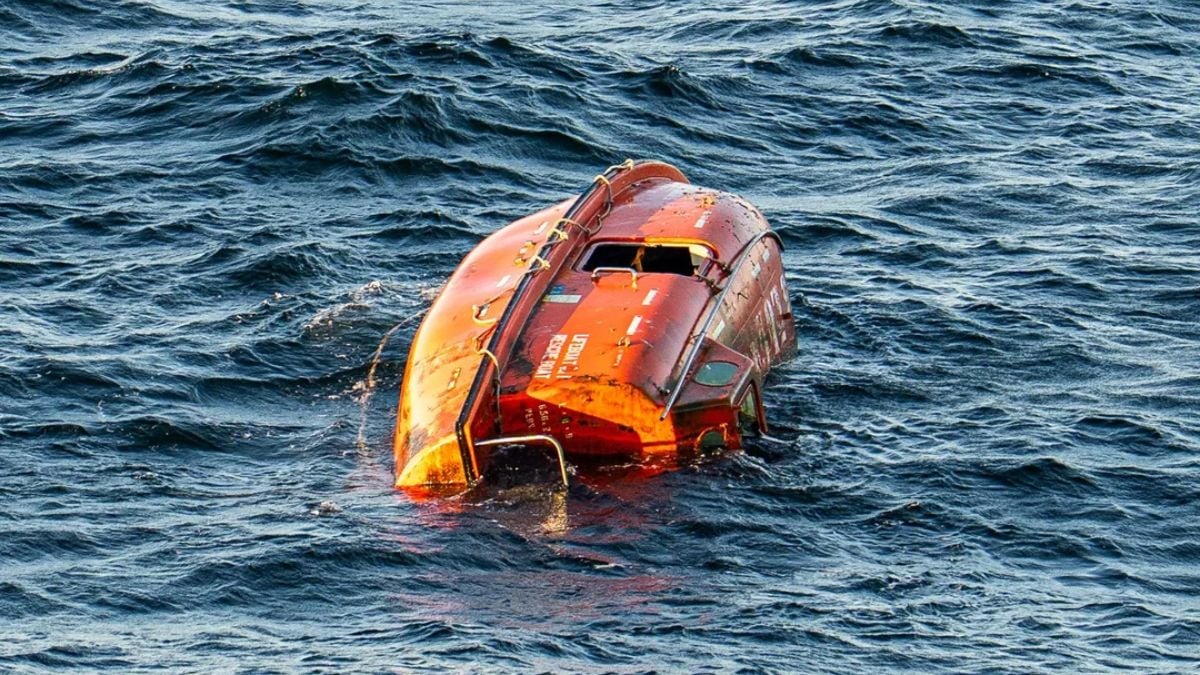
As the massive cruise ship maneuvered closer, passengers crowded the rails, peering through the twilight at a lone orange object bobbing rhythmically in the swells. Upon closer inspection, the object was identified as a commercial-grade lifeboat, heavily weathered and coated in thick, dark grime. The hull, scarred by time and exposure to the elements, still bore the faint, peeling stenciling of the words "lifeboat" and "rescue boat."
The scene was unsettling for those watching from the safety of the cruise ship. The boat was listing at a precarious angle, its interior empty and exposed to the elements. There were no signs of life, no emergency beacons firing, and no other vessels in the immediate vicinity to suggest a recent deployment. In maritime parlance, a vessel found adrift without a crew is often colloquially referred to as a "ghost ship," and guests were quick to dub this derelict craft a "ghost lifeboat."
The Weight of Maritime Law: The SOLAS Convention
The captain’s decision to deviate from the ship’s carefully timed schedule was not merely a courtesy; it was a mandatory obligation under the International Convention for the Safety of Life at Sea (SOLAS).
First implemented in 1914 in the wake of the RMS Titanic disaster, SOLAS remains the bedrock of maritime safety. It mandates that any vessel’s master, upon receiving a signal or spotting evidence of distress, is duty-bound to proceed with all speed to the assistance of the persons in distress, if possible, informing them of the situation. While the lifeboat appeared long-abandoned, the Emerald Princess was required to confirm that there were no survivors or bodies trapped within the wreckage.
This incident serves as a poignant reminder that the rules of the sea are non-negotiable. As recently as May 2026, the effectiveness of these protocols was demonstrated when the Carnival Mardi Gras successfully rescued nine individuals from a disabled vessel off the coast of Florida. For the passengers of the Emerald Princess, the hour-long investigation was a firsthand lesson in the grave responsibilities borne by those who command ships in international waters.
Chronology of an Investigation
The investigation proceeded with clinical precision. For nearly sixty minutes, the Emerald Princess circled the derelict craft. Crew members used high-powered binoculars and professional-grade optical equipment to survey the interior of the lifeboat while maintaining continuous communication with the U.S. Coast Guard.
The bridge remained in a state of high alert. Passengers, capturing the scene on smartphones and cameras, took to social media to share their observations. The uncertainty of the situation created a somber mood on the ship, with many speculating on the origin of the boat. Was it from a recent accident? Was it a hazard to navigation that needed to be salvaged?
Eventually, the tension on the decks broke when the captain returned to the PA system. He informed the passengers that, following a thorough assessment and consultation with the U.S. Coast Guard, the vessel had been identified as an abandoned craft, long ago discarded. With no threat to life and no further need for intervention, the Emerald Princess resumed its course, docking in Ketchikan the following morning, July 19, before continuing its journey back to Vancouver.
Unraveling the Mystery: The Legacy of the ‘Morning Midas’
The mystery of the "ghost lifeboat" was not left to the realm of urban legend for long. Maritime records quickly linked the derelict craft to a significant industrial disaster: the sinking of the Morning Midas.
The Morning Midas was a 46,800-gross-ton cargo ship that vanished beneath the surface of the Northern Pacific in June 2025. On June 3, 2025, the vessel was navigating approximately 300 miles southwest of Adak Island, Alaska, while transporting a cargo of roughly 3,000 vehicles—including 70 electric and 681 hybrid cars—from Yantai, China, to Lázaro Cárdenas, Mexico.
A fire broke out in the ship’s cargo hold, a blaze that would eventually prove insurmountable. Investigators have long speculated that the incident was triggered by a catastrophic lithium battery failure in one of the electric vehicles. Despite the heroic efforts of the crew to contain the inferno, the fire raged on, forcing the evacuation of all 22 crew members.
The crew safely boarded their lifeboats—including the very one eventually discovered by the Emerald Princess—and were rescued by the passing merchant vessel Cosco Hellas. The Morning Midas burned for twenty days before finally succumbing to the damage and sinking on June 23, 2025.
Implications for Modern Shipping
The discovery of the lifeboat by the Emerald Princess is more than a mere curiosity; it is a testament to the sheer scale of the ocean and the durability of maritime debris. A year after the Morning Midas sank, pieces of its equipment are still drifting through the North Pacific, thousands of miles from the site of the original fire.
Environmental and Safety Concerns
The presence of such debris poses a lingering, albeit minor, threat to navigation. Larger, semi-submerged objects can cause significant damage to smaller vessels, and the fact that such a large piece of equipment remained adrift for over a year highlights the complexity of ocean currents and the difficulty of clearing wreckage in remote maritime corridors.
The Human Element
Beyond the logistics, the incident serves as a haunting reminder of the human element in maritime commerce. The lifeboat, once a vessel of salvation for 22 souls in the midst of a terrifying shipboard fire, became a silent, rusted relic of a near-tragedy. It serves as a physical bridge between the Emerald Princess passengers’ vacation and the harrowing reality faced by the Morning Midas crew.
The Role of Regulatory Vigilance
The incident reinforces the necessity of the SOLAS protocols. Had the Emerald Princess ignored the floating object, they might have overlooked a vessel in need—even if the probability was low. The fact that the ship’s command prioritized the safety of the seas over the strict maintenance of their schedule underscores the culture of care that defines modern passenger shipping.
Conclusion: A Haunting Reminder
While the Emerald Princess incident concluded without the discovery of survivors or victims, it effectively stripped away the veil of abstraction surrounding maritime safety. For the thousands of guests onboard, the orange, grime-covered boat was a stark, tangible encounter with the reality of life at sea.
As the cruise ship continued its journey toward Vancouver, the "ghost lifeboat" was left behind, continuing its lonely drift through the Pacific. It remains a silent sentinel, a reminder of a fire that once threatened twenty-two lives, and a testament to the enduring vigilance of the maritime community, which ensures that even in the most remote corners of the globe, no vessel—or its remnants—is ignored.
 Asep Darmawan
  Pevita Pearce
  Asro
Asro 