

Executive Summary: A Landmark Initiative for Heritage Preservation
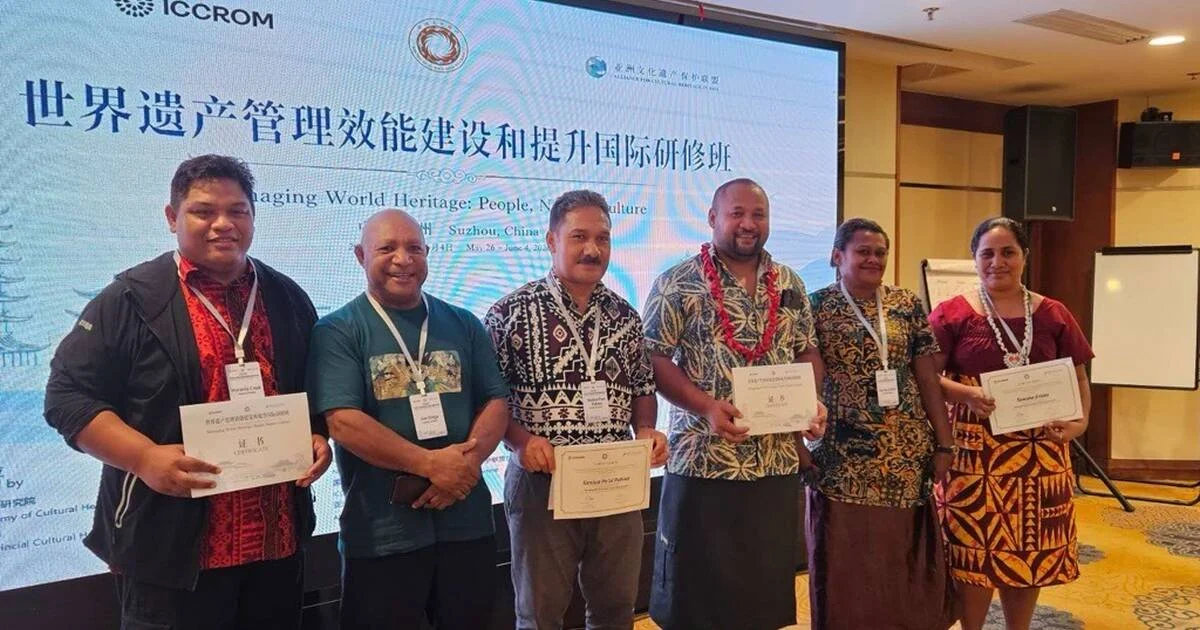
In a significant stride toward safeguarding the cultural and natural legacies of the Pacific, UNESCO and ICCROM recently concluded the "International Course on Managing World Heritage: People Nature Culture (PNC)." Held in the historic city of Suzhou, China, from 26 May to 4 June 2026, the ten-day intensive program represented a critical juncture for heritage conservation in Small Island Developing States (SIDS).
The course served as a cornerstone of the Sustainable Islands: Building Heritage Disaster and Climate Resilience of Small Island Developing States in the Pacific Region project. Supported by the generous contributions of the Republic of Korea through the UNESCO/Republic of Korea Funds-in-Trust, the initiative brought together 34 heritage professionals from across the globe, with a focused delegation from Fiji, Kiribati, Nauru, Papua New Guinea, Samoa, and Tonga. By bridging the gap between theoretical conservation and grassroots community engagement, the program sought to equip Pacific leaders with the tools necessary to combat the dual threats of climate change and disaster vulnerability.
Chronology: A Ten-Day Immersion in Global Best Practices
The PNC course was meticulously structured to foster both intellectual growth and practical application. The chronology of the event reflects a transition from high-level management theory to site-specific problem-solving.
Days 1–3: The Philosophical Foundation
The opening days were dedicated to deconstructing the "Heritage Place Approach." Participants engaged in deep-dive sessions examining how heritage management has evolved from a purely structural focus to a "people-centered" paradigm. This section emphasized the importance of viewing a heritage site not as a static monument, but as a living entity embedded within its social, environmental, and economic context.

Days 4–7: The Technical Core
Mid-course activities shifted toward the application of the Managing World Heritage Resource Manual and the Enhancing Our Heritage Toolkit 2.0 (EOH 2.0). These sessions were technical and rigorous, requiring participants to dissect the "value and attributes" of two specific World Heritage sites: the Levuka Historical Port Town in Fiji and the Kuk Early Agricultural Site in Papua New Guinea. Participants analyzed management systems through the lens of disaster risk reduction (DRR) and climate change mitigation, moving beyond abstract concepts to actionable checklists and assessment frameworks.
Days 8–10: Synthesis and Future Planning
The final phase of the course focused on peer-to-peer learning and future-proofing. Through group workshops and field simulations, attendees synthesized the lessons learned to draft preliminary management strategies for their home countries. The closing ceremony underscored the birth of a new professional network—a community of practice designed to sustain collaboration long after the conclusion of the course.
Supporting Data: Integrating Science and Tradition
The effectiveness of the Suzhou training lies in its reliance on evidence-based methodologies. The use of the EOH 2.0 toolkit is not merely administrative; it is a strategic shift toward data-driven conservation.
- Diverse Representation: The 34 participants represented a global cross-section, ensuring that the Pacific delegation was exposed to diverse management challenges from varied geographical landscapes.
- Case Study Focus:
- Levuka Historical Port Town (Fiji): As a 19th-century colonial port, Levuka faces unique challenges regarding coastal erosion and urban management. The course provided a framework to manage these urban dynamics while preserving the town’s unique historical identity.
- Kuk Early Agricultural Site (Papua New Guinea): As one of the earliest agricultural landscapes in the world, the site requires delicate management of its ecological and archaeological layers. The training provided participants with tools to monitor environmental factors that threaten these ancient wetlands.
- Methodological Rigor: The curriculum prioritized "Integrated Management," ensuring that conservation efforts are not siloed but are instead aligned with national climate action plans and community resilience goals.
Voices from the Field: Official and Personal Responses
The impact of the training is perhaps best captured by the voices of those tasked with the daily stewardship of these irreplaceable sites.
One delegate from Samoa remarked on the paradigm shift initiated by the training: "The course helped me better understand place-based approaches to heritage management, focusing on the conservation and enhancement of the multiple values of heritage places within their broader social, environmental, cultural and economic contexts. The knowledge and skills gained through this training will strengthen my capacity to document, protect and manage cultural and natural heritage sites in Samoa in close collaboration with local communities."
This sentiment was echoed by another participant who highlighted the shift toward local empowerment: "What I found most valuable was learning from other participants and reflecting on the importance of communities and traditional landowners. Rather than telling people what to do, we need to build trust and work together to support the protection of heritage places."
Regarding the practical utility of the tools provided, a professional working on the Kuk Early Agricultural Site noted: "These approaches will be particularly useful… they will help us better manage community expectations, and I intend to use the tools introduced during the course as a practical checklist to strengthen our management planning."
Implications: Building a Resilient Future for the Pacific
The implications of this collaboration extend far beyond the ten-day training in Suzhou. As Pacific SIDS remain on the front lines of the climate crisis, the ability to protect heritage is synonymous with protecting identity and economic stability.
Strengthening Institutional Capacity
The training serves as a catalyst for institutional reform within the participating countries. By formalizing management strategies through the EOH 2.0 framework, heritage authorities can better advocate for funding and policy support at the national level.
Disaster Risk Management as a Priority
Climate change is not a future threat for the Pacific; it is a current reality. The integration of disaster risk management (DRM) into the heritage conservation curriculum ensures that when disaster strikes, heritage sites are not left as afterthoughts. This includes everything from flood mitigation strategies to the documentation of sites at risk of sea-level rise.
The Role of International Cooperation
The partnership between UNESCO, ICCROM, and the Republic of Korea serves as a model for international development in the cultural sector. By providing "Funds-in-Trust," the Republic of Korea has demonstrated a commitment to global heritage that transcends borders, providing the Pacific region with the resources required to bridge the gap between intent and implementation.
Sustaining the Network
The "people-centered" approach promoted in Suzhou also refers to the professionals themselves. The creation of this network allows for the cross-pollination of ideas. When a professional in Tonga encounters a specific management challenge, they now have a direct line to peers in Fiji or Samoa who may have already navigated similar obstacles, creating a self-sustaining ecosystem of regional expertise.
Conclusion: A Legacy of Preservation
The conclusion of the International Course on Managing World Heritage in Suzhou marks the beginning of a more proactive era for Pacific heritage management. Through the combination of rigorous academic training, community-based philosophy, and international financial support, the project has successfully empowered a new generation of custodians.
As these professionals return to their respective nations, the tools provided—the resource manuals, the assessment frameworks, and the newfound professional alliances—will serve as the bedrock for a more resilient future. UNESCO and its partners remain committed to this trajectory, recognizing that in the Pacific, the preservation of our past is the most vital strategy for securing our future.
The successful collaboration with the Republic of Korea underscores that heritage protection is a shared global responsibility. As we move forward, the lessons from Suzhou will undoubtedly be woven into the management plans of heritage sites across the Pacific, ensuring that they remain vibrant, protected, and meaningful for generations to come.
 Asep Darmawan
  Evan Lee Salim
  Jia Lissa