

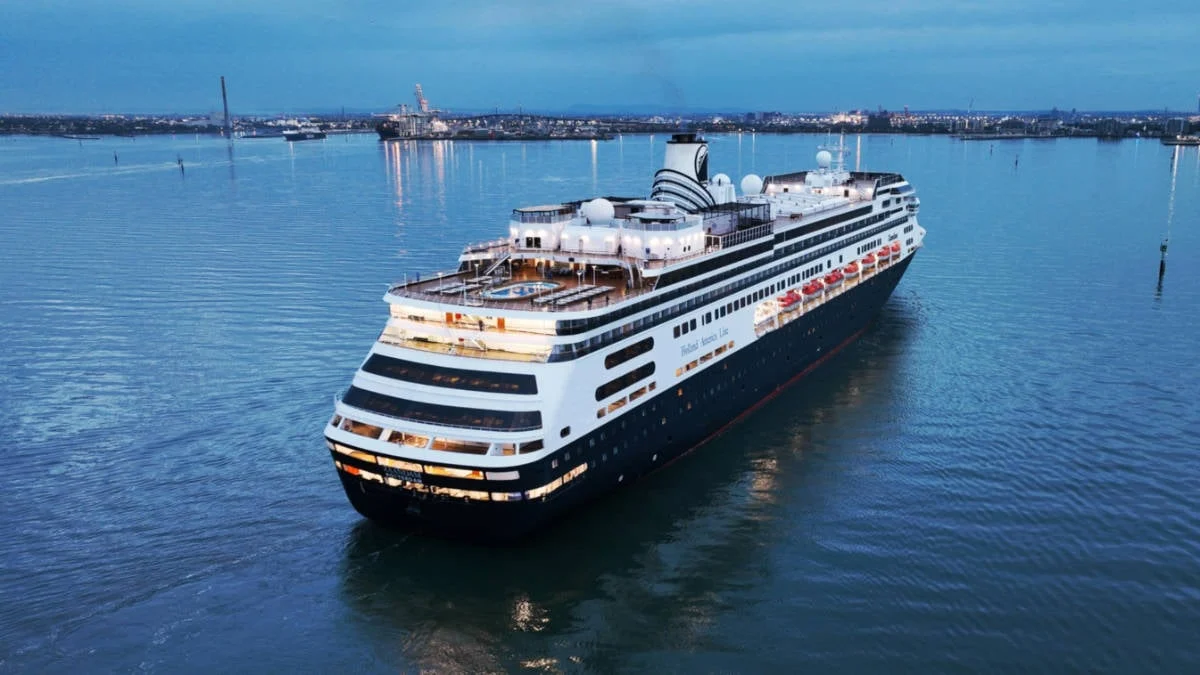
Thousands of passengers booked on Holland America Line’s MS Zaandam for the 2026 Alaska cruise season are facing significant itinerary modifications. The cruise line has confirmed that a series of voyages, stretching from mid-July through the season’s grand finale in September, will undergo adjustments. Citing "operating speeds and tidal constraints," the cruise line is recalibrating its schedules, leaving many travelers to navigate the logistical ripple effects of these changes.
Overview of the Itinerary Disruptions
The MS Zaandam, a 61,396-gross ton vessel known for its classic cruising elegance, has long been a staple of Holland America’s Alaska program. Operating primarily out of Vancouver, Canada, the ship typically offers seven-night round-trip voyages through the iconic Inside Passage.
These itineraries are prized for their visits to some of Alaska’s most prestigious natural landmarks, including the Tracy Arm Fjord, Juneau, Skagway, Glacier Bay, and Ketchikan. However, recent communications from Holland America have signaled a departure from these established routes. While the cruise line maintains that these changes are a necessary measure to ensure safety and operational compliance, the frequency of the adjustments suggests a systemic challenge affecting the vessel’s performance in the region’s complex maritime environment.
A Chronological Breakdown of Changes
The scope of these modifications is broad, affecting multiple sailings throughout the summer and early autumn. Based on information surfaced by passengers and industry observers, the timeline of impacted voyages is as follows:
The July 15 Departure
The earliest identified disruption begins with the July 15, 2026, sailing. Guests booked on this voyage have reported significant changes, including a delay on the day of embarkation in Vancouver. Furthermore, the scheduled visit to Tracy Arm—or its replacement, Endicott Arm—has been removed entirely from the itinerary. Consequently, the vessel’s arrival in Juneau is expected to be delayed, forcing a compression of the time guests have to explore the capital city.
The August 19 Voyage
The mid-season sailing departing August 19 faces a similar set of hurdles. Holland America has formally notified guests that the vessel will no longer conduct a service call to the Tracy Arm Inlet, which was scheduled for August 21. Beyond the loss of this scenic cruising highlight, the ship will arrive in Juneau at 2:00 PM, a later-than-expected arrival compared to the original 1:30 PM slot. Furthermore, the port call in Ketchikan on August 24 has been truncated by one hour, with the ship now slated to depart at 6:00 PM rather than the previously advertised 7:00 PM.
The September 16 Season Finale
The most extensive modification involves the 18-night grand finale sailing departing September 16. This voyage, which serves as the bookend to the 2026 season, is designed to visit a wider array of destinations, including Prince Rupert in British Columbia. Because of the new speed and tidal requirements, the ship will now depart Vancouver one hour earlier than originally planned. This shift carries serious implications for travelers flying into Vancouver on the day of embarkation; the cruise line has advised that guests must arrive in the city no later than 10:00 AM to ensure they clear customs and board the vessel before the accelerated departure time.
Underlying Causes: Tidal Constraints and Propulsion Concerns
Holland America’s official statements have been somewhat opaque, attributing the changes to "operating speeds and tidal constraints." This phrasing has sparked a flurry of debate within the cruise community regarding the true nature of the operational challenges.
The Role of Alaska’s Extreme Environment
Alaska is home to some of the most dynamic tidal systems on the planet. Locations like the Seymour Narrows and Cook Inlet feature massive tidal swings—sometimes as high as 40 feet—that create powerful currents. Navigating these areas requires precise timing; ships must transit certain channels during "slack water" periods to ensure safety. When a vessel cannot maintain a specific speed, it may miss these critical "windows," necessitating a complete redesign of the ship’s route to avoid hazardous currents.

Lingering Propulsion Issues
Industry analysts and frequent cruisers are questioning whether these constraints are purely environmental or if they are exacerbated by the ship’s internal mechanics. The MS Zaandam has recently struggled with documented propulsion issues, which led to delays earlier in the 2026 season. If the vessel’s engines are not performing at full capacity, the ship’s ability to "make time" between ports is severely limited. A vessel operating at reduced speed cannot compensate for tidal delays, which explains why the cruise line has opted to remove port calls and shorten time in others—it is essentially buying back the time lost due to reduced engine output.
Implications for Booked Passengers
The impact on the passenger experience is twofold: the loss of scenic highlights and the logistical burden of adjusted travel plans.
Scenic Cruising and Port Modifications
The removal of Tracy Arm/Endicott Arm is a significant loss for travelers who prioritize the "glacier experience" of an Alaska cruise. Furthermore, the shift in the transit route—moving from the Seymour Narrows to the broader Inside Passage—changes the visual experience of the cruise, potentially bypassing some of the narrow, dramatic channels that define the region.
Shore Excursion Management
Holland America has indicated that, for all impacted sailings, pre-booked shore excursions will be managed automatically. Where possible, the cruise line will reschedule activities to align with the new port times. If a rescheduling is not feasible, the cruise line has promised to cancel the excursion and issue a full refund. While this alleviates the financial risk for guests, it does little to mitigate the disappointment of missing out on planned excursions like whale watching or glacier flight-seeing.
Official Stance and Future Outlook
In all communications regarding these changes, Holland America has underscored that the decisions were made with the "safety and comfort of all onboard" as the paramount priority. While the brevity of the official statements may frustrate some, it is standard industry practice to focus on safety as the final word.
However, the fact that these changes are being issued months in advance suggests that the cruise line is attempting to "right-size" its operational expectations for the remainder of the season. By moving departure times earlier and removing certain port calls, the company is creating a buffer that prevents the ship from arriving late to port—a scenario that would be far more disruptive than an advance itinerary change.
What Guests Should Do
For those currently holding a reservation on the MS Zaandam, the following steps are recommended:
- Monitor Communications: Keep a close eye on the email address associated with the booking. Holland America is pushing updates directly to passengers as they are finalized.
- Review Travel Logistics: If you are flying in on the day of departure, contact your airline to check for earlier flights, particularly for the September 16 voyage, to accommodate the early departure.
- Verify Shore Excursions: Log in to the "Manage My Cruise" portal periodically to see if your excursions have been updated or canceled, and ensure that refunds are being processed correctly.
- Stay Informed: Engage with official cruise line updates rather than relying solely on social media speculation, as policies can evolve as the season progresses.
As the 2026 Alaska season continues, the MS Zaandam serves as a case study in the complexities of modern cruise operations. In a region defined by its wild, unpredictable geography, the ability of a cruise line to adapt its schedule while maintaining the safety of its passengers remains the ultimate measure of its professionalism. Whether these changes are a temporary result of seasonal tidal conditions or a sign of deeper technical issues, the priority for the line remains clear: ensuring that every voyage, regardless of the route, concludes safely.
 Asep Darmawan
  Pevita Pearce
  Asro
Asro 